- Category
- Latest news
Russia Forces Ukrainian Children in Occupied Territories to Obtain Russian Passports to Travel Abroad
 Prefer U24 Media on Google
- Authors


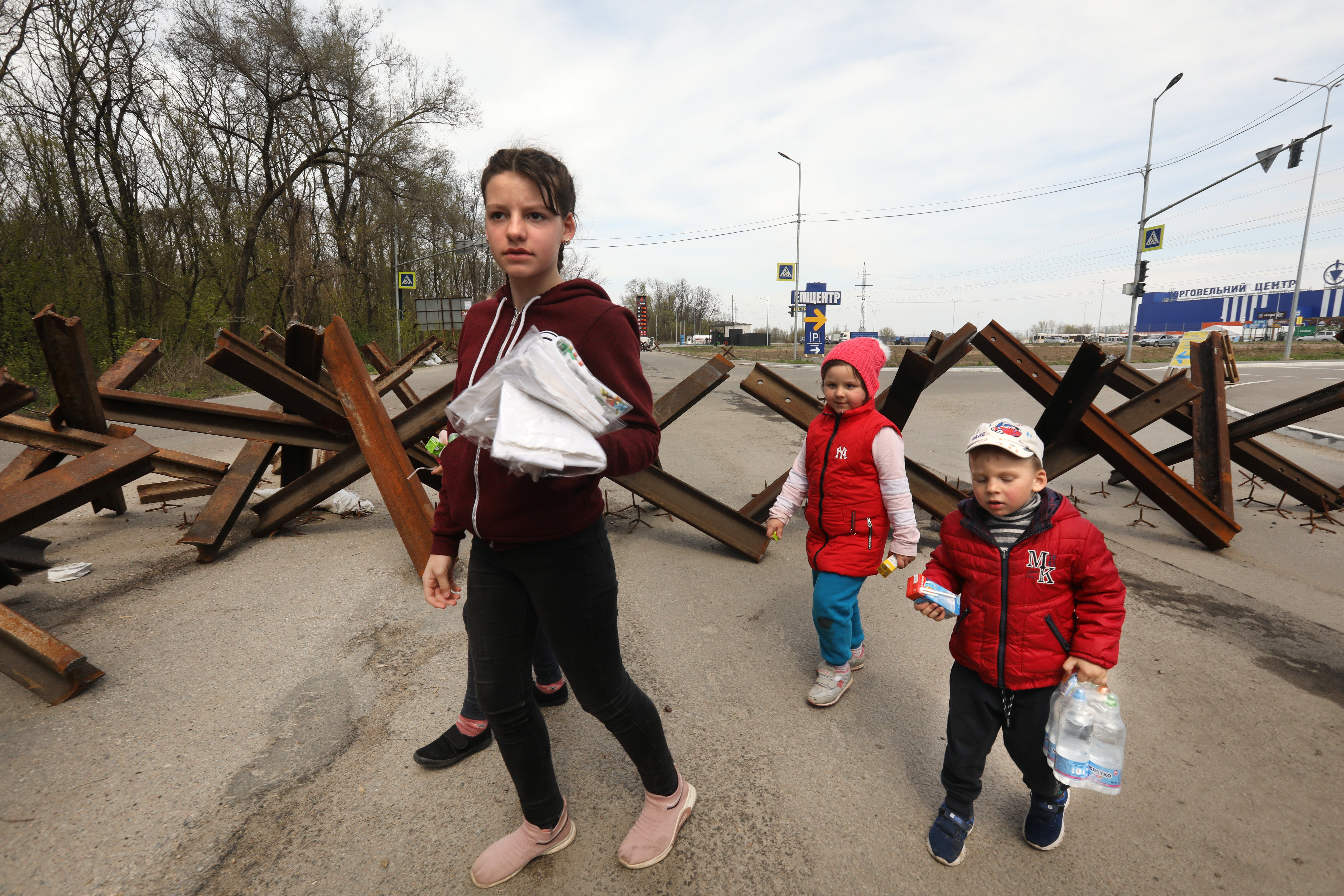
Russia has introduced a new law requiring Ukrainian children living in occupied territories to hold Russian passports in order to travel abroad, according to a British Defense Intelligence update published on February 11.
“Russia has introduced a new law which requires Ukrainian children in occupied Ukrainian territory to possess a Russian passport in order to travel abroad (aside from Belarus, Kazakhstan, Kyrgyzstan, and the Russian-occupied regions of Georgia),” the UK Ministry of Defense said.
We bring you stories from the ground. Your support keeps our team in the field.
The report states that the measure reportedly came into force on January 20 and applies to “all children under the age of 14 within Russia and the Ukrainian territories Russia annexed.”
British intelligence assessed that the move is “highly likely intended to increase the difficulties for Ukrainians with children seeking to leave those areas of Ukraine currently under Russian control.”
The update further described the legislation as part of a broader policy of forced assimilation, noting that it “amounts to a further addition to the Russian senior leadership’s long-standing Russification policy in occupied Ukrainian territory, which seeks to extirpate Ukrainian culture, identity and statehood.”
Latest Defence Intelligence update on the situation in Ukraine - 11 February 2026.
— Ministry of Defence 🇬🇧 (@DefenceHQ) February 11, 2026
Find out more about Defence Intelligence's use of language: https://t.co/Afc3fLQcCk #StandWithUkraine pic.twitter.com/1j2BS6j7xU
The report links the new law to a decree signed by Russian leader Vladimir Putin on March 20, 2025, which required Ukrainian nationals living in Russia or in occupied Ukrainian territory to “settle their legal status” by September 10, 2025, or leave the territory.
According to the UK assessment, this measure was “almost certainly intended to compel Ukrainian nationals living in areas under Russian control to accept Russian passports and citizenship.”
“This was almost certainly intended to compel Ukrainian nationals living in areas under Russian control to accept Russian passports and citizenship. Male Ukrainians aged 18–30 who hold Russian passports are liable for conscription into the Russian military,” the report concluded.
As pressure to obtain Russian documents escalates, Russian-installed authorities in the temporarily occupied Kherson region are coercing Ukrainian parents into accepting Russian passports by threatening to strip them of custody of their children.
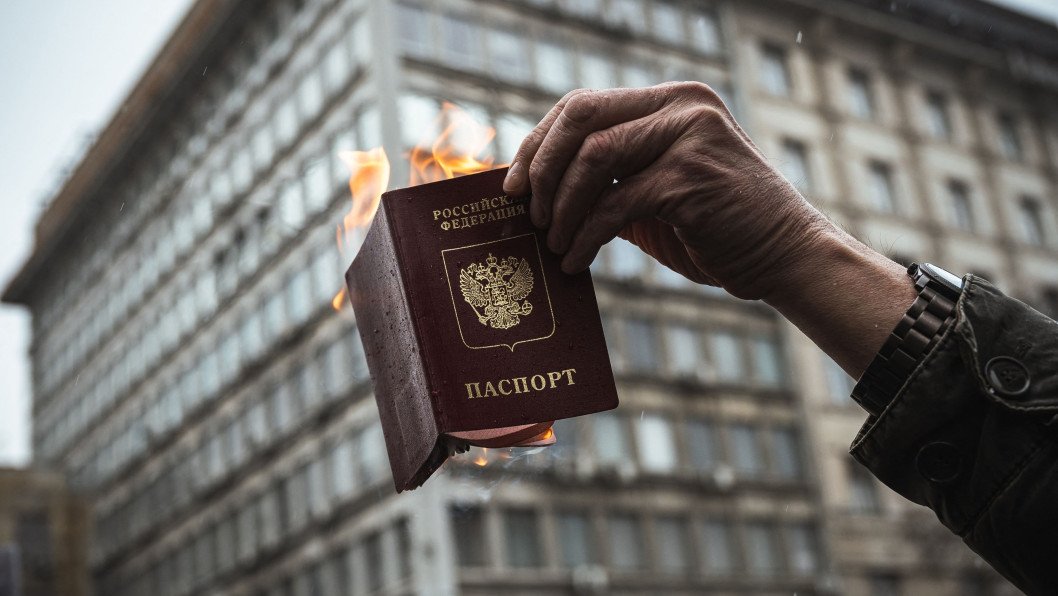
“These are not documents. They are instruments of terror,” said Ukrainian-appointed Governor Ivan Dudary of Kherson region in a comment to the Center of National Resistance.
According to the report, in the village of Askaniya-Nova, parents have been directly warned that refusing to obtain Russian documents could lead to their children being taken away or their parental rights revoked. The settlement, located about 52 kilometers from territory controlled by the Ukrainian government, lies deep inside Russian-occupied areas where basic rights and services are heavily restricted.
Residents who do not hold Russian passports reportedly face severe constraints, including limited access to healthcare, restrictions on movement through military checkpoints, and an increased risk of forced mobilization into Russian armed formations.

Notably, forced passportization in occupied territories may amount to a war crime under international humanitarian law when imposed through coercion or under conditions of occupation, as protected persons cannot be compelled to alter their legal status or allegiance.
Earlier, in the temporarily occupied city of Sievierodonetsk in the Luhansk region, Russian-installed authorities started engaging preschoolers in state-sponsored propaganda initiatives.
Children in local nurseries and kindergartens were recently awarded certificates for taking part in drawing and poetry competitions centered on military themes. The activities were held as part of Russia’s federal program, “Patriotic Education of Russian Citizens.”
Discuss this article:

-c439b7bd9030ecf9d5a4287dc361ba31.jpg "Photo of Katherina Popilnichenko")