- Category
- Anti-Fake
Surrender Demands as “Security Guarantees”: Decoding Russian Diplomatic Dictionary
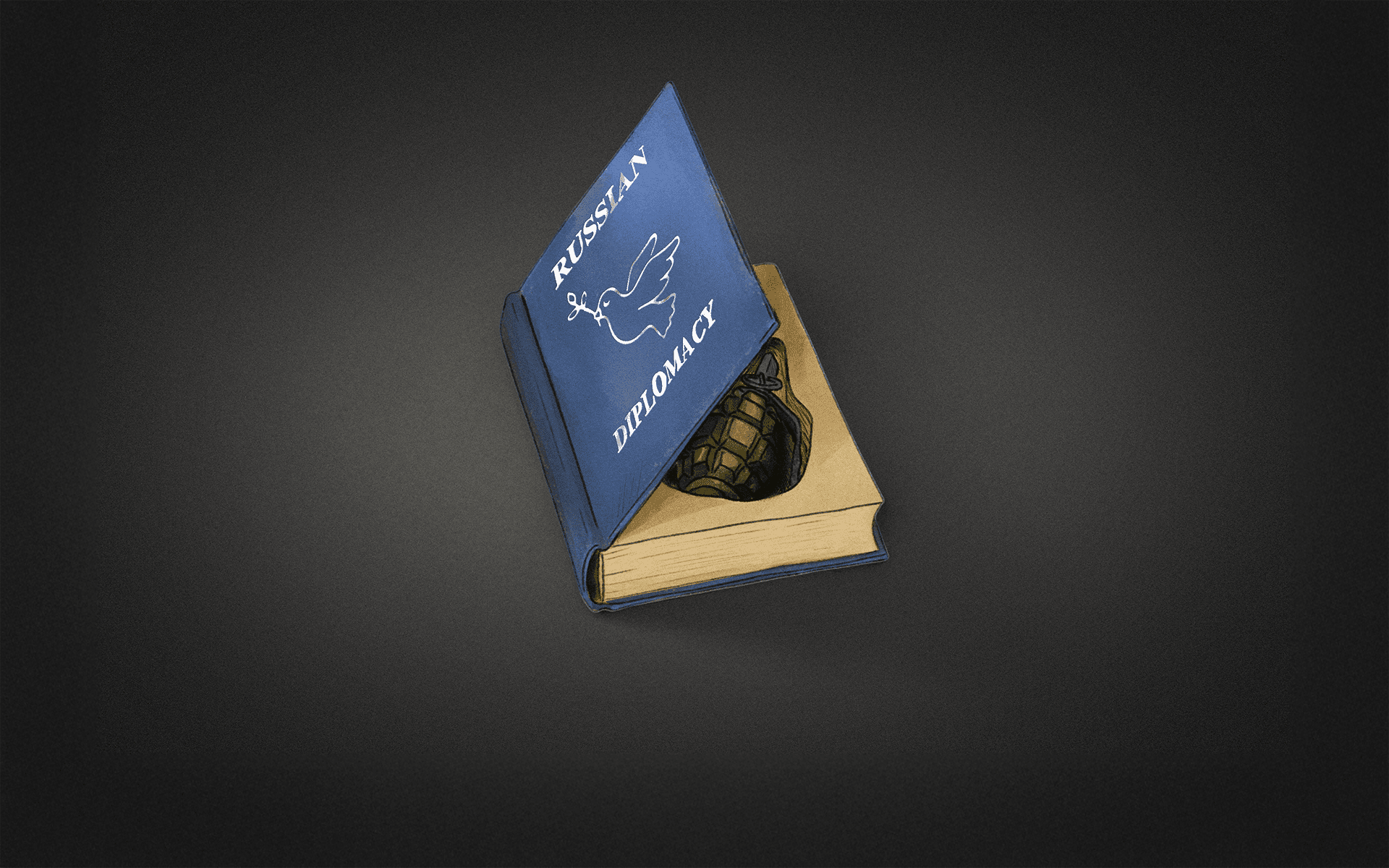
Before Russia’s full-scale invasion of Ukraine began on the ground, it had already started with propaganda in the Russian language, recasting war as a “special military operation.” Now, Moscow advances its surrender demands while branding them “security guarantees.”
 Prefer U24 Media on Google
- Authors


In 1995, the renowned Italian writer and thinker Umberto Eco wrote an essay titled Ur-Fascism. In it, he listed 14 traits common to fascist regimes, no matter when or where they existed. Most of those traits fit modern Russia perfectly.
One of Eco’s phrases is worth recalling here: “Fascist governments are condemned to lose wars because they are constitutionally incapable of objectively evaluating the force of the enemy.” Judging by the fact that Russia’s war against Ukraine has dragged on for more than three and a half years instead of ending in a blitzkrieg, the Kremlin’s calculations were indeed far off the mark.
But let’s focus on one of the 14 traits Eco highlighted.
“Newspeak”—fascist regimes rely on and promote an impoverished vocabulary designed to stifle critical thought. In recent years, Russia’s leadership—and society at large—have perfected this practice. What follows is a dictionary translating Russian newspeak into plain reality.
Russia’s doublespeak explained
What “security guarantees” really mean
Ukraine has shown readiness to meet with Russia to stop the fighting and achieve peace. For the aggressor, however, negotiations are not about compromise—they are about ultimatums. Every time Ukrainians came to the table, they were confronted with terms of surrender.
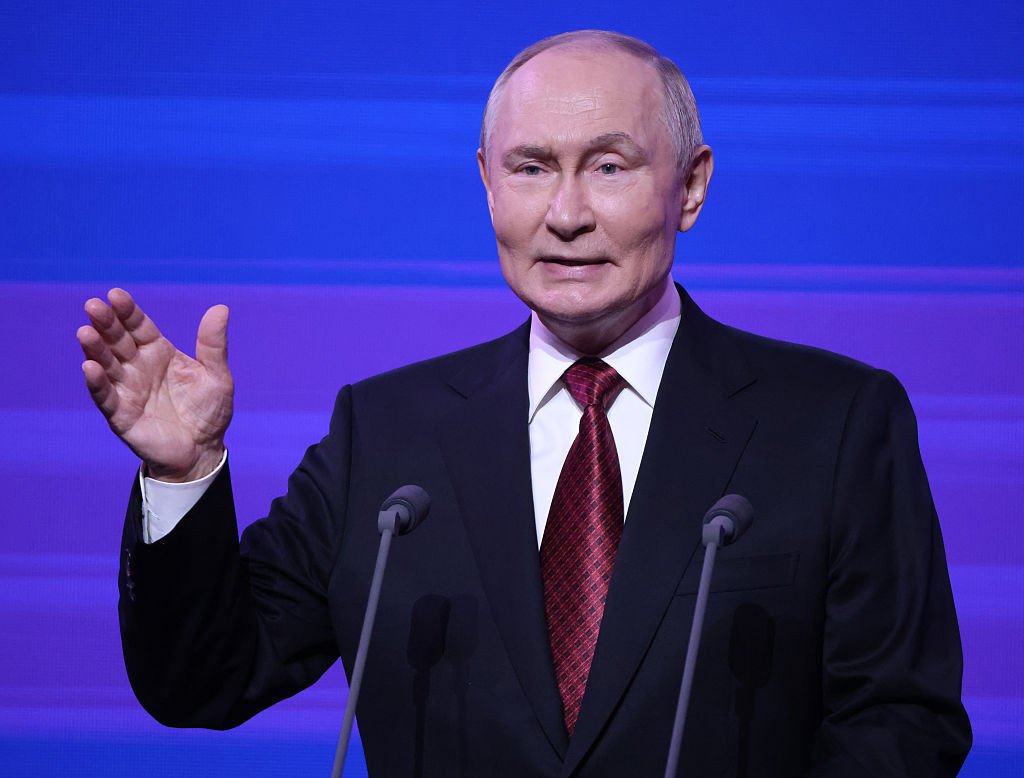
Putin calls them “security guarantees.” In practice, they mean: a smaller Ukrainian army, a ban on NATO membership, no foreign allies on Ukrainian soil, and recognition of Russia’s territorial seizures. In other words, the aggressor who launched the war now demands that the victim be left defenseless. These “guarantees” would strip Ukraine of sovereignty and reduce it to a Russian satellite.
Even earlier, after the Istanbul talks, Moscow released what it branded a “memorandum of settlement.” In diplomatic practice, a memorandum is a record of mutual understanding—it reflects common ground, outlines agreed principles, and serves as a step toward further negotiation. Russia’s document was the opposite: a unilateral list of surrender demands, from troop withdrawals and recognition of occupied land to NATO renunciation and lifting sanctions. By misusing the term, the Kremlin tried to present an ultimatum as if it were a legitimate agreement—creating the false impression that Ukraine had spurned a genuine peace proposal.
Meanwhile, whenever Moscow suffers setbacks, it also cloaks them in propaganda. The retreat from Kyiv became a “reduction of military activity.” The sinking of the Moskva was a “loss of stability due to hull damage.” Abandoning Snake Island was spun as a “gesture of goodwill.” Russia dresses up failure as magnanimity — and surrender demands as “security guarantees.”
But let’s remember the phrase it all started with.
“Special military operation” vs full-scale invasion
Kilometer-long columns of armored vehicles. Attacks from a dozen directions across all border regions. Hundreds of warplanes in the sky, ballistic and cruise missiles exploding across the entire country.
Looks like a war, doesn’t it? Not to Russia. For them, it is a Special Military Operation — the label they use for their full-scale invasion of Ukraine. The “operation” has lasted three and a half years. Ukraine’s General Staff reported that Russian losses have exceeded one million soldiers. And still, it is “not a war.”
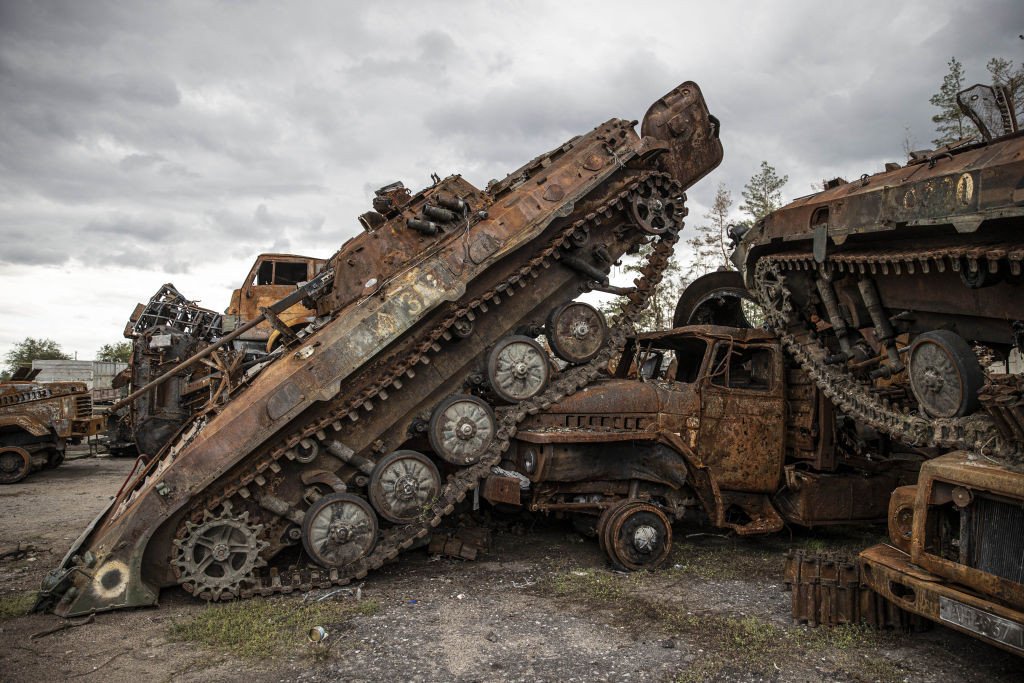
This is not new. In 1939, when the USSR, allied with Nazi Germany, invaded Poland, it called it a “liberation.” The 1968 invasion of Czechoslovakia was “fraternal assistance to the Czechoslovak people.” The war in Afghanistan was merely the “deployment of a limited contingent of Soviet troops.”
The primary goal: avoid the word war and minimize the aggression.
How Russia frames war as diplomacy
“Protection of Russian speakers” as erasing neighbors’ identities
Moscow traditionally cloaks its aggression in claims of “protecting Russian speakers.” Yet those people never asked for it, and the cities supposedly “protected” end up reduced to rubble.
Another side of this “protection” is the repression of national identity: arrests for displaying Ukrainian flags, closure of Ukrainian schools, bans on books, and punishment for speaking one’s native language. Behind the phrase lies an effort to erase cultural identity altogether.
This has long been Russia’s pattern — in the Baltics, in Moldova, in Ukraine — not only in recent years, but for centuries. Under the guise of caring for Russian speakers, the Kremlin pushes its imperial model: Russian as the only acceptable language, a “shared history” instead of national memory, “brotherly peoples” instead of independent nations. “Protection” becomes a pretext for domination and control.
“Humanitarian corridors” as abduction routes
The world first heard of “humanitarian corridors” in Ukraine during the siege of Mariupol. Russia promised civilians a safe path to Ukrainian-controlled territory. But once the evacuation began, the Russians broke their promise and resumed air attacks. Similar tragedies occurred in other regions under attack.
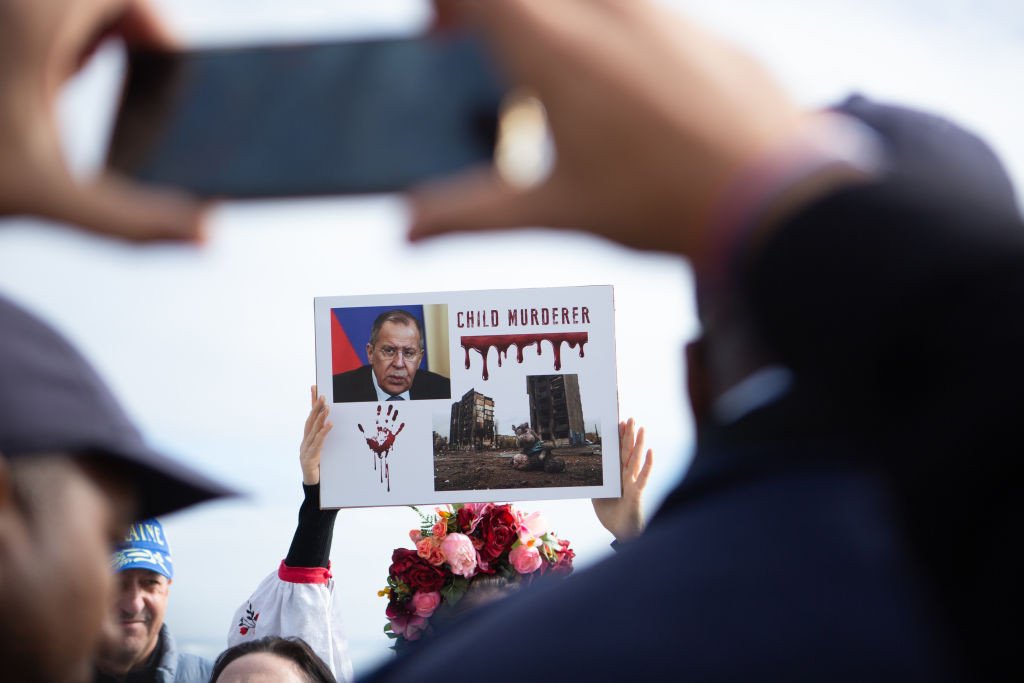
Later, Russians began calling something else “humanitarian corridors”—the forced relocation of Ukrainian civilians deeper into Russia. Along the way, people endured humiliating interrogations and so-called “filtration.” The Ukrainian organization Bring Kids Back has documented 20,000 reports of illegal deportations and forced transfers of children.
Political manipulation through language
“Referendums” to cover staged votes
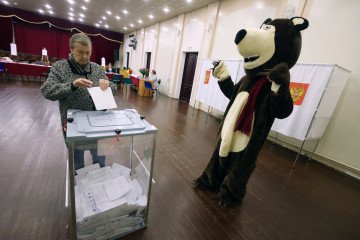
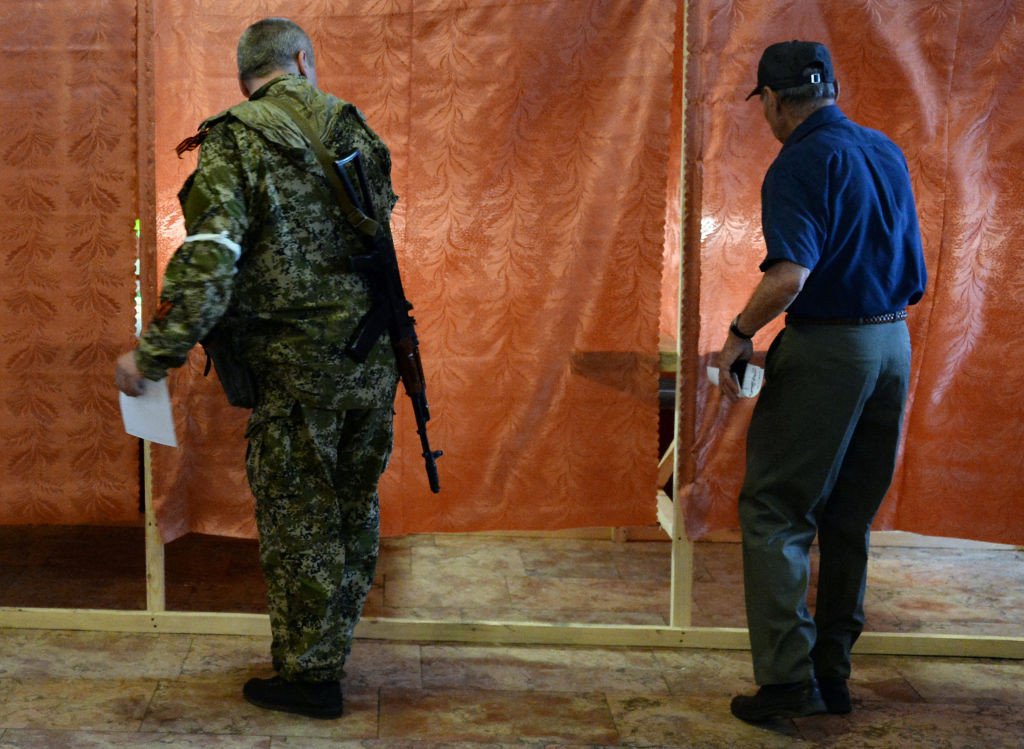
Ballots and boxes under the barrels of rifles, “observers” from fringe groups, and results pre-determined in advance—that is what Russian “referendums” look like. The outcome never changes: over 90% allegedly vote for “joining Russia.”
Such “votes” took place in Crimea in 2014, in eastern Ukraine, and after the full-scale invasion in the Kherson and Zaporizhzhia regions. Their sole purpose: to create a paper-thin illusion of “legitimacy” to cover plain occupation.
“Multipolar world” as empire rhetoric
At a recent meeting of the Shanghai Cooperation Organization, China, India, and Russia enthusiastically discussed the idea of a so-called multipolar world. The notion of its necessity was even written into the event’s final declaration.
But what lies behind the Russian officials' mantra? In their view, the global order—where Western democratic values are prioritized—must change. In a multipolar world, there would be several centers of power and influence: the United States, China, and, of course, Russia—at least in the Kremlin’s imagination.
This rhetoric distracts from Russia’s actual place in the world. In 2024, the country fell out of the world’s top ten economies, dropping to 11th place. By GDP per capita, Russia ranks 71st globally.
Moscow’s talk of multipolarity hides its desire to control neighboring states. Ukraine, Poland, Moldova—and others once under the communist bloc—declared independence and embraced democracy decades ago. The Kremlin’s “multipolar world” is merely an attempt to resurrect the USSR and excuse the invasion. No wonder Putin once called the Soviet collapse the “greatest geopolitical catastrophe of the century.”
Long ago, a humorous test in the US and UK summed up obvious truths: “If it looks like a duck, swims like a duck, and quacks like a duck, then it probably is a duck.”
Discuss this article:
-72b63a4e0c8c475ad81fe3eed3f63729.jpeg "Photo of Cyril Barabaltchouk")