- Category
- Latest news
Russia Found Responsible by ECHR for Systematic Rights Violations in Occupied Georgian Regions
 Prefer U24 Media on Google
- Authors


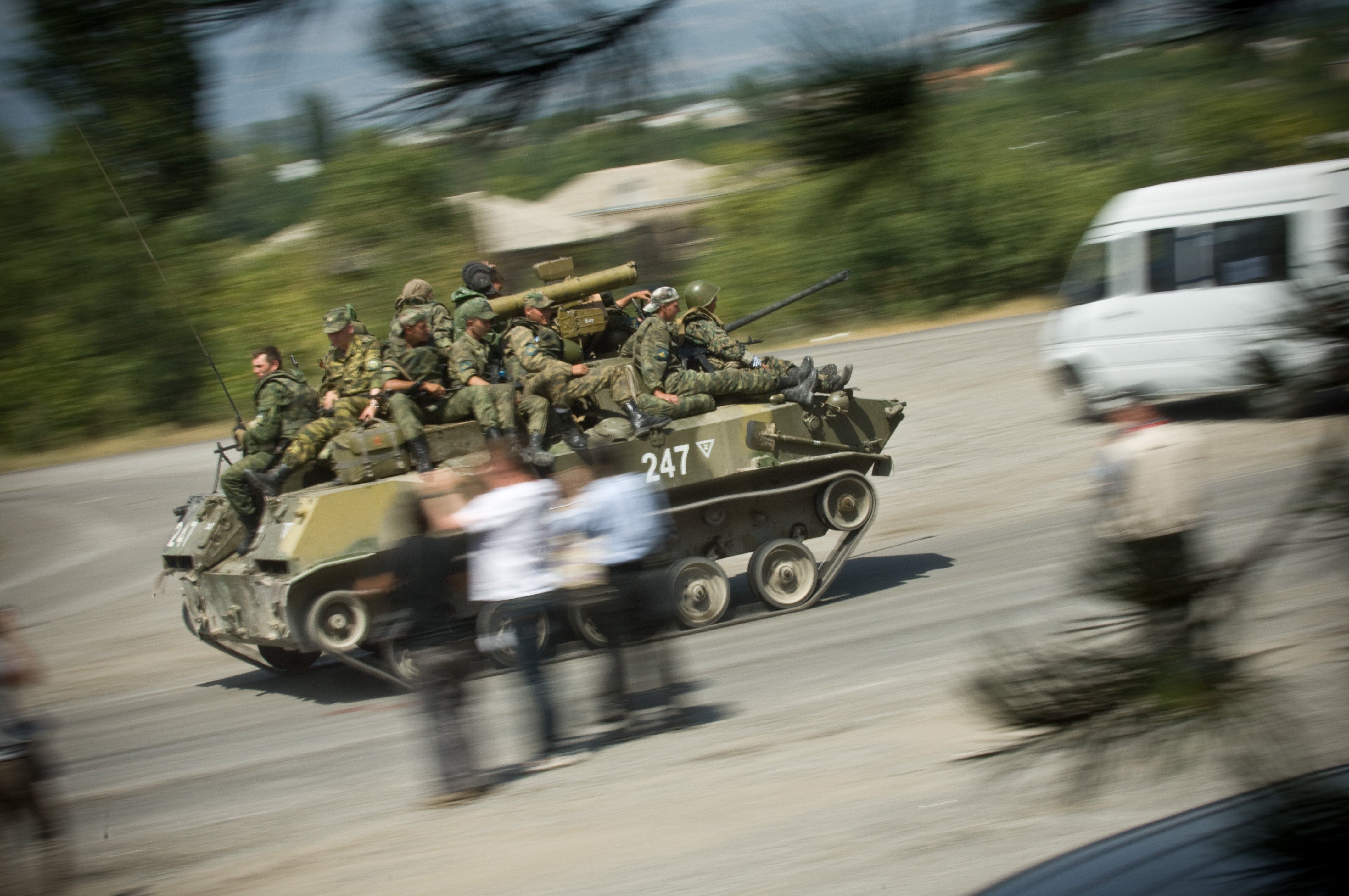
The European Court of Human Rights (ECHR) has ruled that Russia must pay Georgia $278 million in compensation for human rights violations linked to “borderization” following the 2008 war, according to the Moscow Times on October 14.
The funds are intended for around 29,000 people affected by barriers built between Georgia and its breakaway regions of Abkhazia and South Ossetia. Russian military personnel were involved in constructing metal fences topped with barbed wire along the Georgian administrative boundaries, which Tbilisi refers to as the “occupation line.”
The ruling in the case Georgia v. Russia (IV) was issued in April 2024, and on October 14 the ECHR confirmed that Russia must pay Georgia $278 million in compensation. The court cited systematic human rights violations by Russia under the European Convention on Human Rights, including unlawful detentions at the border, excessive use of force, mistreatment, restrictions on freedom of movement, and limits on access to homes, land, and education in the Georgian language.
According to the Moscow Times, in two other cases, the ECHR ordered Russia to pay up to $143 million for widespread human rights violations during and after the 2008 war, and up to $11 million for the mass deportation of ethnic Georgians and other rights violations.
Russia has stopped implementing ECHR rulings issued after March 15, 2022, following its expulsion from the Council of Europe over its invasion of Ukraine. However, the court notes this rule applies only to events occurring after September 16, 2022, when Russia formally ceased being a party to the European Convention on Human Rights.
Abkhazia and South Ossetia declared independence in the early 1990s. For more than 15 years, no UN member state recognized them. After Georgia attempted to restore control over South Ossetia in August 2008, Russia used it as a pretext to launch a military intervention. Following the five-day conflict, Russia unilaterally recognized the independence of both regions—an internationally condemned move that was only later echoed by a handful of allies, including Venezuela, Nicaragua, Nauru, and Syria.
The Moscow times noted that while neither territory is officially part of Russia, Moscow maintains significant political, military, and economic influence. Russian military bases are present, residents receive Russian passports, and the ruble is widely used. Both regions rely heavily on Russian subsidies to fund their budgets.
The Moscow Times also highlights that authorities in Abkhazia have signaled a willingness to deepen ties with Russia and Belarus through the Union State, effectively undermining their claimed “formal independence.” Meanwhile, South Ossetia even considered holding a referendum to formally join Russia following the outbreak of the war in Ukraine—though the plan was later shelved, it underscored Moscow’s ongoing efforts to expand its control over breakaway regions.
Earlier, it was reported that Georgian riot police used water cannons and pepper spray to disperse protesters outside the presidential palace in Tbilisi late on October 4, detaining several opposition figures following clashes that erupted during local elections.
Discuss this article:

-111f0e5095e02c02446ffed57bfb0ab1.jpeg "Photo of Roman Kohanets")


-72b63a4e0c8c475ad81fe3eed3f63729.jpeg "Photo of Cyril Barabaltchouk")