- Category
- Latest news
Russian Forces Deploy Artificial Trees to Mask Antennas From Ukrainian Drones
 Prefer U24 Media on Google
- Authors


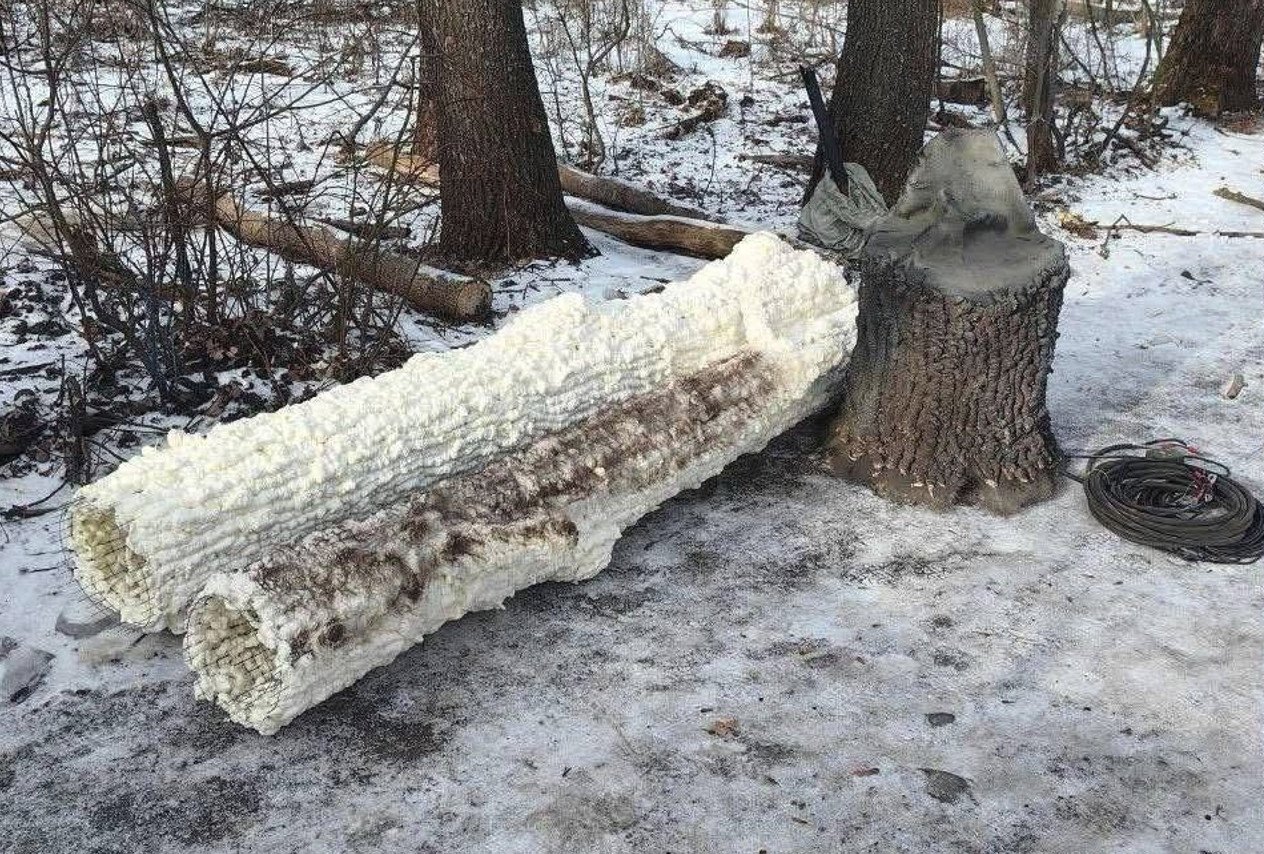
Russian military units have begun deploying specialized decoys designed to look like trees and logs to mask communication antennas from Ukrainian aerial reconnaissance.
According to Ukrainian radio technology expert Serhii “Flash” Beskrestnov on March 2, these measures aim to protect critical signal equipment from FPV drones and artillery strikes.
We bring you stories from the ground. Your support keeps our team in the field.
The manufacturing process for these camouflage structures involves low-cost industrial materials. The foundation of the decoy is a plastic mesh frame shaped into a cylinder or a more complex structure resembling a trunk and branches.
The assembly process follows several stages where plastic mesh is used to create the volume and silhouette of a tree, followed by a coating of polyurethane expanding foam to provide rigidity and a bark-like texture. Finally, the exterior is painted to match the specific colors and patterns of the local landscape.
Inside these hollow structures, Russian forces install communication antennas with the primary objective of deceiving Ukrainian drone pilots who may overlook the objects as natural elements of the environment.
The shift toward more sophisticated masking techniques follows recent disruptions in Russian battlefield communications. According to Serhii Beskrestnov, a specialist in radio technologies and advisor to the Ministry of Defense of Ukraine, the move to these decoys coincided with efforts to find alternatives to previously used satellite systems.
Beskrestnov noted that the detection and destruction of Electronic Warfare (EW), Electronic Intelligence (ELINT), and UAV control stations remain a top priority on the frontlines.
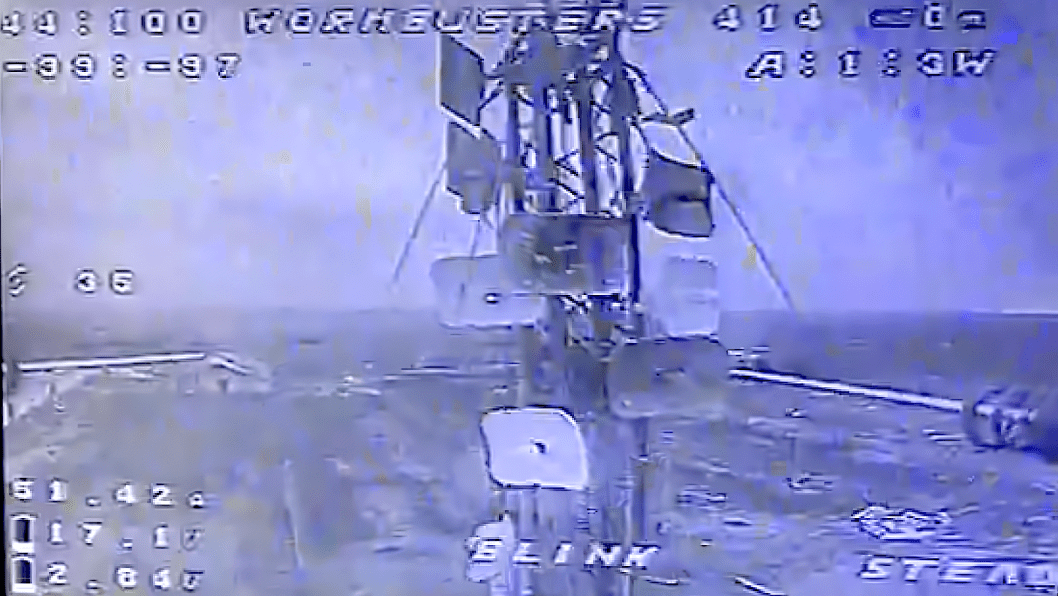
“And all of this is united by ANTENNAS, which are difficult to hide from the experienced eye of aerial reconnaissance. Look what our enemy has come up with. Inside is a plastic mesh as a base,” Beskrestnov stated on his Telegram channel, providing visual evidence of the artificial logs and trunks.
Earlier, Russia began testing a high-altitude “Barrazh-1” stratospheric balloon to relay communications after facing tighter Starlink restrictions in occupied territories, according to Defense Express. However, dominant west-to-east wind patterns over Ukraine could significantly limit the platform’s ability to remain positioned over Ukrainian territory.
Discuss this article:
-4a56a6b482ec132402c16ef6fcabf9a2.png)