- Category
- Latest news
Russian Geran-2 Drones Are Assembled Almost Entirely From Foreign-Made Parts
 Prefer U24 Media on Google
- Authors

-c439b7bd9030ecf9d5a4287dc361ba31.jpg "Photo of Katherina Popilnichenko")
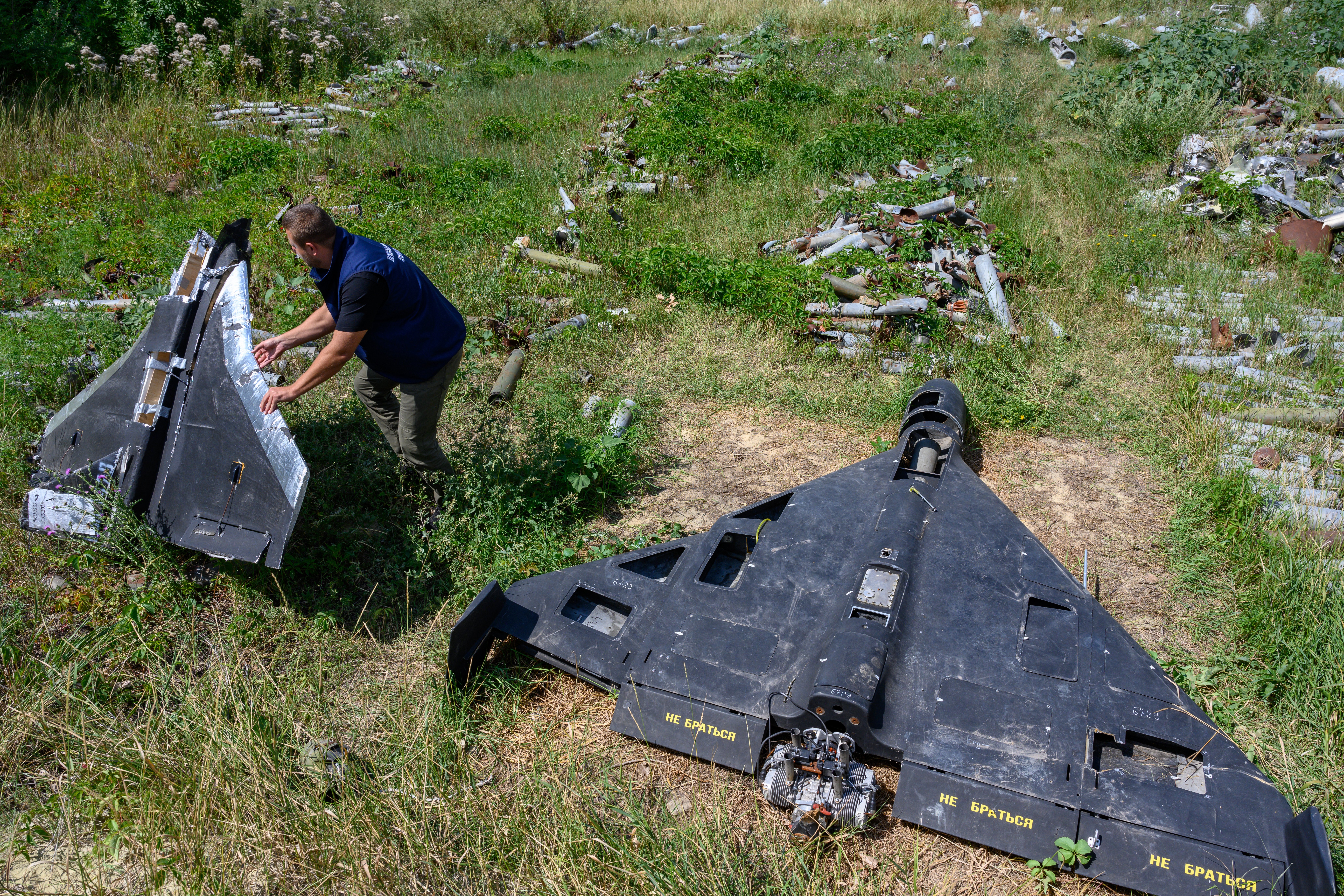
Russia’s Geran-2 attack drones, also known as Shaheds, are constructed almost entirely from foreign components manufactured in the West and East.
Despite strict international sanctions imposed on Russia, the majority of the parts found in these drones originate from companies based in the United States, China, and Europe, according to the Organized Crime and Corruption Reporting Project (OCCRP) on February 18.
We bring you stories from the ground. Your support keeps our team in the field.
Journalists identified hundreds of specific parts used in the assembly of these unmanned aerial vehicles. Out of the vast number of components analyzed, only a few dozen were found to be of Russian origin. The foreign-made hardware includes essential items such as microchips, receivers, transistors, diodes, antennas, and fuel pumps.
The report highlights that approximately 20 European companies produce over 100 of the identified components. Although the European Union officially prohibits the direct export of much of this technology to Russia, trade data suggests these restrictions are being bypassed.
Information from the Import Genius platform shows that at least 672 shipments of sanctioned European-produced components were sent to Russia between January 2024 and March 2025.
These deliveries were carried out by 178 different companies, mostly registered in China and Hong Kong. The investigation found no evidence that the European manufacturers themselves were violating sanctions laws or exporting directly to Russia.
After reviewing photos of the components, REMA Group and Diotec Semiconductor stated that the parts shown were not their products. Additionally, trade data did not contain specific records regarding shipments of sanctioned components produced by AMS Osram Group, Robert Bosch, REMA Group, Pierburg, or Complex Automotive Bearings.
The company u-blox provided a statement outlining several ways its components might end up in Russian hardware.
The company suggested they could be “purchased before the introduction of sanctions, resold from excess inventory through brokers in countries that have not joined the sanctions, smuggled, or dismantled from civilian products for further integration into drones.”

Recent reports indicate that despite ongoing sanctions, German parts continue to be found in Russian drones, with some estimates suggesting their numbers could reach hundreds of thousands.
According to Ukrainian military intelligence, the majority of foreign components found in Russian military equipment come from the US and China, while 137 specific types of parts were identified as being of German origin.
More than half of these German parts were discovered in drones, while the remainder were found in missiles, radar stations, military vehicles, and helicopters.
Earlier, Ukrainian forces struck a Russian S-300VM air defense missile system launcher near occupied Mariupol, along with drone control points, a workshop, and various concentrations of military equipment and personnel across the Zaporizhzhia and Donetsk regions during Russia’s full-scale invasion of Ukraine.
Discuss this article:


-111f0e5095e02c02446ffed57bfb0ab1.jpeg "Photo of Roman Kohanets")