- Category
- Latest news
Russian Spy Satellite “Luch” Destroyed by Space Debris, Analysts Say
 Prefer U24 Media on Google
- Authors


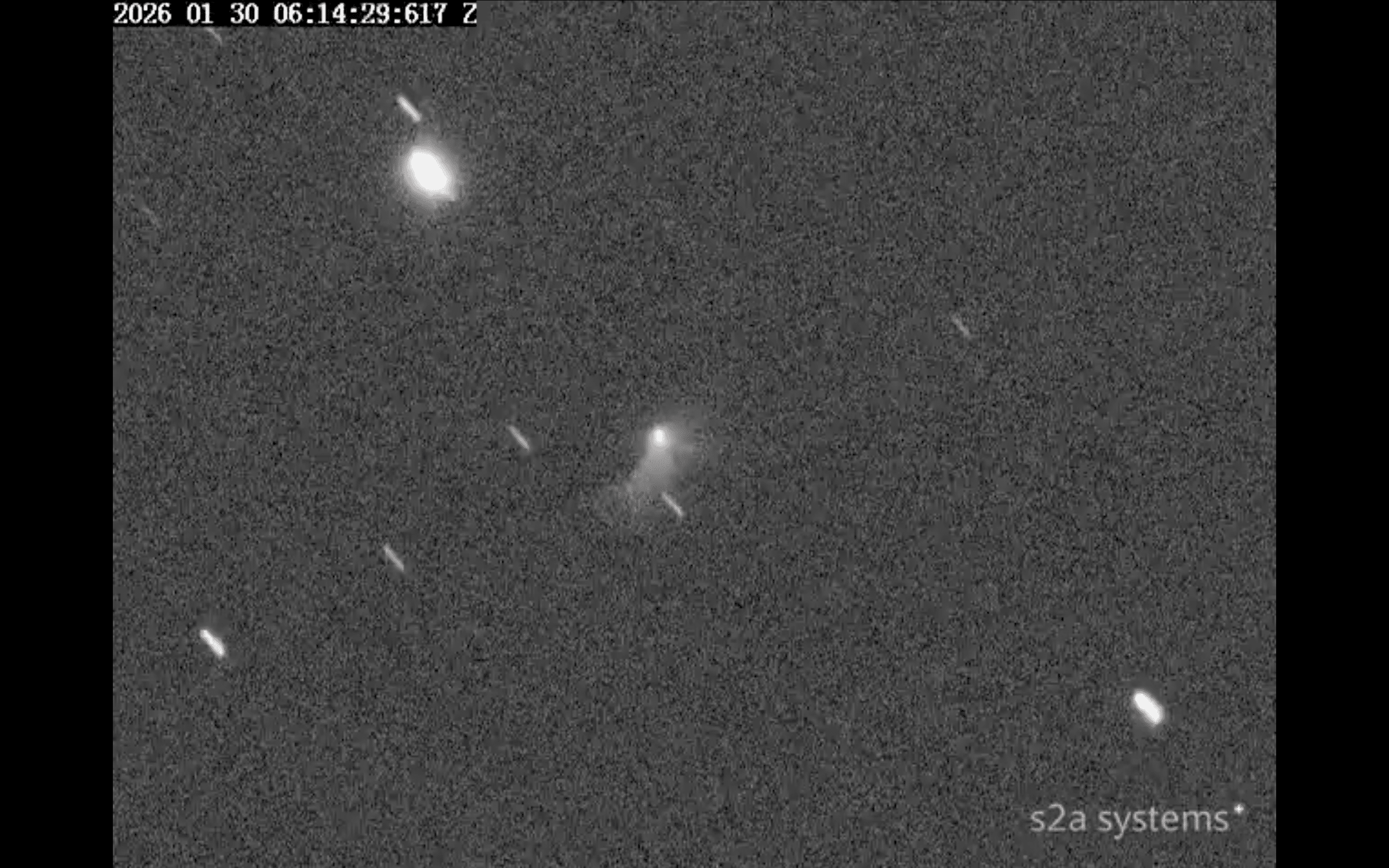
A Russian satellite identified by Western analysts as a signals intelligence platform was completely destroyed following a collision with orbital debris, according to Swiss space monitoring firm S2A Systems.
On January 30, the satellite—officially named Luch and registered under NORAD ID 40258—broke apart on a graveyard orbit, a zone typically reserved for decommissioned satellites.
A short time lapse of the fragmentation event on LUCH (OLYMP) #40258 that took place today, 2026-01-30 from 06:09:03.486 UTC. pic.twitter.com/0bwbNvlnCL
— s2a systems (@s2a_systems) January 30, 2026
The fragmentation was observed by S2A Systems and is believed to have been caused by accidental contact with space debris. It remains unclear whether the event was accidental or involved a deliberate action.
Originally launched in September 2014, the Luch satellite has long attracted attention from military and commercial spacewatchers due to its maneuvering patterns. Unlike the Luch-5 series used for commercial communications, this satellite frequently repositioned itself along the geostationary belt, occasionally approaching other nations’ satellites.
In 2015, the satellite maneuvered between two Intelsat communications satellites, prompting a formal protest from the United States. Three years later, then-French Armed Forces Minister Florence Parly publicly accused Russia of attempting to intercept secure signals when Luch moved close to the French-Italian military satellite Athena-Fidus.
Over the years, multiple open-source assessments and Western defense officials have associated the satellite with Russia’s Federal Security Service (FSB), describing it as part of Moscow’s broader electronic intelligence efforts.
Earlier, in 2024, the Russian military satellite Kosmos-2553—believed by US officials to support nuclear anti-satellite research—reportedly began tumbling out of control. According to Reuters, space-tracking firms including LeoLabs and Slingshot Aerospace observed irregular movements and fluctuations in brightness, raising concerns about its role in Moscow’s potential development of space-based nuclear capabilities.
Discuss this article:
-4a56a6b482ec132402c16ef6fcabf9a2.png)


-c439b7bd9030ecf9d5a4287dc361ba31.jpg "Photo of Katherina Popilnichenko")