- Category
- Latest news
Russian Spy Ship Busted Red-Handed Launching Drone at French Aircraft Carrier
 Prefer U24 Media on Google
- Authors


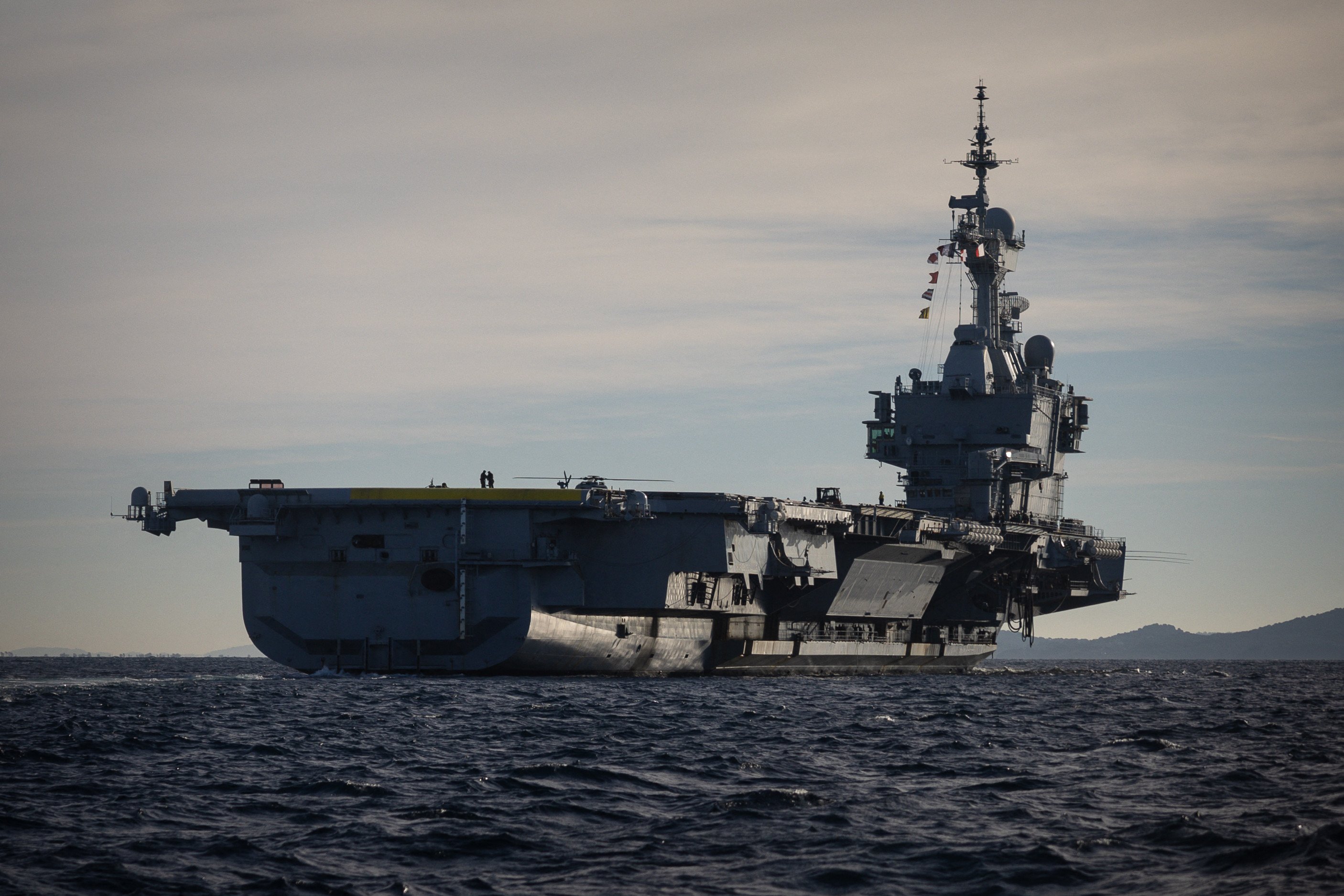
Following the recent interception of a Russian unmanned aerial vehicle (UAV) in the port of Malmö, the Swedish Ministry of Defense has released specific operational details regarding the failed surveillance mission against the French aircraft carrier Charles de Gaulle.
We bring you stories from the ground. Your support keeps our team in the field.
According to Reuters, the drone was launched from the Russian Baltic Fleet’s reconnaissance vessel Zhigulevsk (Project 503R) while it was maneuvering in the Baltic Sea.
The Swedish patrol boat HSwMS Rapp, a Tapper-class vessel, had been tracking the Zhigulevsk prior to the drone’s deployment.
According to Defense Express, the Swedish crew was able to document the exact moment of the UAV’s launch, providing visual and technical evidence that the surveillance attempt originated from the Russian naval asset.
-262174cb132ab56bf95996579933859e.jpg)
While Swedish officials have not disclosed whether the drone was downed kinetically or via electronic warfare (EW), Vice Admiral Ewa Skoog Haslum confirmed that the spy equipment was fully neutralized upon approaching the French flagship.
“We monitored this vessel during its transit and were able to promptly take countermeasures when the drone was detected,” Vice Admiral Haslum stated, according to Defense Express.
The role of modernized Swedish assets
According to Reuters, the successful interception highlights the 2020 modernization of Sweden’s Tapper-class fast patrol boats.
These vessels, which were nearly decommissioned in 2014, were upgraded with advanced sensors specifically designed to detect small-scale reconnaissance drones even when operating in radio-silence mode.
The Swedish Armed Forces can now confirm, based on technical data, that an unauthorized drone was launched from the Russian signals intelligence vessel Zhigulevsk. The incident occurred near the French aircraft carrier Charles de Gaulle during its visit in Malmö. (1/2) pic.twitter.com/uIlfNZHUa7
— Pål Jonson (@PlJonson) February 27, 2026
The Swedish Defense Minister, Pål Jonson, confirmed on February 27, 2026, via social media that technical analysis verified the drone’s Russian origin.
According to Defense Express, the Zhigulevsk is part of the 72nd Separate Division of Special Purpose Ships and regularly conducts intelligence-gathering missions in the Baltic region.
Strategic consequences
The incident has resulted in the following developments:
Intelligence analysis: NATO specialists are currently examining the recovered technical data and the drone’s hardware to assess Russian surveillance capabilities;
Heightened surveillance: following the breach, Baltic Sea nations have further intensified their maritime and coastal monitoring;
Operational security: the Charles de Gaulle has continued its scheduled participation in strategic exercises under a reinforced security umbrella.
According to Reuters, the failure of the Russian operation reflects the high level of NATO naval readiness in the Baltic Sea.

Earlier, on February 4, Financial Times reported that Russian Luch-1 and Luch-2 satellites likely hijacked unencrypted signals from over a dozen European spacecraft. German military space command told Financial Times that these maneuvers targeted sensitive government and military data, warning that Russia could potentially spoof commands to deorbit or crash older, unencrypted satellites.
Discuss this article:



-72b63a4e0c8c475ad81fe3eed3f63729.jpeg "Photo of Cyril Barabaltchouk")