- Category
- Latest news
Russia’s Answer to Ukrainian Drones? Soldiers Shelter in Bizarre Vertical Pods
 Prefer U24 Media on Google
- Authors


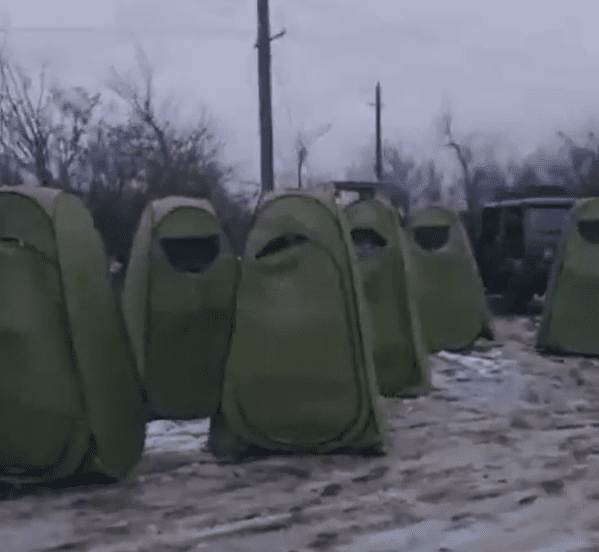
Photos and videos circulating online appear to show groups of Russian soldiers using unusual individual shelters resembling vertical “capsules,” according to footage shared by the OSINT account Status-6 (War & Military News) on January 12.
We bring you stories from the ground. Your support keeps our team in the field.
Based on the available imagery, the structures do not appear to be conventional living tents. Instead, they resemble camouflage enclosures likely intended to reduce both visual and thermal signatures, according to analysis by Ukrainian military outlet Militarnyi.
The shelters fully conceal a soldier’s body, leaving only a small opening for limited observation. Such a design could reduce the likelihood of detection by Ukrainian FPV strike drones or thermal imaging sensors mounted on reconnaissance UAVs.
No, the alien invasion hasn't just begun.
— Status-6 (War & Military News) (@Archer83Able) January 12, 2026
These are Russian soldiers wearing "body tents," presumably destined for reducing heat signature. pic.twitter.com/r95wV6XC3n
The appearance of these shelters suggests an attempt by Russian forces to adapt to rising losses caused by Ukrainian drone attacks, which increasingly dominate the battlefield. However, the design comes with significant trade-offs. While concealment may improve, the enclosed structures sharply restrict mobility and situational awareness, leaving soldiers with limited ability to react to sudden threats.
The shelters have been observed deployed in clusters, which may indicate efforts to establish concealed waiting positions or improvised ambush points rather than permanent defensive positions.
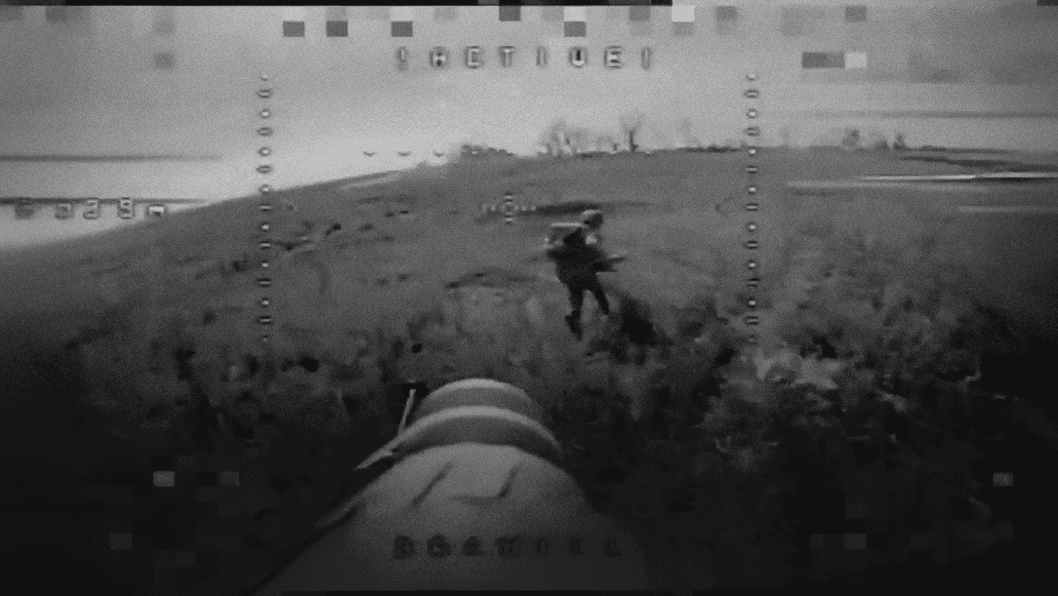
Despite their unusual appearance, the “capsules” highlight a broader and more serious challenge facing Russian forces: the growing inability to find effective cover from aerial surveillance and FPV drones. Traditional field fortifications have proven increasingly vulnerable to overhead detection and precision strikes.
Some observers speculate that the shelters may be improvised from commercially available portable shower or toilet tents, repurposed for battlefield use. However, it remains unclear how effective these makeshift enclosures are at masking heat signatures from modern thermal imaging systems.
Earlier, Ukrainian company Ptashka Drones released footage showing combat strikes carried out by fiber-optic–guided FPV drones with a claimed operational range of up to 50 kilometers.
Discuss this article:
-9bd5e1532102621f8fb1c4ba871a3171.png)


-c439b7bd9030ecf9d5a4287dc361ba31.jpg "Photo of Katherina Popilnichenko")