- Category
- Latest news
Russia’s “Doomsday Radio” UVB-76 Goes Silent After Drone Strike Hits Power Grid
 Prefer U24 Media on Google
- Authors


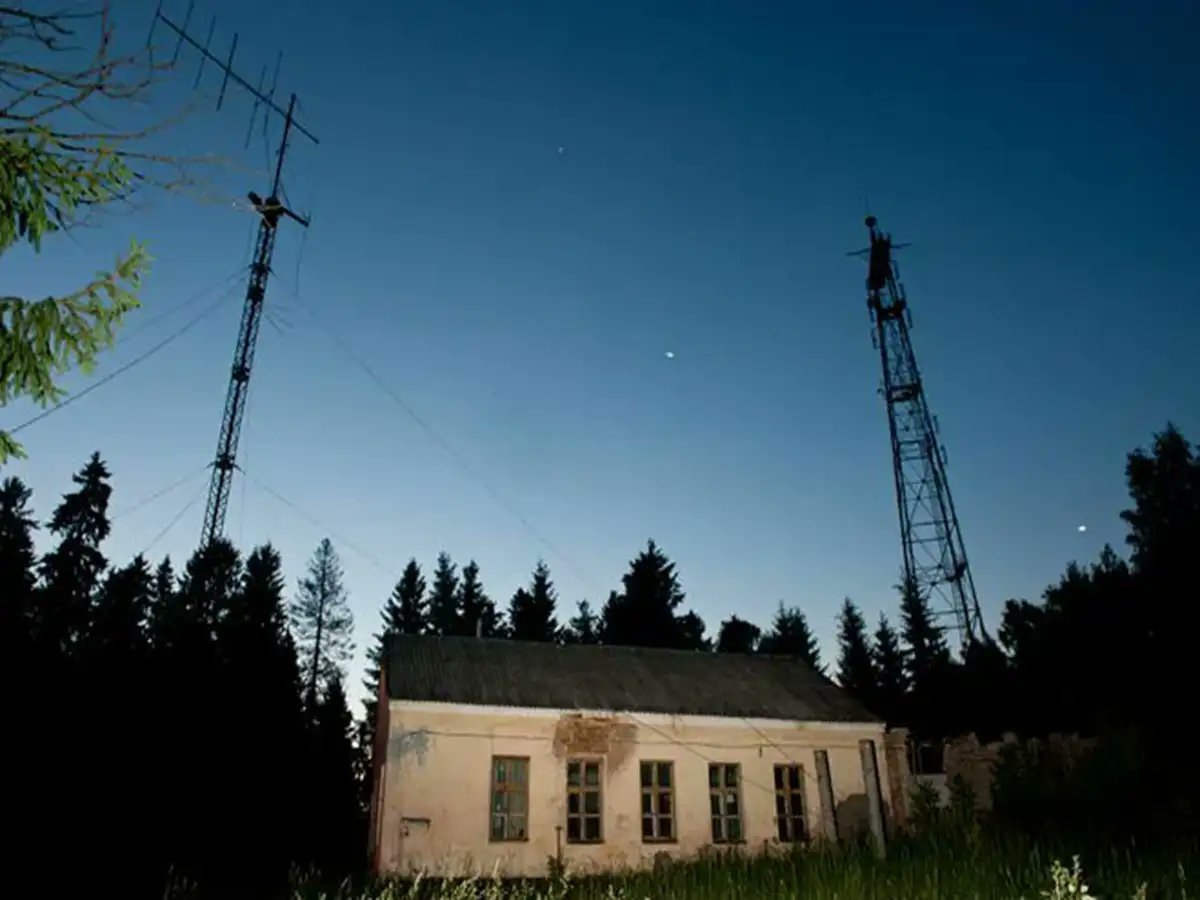
Broadcasts from one of Russia’s most enigmatic military radio stations—UVB-76, better known to shortwave listeners as “the buzzler”—were temporarily cut off after a reported drone strike disabled a nearby power substation, Russian state media RIA Novosti reported on November 14.
According to the Telegram channel UVB-76 Efir, which monitors the frequency, “The broadcasts will be temporarily suspended. The problem is a power outage resulting from a UAV strike on the substation.” The brief outage is unusual for a station that has transmitted almost continuously for half a century.
🇷🇺The infamous Cold War-era vodka-powered radio signal "The Buzzer UVB-76" loud and clear in 🇮🇹Milan at 01:06 UTC November 2, 2025 4625kHz pic.twitter.com/2M8bIdM0G2
— Shortwave Observer (@shortwave78) November 2, 2025
UVB-76 has been broadcasting a repetitive, low-frequency buzzing tone on 4625 kHz since the mid-1970s. The sound pulses roughly 25 times per minute, interrupted only occasionally by voice messages that read out coded phrases in the Russian phonetic alphabet—such as “NJT I 55439 Lesoled 6302 3118.”
Because the broadcast rarely changes and never explains itself, it has fascinated radio enthusiasts, cryptographers, and intelligence analysts for decades. To most of them, the station’s trademark sound — a monotonous 110 Hz buzz lasting 1.2 seconds, then pausing for two—is instantly recognizable, like a heartbeat echoing across the shortwave bands.
BREAKING: Russia’s UVB-76 “Doomsday Radio” transmits a second cryptic message today.
— Defence Index (@Defence_Index) September 8, 2025
Codewords ‘NZHTI’ and ‘HOTEL’ sent to unknown listeners far from Russia. 👀 pic.twitter.com/2HZObXglTK
Nicknamed “the buzzler” or “the buzzer”, UVB-76 is believed to serve as part of Russia’s strategic military communication network, possibly maintaining an open radio channel between command centers and regional units. Some defense analysts—including those cited by BBC Monitoring—have suggested that UVB-76 could be linked to “Perimetr,” the Soviet-era “Dead Hand” nuclear retaliatory system designed to automatically launch a counterstrike if Russian leadership were destroyed.
Others argue it functions as a readiness or alert channel for military mobilization across the Western Military District, transmitting coded mobilization commands disguised as meaningless words.
The station first gained attention among Western shortwave enthusiasts in the late 1980s, but recordings show it began operation as early as 1975. For decades, it was believed to broadcast from a military site near Povarovo, north of Moscow, until the signal relocated to the Leningrad region in 2010.
Since then, multiple transmitters have been detected, suggesting redundancy and mobility in its setup—a hallmark of military resilience.
“Doomsday” station UVB-76 going wild today pic.twitter.com/eARlGxKBSJ
— krus🪖 (@krus_chiki) June 2, 2025
Despite modern encryption and satellite systems, UVB-76 continues to broadcast its buzzing tone nonstop, which experts see as evidence that it still plays a strategic or psychological role.
Earlier, rocket-powered drones struck the Russian Aerospace Forces’ 40th Command and Measurement Complex, also known as the Center for Deep Space Communications, in the village of Vitino, temporarily occupied Crimea.
Discuss this article:



-c439b7bd9030ecf9d5a4287dc361ba31.jpg "Photo of Katherina Popilnichenko")