- Category
- Latest news
Russia’s Invasion of Ukraine Has Slowed to a Crawl Unseen in Over a Century
 Prefer U24 Media on Google
- Authors


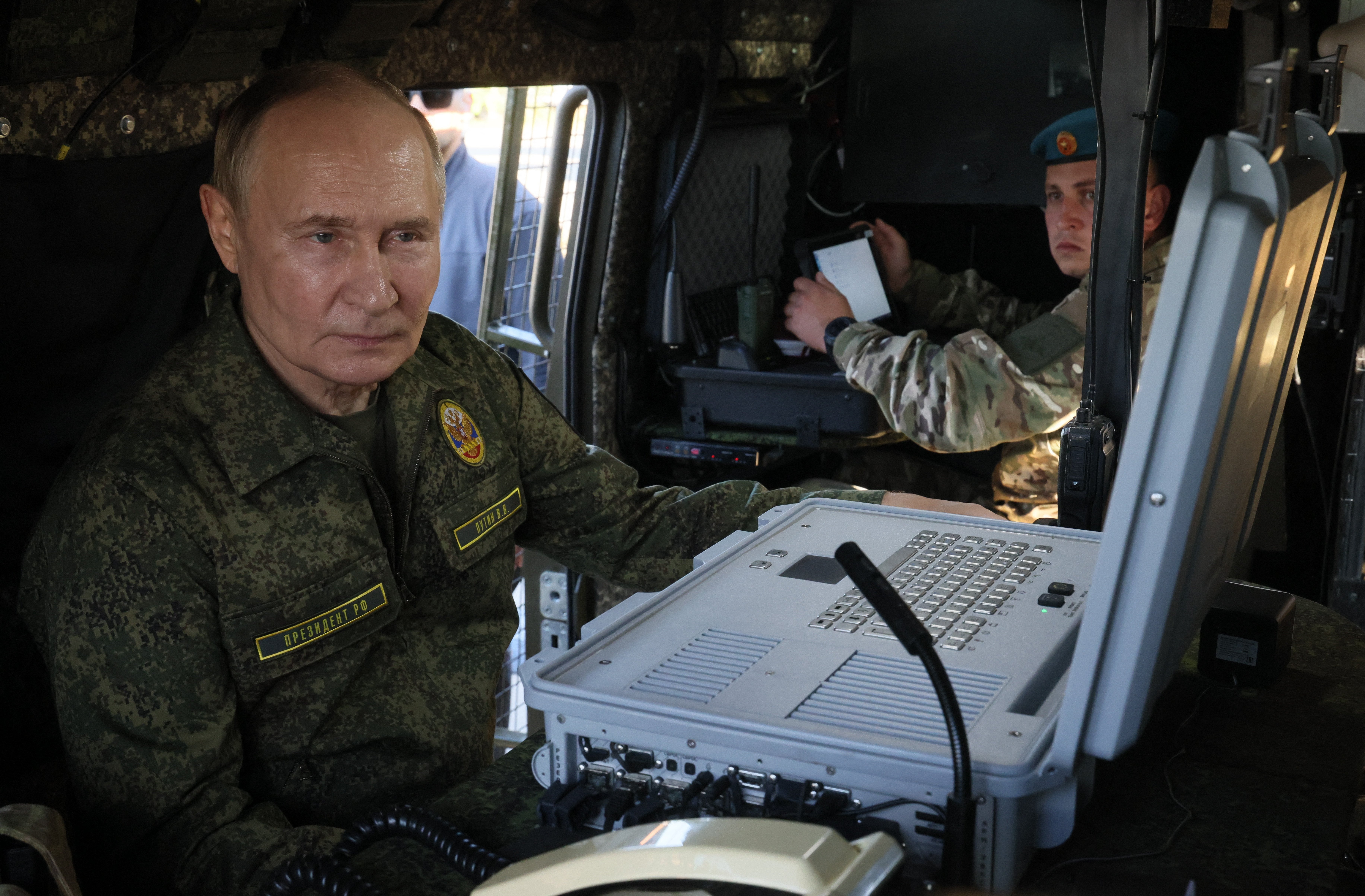
Russia’s ground offensive in Ukraine is advancing at the slowest pace recorded in more than a century of modern warfare, according to a new annual report released by the Washington-based Center for Strategic and International Studies (CSIS) on January 27.
CSIS analysts found that despite sustaining enormous personnel losses—averaging roughly 35,000 casualties per month—Russian forces managed to seize just 0.8% of Ukraine’s territory in 2025 (about 4,831 square kilometers) and 0.6% in 2024 (around 3,604 square kilometers).
We bring you stories from the ground. Your support keeps our team in the field.
On several key axes, the pace of advance was even slower than some of the most notorious trench-bound battles of World War I.
One of the starkest examples cited in the report is the offensive toward Chasiv Yar, which began in February 2024. According to CSIS calculations, Russian forces advanced at an average rate of just 15 meters per day, covering only about 10 kilometers in nearly two years—and still failed to fully capture the city.
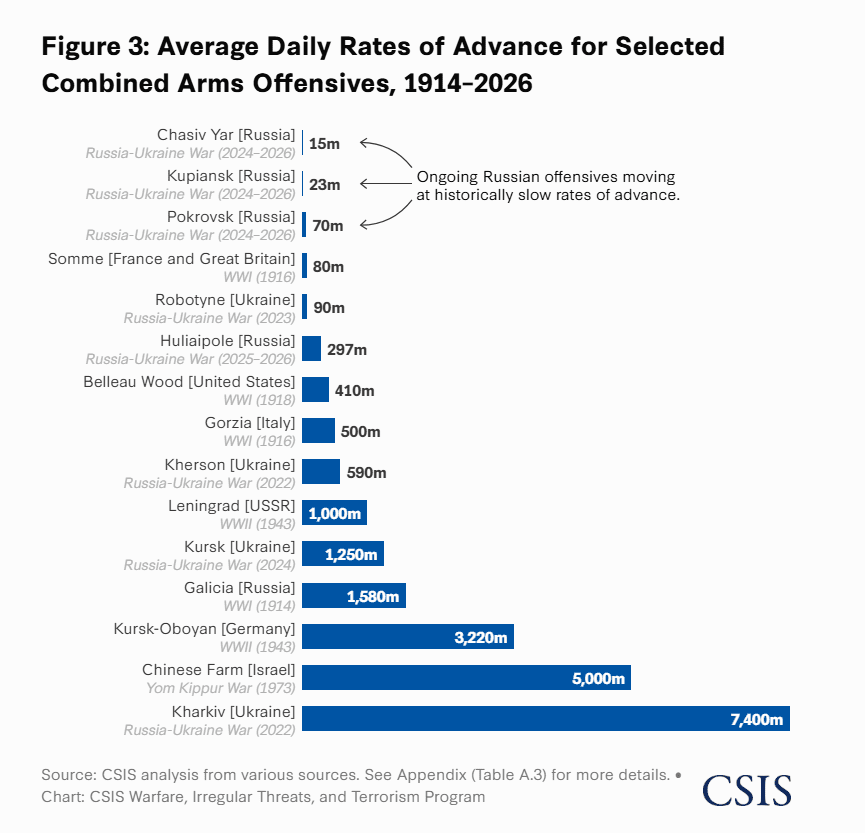
Other axes show similarly glacial progress. The push toward Kupiansk, launched in November 2024, moved at roughly 23 meters per day, while the operation aimed at Pokrovsk, which began after the costly battle for Avdiivka in February 2024, advanced at about 70 meters per day.
After two years and roughly 50 kilometers of movement, Russian forces now control “most of the city,” CSIS noted.
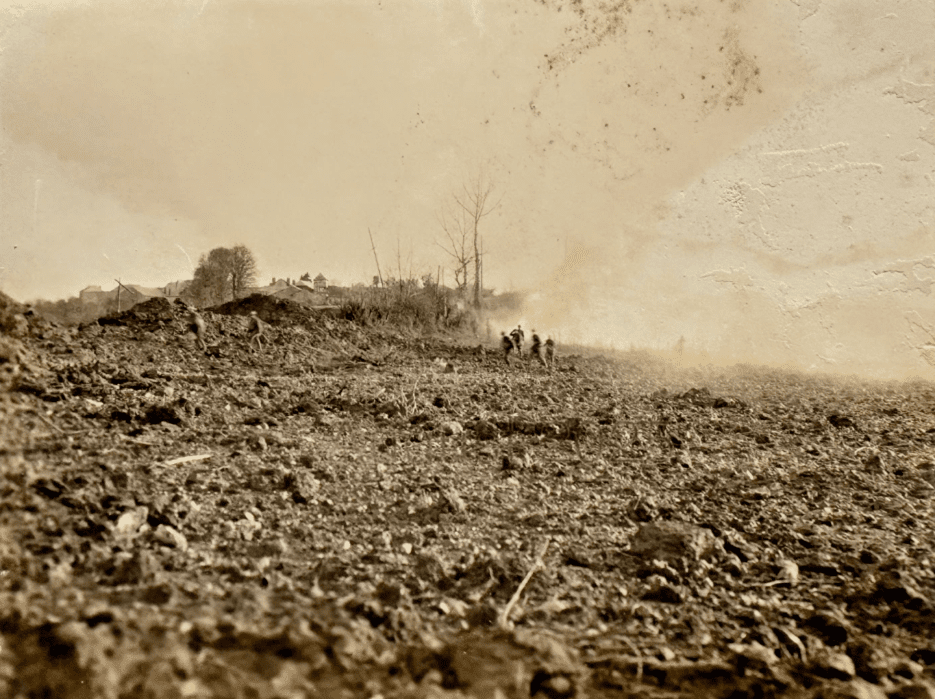
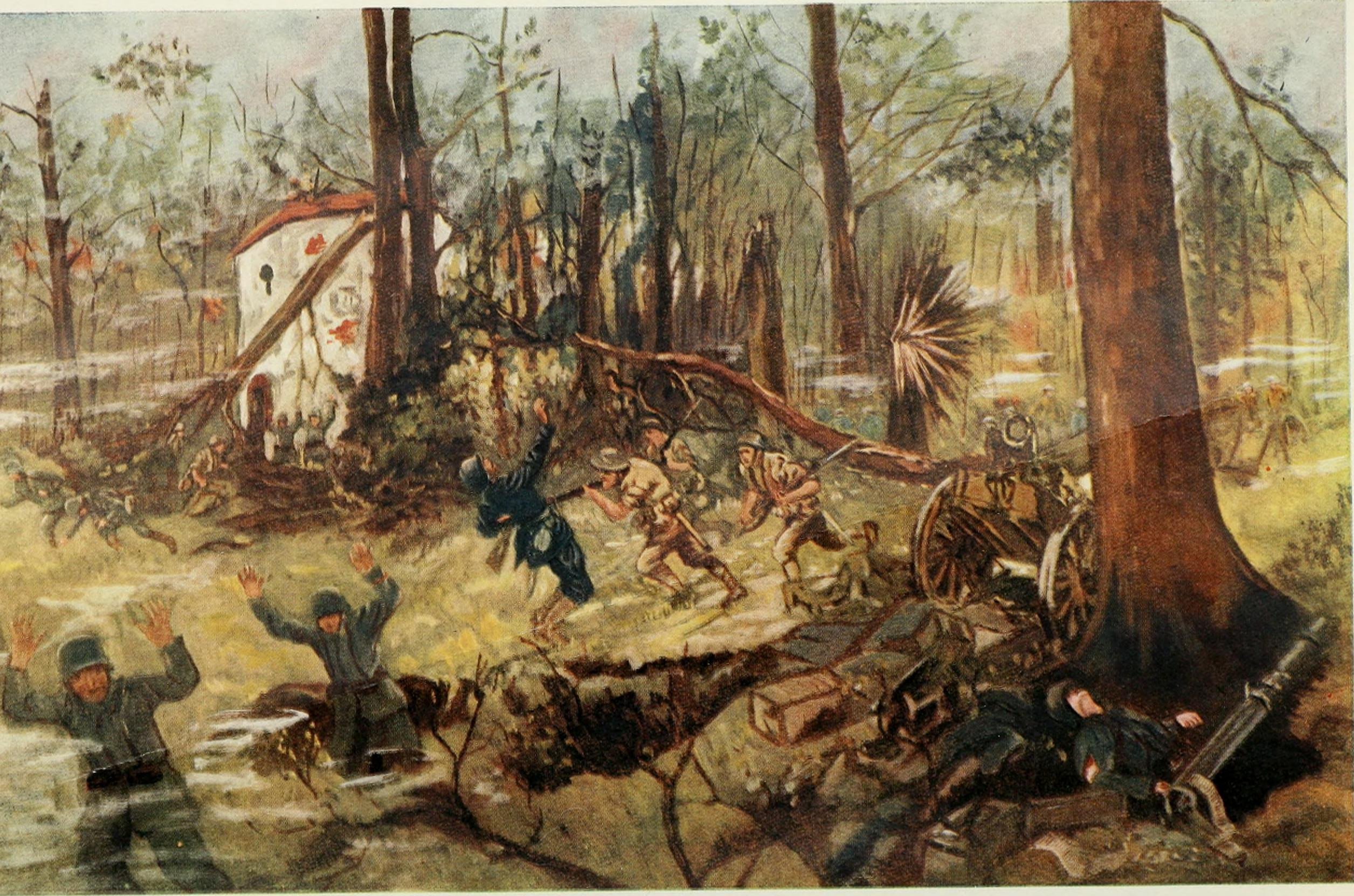
For historical comparison, CSIS pointed out that during the Battle of the Somme in World War I—one of the bloodiest battles in history—French forces advanced at approximately 80 meters per day. During the Battle of Belleau Wood in 1918, when US infantry halted a German offensive, the rate of advance reached 410 meters per day.
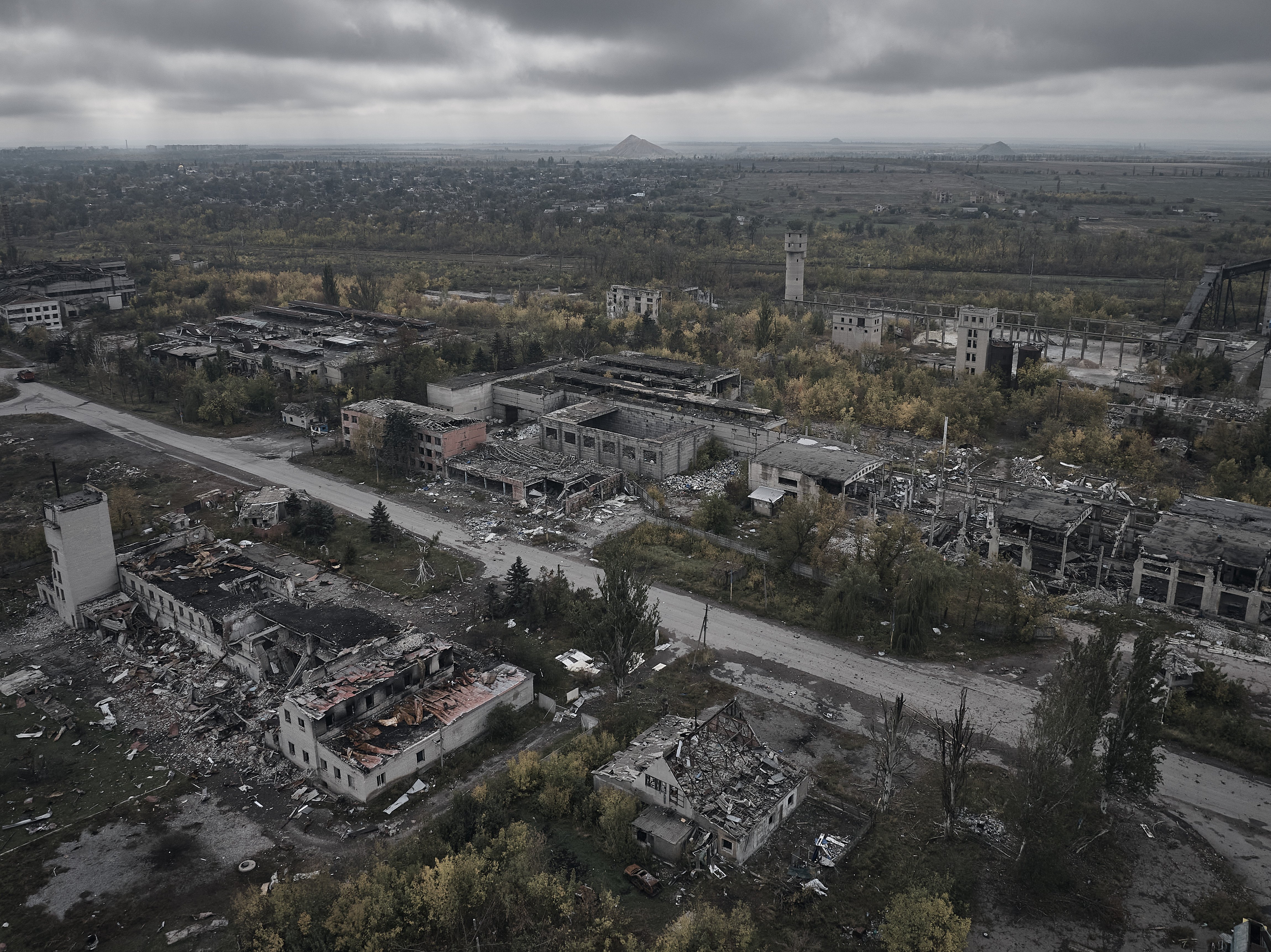
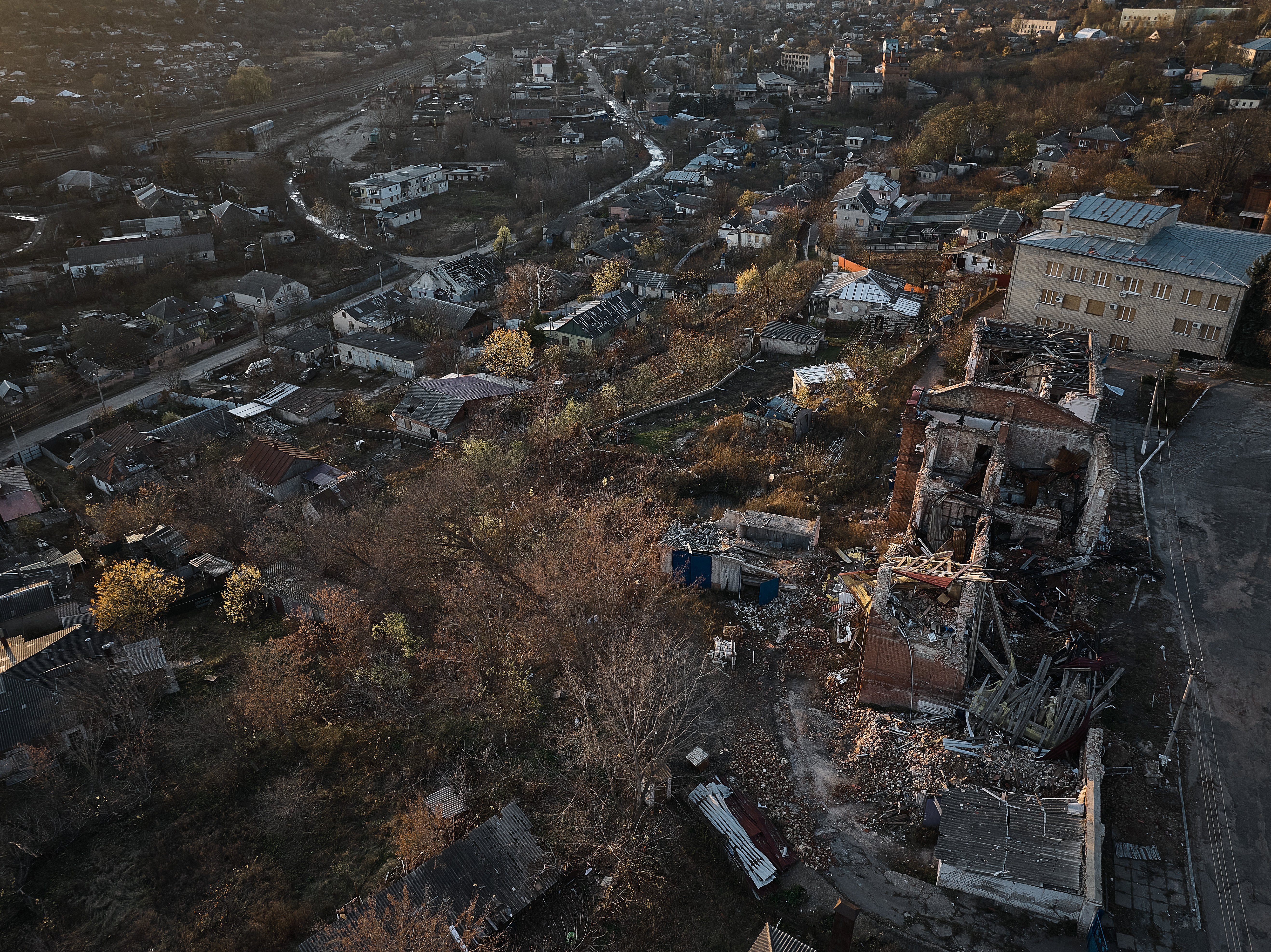
The minimal territorial gains have come at a cost CSIS describes as unprecedented since World War II. From February 2022 through December 2025, Russian forces are estimated to have suffered around 1.2 million casualties, including up to 325,000 killed. Ukrainian losses are assessed at roughly 600,000 casualties, including about 140,000 killed, according to the center’s estimates.
The report characterizes the Russian army’s performance as “weak”, noting that after two years of fighting, it has little to show in terms of meaningful new territorial control.
CSIS also contextualized the campaign’s trajectory. In the first five weeks of the full-scale invasion, Russian forces captured approximately 115,000 square kilometers of Ukrainian territory.
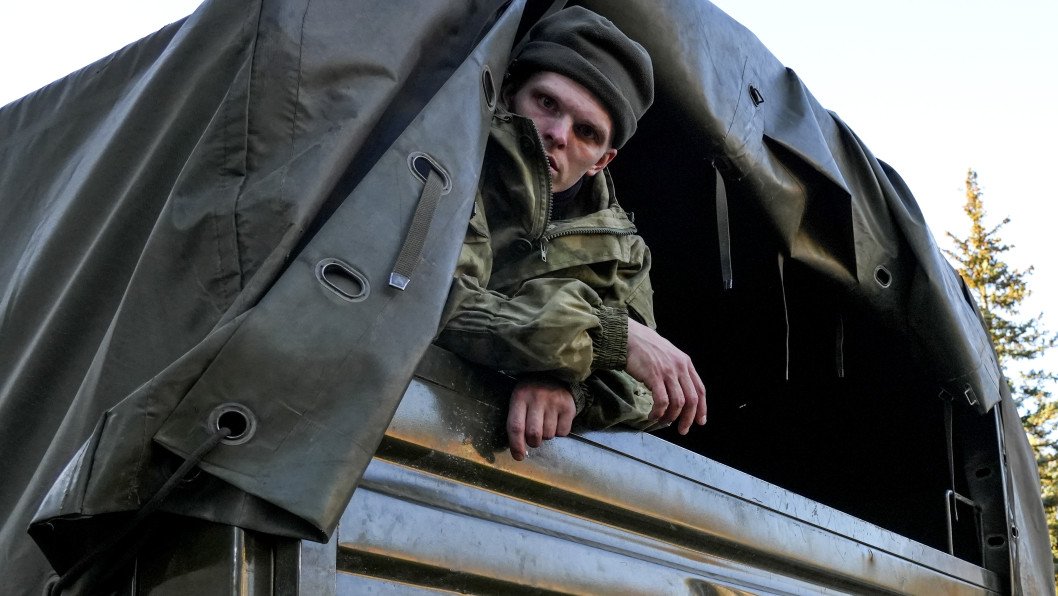
By April 2022, however, 35,000 square kilometers had been lost, and by November that year, Ukrainian forces had reclaimed a total of 75,000 square kilometers. At present, Russia controls about 120,000 square kilometers, or roughly 20% of Ukraine’s territory, including Crimea and areas of the Donetsk and Luhansk regions that were under Moscow’s control prior to the invasion.
Of that total, 75,000 square kilometers were seized during the ongoing war, CSIS added.
Drawing a broader historical contrast, the report noted that during the 1,394 days of the Soviet campaign in World War II, the Red Army advanced all the way to Berlin.
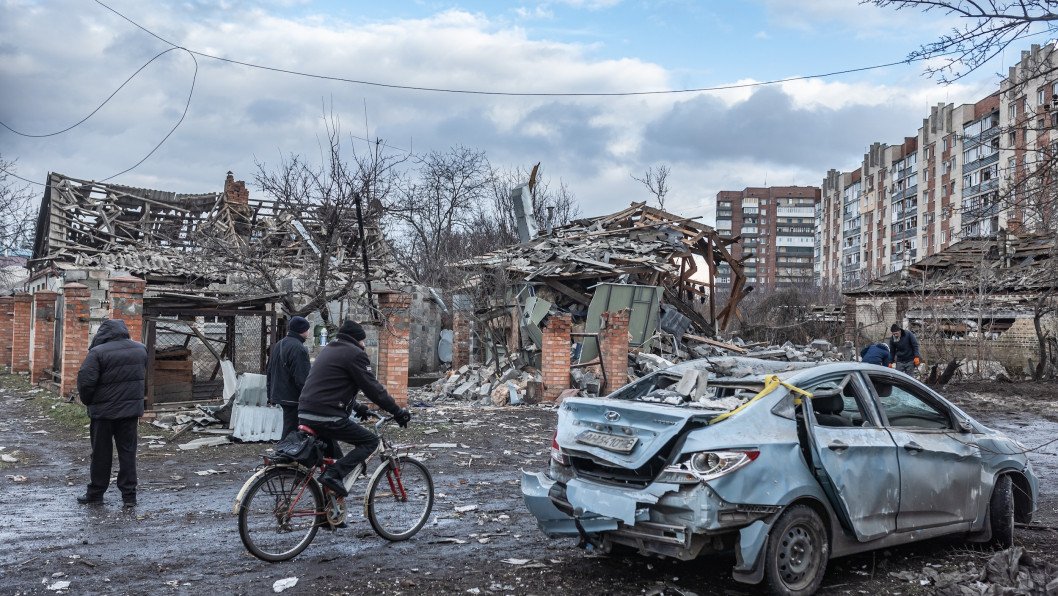
By comparison, after nearly four years of fighting, Russia’s forces have only reached Pokrovsk—a city roughly 500 kilometers from Kyiv. These outcomes, CSIS concluded, fall “far short of the campaign’s stated objectives,” which Russian state propaganda once claimed would be achieved in a matter of days.
According to the report, Moscow’s approach has evolved into a strategy of attrition, accepting sustained losses in the hope of eventually exhausting Ukraine’s military and society. Whether that strategy is sustainable over the long term, CSIS cautioned, remains an open question.
Earlier, NATO Secretary General Mark Rutte, citing internal alliance data, stated that Russia suffered catastrophic battlefield losses in December 2025, with as many as 1,000 soldiers killed each day.
Discuss this article:

-c439b7bd9030ecf9d5a4287dc361ba31.jpg "Photo of Katherina Popilnichenko")