- Category
- Latest news
Short on Workers, Russia Begins Talks to Recruit Labor From Afghanistan
 Prefer U24 Media on Google
- Authors


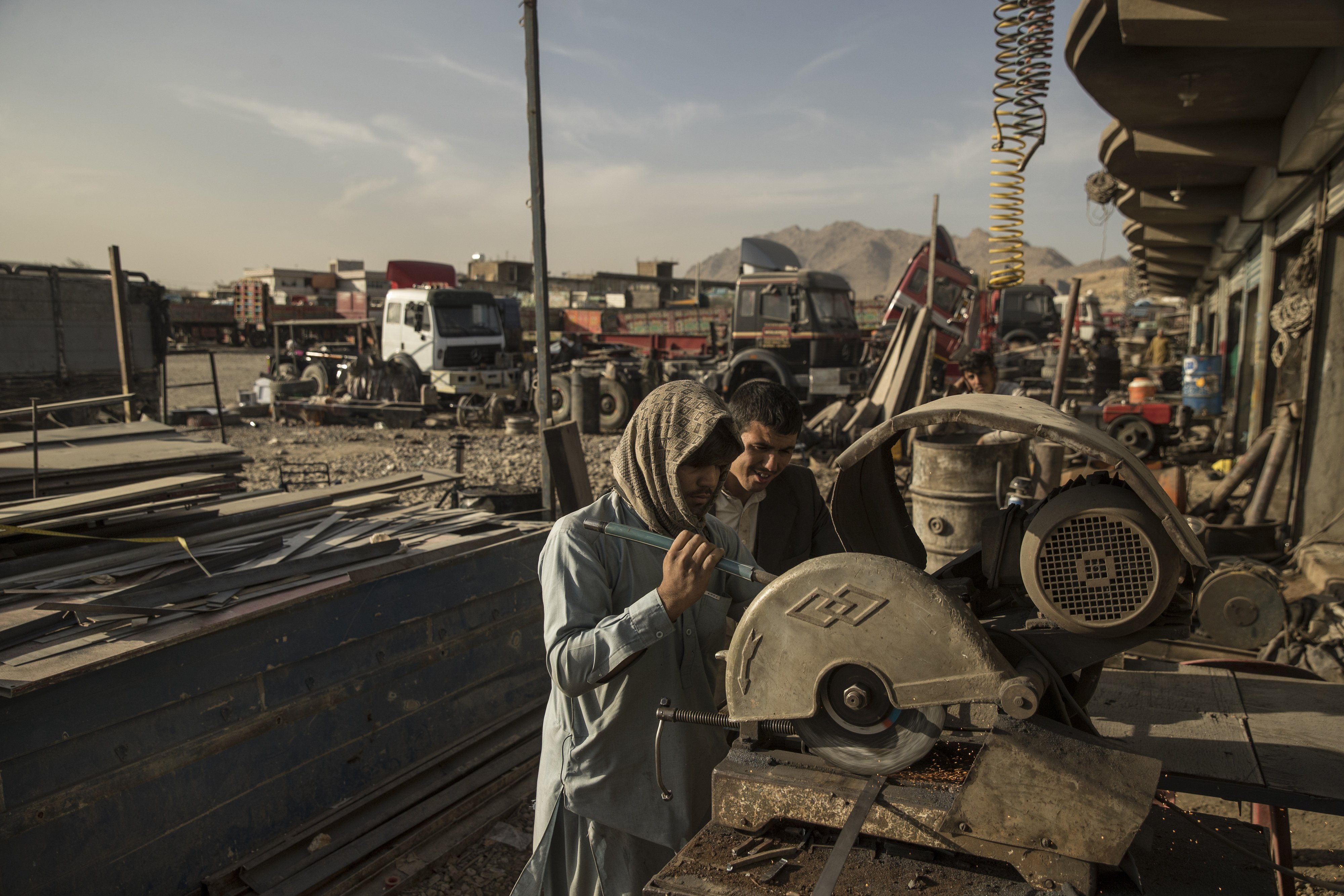
Russia has begun talks with Afghanistan on recruiting workers to help ease its labor shortage, Gul Hassan, the ambassador of the Islamic Emirate to Moscow, said, according to The Moscow Times on February 2.
He said the discussions give “reason to expect positive outcomes,” adding that Afghanistan is ready to provide young, “qualified and professional” workers.
We bring you stories from the ground. Your support keeps our team in the field.
Alongside labor negotiations, the two sides are also considering expanding air links. Hassan said plans are being developed to launch direct Kabul–Moscow flights operated by Kam Air, which could begin “in the near future.” Currently, Ariana Afghan Airlines operates one weekly flight between the two capitals from Sheremetyevo Airport.
The talks follow Russia’s decision last year to remove the Taliban-led government from its list of terrorist organizations and later become the first country to officially recognize the Islamic Emirate. After that step, Moscow pointed to “significant prospects” for cooperation, particularly in energy, transport, agriculture, and infrastructure.
Russia has faced an acute labor shortage since the start of its war against Ukraine, The Moscow Times reported. The Higher School of Economics estimates the economy lacks about 2.6 million workers, a deficit the Ministry of Labor expects could exceed 3.1 million by 2030. To offset the shortfall, authorities have increasingly relied on foreign labor, especially from India. In 2025 alone, more than 56,000 work permits were issued to Indian nationals, the highest number in nine years.
-b6ee4c6cf1e1afa682f60551181f4534.jpg)
Deputy Prime Minister Denis Manturov has previously said Russia was prepared to accept an unlimited number of Indian workers to address the shortage. In the second half of 2025, unemployment in Russia twice fell to a record low of 2.1%.
The government is also seeking to attract workers from China, Malaysia, Bangladesh, and several African countries. Afghanistan had not previously played a significant role in these plans, but in November Afghan officials offered to send workers to Russia for agriculture, where at least 130,000 specialists are needed, with the option of expanding employment into other sectors.
Russia is also increasingly relying on India to address its widening labor deficit. According to Deutsche Welle, Russian officials expect tens of thousands of Indian workers to arrive in the country in 2026.

Boris Titov, Russia’s special representative for sustainable development, said that at least 40,000 Indian citizens are expected to come to Russia for work next year. India’s ambassador to Moscow, Vinay Kumar, said that by the end of 2025 between 70,000 and 80,000 Indian nationals were already employed in Russia.
Deutsche Welle reported that the move follows a labor mobility agreement signed in New Delhi in December 2025 by Indian Prime Minister Narendra Modi and Russian leader Vladimir Putin. The agreement provides for a quota of more than 70,000 Indian workers for 2026, formalizing India’s growing role as a key source of labor for Russia amid its ongoing workforce shortages.
Earlier, it was reported that Russian businesses are getting ready to hire migrant workers from Nepal, Vietnam, and Bangladesh in response to a growing labor deficit.
These countries have sufficient demographic potential to provide sizable numbers of workers on long-term contracts. He added, however, that Russia still needs to develop clearer and more transparent systems for recruiting and integrating foreign labor.
Discuss this article:



-c439b7bd9030ecf9d5a4287dc361ba31.jpg "Photo of Katherina Popilnichenko")