- Category
- World
Russia’s Slave-Like Labor Plan Could Bring Up to 50,000 North Korean Workers to Occupied Ukraine. Here’s How
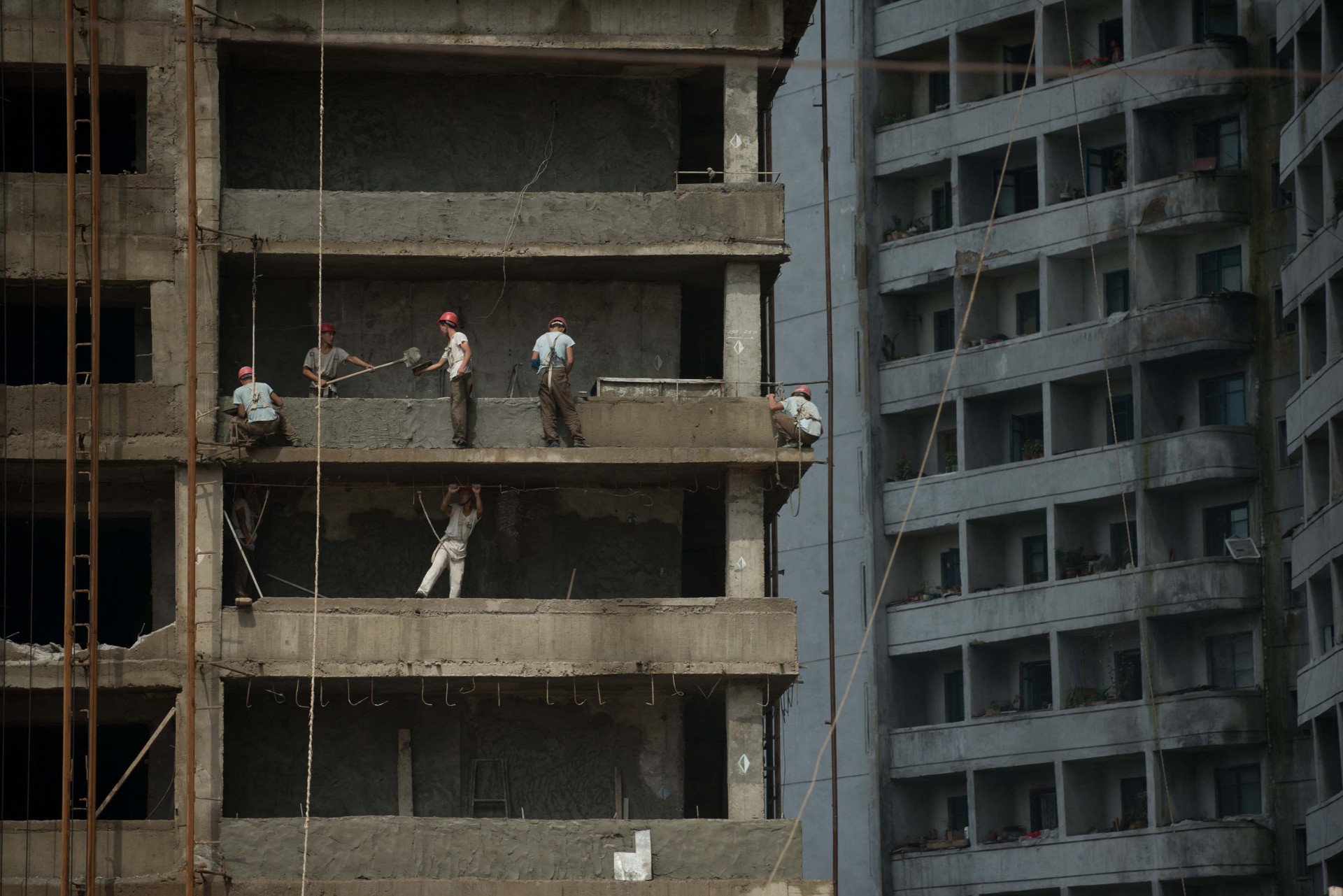
Facing a workforce shortage, Russia is funneling thousands of North Korean workers into occupied Ukraine, using student visas as cover for forced labor. In slave-like conditions, these North Koreans are both building Putin’s empire in Donbas and funding Kim Jong Un’s nuclear dreams.
 Prefer U24 Media on Google
- Authors

-46f6afa2f66d31ff3df8ea1a8f5524ec.jpg "Photo of Jess Daly")
North Korea’s leader, Kim Jong Un, will send 1,000 mine clearance personnel and 5,000 builders to restore Russia’s Kursk region, Sergey Shoigu, Secretary of Russia’s Security Council, confirmed during his visit to Pyongyang in June 2025.
Meanwhile, in the Russian-occupied Donetsk region, debris removal and mine clearance were set to begin on June 30, announced Denis Pushilin, head of the so-called “Donetsk People's Republic.”
He didn't name who would carry out the work, but North Korean laborers had already been dispatched to Donetsk in January 2024 to construct houses, schools, and shopping centers across the temporarily occupied region, an anonymous source told Daily NK.
Construction companies have recently requested that North Koreans work in occupied regions through Russian workers' agencies.
We [North Korea] agreed to mobilize workers [in the Donbas region] after consultations with Russia because we believe that Russia is winning the war against Ukraine
Pushilin first floated the idea in 2022, claiming Pyongyang’s builders were “highly qualified, disciplined.” That August, he confirmed negotiations were underway to bring them to Donetsk, with the first group of specialists arriving soon after to assess the scope of work.
North Korean laborers in Russia
An expanding workforce evading sanctions
The United Nations Security Council banned all use of North Korean laborers abroad in 2017, requiring member states to deport existing workers. Under these sanctions, employing North Korean nationals is strictly prohibited.
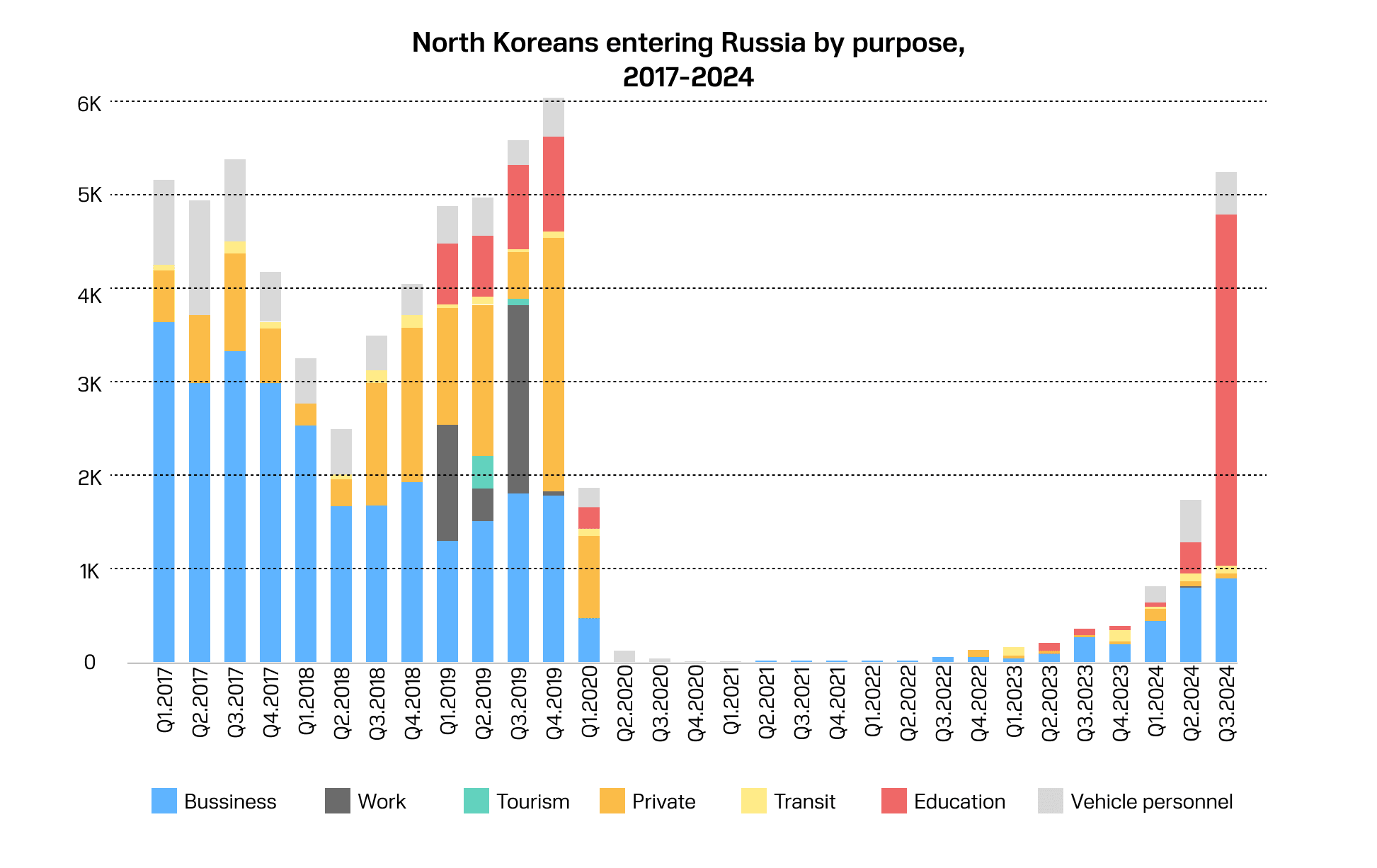
But since Russia’s full-scale invasion of Ukraine—and the signing of the Moscow-Pyongyang Strategic Partnership in 2024—there has been a surge of North Koreans arriving in Russia to work.
North Korea’s labor export is organized, managed, and overseen as a matter of state policy.
A total of 13,221 North Koreans entered Russia in 2024 alone. Nearly 60% of them—7,887 people—arrived on “education” visas, according to Russia’s Federal Migration Service.
Around 15,000 North Korean laborers have been sent to Russia as of May 2025, South Korean intelligence reported.
Preparations to send 28,000 more North Korean workers overseas are underway. A total of 24,200 of them will go to Russia, Daily NK reported, citing an anonymous North Korean source in June 2025. These workers will fill serious labor shortages faced in Russia due to its ongoing war in Ukraine.
North Korea is reportedly considering sending up to 25,000 workers to Russia to train in drone production and operations. The move is part of a broader effort by Pyongyang to support Moscow’s expanding drone industry, a key component to its war in Ukraine.
To facilitate this surge, Russia and North Korea have restored and expanded transit links:
Railway connections and passenger trains have resumed
Parcel delivery and logistics have returned
Construction of the first road bridge began in May 2025
Plans to resume direct air travel for the first time in over 30 years are underway
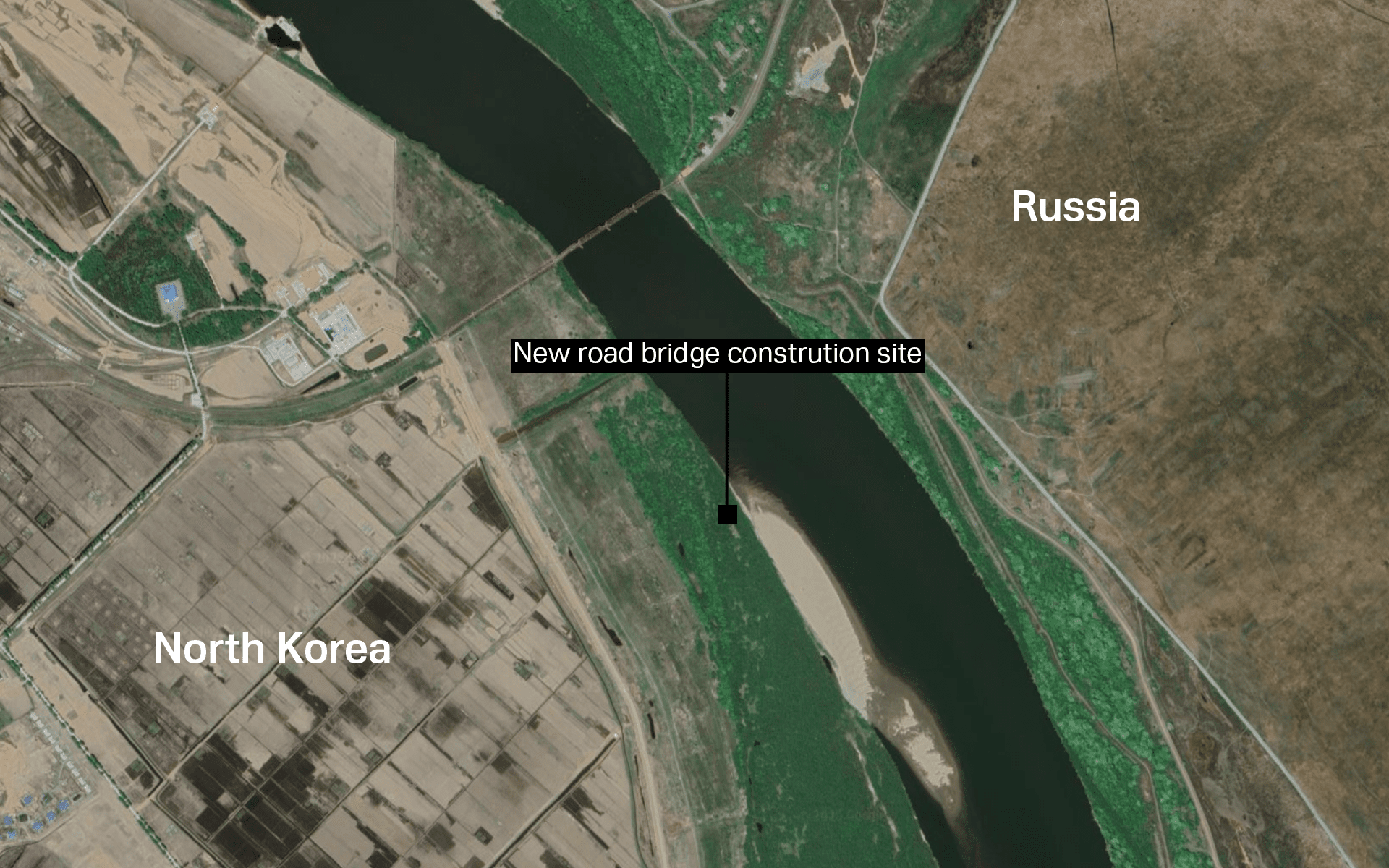
The new transportation links will allow North Korea to more easily send sanctioned labor to Russia, along with a new wave of troops, boosting both regimes in defiance of UN restrictions, and aiding Russia’s war in Ukraine.
Slave-like working conditions
North Korean workers in Russia face slave-like conditions—working up to 12 hours a day, six days a week, while under strict surveillance.
Agencies that supply North Korean laborers and the regime’s weapons programs are among those cashing in on the scheme. The workers themselves see very little of their wages.
Workers are not allowed to return to North Korea until their contract expires, which usually lasts three years, according to the Asan Institute for Policy Studies.
Work harder, pay more, keep less.
North Korean workers “agree to longer working days” and are housed in “Soviet-style dormitories”, which are “even better” than those provided to Chinese laborers, according to French Russia-focused think tank Observo.
🇰🇵 North Korean workers at a warehouse in Elektrostal, Moscow Region. The DPRK has a practice of leasing its citizens. pic.twitter.com/KXD2akmOAY
— MAKS 25 🇺🇦👀 (@Maks_NAFO_FELLA) April 15, 2025
The Russian organization acknowledges that the working and living conditions are severe, but dismisses them as standard practice. “There are also facts about the harsh living conditions of Koreans,” but such treatment in Russia reflects the “procedures and attitudes towards foreign labor of most businessmen in a developing market system,” Observo said.
In short, exploitation is expected and accepted.
Workers' wages fund North Korea’s weapons program
By law, North Korean nationals working both at home and abroad are required to give up to 70% of their wages to the regime. In some cases, North Korean workers abroad have handed up to 90% of their wages.
They are “generating annual revenues of hundreds of millions of dollars for the Kim regime’s weapons programs to include weapons of mass destruction (WMD) and ballistic missile programs,” the US Department of the Treasury’s Office of Foreign Assets Control (OFAC) reported.
North Korea earned an estimated $1.75 billion from overseas labor between 2017 and 2023, South Korea’s Institute for National Security Strategy (INSS) reported.
North Korea’s labor exports lie at the intersection between grave human rights violations and North Korea’s weapons of mass destruction program. Such human rights violations help perpetuate and support the country’s illicit activities and its development of nuclear weapons.
Investigators describe the system as “one of punishing work hours, vanishing wages, and a byzantine system of fees that turns their labor into little more than state-mandated fundraising”—a global forced labor network designed to bankroll weapons of war.
An estimated 50,000 North Korean workers work in Russia, and the money they send back home is considered a crucial lifeline for the regime in Pyongyang https://t.co/XDjkhkPsKg pic.twitter.com/zPWAItXn4o
— CNN (@CNN) January 16, 2018
Who is hiring North Koreans in Russia
The Intergovernmental Migration Center (MMC), run by Russian national Sergei Tkachuk, plays a central role in facilitating the hiring of North Korean workers across Russia, including in Ukrainian Russian-occupied territories like Donetsk, Luhansk, and Crimea.
Through its official Telegram channel, MMC receives daily requests for North Korean laborers—mostly construction workers, but also nurses, nannies, and dentists. The company openly states that the only legal route for hiring DPRK nationals is as “students” on Russian student visas, a clear workaround to evade UN sanctions.
MMC even offers step-by-step business guides, showing contractors how to navigate the "student-to-worker" hiring scheme.
Employers pay MMC 20,000 rubles, just over $250, for recruitment and support, plus an additional monthly fee of 3,500 rubles, $45, and 8.7% of the worker’s take-home pay to the affiliated “education center.”
On its website, MMC confirmed that “builders from North Korea would join the restoration of the Donetsk People's Republic,” claiming the initiative is backed by Russia’s Construction Ministry. It added that Deputy Prime Minister Marat Khusnullin estimated that Russia will need 20,000 to 50,000 North Korean workers.
Fresh pro-Kremlin AI slop suggesting Russia should reduce dependence on Central Asian and Caucasian migrants, who it claims are vulnerable to Western propaganda, and replace them with more “disciplined” workers, from countries like North Korea pic.twitter.com/RDjFYuJgf4
— Peter Leonard (@Peter__Leonard) April 22, 2025
Another Russian website offers detailed application instructions for DPRK nationals, acknowledging the UN ban, but claiming the new Moscow–Pyongyang Comprehensive Strategic Partnership overrides those sanctions.
While most eyes are on Russia's growing military alliance with North Korea, their deepening ties in non-military sectors are flying under the radar.
This labor alliance may look like infrastructure rebuilding on the surface. In reality, it’s a sanctions-evasion scheme, channeling exploited labor into occupied Ukrainian territories while fueling two authoritarian war machines.
Discuss this article:

-c439b7bd9030ecf9d5a4287dc361ba31.jpg "Photo of Katherina Popilnichenko")

-72b63a4e0c8c475ad81fe3eed3f63729.jpeg "Photo of Cyril Barabaltchouk")