- Category
- Latest news
The Real Cost of Russia’s Artillery War Exposed
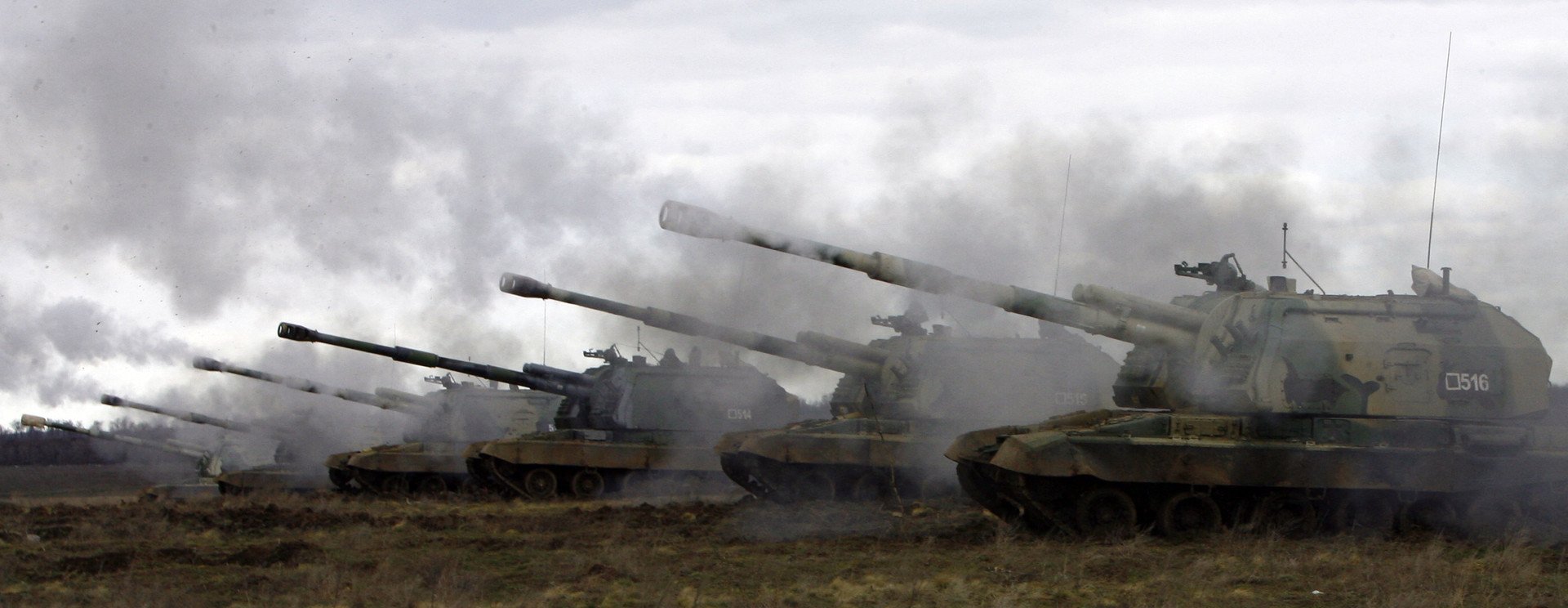
Artillery has faded from the headlines as drones dominate modern warfare, but on the battlefield, it remains the single most decisive factor. Newly uncovered Russian procurement data shows that the war is still being decided by how many shells Moscow can produce, how far they can fly, and how much each shot really costs.
 Prefer U24 Media on Google
- Authors




Despite the rapid rise of drones on the battlefield, artillery—the weapon long known as the “god of war”—remains a decisive factor in modern combat. Range, accuracy, and, above all, ammunition supply continue to shape operational outcomes, according to Militarnyi analysis published on January 27.
We bring you stories from the ground. Your support keeps our team in the field.
Behind the abstract debates about millions of shells lies a simple equation: the side that can sustain fire longer usually prevails.
Documents obtained and analyzed by Militarnyi provide a rare look into Russia’s artillery ammunition production, procurement volumes, and the real cost Moscow pays for each shot fired.
A Russian artillery base of D-20 152 mm howitzers, discovered by fiber-optic FPV drone operators. https://t.co/vx6FJaWn1A pic.twitter.com/rZF09EklV4
— Special Kherson Cat 🐈🇺🇦 (@bayraktar_1love) January 21, 2026
What Russia planned to produce
According to procurement data reviewed by Militarnyi, Russia’s defense industry was expected to deliver the following artillery ammunition in 2025:
82 mm mortar rounds: 750,000;
120 mm mortar rounds: 1.9 million;
122 mm shells: 850,000;
152 mm shells: 1.7 million;
203 mm shells: 60,000;
240 mm mortar rounds: 20,000.
More than 95% of large-caliber artillery ammunition production is handled by GosNII Mash and KBP Instrument Design Bureau, whose facilities across Russia underpin the bulk of these deliveries, Militarnyi reports.
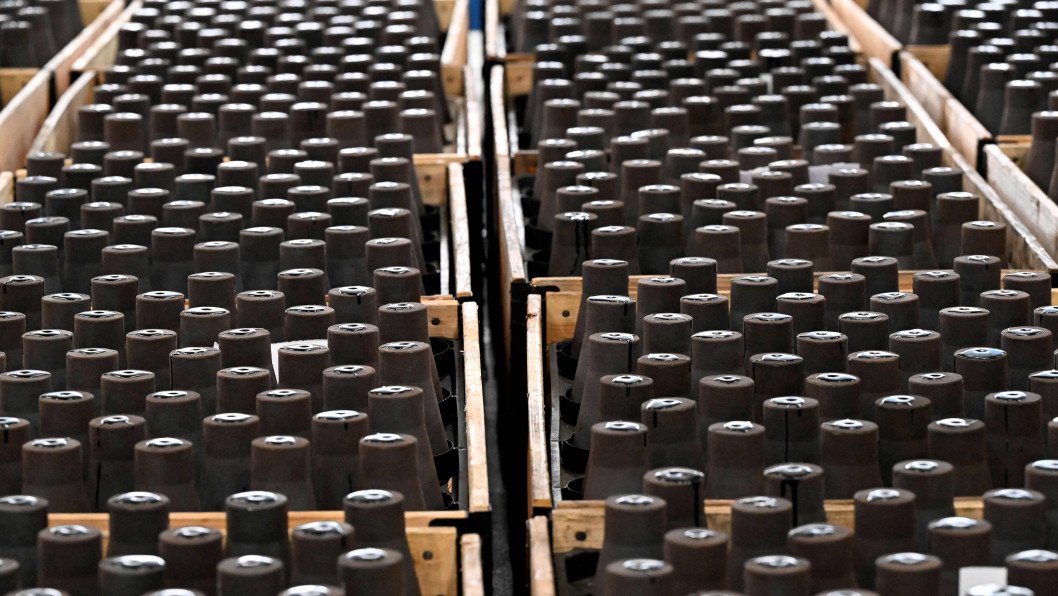
Since the start of the war, contracts have shifted toward shorter timeframes—often under two years—and rely heavily on credit-based financing. Each contract covers complete “shots,” including shell, fuze, casing, and propellant, with variations depending on charge size.
122 mm and 152 mm—volume over quality
For 122 mm shells, Russia ordered roughly 838,000 rounds in 2024, most priced at about $1,000 per shell, according to Militarnyi. Wartime production increasingly relies on a simplified explosive filler known as TA-20, a cheaper TNT-aluminum mix that replaces more powerful prewar explosives.
In 2025, procurement rose slightly to 850,000 shells, almost entirely configured for maximum range—reflecting Russia’s effort to pull artillery farther from the front line.
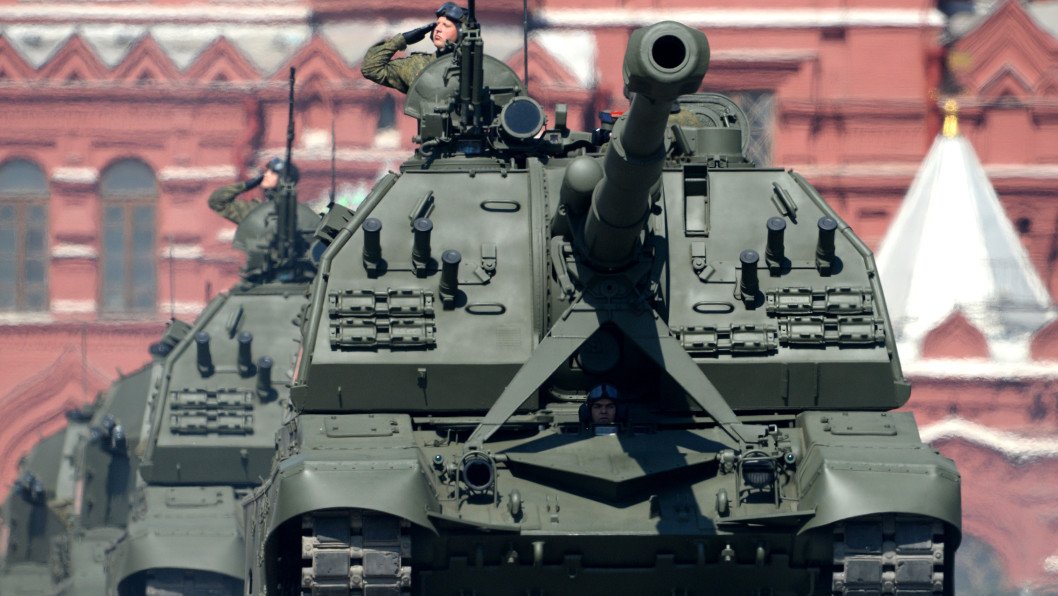
The 152 mm category, Russia’s main artillery caliber, reveals similar trends. Militarnyi estimates that Russia ordered 1.56 million 152 mm shells in 2024, rising to 1.72 million in 2025. Prices ranged from roughly $1,200 to $1,550 per shell, depending on configuration.
Precision-guided rounds such as Krasnopol-M2 remain rare and expensive. Militarnyi found contracts valuing individual guided shells anywhere from $32,000 to more than $80,000, highlighting why Russia continues to rely overwhelmingly on unguided fire.
SO....
— Aleksandr X (@AleksandrX13) April 1, 2023
What happens when you push your has-been artillery beyond every reasonable limit, firing old weapons from the 1950's day and night?
A demonstration 👇
Here we have an overworked russian D-20 howitzer.
Orc conscripts may not rebel, but it seems their weapons do. pic.twitter.com/eNwoMIy3le
Heavy artillery—limited but costly
Russia still fields heavy systems like the 203 mm 2S7 Pion/Malka and the 240 mm 2S4 Tyulpan, but their use is episodic.
Militarnyi notes that ammunition orders for these systems are comparatively small, though unit costs are high—up to $5,500 per round for extended-range 203 mm shells and more than $5,600 per shot for 240 mm mortar ammunition.
2S7 Pion in Storage, Russia. pic.twitter.com/Tp4doiHJ2N
— T-90K (@T_90AK) October 21, 2024
Mortars remain critical
Mortars remain essential for close combat. Militarnyi reports that Russia produced 1.43 million 120 mm mortar rounds in 2024, increasing output to nearly 2 million in 2025. Notably, unit prices fell sharply as production scaled, dropping from around $1,100 to $1,000 per round.
The smaller 82 mm mortar remains another staple, with annual contracts for 750,000 rounds. Militarnyi highlights a striking price correction here as well, with unit costs falling from an unusually high $1,400 in 2024 to about $850 in 2025.
Video of a Russian artillery gun (poss D30), that had catastrophic barrel failure after a North Korean shell exploded in the barrel. If this is the quality of "support" Putin is getting from Kim, there are going to be some interesting upcoming events on the frontlines. pic.twitter.com/Dh92TFACAS
— raging545 (@raging545) October 25, 2024
What the numbers show
Taken together, the data paints a clear picture. As Militarnyi emphasizes, Russia has prioritized volume, range, and sustained fire over precision and technological sophistication.
While drones dominate headlines, artillery still consumes the bulk of resources—and continues to decide outcomes on the ground.
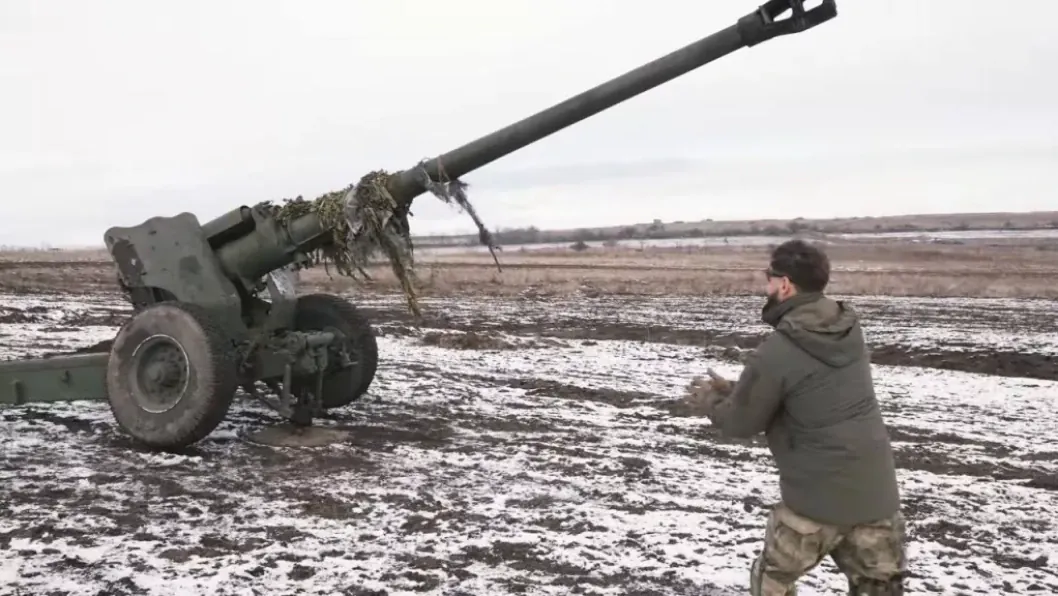
Russia’s artillery production has expanded, but at the cost of simplified explosives, limited precision stocks, and growing financial strain per operational effect. In modern warfare, as Militarnyi’s analysis makes clear, artillery is no longer just about firepower—it is about industrial endurance.
Earlier, Kyrylo Budanov, Head of Ukraine’s Defense Intelligence, stated that North Korea was supplying Russia with up to 40% of the ammunition it uses in its war against Ukraine.
Discuss this article: