- Category
- Latest news
The Stolen Art Campaign: How Ukrainians Are Exposing Cultural Erasure in New York, London & Paris Museums
 Prefer U24 Media on Google
- Authors


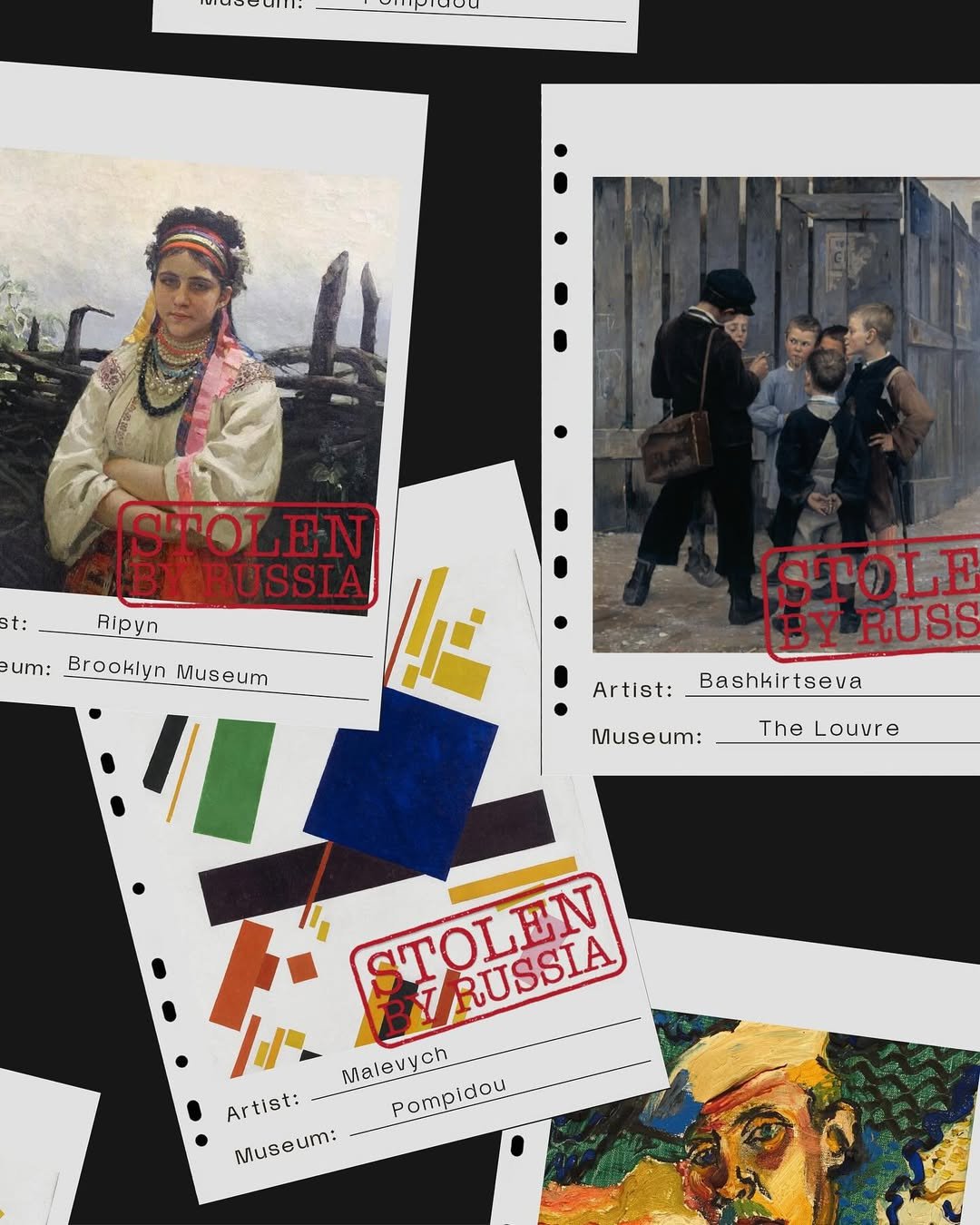
Putin is trying to erase Ukrainian culture — and some Western museums are still complicit. Four years into Russia’s invasion, institutions like MoMA, Tate, and the Pompidou still label Ukrainian artists like Malevych, Ekster, and Tatlin as “Russian.” Despite activists’ calls to correct this, many rely on outdated sources, ignoring Russia’s broader information warfare.
In response, Ukrainian cultural NGO The Shadows Project has launched The Stolen Art Campaign — the first coordinated, youth-led initiative aimed at challenging the mislabelling of Ukrainian artists in major museums across New York, London, and Paris.
At the heart of the campaign is an Instagram filter that lets users flag mislabelled artworks during museum visits or while browsing online. By tagging the institutions and using the hashtag #fixthelabel, visitors can directly call attention to inaccuracies. This is complemented by a wider digital campaign and organized visits to museums in Paris, London, and New York.
The initiative also features a streetwear collection created in partnership with Ukrainian brand RDNY Streetwear. The designs are inspired by mislabelled Ukrainian artists, blending cultural activism with contemporary fashion. Collection with Rdny launches last week of July, and the filter is the 1st of September.
A dedicated project website hosts the first public database tracking the mislabelling of artists, along with English-language biographies developed in collaboration with Ukrainian researchers. To support the campaign’s advocacy, a research paper has been published, documenting how cultural erasure is used as a weapon of war—providing valuable insight for museums and policymakers alike.
-0d47c274f3ab65f7c71893047d4b936e.jpg)
The campaign is already making an impact. The Cleveland Museum updated its label for Alexandra Ekster to include her Ukrainian heritage, while the Brooklyn Museum reclassified a landscape by Repin from “Russian” to “Ukrainian.” Major institutions like Tate, MoMA, and the Louvre are currently reviewing their attributions following the campaign’s outreach.
So far, the campaign has reached over 300,000 people and established more than 15 cultural partnerships across Europe and Ukraine.
“Russia has made it its state policy to erase Ukrainian identity by attacking it and removing it from public spaces,” said Agatha Gorski, co-founder of The Shadows Project. “Right at the beginning of the full-scale invasion, Russia bombed a museum containing art of one of Ukraine’s most famous painters – today over 2000 Ukrainian cultural institutions have been destroyed or damaged.
-44c4a277ce2e4d52617a3209a71f93fb.jpg)
According to Gorski, Putin is trying to rewrite Ukraine’s history—and that Western museums are complicit. They emphasize that culture is deeply tied to politics, shaping how a nation is perceived and whether its independence is seen as legitimate. Defending Ukrainian culture, they say, is inseparable from defending national identity and, ultimately, the state itself. The campaign aims to ensure that Ukraine is recognized on its own terms, beginning with the way Ukrainian artists are represented in Western institutions.
The Shadows Project is a Ukrainian cultural NGO and creative studio focused on preserving and promoting national identity through research, storytelling, and design. Its mission is to strengthen cultural resilience by making it easier for people — especially young Ukrainians — to connect with their heritage in everyday life. Founded in 2021 as a digital media platform on Instagram, the project has since evolved into a wider cultural initiative.
Earlier, the National Museum of Ukrainian History opened the exhibition "Treasures of Crimea: Return" in its Treasury Hall. The display showcases Scythian gold rescued from Russian occupiers of the peninsula thanks to international court rulings.
Discuss this article:


-c439b7bd9030ecf9d5a4287dc361ba31.jpg "Photo of Katherina Popilnichenko")