- Category
- Latest news
Ukraine Doubles Interceptor Drone Supply as Air Defense Downs 33,000 UAVs in March
 Prefer U24 Media on Google
- Authors

-c439b7bd9030ecf9d5a4287dc361ba31.jpg "Photo of Katherina Popilnichenko")
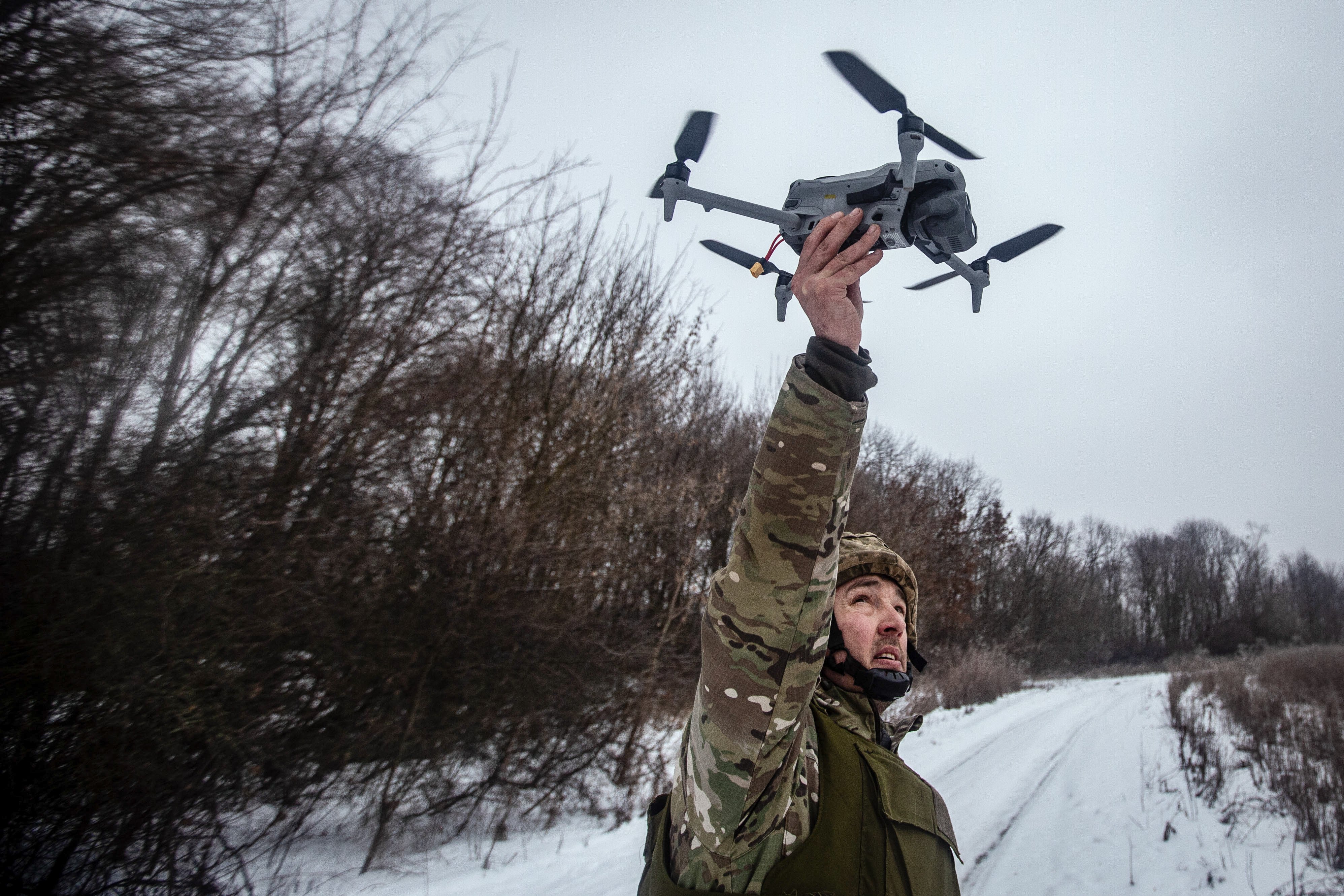
The Ukrainian military has significantly increased its supply of anti-aircraft drones designed to intercept loitering munitions.
Over the past four months, the Defense Forces received twice as many interceptor drones through the Defense Procurement Agency and the State Operator for Rear than they did during the entire previous year, according to Suspilne News on April 27.
We bring you stories from the ground. Your support keeps our team in the field.
The Ministry of Defense noted that this development substantially strengthens the country’s air defense capabilities following Russia’s full-scale invasion of Ukraine.
According to the Ministry of Defense, these anti-aircraft drones serve as a much more affordable alternative to traditional weapons. Their cost is hundreds of times lower than that of conventional missiles and dozens of times lower than the enemy drones they are designed to destroy. This price difference allows for a more effective scaling of their use to protect the airspace.
Ministry data shows that in March alone, interceptor drones successfully neutralized over 33,000 enemy unmanned aerial vehicles of various types.
The delivery of these systems to the military is managed through several channels, including direct contracts from the Defense Procurement Agency and the State Operator for Rear, the "Army of Drones. Bonus " program, and the DOT-Chain Defense weapons marketplace.
Officials emphasized that utilizing multiple procurement mechanisms ensures a continuous supply chain. This approach allows the military to quickly increase the number of drones available to units in the field.
In April 2026, Ukrainian interceptor drones became a critical layer of the country's air defense, proving highly effective at destroying Russian Shahed attack drones. A pilot with the callsign “Hulk” reported that his crew had been actively operating since November, successfully neutralizing around 200 targets, including 184 Shaheds.
The unit achieved a 95% success rate with their Sting drones, even managing to intercept a jet-powered variant traveling at speeds up to 600 km/h. By detonating the warheads mid-air, the operators successfully minimized debris and protected civilian areas from the impact of Russia’s full-scale invasion of Ukraine.
Discuss this article:
-9bd5e1532102621f8fb1c4ba871a3171.png)