- Category
- Latest news
Ukraine Tests Exoskeletons on Front Line, Boosting Strength of Troops Near Pokrovsk
 Prefer U24 Media on Google
- Authors


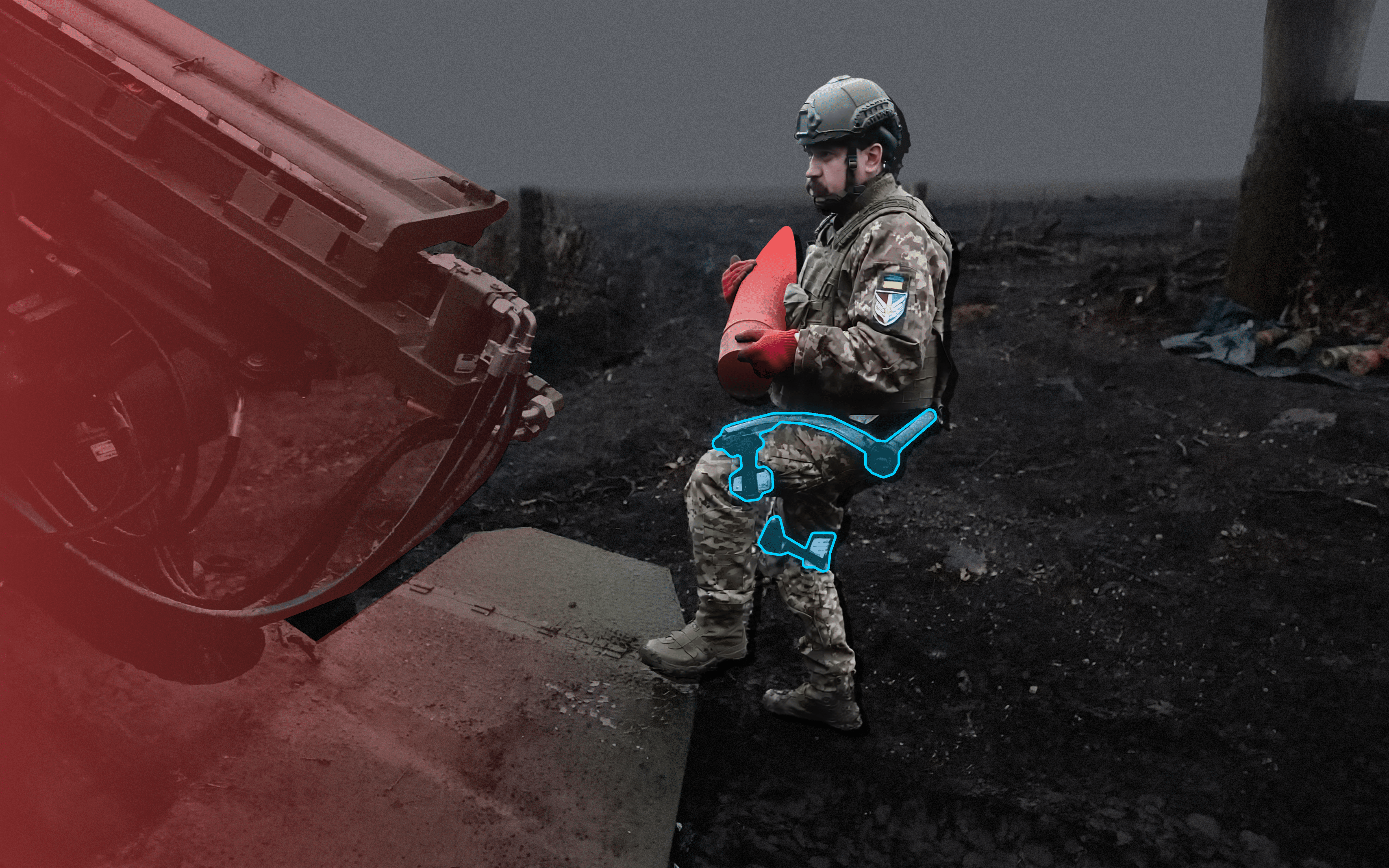
Ukrainian airborne assault forces have begun testing exoskeleton technology on the front lines, deploying early models with units operating in the Pokrovsk sector, the 7th Air Assault Corps reported on March 20.
According to the unit, trial systems have been distributed among formations of the corps and are currently being evaluated in both logistics operations and active combat positions.
We bring you stories from the ground. Your support keeps our team in the field.
The exoskeletons are designed to reduce physical strain on soldiers by up to 30%, while allowing assisted movement speeds of up to 20 km/h and a range of approximately 17 kilometers.
Artillery crews, in particular, are expected to benefit from the technology. These units routinely handle extreme physical workloads, including transporting heavy ammunition under combat conditions.
“Every day, artillery crews endure significant physical strain. They carry 15–30 shells daily, each weighing around 50 kilograms. Based on the test results, they get less fatigued, work faster, and maintain combat effectiveness for longer,” said Colonel Vitalii Serdiuk, deputy commander of the 7th Corps and head of its rocket forces and artillery.
The deployment is part of a broader effort to integrate advanced technologies into combat operations.
“The introduction of such systems reflects our focus on a tech-driven airborne force. We are easing human physical effort through technological solutions,” the corps said in a statement accompanying the released footage.
Video shared by the unit shows soldiers from the 147th Separate Artillery Brigade using the exoskeletons during operations in the Pokrovsk direction.
Previously, Ukraine received two Phantom MK-1 humanoid robots designed for military use, marking one of the first real-world battlefield evaluations of humanoid soldier technology.
Foundation co-founder Mike LeBlanc said the experience of bringing the Phantom system to Ukraine reinforced his belief that humanoid robots could play a major role in future warfare.
“Humanoid soldiers can be invaluable for resupply and reconnaissance work, especially in places drones can’t access, like bunkers,” LeBlanc explained.
Earlier, Britain’s Minister for the armed forces, Al Carns, said the war in Ukraine is forcing the UK and its allies to rethink how wars will be fought, with AI-enabled software and robotic systems increasingly shaping outcomes on the battlefield.
Discuss this article:


-c439b7bd9030ecf9d5a4287dc361ba31.jpg "Photo of Katherina Popilnichenko")



-72b63a4e0c8c475ad81fe3eed3f63729.jpeg "Photo of Cyril Barabaltchouk")