- Category
- Latest news
Ukrainian Drones Hit Russian Chemical Weapons Workshop in Occupied Avdiivka
 Prefer U24 Media on Google
- Authors


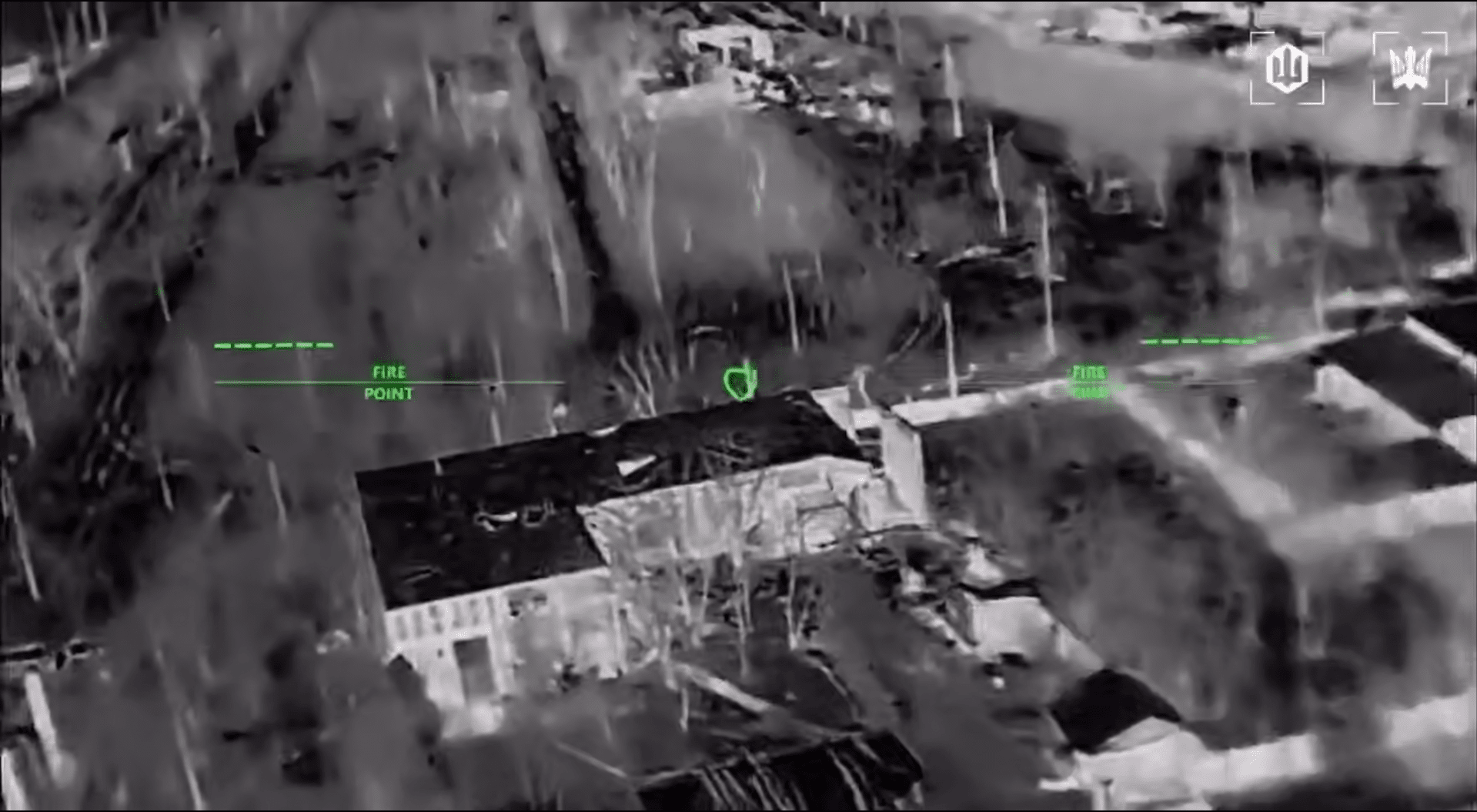
Ukrainian unmanned aerial systems targeted a Russian-operated facility reportedly used to manufacture chemical munitions in the occupied city of Avdiivka on March 23.
We bring you stories from the ground. Your support keeps our team in the field.
Footage of the strike was released by Robert “Madyar” Brovdi, commander of Ukraine’s Unmanned Systems Forces. According to him, the operation was carried out by drone operators from the 9th Battalion “Kairos” of the 414th Brigade “Birds of Madyar,” using Ukrainian-made FP-2 strike drones.
The targeted site was described as a workshop involved in producing improvised munitions containing chloropicrin, a chemical agent historically used as a tear-inducing substance. The strike appears to have been aimed at disrupting localized production capabilities.
Data from Ukrainian military sources indicates that the use of chemical irritants by Russian forces has increased significantly. Nearly 12,000 recorded cases of hazardous chemical substance use have been documented since the start of the full-scale invasion, with more than half—6,540 incidents—occurring in 2025 alone. In January and February 2026, over 600 additional cases were reported.
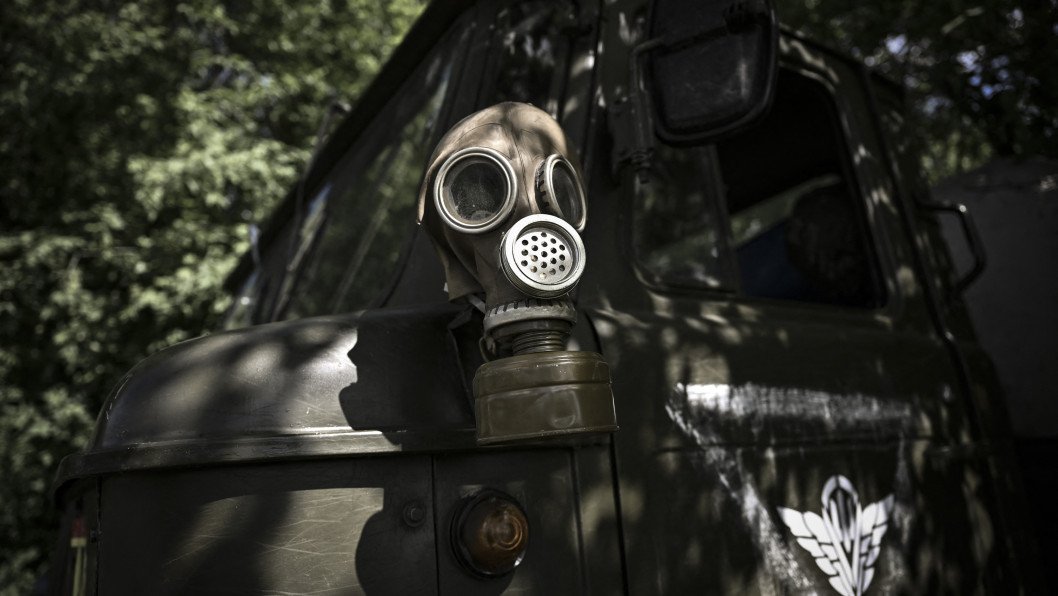
Russian forces typically deploy gas grenades such as K-51 and RG-VO, equipped with CS and CN irritant agents commonly associated with riot control. Improvised munitions containing chloropicrin are also used, though less frequently. These substances are often delivered via drones against Ukrainian defensive positions to force personnel out of shelters and expose them to conventional fire.
While such agents are not classified as lethal chemical weapons, their use in combat operations is prohibited under international law. The Chemical Weapons Convention bans the use of riot control agents as a method of warfare regardless of their intended lethality.
Earlier, it was reported that a Russian state-affiliated institute involved in the manufacture of chemical weapons continues to acquire essential components for prohibited munitions, successfully bypassing extensive international sanctions.
Discuss this article:
-9a7b3a98ed5c506e0b77a6663f5727c5.png)


-c439b7bd9030ecf9d5a4287dc361ba31.jpg "Photo of Katherina Popilnichenko")