- Category
- Latest news
US Reveals F-22 Raptor 2.0 Upgrade That Gives It a New Edge Over China’s J-20 and Russia’s Su-57
 Prefer U24 Media on Google
- Authors


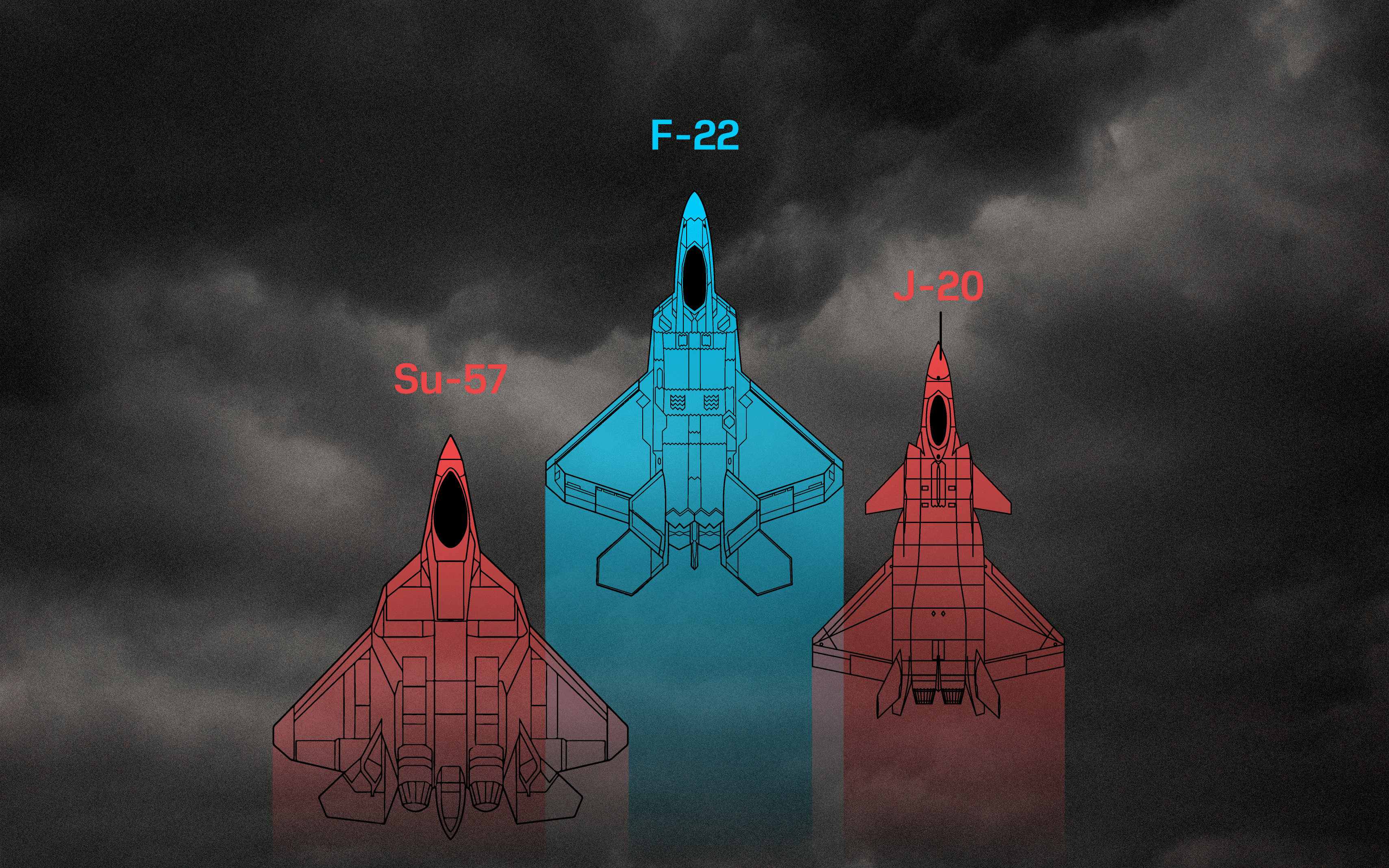
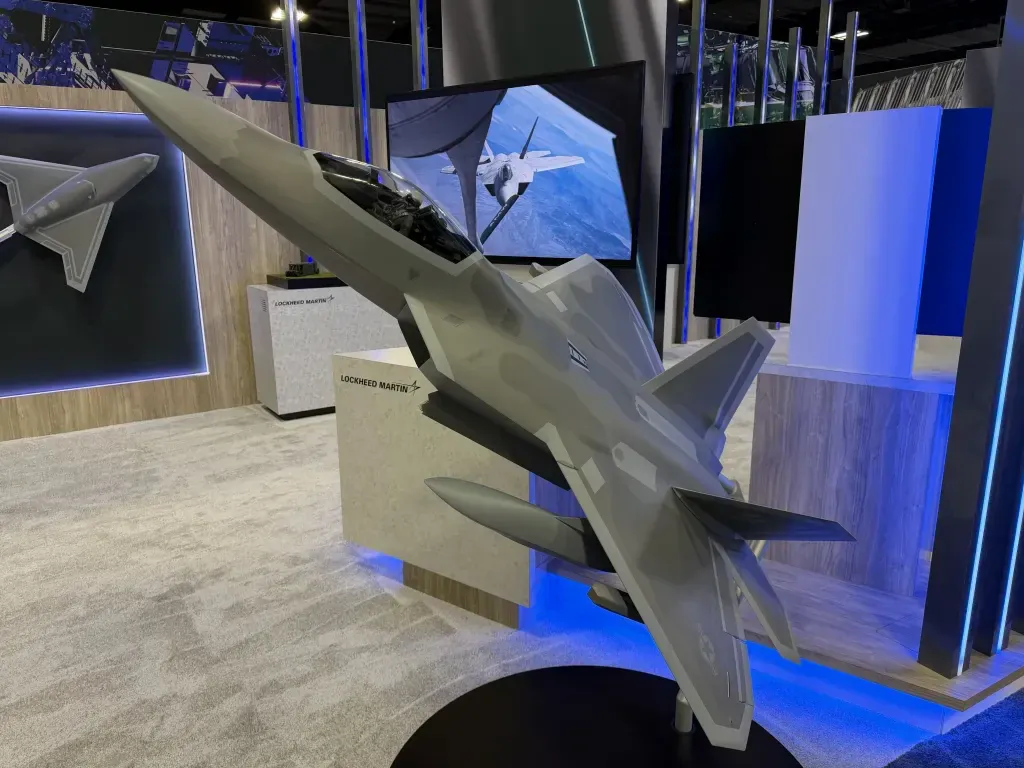
The United States has unveiled a concept model of a long-anticipated modernization of the F-22 fighter jet, dubbed Raptor 2.0, introducing upgrades aimed at extending range and improving detection capabilities while minimizing impacts on stealth performance, according to Defense Express on February 26.
Images and details of the upgraded aircraft were revealed during the Air & Space Forces Association’s annual warfare symposium, where reporters from The War Zone examined the proposed configuration.
We bring you stories from the ground. Your support keeps our team in the field.
Discussions about such improvements had circulated among defense observers for years, but the latest presentation offers the clearest look yet at how the US may evolve its first fifth-generation fighter.
According to Defense Express, the modernization could significantly enhance the aircraft’s combat effectiveness against advanced rivals such as Russia’s Su-57 and China’s J-20.
The perfect vapor cone in slow mo, brought to you by the incredible F-22 Raptor. pic.twitter.com/bTuQLVmjCA
— Air Power (@RealAirPower1) February 16, 2026
Stealth-shaped fuel tanks extend range
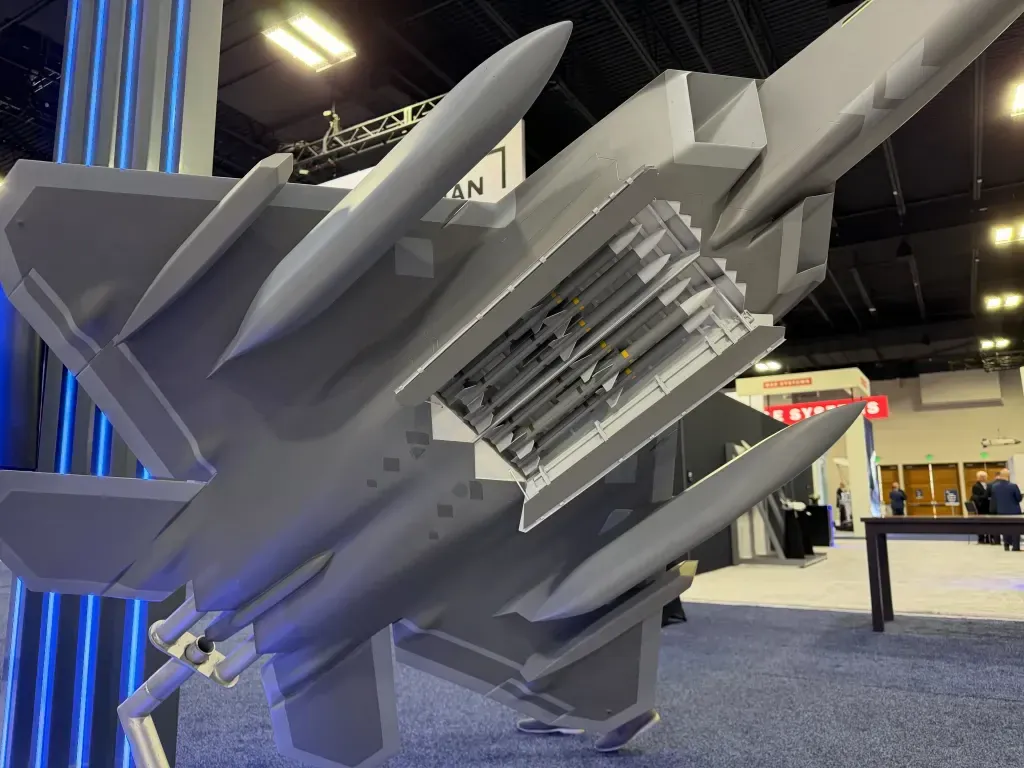
One of the most noticeable changes is the addition of redesigned external fuel tanks featuring stealth-optimized shaping.
Earlier F-22 configurations relied on conventional external tanks that greatly increased radar visibility and typically had to be jettisoned before entering combat. The new design aims to expand operational range while reducing the aircraft’s radar signature—a critical advantage in modern high-threat environments.
Lockheed Martin representatives have suggested the aircraft could potentially enter combat without discarding the tanks, allowing pilots to retain extended endurance throughout a mission.
According to Defense Express, this represents a major improvement for long-range operations in the Indo-Pacific, where distance has become one of the defining challenges for US airpower.
Long-planned infrared sensor finally appears
Another key addition is an infrared search and track (IRST) sensor mounted beneath the wing—a capability originally envisioned during the F-22’s early development but never fielded at the time.
The IRST system significantly improves the fighter’s ability to detect aircraft through heat signatures rather than radar emissions, making it particularly valuable against stealth targets.
Defense Express notes that such sensors are increasingly important as rival fifth-generation aircraft attempt to reduce radar detectability. Passive detection methods allow pilots to locate targets without revealing their own position.
Despite efforts to streamline the sensor’s shape, analysts acknowledge it will likely increase the aircraft’s radar signature to some extent. However, the tradeoff may be mitigated by networking tactics: data gathered by a sensor-equipped aircraft could be transmitted to another F-22 flying in a “clean” stealth configuration.
New relevance
According to Defense Express, the proposed upgrades highlight a renewed interest in extending the operational relevance of the F-22, whose future had previously appeared uncertain.
Plans to retire portions of the fleet were halted by the US Congress, reflecting continued concern over maintaining air superiority against peer competitors.
The modernization concept suggests the aircraft may remain a cornerstone of US airpower longer than previously expected, bridging the gap until next-generation fighter programs fully mature.
An F-22 Raptor showing off!
— Aviation (@xAviation) July 13, 2023
📹: f22demoteam pic.twitter.com/6wMxRlVAzS
If implemented, Raptor 2.0 would not fundamentally redesign the aircraft but instead adapt it for emerging combat realities—longer distances, stealth-versus-stealth engagements, and increasingly sensor-driven air combat.
As Defense Express notes, the upgrade appears to offer a pragmatic path forward for the world’s first operational fifth-generation fighter, ensuring it remains competitive in an era defined by rapid advances in aerospace technology.
Earlier, Ukrainian Air Force footage revealed F-16 fighters intercepting Shahed-type attack drones using inexpensive APKWS II guided rockets, a development that could dramatically lower the cost of defending against large-scale drone attacks.
Discuss this article:
-9a7b3a98ed5c506e0b77a6663f5727c5.png)

-c439b7bd9030ecf9d5a4287dc361ba31.jpg "Photo of Katherina Popilnichenko")