- Category
- Latest news
Russia’s Su-34 Can Technically Reach Washington—But the Real Concern Is Closer to Europe
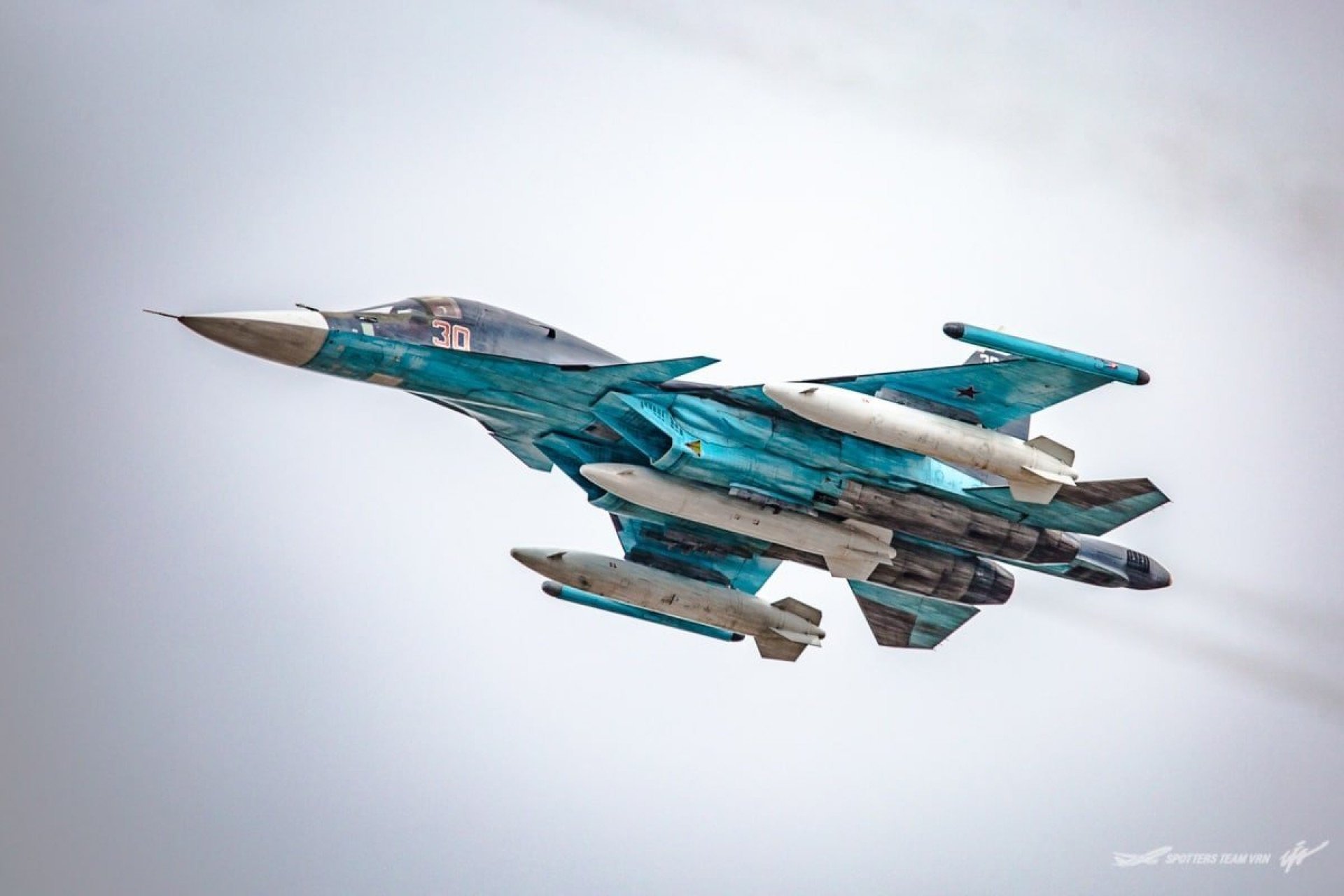
Russia’s Su-34 strike aircraft has recently drawn attention after appearing configured for extremely long-range flights—theoretically capable of crossing intercontinental distances under specific conditions—highlighting that Russian tactical aviation remains a factor Western planners cannot ignore despite heavy losses in Ukraine.
 Prefer U24 Media on Google
- Authors


Imagery showing a Russian Su-34 carrying three large external fuel tanks has revived discussion among defense observers about the aircraft’s maximum endurance and potential operational reach, according to Military Watch Magazine on February 22.
While some Russian media portrayed the configuration as evidence of an “intercontinental fighter,” analysts note that the reality is more nuanced—yet still strategically relevant.
We bring you stories from the ground. Your support keeps our team in the field.
The Su-34 is a strike aircraft derived from the Soviet-era Su-27 platform, originally designed for long-range penetration missions.
How the Su-34 achieves “intercontinental” distance
Compared with most Western tactical jets, Russian aircraft traditionally emphasize extended range through large internal fuel capacity, allowing operations across vast geographic areas without frequent aerial refueling.
⚡️BREAKING 🇺🇦🇷🇺
— War Monitoring (@WarMonitoring_x) February 20, 2026
Reports circulating online claim a Russian Su-34 fighter-bomber may have been shot down over southern Ukraine. pic.twitter.com/Ylu199yBk4
Under standard conditions, the Su-34’s ferry range is estimated at roughly 4,800–5,000 kilometers using internal fuel alone. However, the aircraft can carry three PTB-3000 external fuel tanks—each holding 3,000 liters—extending endurance.
With this maximum fuel configuration, analysts estimate a theoretical ferry range approaching 8,000 kilometers. On paper, that distance would allow a nonstop flight roughly equivalent to traveling from Moscow to Washington, DC.
But the key limitation is critical: such performance is achievable only under ideal ferry conditions—meaning no weapons payload, minimal maneuvering, and an optimized flight profile designed purely to conserve fuel.
How Russia actually uses the Su-34 in Ukraine
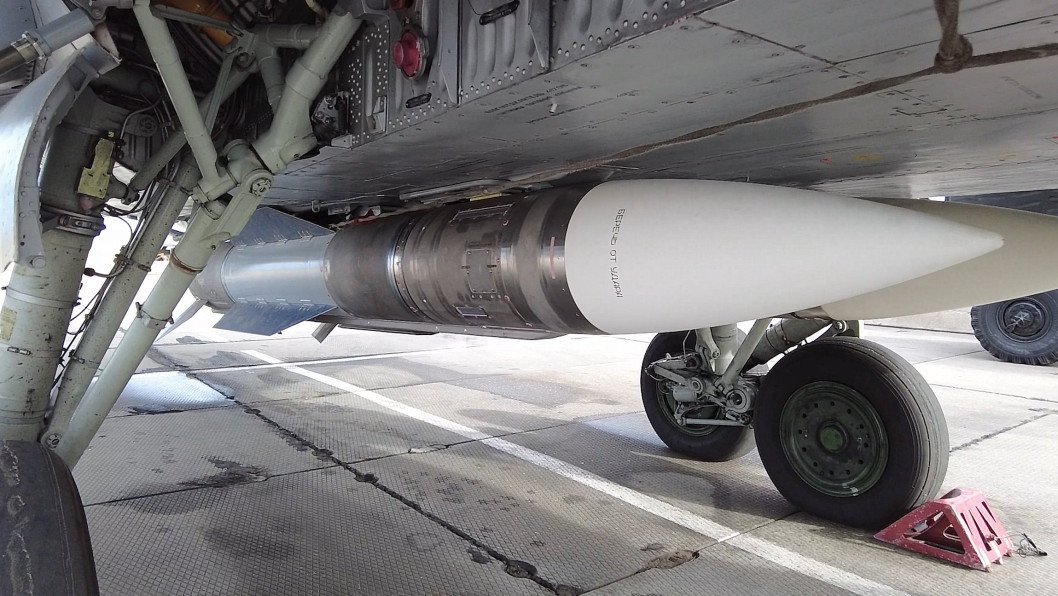
Russia has relied heavily on the Su-34 throughout its war against Ukraine, where the aircraft has become one of the primary platforms for launching guided glide bombs known as KABs.
Operating largely outside the reach of Ukrainian short-range air defenses, Su-34 crews routinely release these precision-guided munitions from stand-off distances, allowing Russian forces to strike frontline positions and urban areas without directly entering contested airspace.
The aircraft’s large payload capacity and long endurance have made it central to Russia’s current strike doctrine, even as losses and evolving Ukrainian air defenses continue to shape how it is employed.
😔 This is what the launch of four ODAB-500OF bombs by a Russian Su-34 looks like... pic.twitter.com/mwkbXTMNfL
— MAKS 25 🇺🇦👀 (@Maks_NAFO_FELLA) April 5, 2024
The critical catch: no weapons, no combat profile
In combat scenarios, the range would be significantly shorter due to weapon weight, higher engine power settings, and evasive maneuvering requirements. External tanks also increase drag and radar visibility, reducing survivability in contested airspace.
Even so, the configuration illustrates a broader point increasingly emphasized by defense analysts: Russian tactical aviation still retains long-range operational flexibility that can complicate NATO planning, particularly across Europe’s northern and eastern flanks.
Rather than enabling direct transcontinental strike missions, the extended range could support roles such as long-duration patrols, reconnaissance missions, or stand-off operations launched far from frontline bases.
Why range still matters for NATO
The Su-34 is capable of carrying electronic warfare pods, reconnaissance equipment, and long-range guided munitions designed to strike from outside dense air-defense zones.
Production of the Su-34 has reportedly accelerated since 2022 as Russia attempts to replenish combat losses and sustain its air campaign against Ukraine.
Continued upgrades—including potential engine improvements aimed at fuel efficiency—could further extend endurance in future variants.
For Western militaries, the aircraft’s extended reach is less about intercontinental attack scenarios and more about persistence: the ability of Russian aircraft to operate farther from bases, reposition rapidly, and threaten targets across wide operational theaters.
In that sense, the Su-34’s endurance demonstrations serve as a reminder that despite battlefield setbacks, Russia’s aerospace forces remain capable of adapting existing platforms in ways that maintain strategic pressure on both Ukraine and NATO’s eastern defenses.
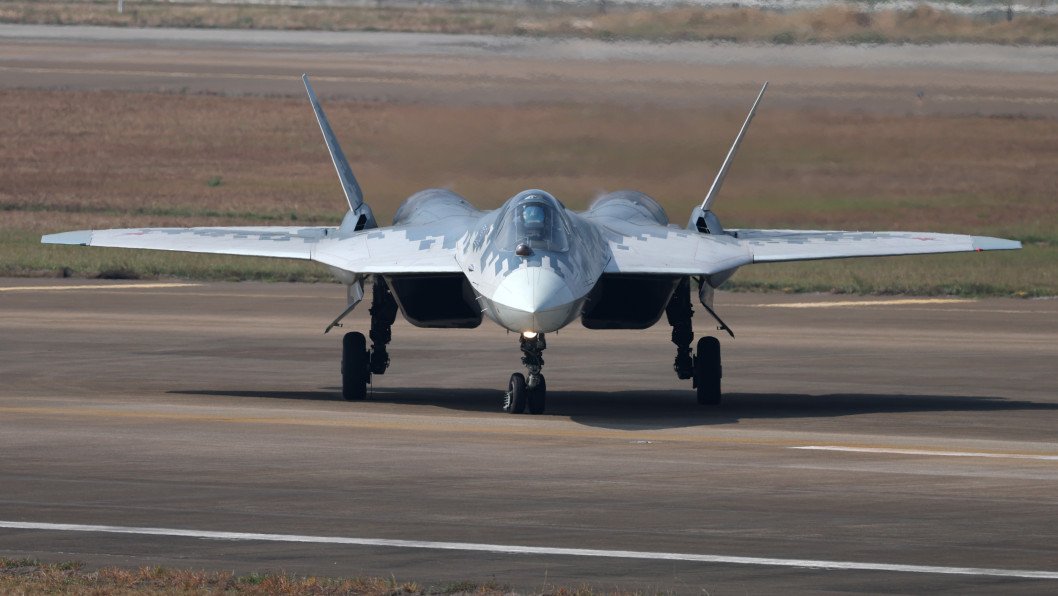
However, even given the fighters’ extended range, the Russian Air Forces are still suffering a lot of losses, even on the ground. Recently, an incident occurred at a Russian bomber aviation regiment when the ejection system of the Su-34 or Su-24 jet activated onboard an aircraft parked inside its shelter.
The malfunction reportedly triggered an ejection while the jet was on the ground and static, resulting in the deaths of both the pilot and navigator, who sustained injuries described as “incompatible with life.”
Discuss this article:


-c439b7bd9030ecf9d5a4287dc361ba31.jpg "Photo of Katherina Popilnichenko")