- Category
- World
Russia Allegedly Developing Secret Project to Plant Nuclear Missiles on the Arctic Ocean Seabed
 Prefer U24 Media on Google
- Authors

-c439b7bd9030ecf9d5a4287dc361ba31.jpg "Photo of Katherina Popilnichenko")
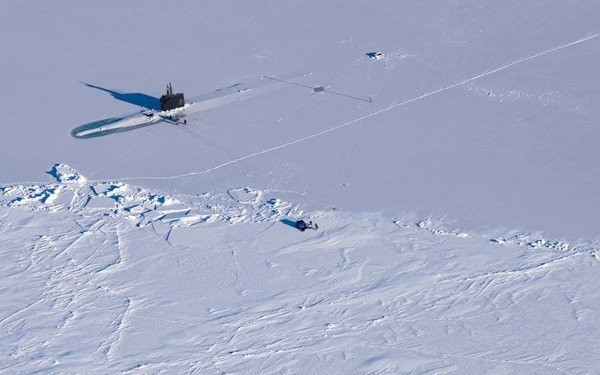
Russia is allegedly implementing a classified military project designed to place nuclear-capable missile delivery systems directly onto the Arctic Ocean seabed.
A joint investigative report published by German public broadcasters WDR and NDR, which draws on findings from Tagesschau on May 21 and intelligence assessments from NATO countries, outlines a highly secretive program codenamed Skif.
We bring you stories from the ground. Your support keeps our team in the field.
Western intelligence data indicates that the planned strategy involves anchoring these specialized missile systems inside custom-built silos or storage containers resting on the ocean floor, reaching depths of several hundred meters in some areas.
These submerged assets are intended to remain hidden underwater for extended periods, utilizing a remote activation mechanism to execute launches once an official order is transmitted.
To construct the underwater infrastructure required for the project, NATO intelligence suggests Russia could deploy the specialized military transport vessel Zvezdochka, a ship based in Severodvinsk that is modified to move oversized naval equipment.
Operational tracking also points to the likely involvement of the unique submarine Sarov, an experimental vessel previously linked to covert trials of advanced maritime technologies.

The strategic premise of hiding weapons of mass destruction on the seabed is a concept that was heavily evaluated during the Cold War.
These specific security risks led to the implementation of the 1971 Seabed Arms Control Treaty, an international agreement signed by dozens of countries, including the Soviet Union and the United States, which bans the deployment of nuclear weapons or other weapons of mass destruction on the ocean floor outside territorial waters.
The underlying military logic indicates that hiding nuclear systems in deep ocean zones makes them exceptionally difficult to locate, track, or neutralize.
If the intelligence surrounding the Skif program is fully verified, it reveals a concerted effort by Russia to bypass international legal limits and create a highly covert addition to its nuclear deterrence posture.

The development follows a recent report indicating that NATO is organizing a new defensive monitoring deployment called the Arctic Sentry mission. The alliance initiative is designed to address expanding military maneuvers conducted by both Russia and China within the Arctic region.
Earlier, Yle reported that Russia is reactivating a Soviet-era military base in Petrozavodsk near the Finnish border to host the newly formed 44th Army Corps. Satellite imagery shows new barracks, vehicle buildup, and radar installations, with local authorities confirming Kremlin support. Despite the expansion, much of the corps remains deployed in Ukraine.
Discuss this article:
-4a56a6b482ec132402c16ef6fcabf9a2.png)


-72b63a4e0c8c475ad81fe3eed3f63729.jpeg "Photo of Cyril Barabaltchouk")

-111f0e5095e02c02446ffed57bfb0ab1.jpeg "Photo of Roman Kohanets")