- Category
- Latest news
Vietnam Buys 40 Russian Su-35 Fighters in Covert $8 Billion Weapons Pact—With Oil Payments to Dodge Sanctions
 Prefer U24 Media on Google
- Authors


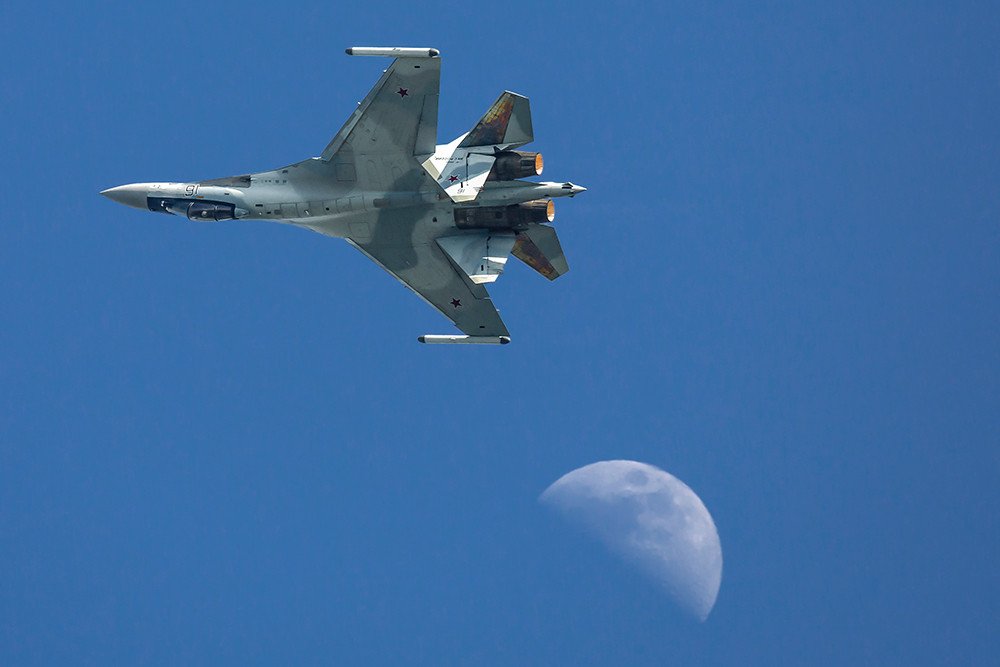
Vietnam has significantly increased its military purchases from Russia despite US efforts to counter Moscow’s war economy—and has done so using concealed financial channels, according to an investigation by The New York Times on October 27.
The probe, based on internal documents from Russian state exporter Rostec and interviews with officials from Vietnam, the US, and elsewhere, offers a rare view into how Vietnam’s willingness to buy Russian systems has quietly tipped its strategic alignment.
👀 The Air Force has published a video of shooting down of Russian Su-35 fighter. pic.twitter.com/CudiAJucdm
— UNITED24 Media (@United24media) June 7, 2025
Under the administration of Joe Biden, US-Vietnam ties reached unprecedented levels, yet Russia has simultaneously worked to deepen arms sales to Hanoi—a trend analysts say was aided by certain inconsistencies in the prior US posture under Donald Trump.
Vietnam halted major purchases early in the war in Ukraine, but by 2024, it had resumed negotiations for large Russian arms deals—and when Trump returned to office, the process accelerated, according to the documents, obtained by The New York Times.
"Kickoff" (Thread)
— Lee Ann Quann (@AnnQuann) December 8, 2022
Sukhoi Su-30 multi-role fighters of Vietnam People Air Force dropping countermeasures as part of the opening ceremony of Vietnam International Defense Expo 2022 (VIDE 2022). Today, 8 December, is the 1st day of the 3-day-long expo.
Expect spamming from me! pic.twitter.com/nBCZwIjvtA
In mid-2025, military sources in Vietnam began circulating unconfirmed rumors that new multi-billion-dollar contracts with Russia were imminent.
Documents from Rostec identify Vietnam under the discreet label “Customer 704.” According to the sources and those documents, one deal could be worth ~$8 billion and include up to 40 new fighter jets.
"Wings of steel"
— Lee Ann Quann (@AnnQuann) October 18, 2022
Sukhoi Su-30MK2 multirole fighters of Vietnam People Air Force (VPAF) gearing up for the training season. Fielding a total of thirty five airframes, VPAF is the fifth biggest operator of Su-30. VPAF also uses Su-27, the predecessor of Su-30 (eleven airframes). pic.twitter.com/J6hZjlGLXp
Rostec files also show that Vietnam was listed to receive nine electronic-warfare systems for the Su-35 fighter in 2024, and 26 mobile ground-based jammers in 2025—the latter contract valued at ~$190 million.
To facilitate payments without triggering Western sanctions, Vietnam and Russia reportedly set up a specialized scheme: money flows through joint oil-and-gas ventures instead of traditional cross-border banking channels.
One Rostec memo complains of delayed payments because funds had to be routed through intermediary firms. A US Treasury sanctions list confirmed that at least one Hanoi company connected to these transactions was officially black-listed in 2024-25.
"Resumption"
— Lee Ann Quann (@AnnQuann) March 8, 2023
Su-22M4 (single-seater) and Su-22UM3K (two-seater) of Vietnam People Air Force being prepped for flights. The crash of a Su-22M4 in early 2023 resulted in some disruptions but squadrons that operate the type have started carrying out sorties like normal once again. pic.twitter.com/kjDy8NF4HN
Vietnam has historically depended on Soviet and Russian arms, but its current initiative is seen as a broader geopolitical shift: Hanoi is diversifying suppliers and hedging between Beijing, Moscow, and Washington as regional tensions intensify.
One senior Vietnamese official told NYT anonymously: “The US must accept that Vietnam’s defense transition to a more diversified source of supply is a long‐term process… It cannot be done overnight. Instead of pressuring Vietnam to stop purchasing weapons from Russia, the US should boost cooperation in non-military sectors.”
Earlier, reports emerged that Russia and Vietnam developed a secretive financial workaround to conceal arms deal payments and bypass US and Western sanctions, according to internal Vietnamese government documents.
Discuss this article:


-c439b7bd9030ecf9d5a4287dc361ba31.jpg "Photo of Katherina Popilnichenko")