- Category
- Latest news
Washington’s Next Frontier: America Builds a Space Triad to Fight China and Russia Above the Earth
 Prefer U24 Media on Google
- Authors


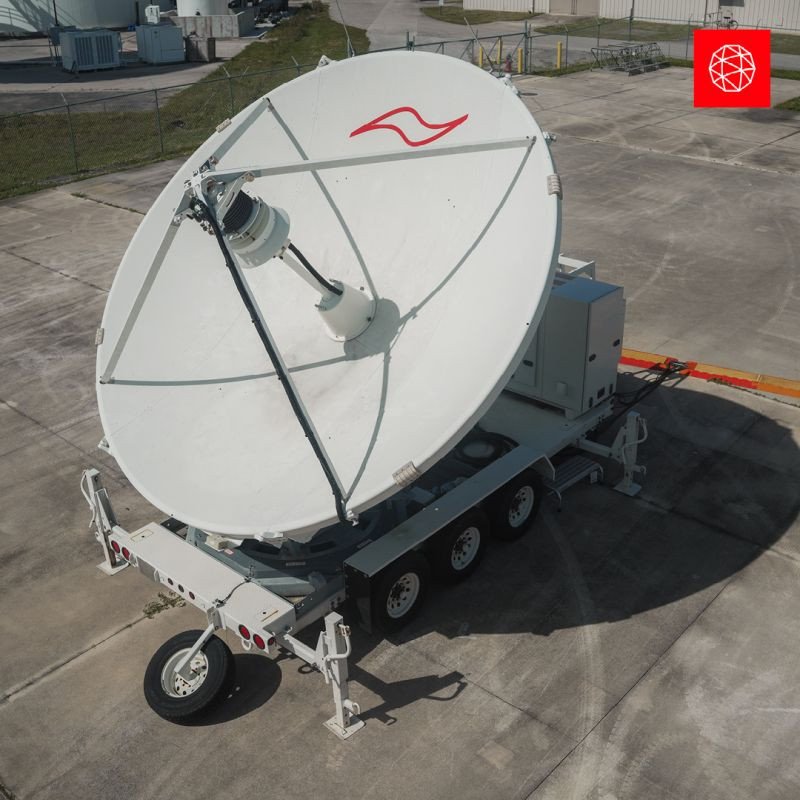
The US Space Force is deploying a new generation of non-destructive satellite jammers designed to disrupt Chinese and Russian space-based surveillance and communication systems without creating orbital debris, Army Recognition reported on November 12.
According to Bloomberg’s reporting, cited by the Army Recognition, the Space Force is introducing two new “reversible” counterspace weapons—L3Harris’s Meadowlands and the Remote Modular Terminal (RMT)—which will operate alongside the existing Counter Communications System (CCS), the service’s long-standing space jamming platform.
Together, these three systems form what officials have called a “layered space-control triad”, a coordinated family of tools able to degrade enemy satellite links at different ranges and scales.
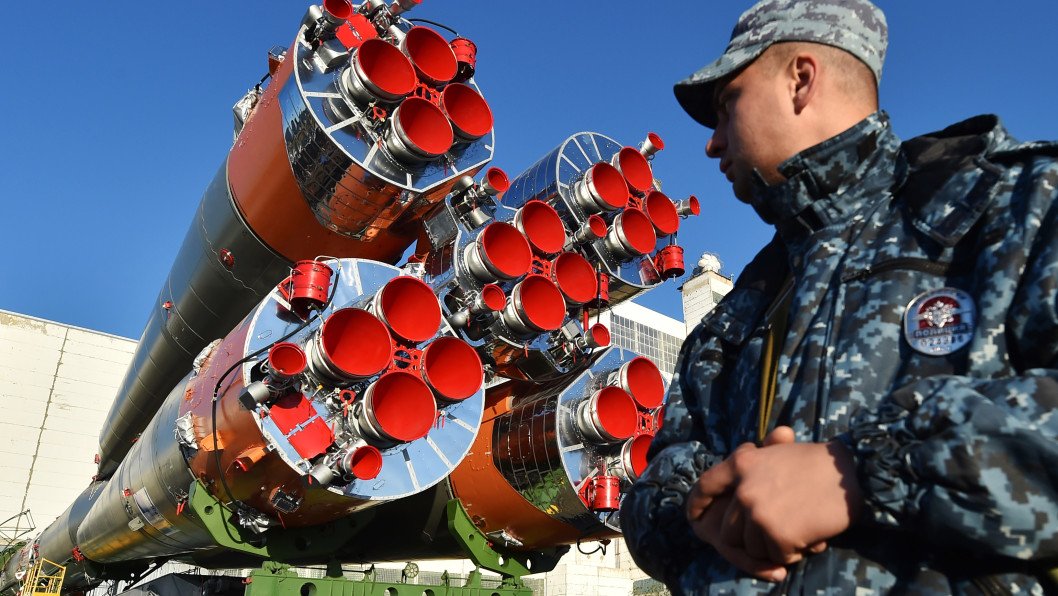
Army Recognition noted that the jammers will be dispersed globally and remotely operated through a new Space Electromagnetic Tactical Operations Center, which will coordinate with the Bounty Hunter network. This intelligence system tracks interference against US and allied satellites.
The new jammers are designed to blind, jam, or corrupt enemy satellite links temporarily, creating “reversible effects” that disrupt adversary command, control, and reconnaissance without escalating into a kinetic space war.
L3Harris’s Meadowlands, cleared for fielding in May 2025, is described as a next-generation offensive space control platform capable of focusing powerful radio-frequency energy to block satellite uplinks or corrupt data downlinks.
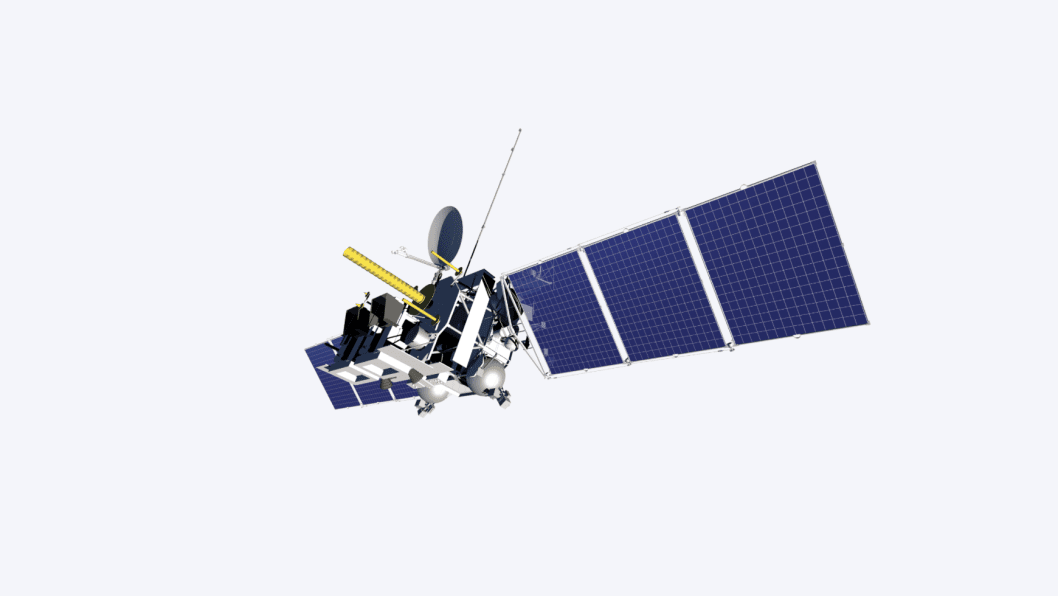
“A step-change in capability,” one company official told Army Recognition, referring to its compact mobility and faster setup time compared to older systems. By precisely timing and directing energy bursts, Meadowlands can sever targeting chains used by Chinese and Russian reconnaissance constellations during critical moments of conflict.
Meanwhile, the Counter Communications System, first declared operational in 2020, remains the backbone of US space electronic warfare.
The CCS Block 10.2 upgrade introduced software-defined jamming, improved cyber defenses, and multiyear sustainment contracts worth roughly $120 million, according to Bloomberg’s review of procurement documents.

The third leg, the Remote Modular Terminal, developed by Northstrat and CACI, represents the distributed layer of the triad—a compact, networked jammer that can be hidden at forward bases or allied sites and remotely operated. Bloomberg reported that as many as 24 RMT units are planned for deployment, giving commanders greater persistence and survivability through numbers rather than size.
The deployment comes as the Space Force warns that China now operates more than 510 intelligence, surveillance, and reconnaissance satellites, forming what the 2025 Space Threat Fact Sheet calls a “maritime kill web” capable of locating US carrier groups in the Pacific.
Timed jamming against these satellites—particularly low-Earth-orbit radar and relay platforms—would slow targeting cycles and restore maneuver space for American and allied forces.
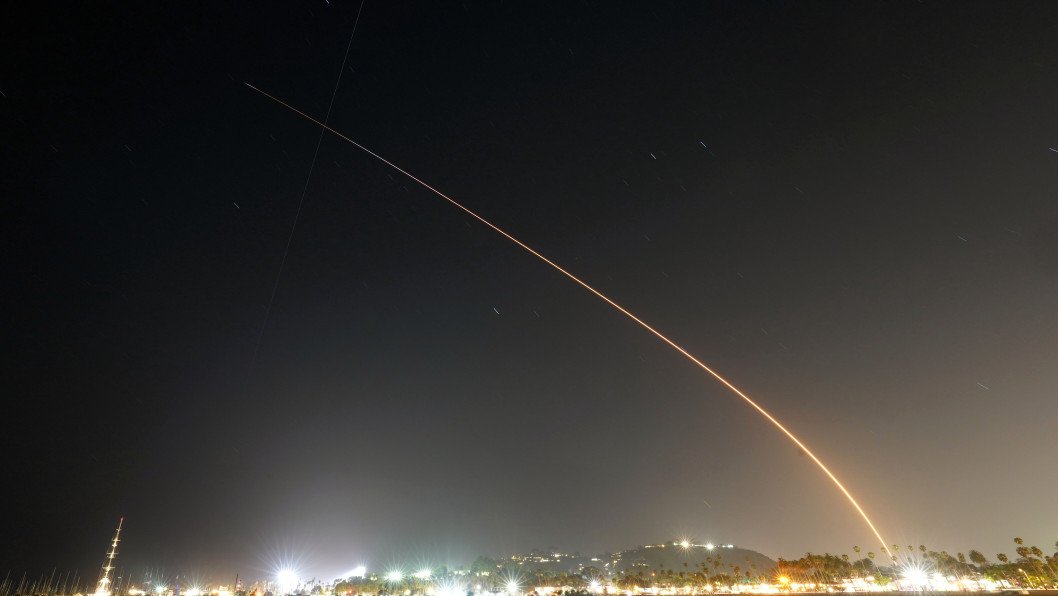
“Space must be seen as a warfighting domain,” said Gen. Chance Saltzman, the US Space Force Chief of Space Operations, emphasizing that non-kinetic tools like reversible jammers are critical for deterrence.
For Russia, the same systems provide a non-escalatory way to degrade satellite-enabled targeting and battle-damage assessment, a growing concern as Moscow invests heavily in electronic warfare and co-orbital threats. The Secure World Foundation’s 2025 report underscores that reversible interference allows the US to impose delay and confusion without crossing the threshold of destruction.
As Army Recognition summarized, CCS delivers persistent denial of satellite communications for major operations, Meadowlands provides agile, high-power ISR disruption, and RMT extends those effects through low-signature, remotely operated nodes. Integrated under the Space Electromagnetic Operations Center, they form a “reversible warfare triad” ready to blind adversary satellites long before a single missile is launched.

According to Bloomberg, the triad’s funding and doctrine both reflect a broader strategic pivot: contesting space without debris, escalation, or ambiguity, and maintaining freedom of action in orbit — not through destruction, but through precision-controlled disruption.
Earlier, reports emerged that US Raytheon was investing $53 million to expand its radar manufacturing capabilities in Massachusetts to meet surging global demand for its new Lower Tier Air and Missile Defense Sensor (LTAMDS)—a next-generation radar designed to bolster air and missile defenses against advanced threats, including hypersonic weapons, like Russian Kh-47M2 “Kinzhal.”
Discuss this article:



-72b63a4e0c8c475ad81fe3eed3f63729.jpeg "Photo of Cyril Barabaltchouk")
-e88c01988249cd60b6f04f79d29156b7.jpeg "Damage to “Cosmogony,” the largest painting in Ukraine, following a Russian drone attack on Lutsk on October 13, 2026. (Source: @sashyyna/Instagram)")

-dd35be762f08867915b1187d08f5b7cb.jpg "Aftermath of a Ukrainian Neptune missile strike on a Russian Borisoglebsk airfield, October 15, 2026.")