- Category
- Life in Ukraine
This Ranch Survived Russian Occupation. Now Its Horses Are Helping Ukrainian Soldiers Find Peace in the Pastures
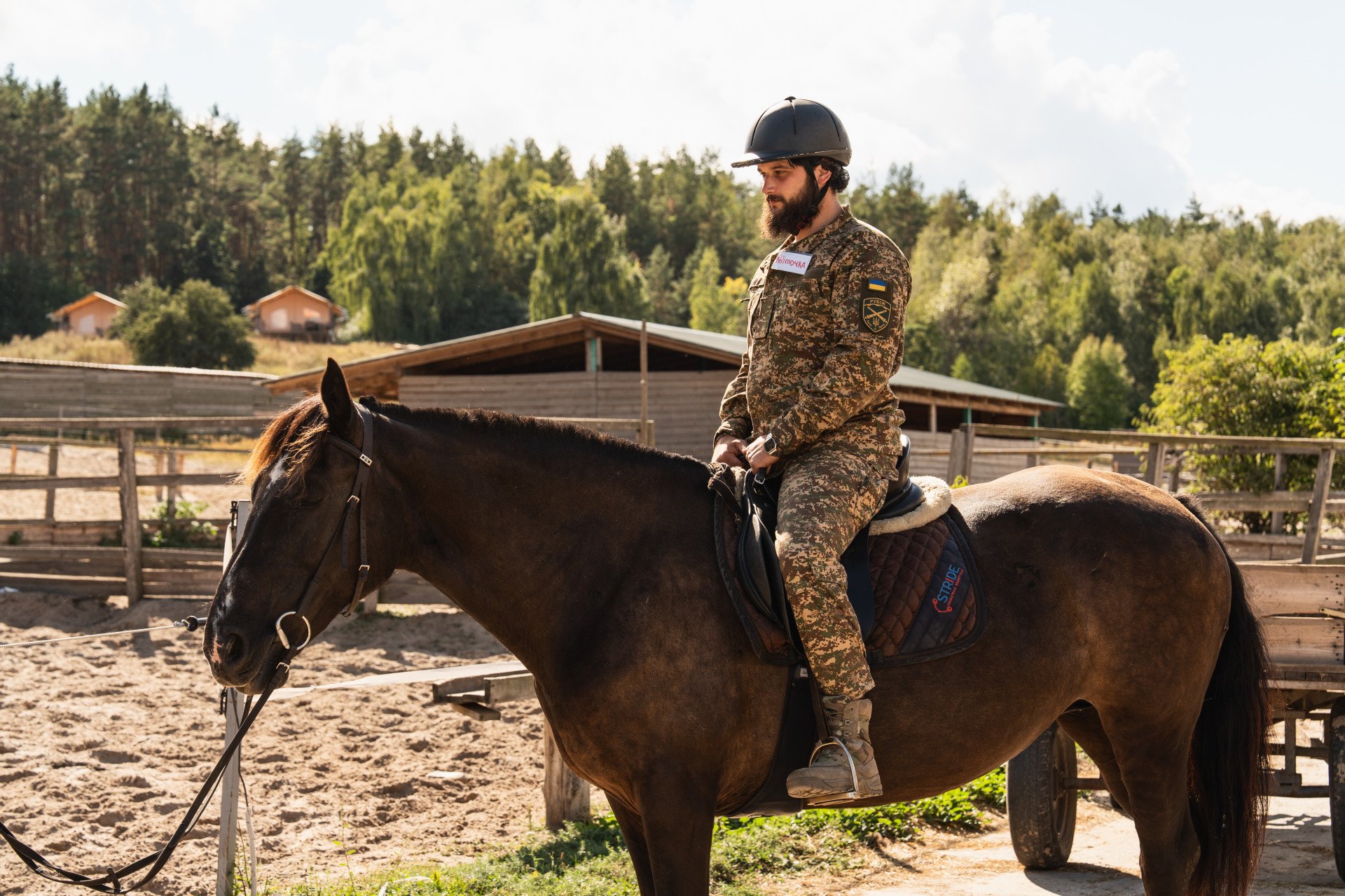
Far from the noise of artillery and military duty, a unique sanctuary offers frontline troops a different kind of reset—using animal partnership to help combat veterans process stress, anchor in the present, and catch their breath.
 Prefer U24 Media on Google
- Authors


Beyond the gates of Solomakha Ranch—a peaceful horse sanctuary on the outskirts of Kyiv—the day belongs to a unique kind of visitor. The sanctuary regularly sets aside its riding lessons and forest excursions to create a dedicated refuge, welcoming military personnel to spend a quiet day surrounded by nature and animals.
Run by EquiReHab Ukraine, the project hosts service members from across the armed forces. Today, a group from the National Guard's Rubizh Brigade arrives for an afternoon among the horses.
What lies ahead is a form of unorthodox recovery, nothing like a traditional therapy room. But to understand why this environment works, one has to look at the unique haven Solomakha Ranch built long before these sessions ever began.
"A soul, not a tool": How the ranch survived occupation
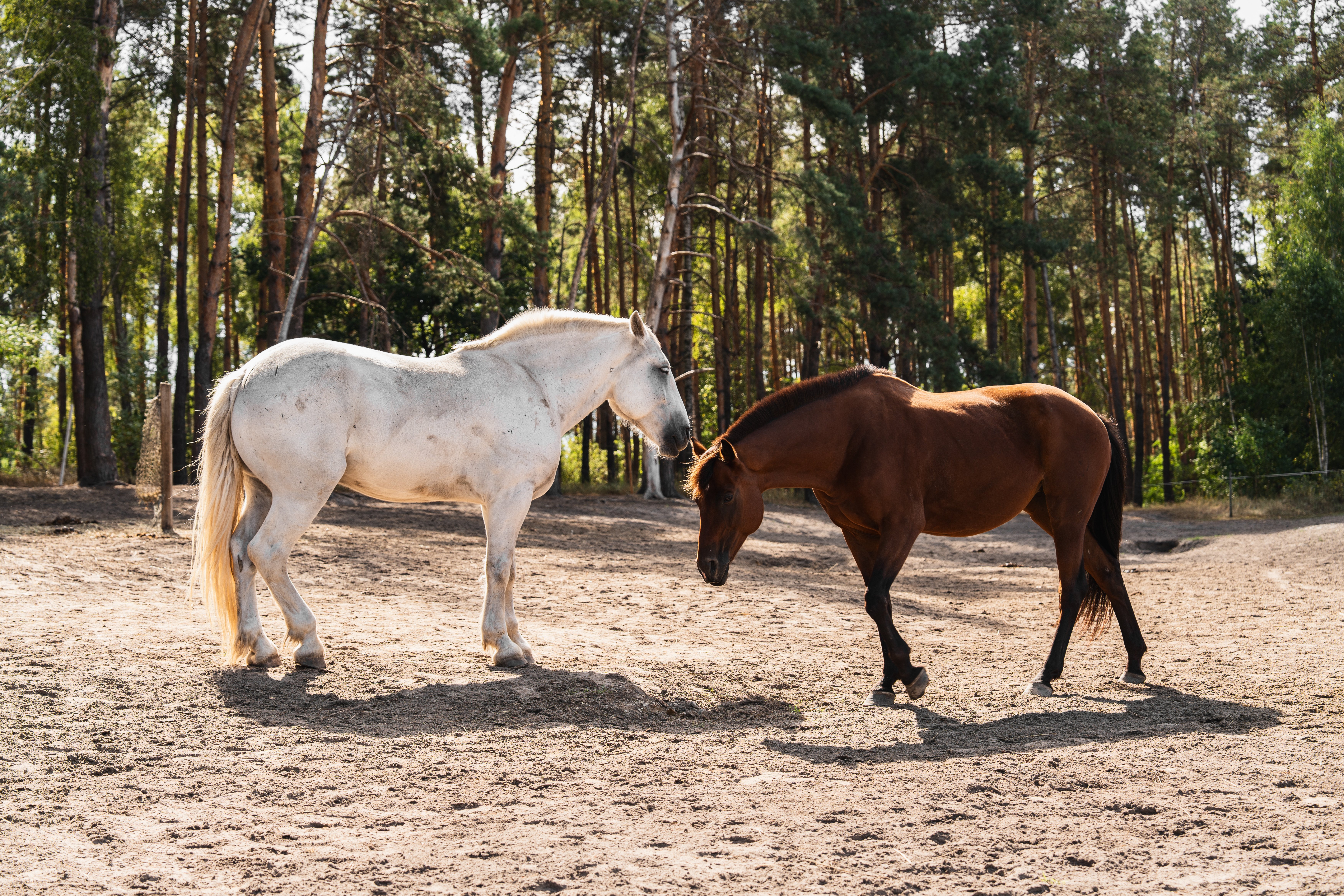
Located in the village of Lytvynivka, north of Kyiv, Solomakha Ranch isn't run like a standard riding club. Operating as an ethical sanctuary for over 60 horses living across several herds, the ranch is built on a clear philosophy: "a place where the horse is a soul, not a tool. Respect, not force, is the only way to true partnership."
Daily life isn't restricted to closed stalls, tight confinement, or the constant use of mouthpieces. Instead, handlers build connection through empathy and calm communication, fitting gear only when necessary and specifically adapted for individual training. Free from coercive force, the animals remain naturally grounded—making them ideal partners for mirroring and settling a soldier's nervous system.
That quiet reality was shattered in February 2022, when the ranch found itself directly in the line of fire as the Russian advance from Belarus toward Hostomel, Irpin, and Bucha swept through the region. Rockets and air strikes filled the sky constantly. On February 25, 2022, a Russian artillery shell exploded directly in the ranch courtyard. Shrapnel killed a 15-year-old bay horse named Lakrits, while another mare died shortly after as medical supplies were cut off during the initial assault.
Despite the immediate danger, the ranch’s grooms and trainers refused to abandon the property, remaining on site through continuous shelling and over a month of occupation to care for the herds. Relying on a single generator, well water, and rationed hay, the staff kept 58 horses alive until the region was liberated in late March.
In the months following liberation, the work shifted from basic survival to restoration. Sanctuary director Viktoriia Davydenko set out to turn the ranch into a place for military rehabilitation, dreaming of helping soldiers process visible and invisible trauma through equine therapy. To bring that vision to life, they launched EquiReHab Ukraine alongside a dedicated group of volunteer psychologists, trainers, and specialists to host dedicated sessions on site —transforming a sanctuary that survived its own trial under occupation into a refuge for defenders and emergency responders on the front lines and beyond.
I dream of developing equine therapy at the ranch. I want groups of soldiers to come to Solomakha Ranch so they can try this amazing method of healing visible and invisible wounds.
Viktoriia Davydenko
Solomakha Ranch director
The "Rubizh" brigade steps off high alert
Today’s visitors are eight defenders—seven men and one woman—from the National Guard’s "Rubizh" brigade. The unit famously held the line at nearby Hostomel Airport in February 2022, buying critical time to stall Russia’s advance on Kyiv.
Since then, Rubizh has operated as a battle-hardened combat formation deployed continuously across the eastern front. From the grinding urban battles in Bakhmut to holding key defensive lines in the Kharkiv region, the brigade’s personnel remain deeply engaged in active service—currently holding the line along the Pokrovsk direction in Donetsk region.
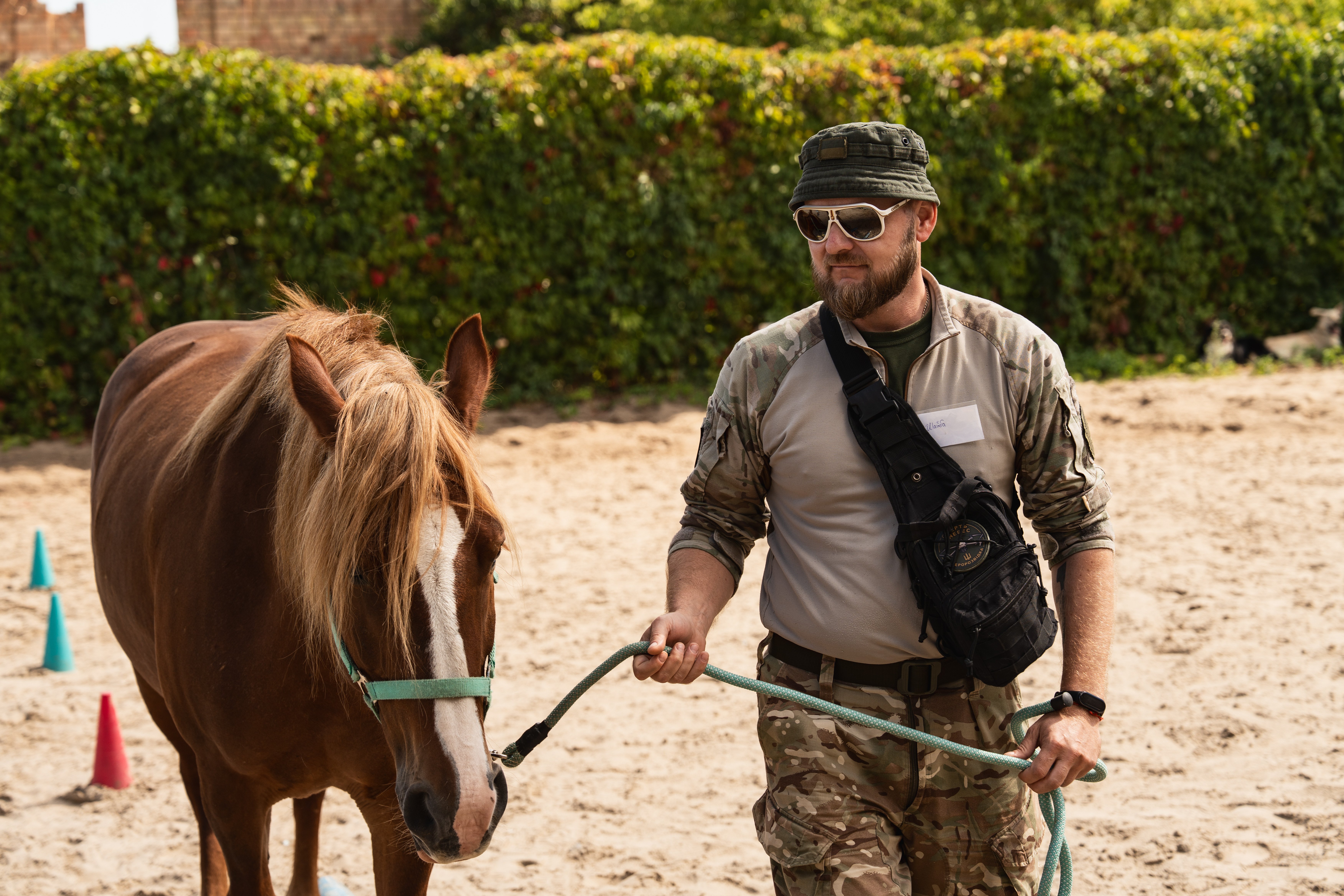
To offer a brief pause from that relentless operational tempo, coordinators brought a small group from the unit to the site. Shaiba, a defender with the brigade, had a simple reasion for coming: "I was looking for a calm day surrounded by nature and animals—they really help settle my mind after combat operations."
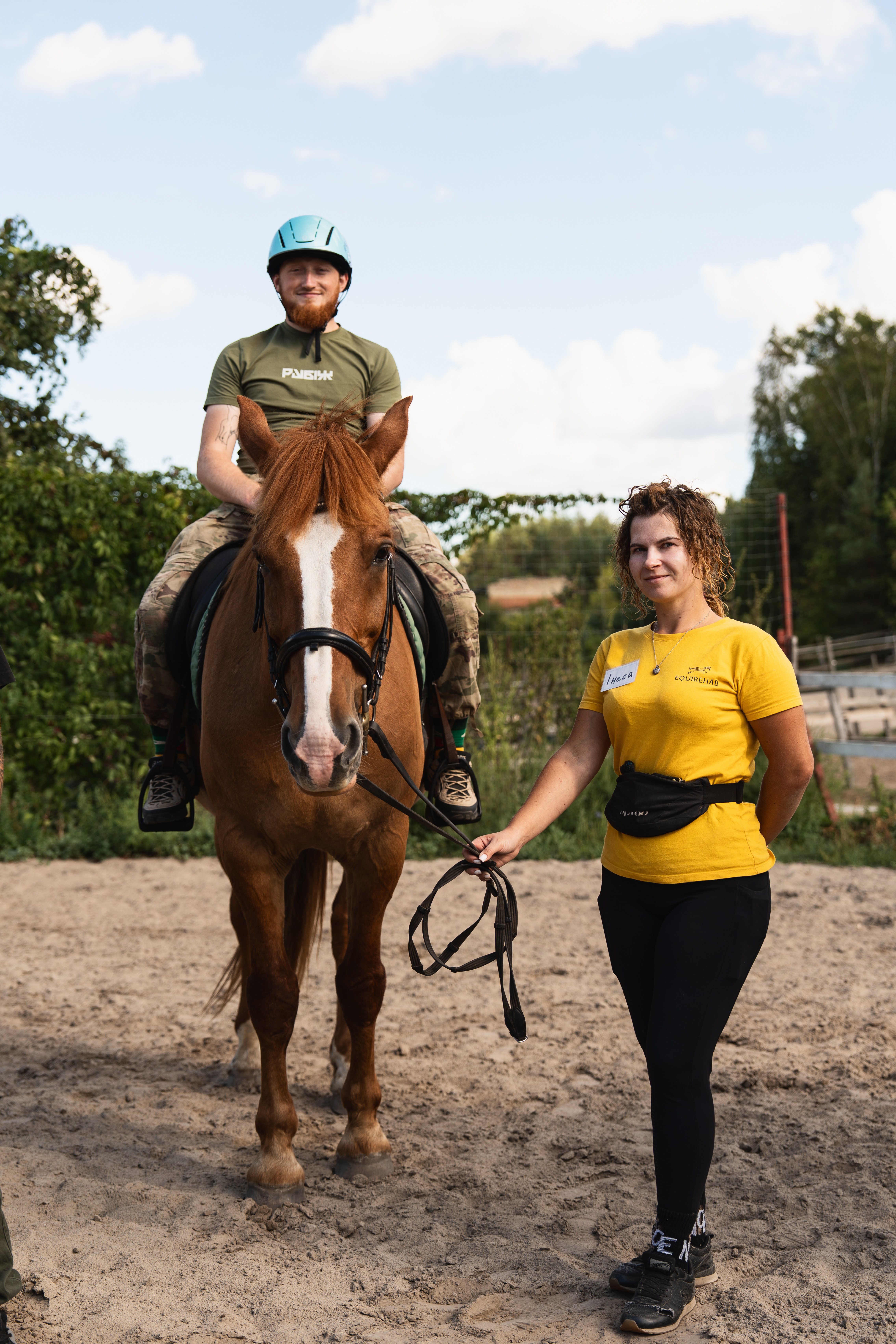
For Inesa, one of the horse handlers, welcoming these specific service members highlights the core purpose behind their work. "Today is indeed an extraordinary day for us," Inesa explains. "It differs from our ordinary days precisely in that today, our horses act as partners—helping soldiers anchor themselves in the present moment and relax, distract themselves with their own thoughts from our surrounding environment, and focus more on themselves."
Taking therapy out into the open field
Equine-assisted recovery isn't a novel experiment—it is a well-established practice globally, recognized for helping combat veterans process trauma. Sensitive to human emotion, a horse's quiet, steady presence helps ground a soldier’s hyper-vigilant nervous system, building trust naturally without pressure or force.
For troops trained to suppress fatigue and maintain constant operational readiness, stepping out of a clinical office and into an open pasture fundamentally changes how they let their guard down. Here, sessions are designed through a collaboration between equine specialists and mental health professionals, including Natella Dubashidze, head of the Kyiv-based psychology center Kyivskyi Dvoryk.
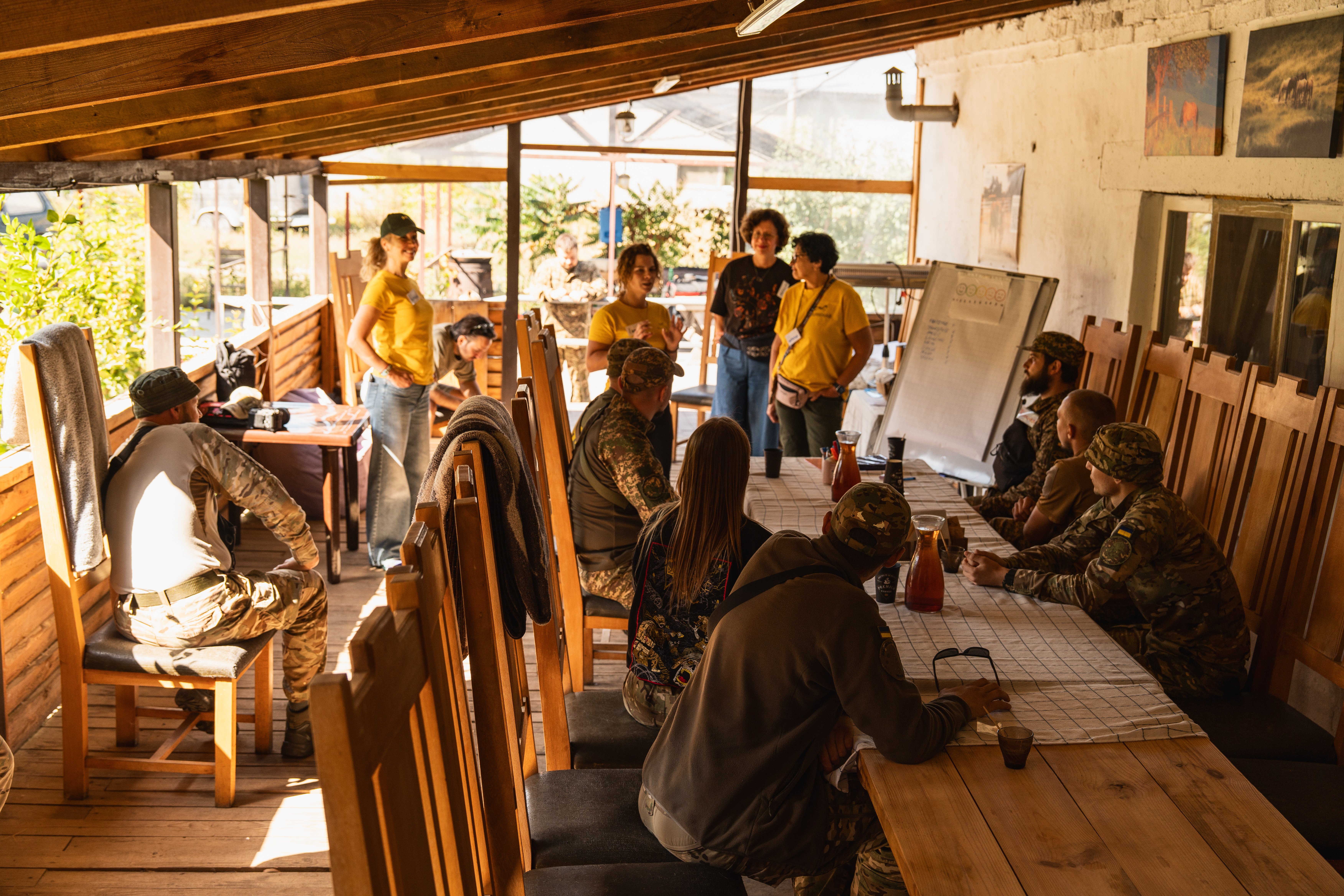
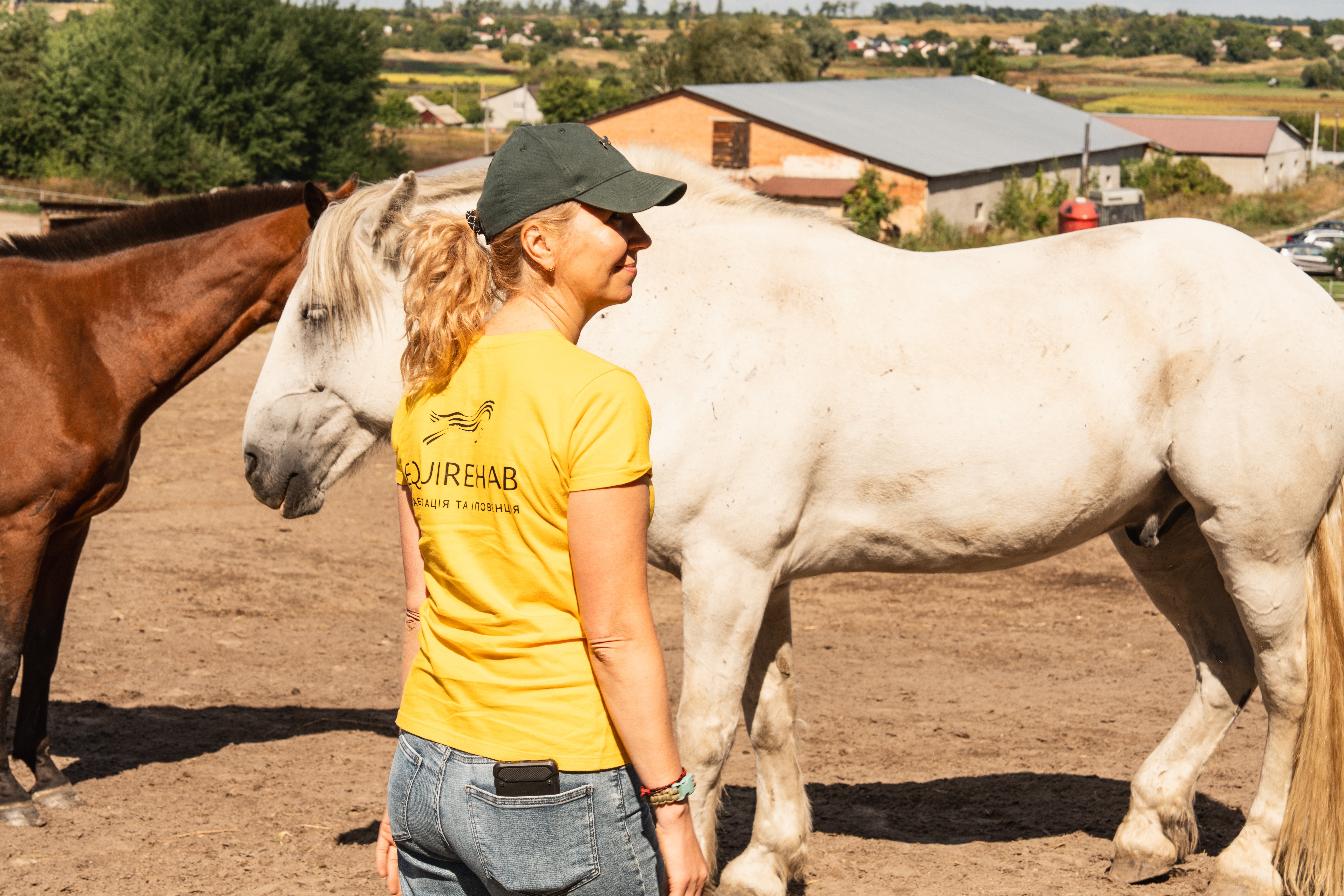
"I specialize in trauma therapies like CBT and EMDR, but I combine those tools with horses because we are working with human souls and emotional states," Dubashidze explains. "The horses become our co-therapists. The participants feel so much more comfortable here. Even soldiers who won't usually talk about their experiences open up here."
To guide this process, each session unfolds across four distinct stages: meeting the horses in the paddock, navigating groundwork obstacles in the arena, hands-on grooming back in the stables, and a concluding trail ride.
From pasture connection to forest trail rides
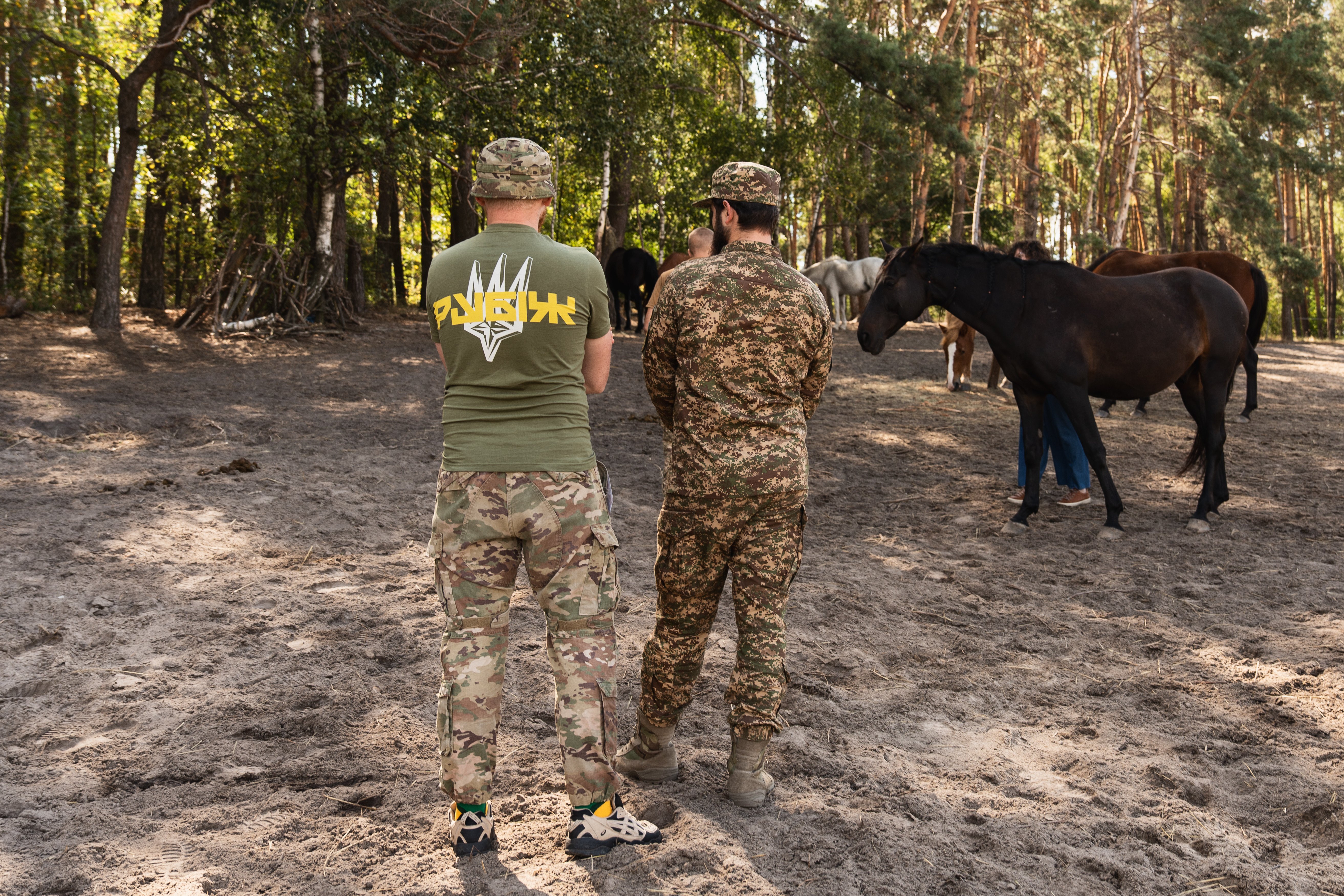
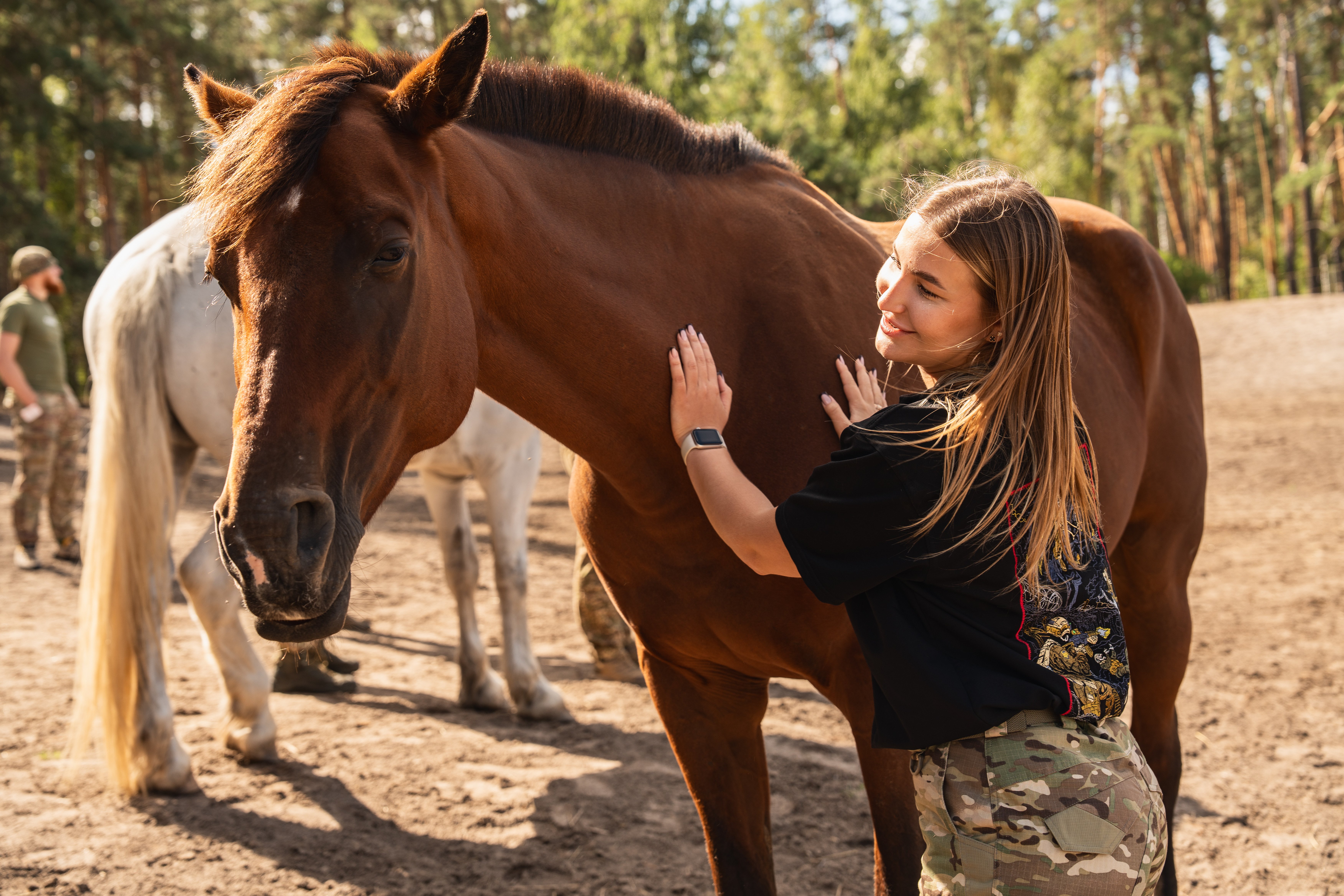
The day begins in the paddock, where soldiers make non-verbal contact with the horses. Without reins, saddles, or operational instructions, the defenders simply step into the field and allow the animals to approach on their own terms.
In the fenced arena, the focus turns to groundwork. Taking lead ropes, defenders guide the horses through turns and gates. Because horses refuse to respond to force, soldiers must adapt their body language, using clear posture and calm intention to move in tandem with their partner.
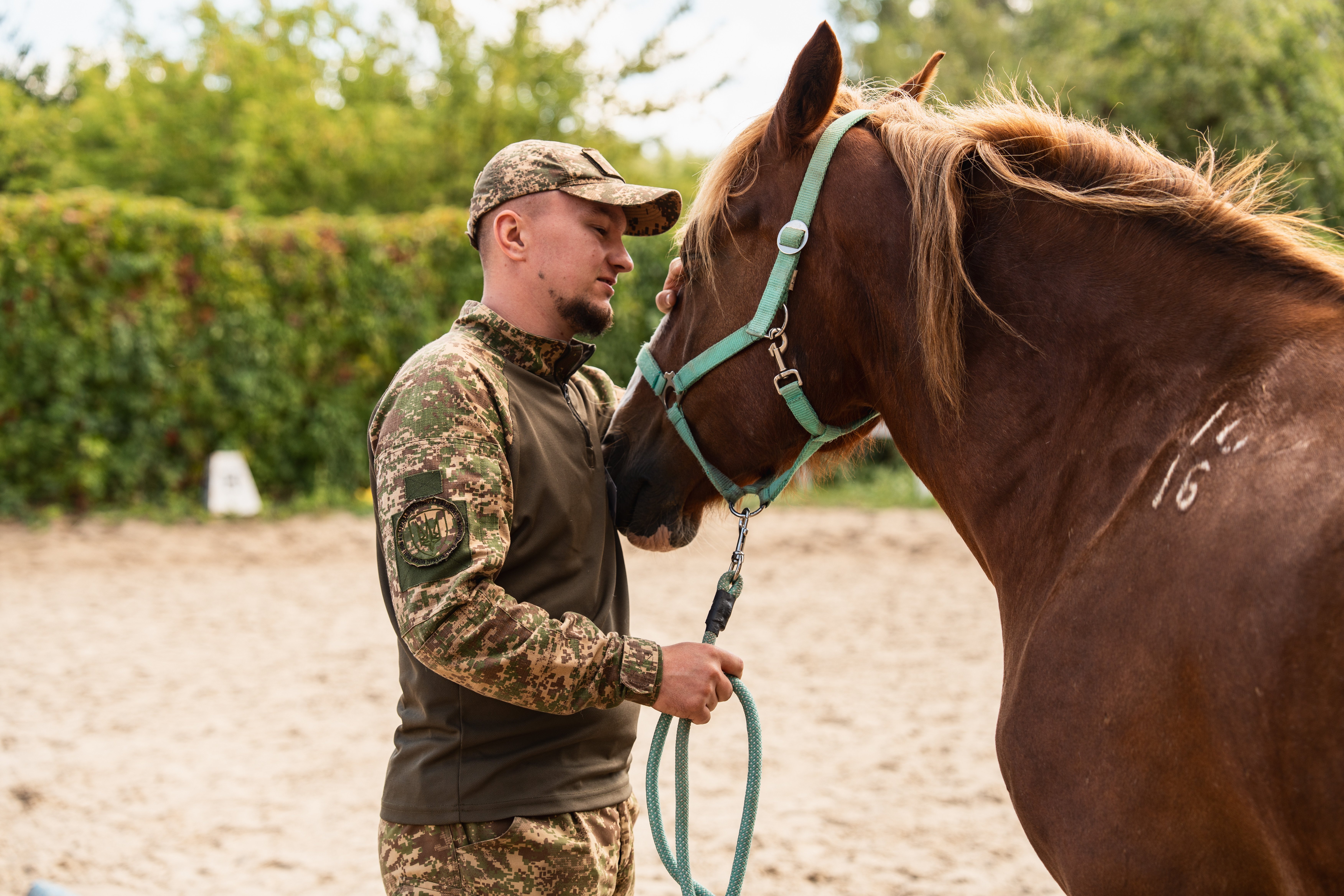
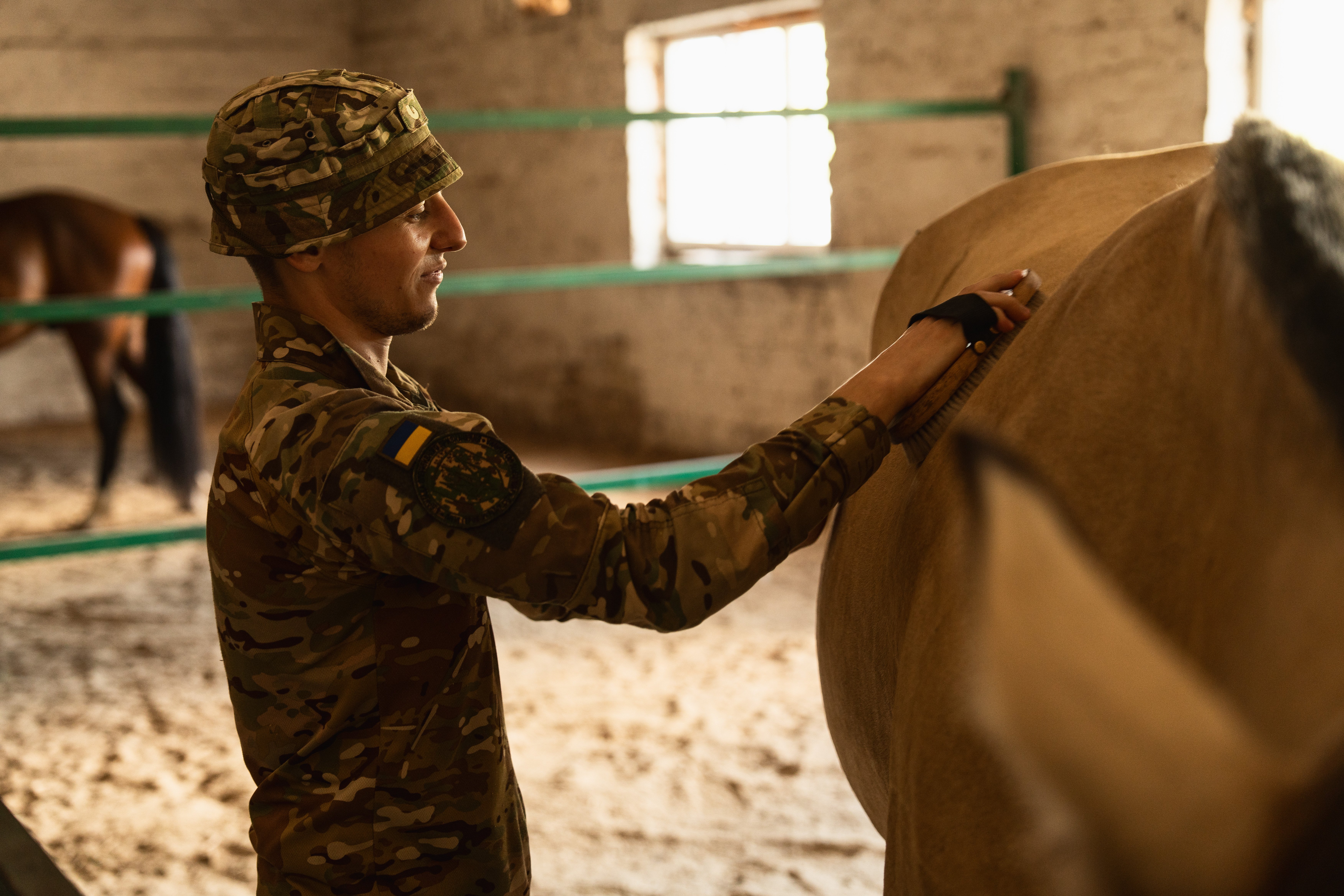
Inside the stables, the work becomes hands-on. Grooming creates an immediate, tactile connection. As Inesa notes: "These horses are extraordinarily balanced and safe for humans. With them, even someone with no experience can reconnect with parts of themselves hidden under stress, finding that relaxed, present state our soldiers need so much right now."
The afternoon concludes with a trail ride through the surrounding forest. Yet even under the trees, the war intrudes. Explosions echo overhead as Ukrainian air defenses intercept incoming Russian drones. Asked if the blasts might panic the herd, a handler notes quietly: "Unfortunately, the horses are used to it." Unfazed, the animals hold their pace, carrying the soldiers steadily through the rest of the ride.
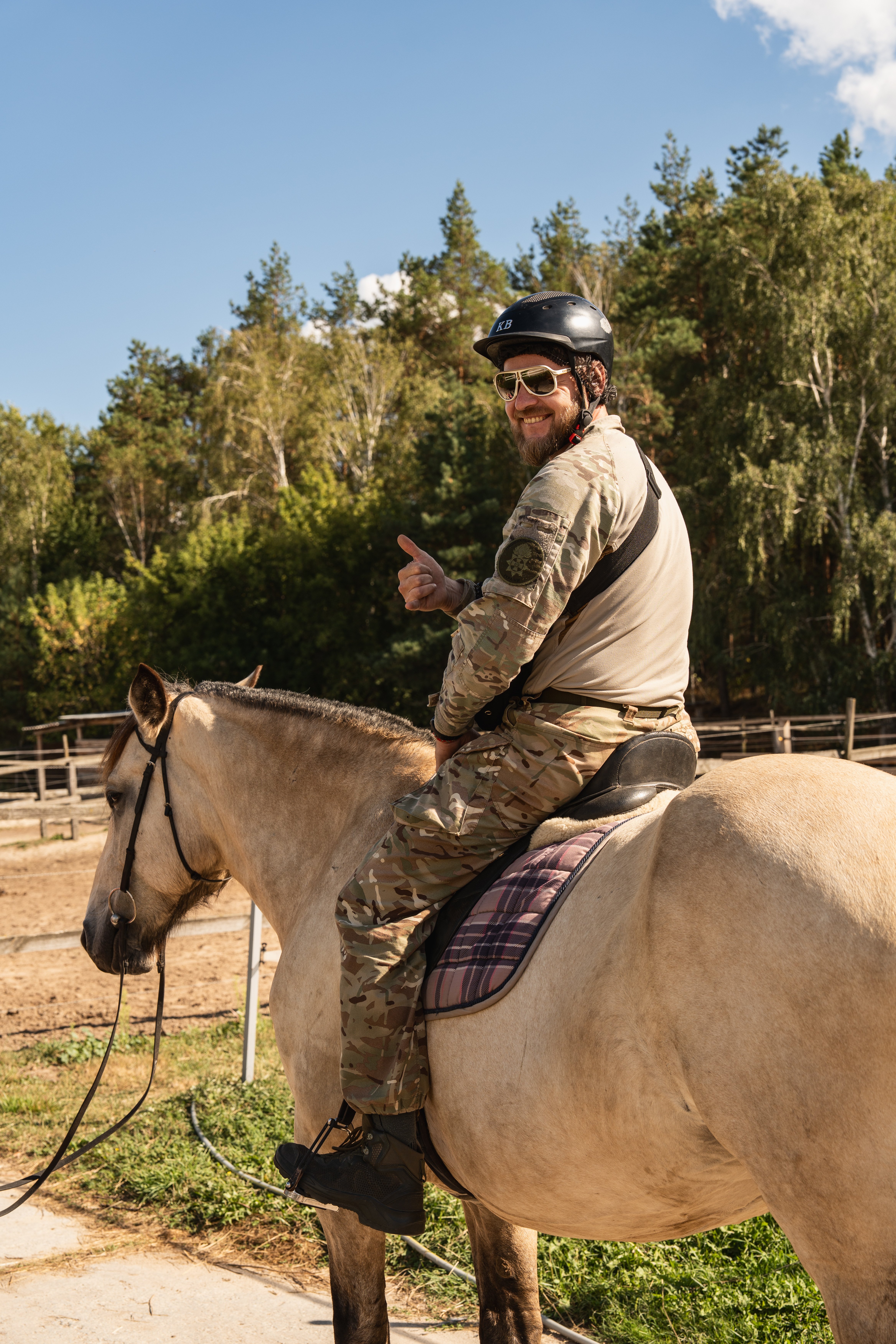
Finding peace before returning to duty
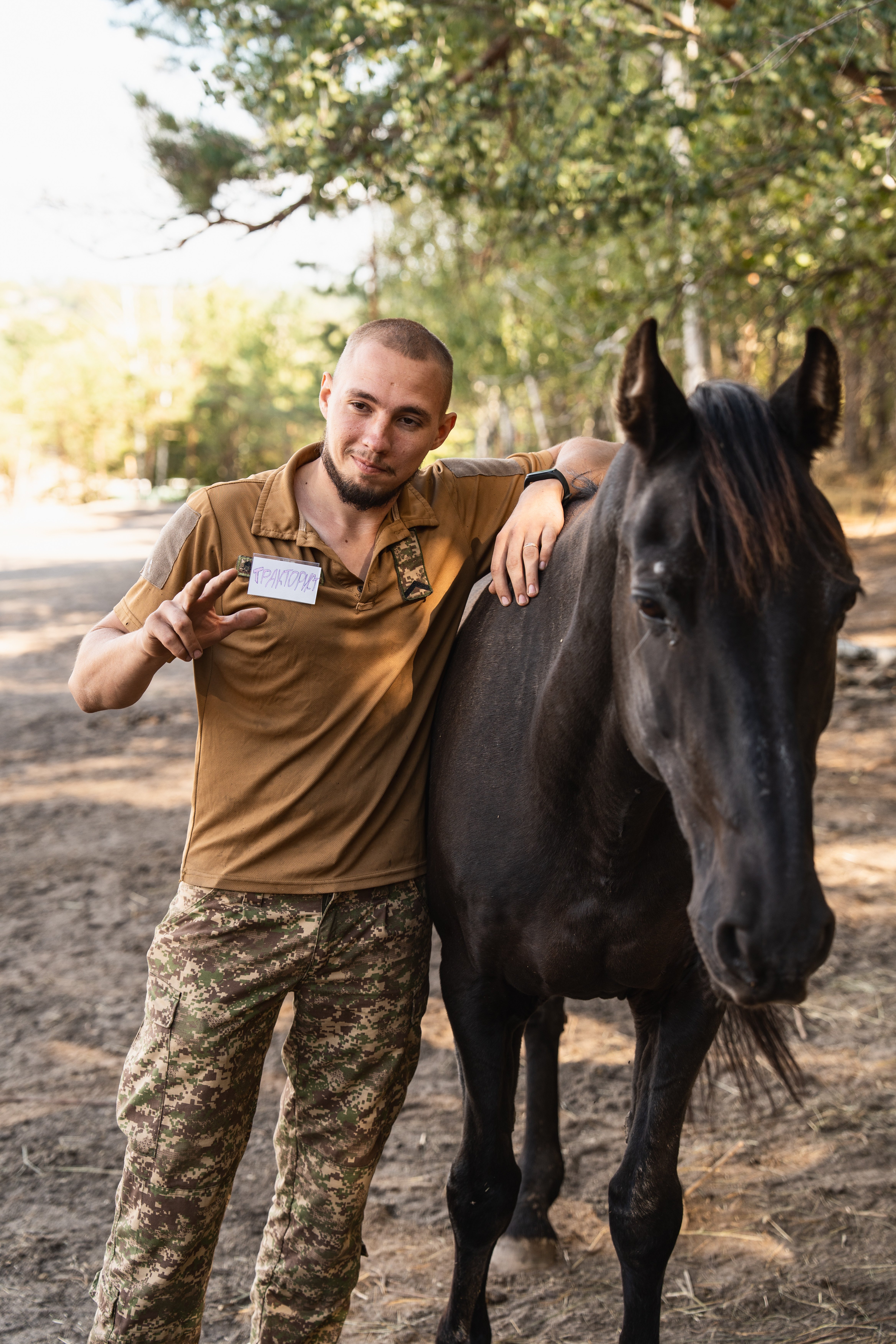
As the horses emerge from the trees and the ride comes to an end, the shift in atmosphere across the grounds is clear. For defenders returning to active service, the afternoon offered a rare moment of genuine ease.
"It feels awesome!" says Kvitochka, a defender from the Rubizh Brigade, reflecting on the experience after dismounting. "I'm still processing it after the ride—I honestly can't find the words to describe how good it feels."
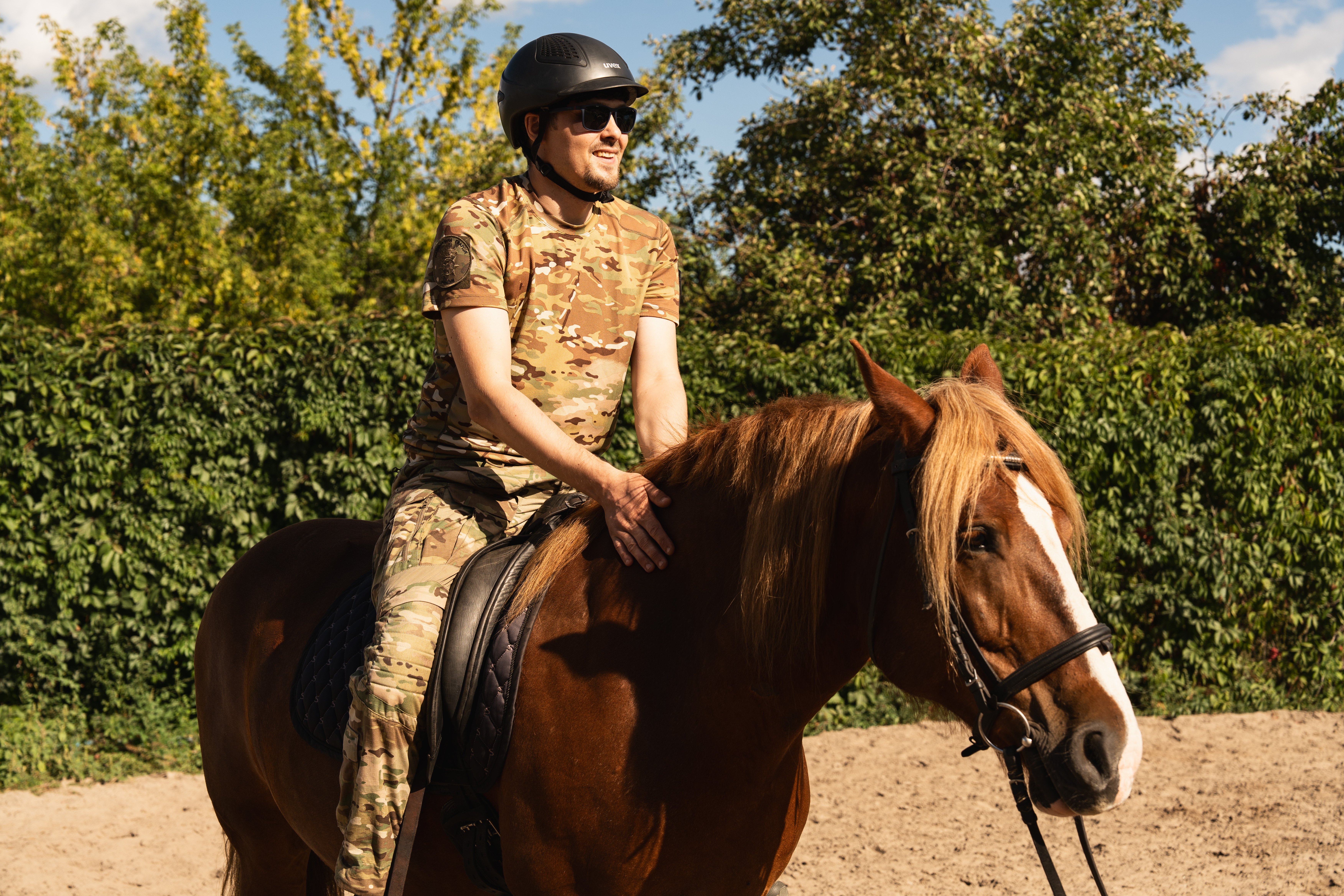
The impact of the visit often extends beyond a single afternoon. Before leaving, Kvitochka made plans to return during his next leave. "I’ve already sorted everything out to come back here with my family," he says.
For Shaiba, the day delivered on its simple objective of providing a quiet reset away from military duties. "Everything is super, everything is cool," he says, looking back over the site. "I'm thrilled. It's beautiful."
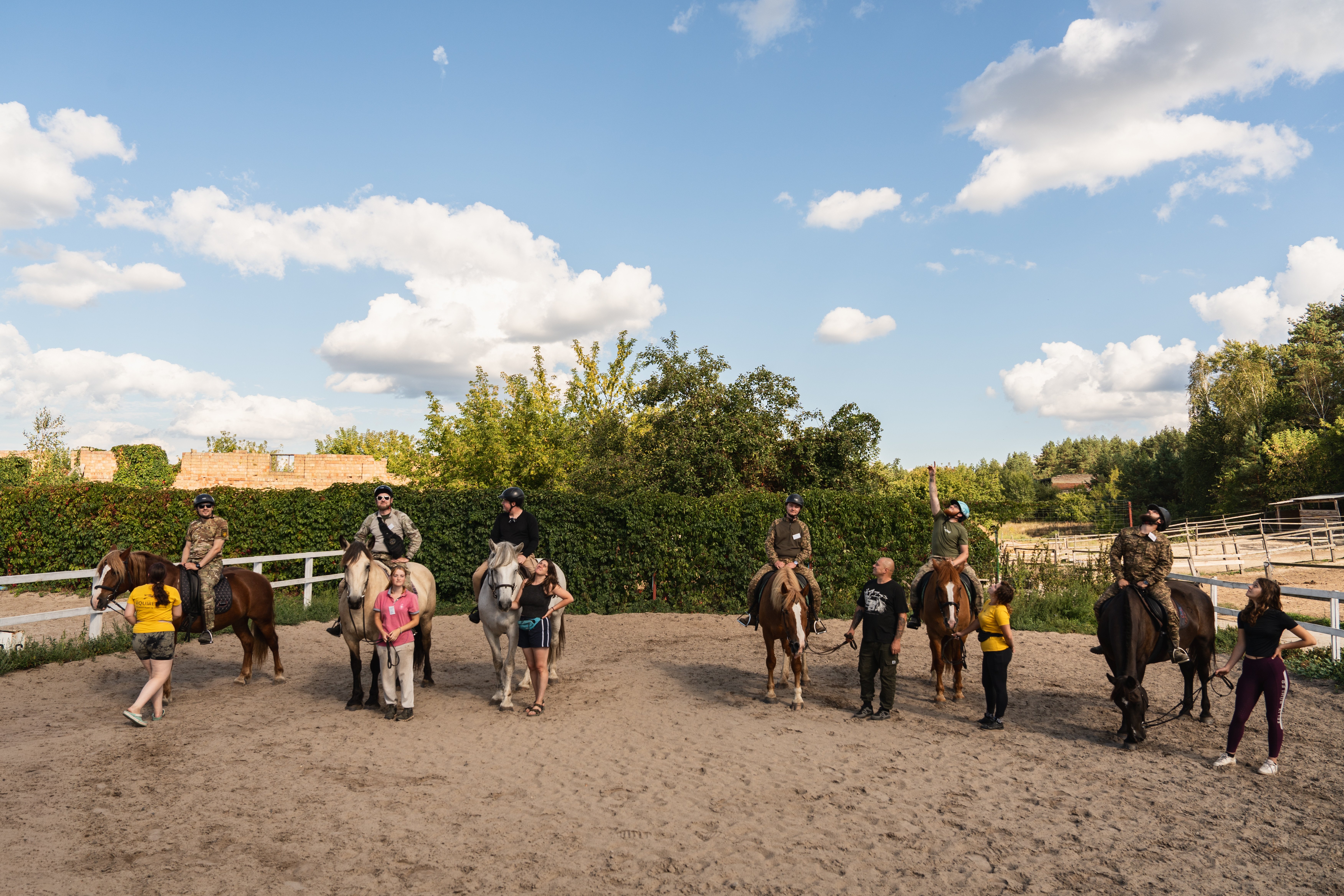
Beneath skies marked by air defense smoke trails, the day comes to an end for the visiting unit. For a few hours, EquiReHab’s charitable initiative offered what these soldiers needed most: a safe space to step off high alert and catch their breath before heading back to the front, one steady stride at a time.
Discuss this article:

-c439b7bd9030ecf9d5a4287dc361ba31.jpg "Photo of Katherina Popilnichenko")

-24deccd511006ba79cfc4d798c6c2ef5.jpeg "Photo of Louis Beaudemont")