- Category
- Life in Ukraine
After The Frontline: How Ukrainian Families Heal The Invisible Wounds of War
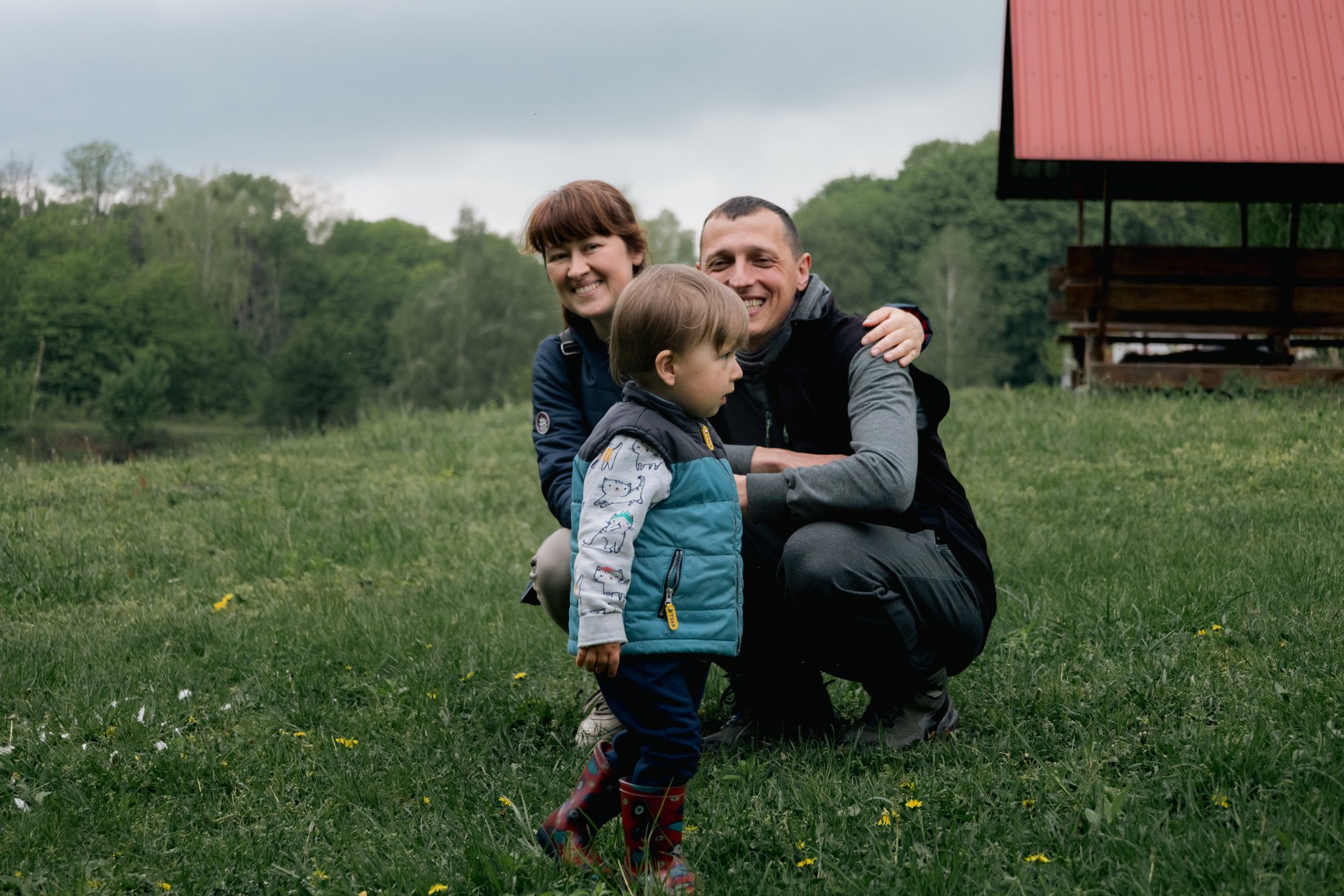
“They have an illusion—the veteran has an illusion, the wife has an illusion, the child has an illusion—that they can return to the life they had before the war. And they hurt themselves against this illusion,” says Liudmyla Frolova, psychotherapist, head of the multidisciplinary team of “Veteran’s Family,” Caritas-Spes Ukraine, which helps veterans to heal the invisible wounds of war.
 Prefer U24 Media on Google
- Authors

-24deccd511006ba79cfc4d798c6c2ef5.jpeg "Photo of Louis Beaudemont")
Russia’s full-scale invasion of Ukraine has caused profound upheaval, not only on the frontlines but also at the very heart of the country’s social and family fabric. Overnight, civilians were forced to put on uniforms, radically changing their relationship to freedom, their bodies, and their ability to make decisions.
We bring you stories from the ground. Your support keeps our team in the field.
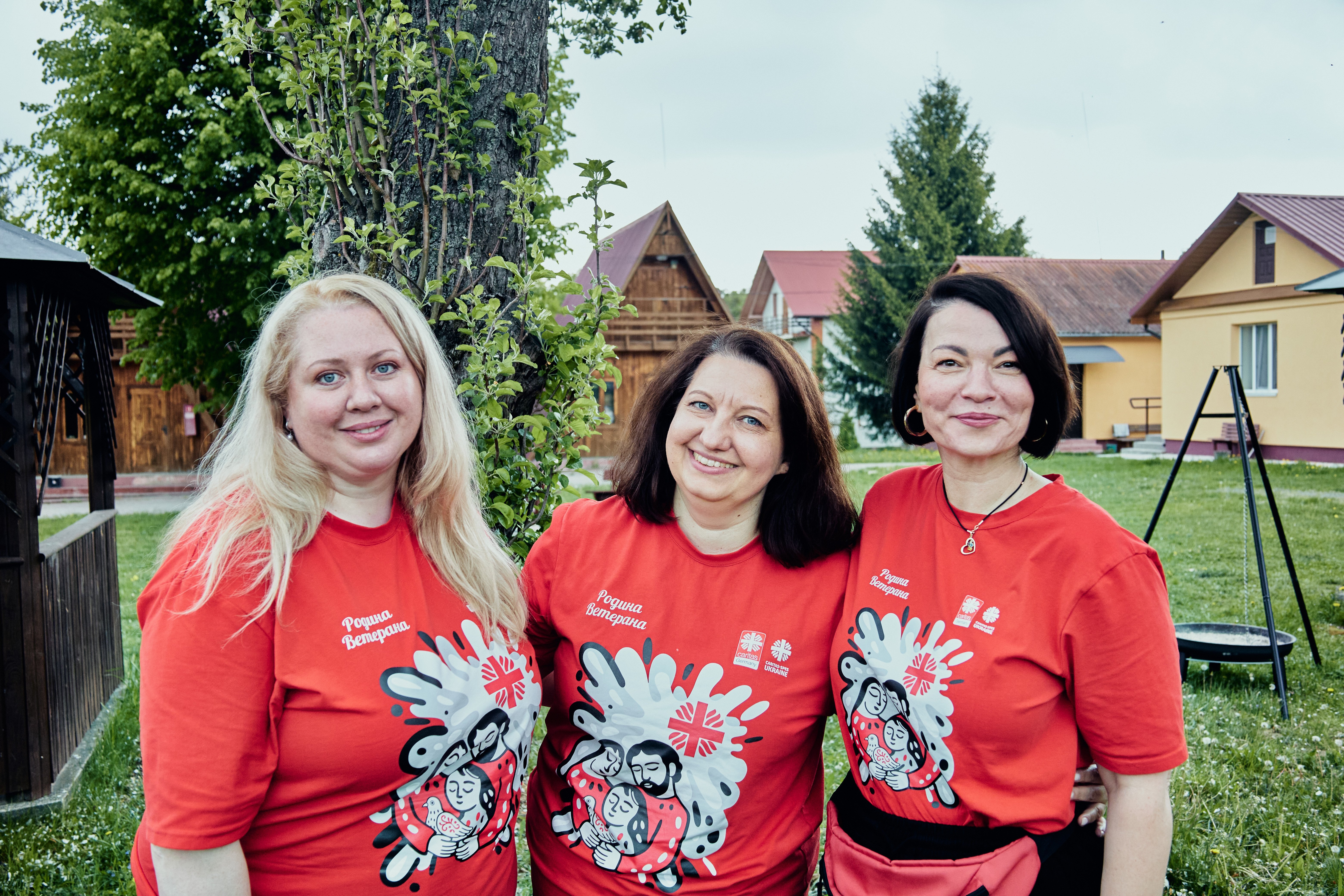
This brutal transformation represents an immense shock for the individual, but it also sends shockwaves through the entire family unit. In response to this crisis, innovative initiatives have emerged, such as the project “Veteran’s Family: Social and Psychological Rehabilitation for Veterans and Their Families,” which exists thanks to the financial support and donations of Caritas Norway and Caritas Germany.
Breaking the silence: the first steps to healing
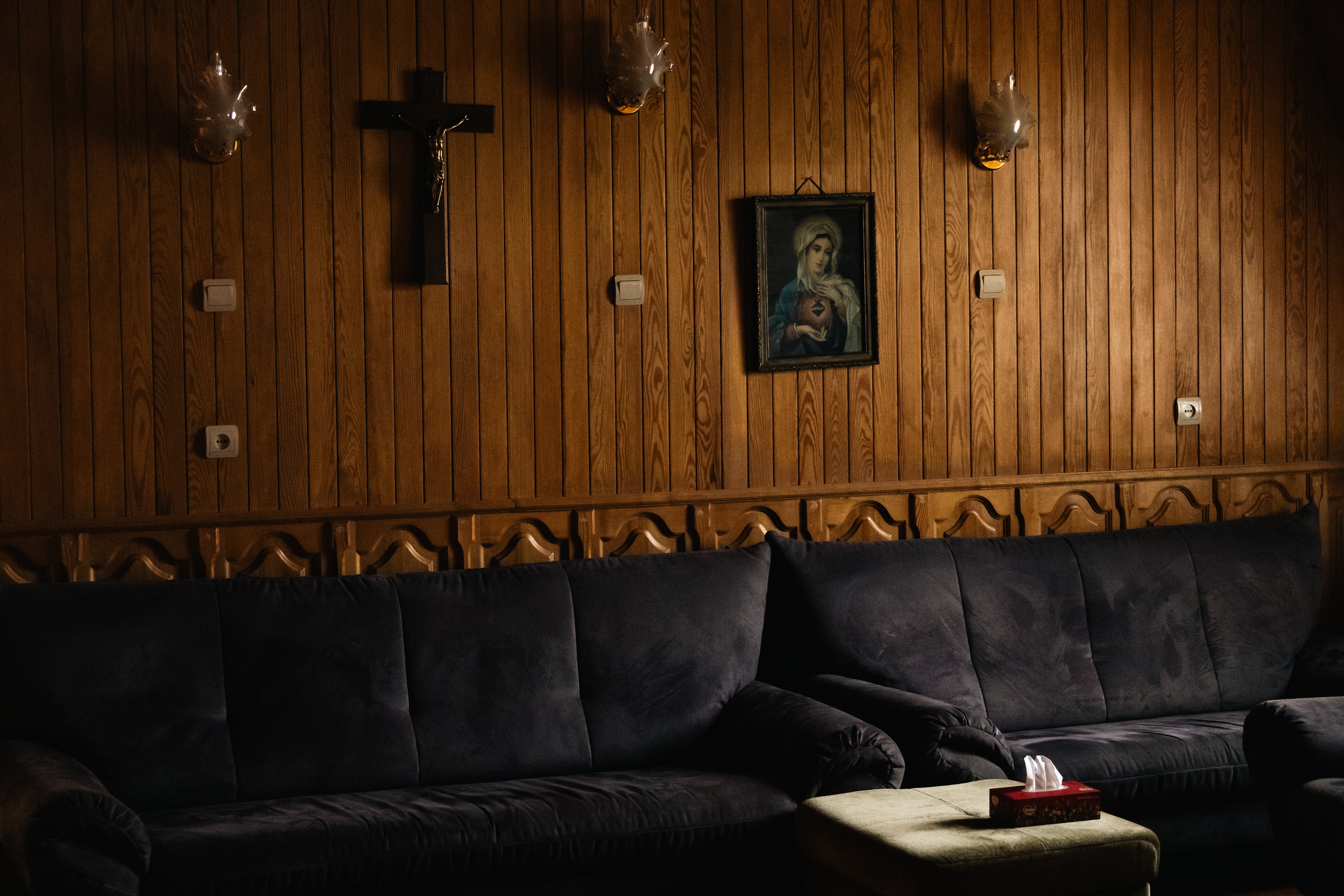
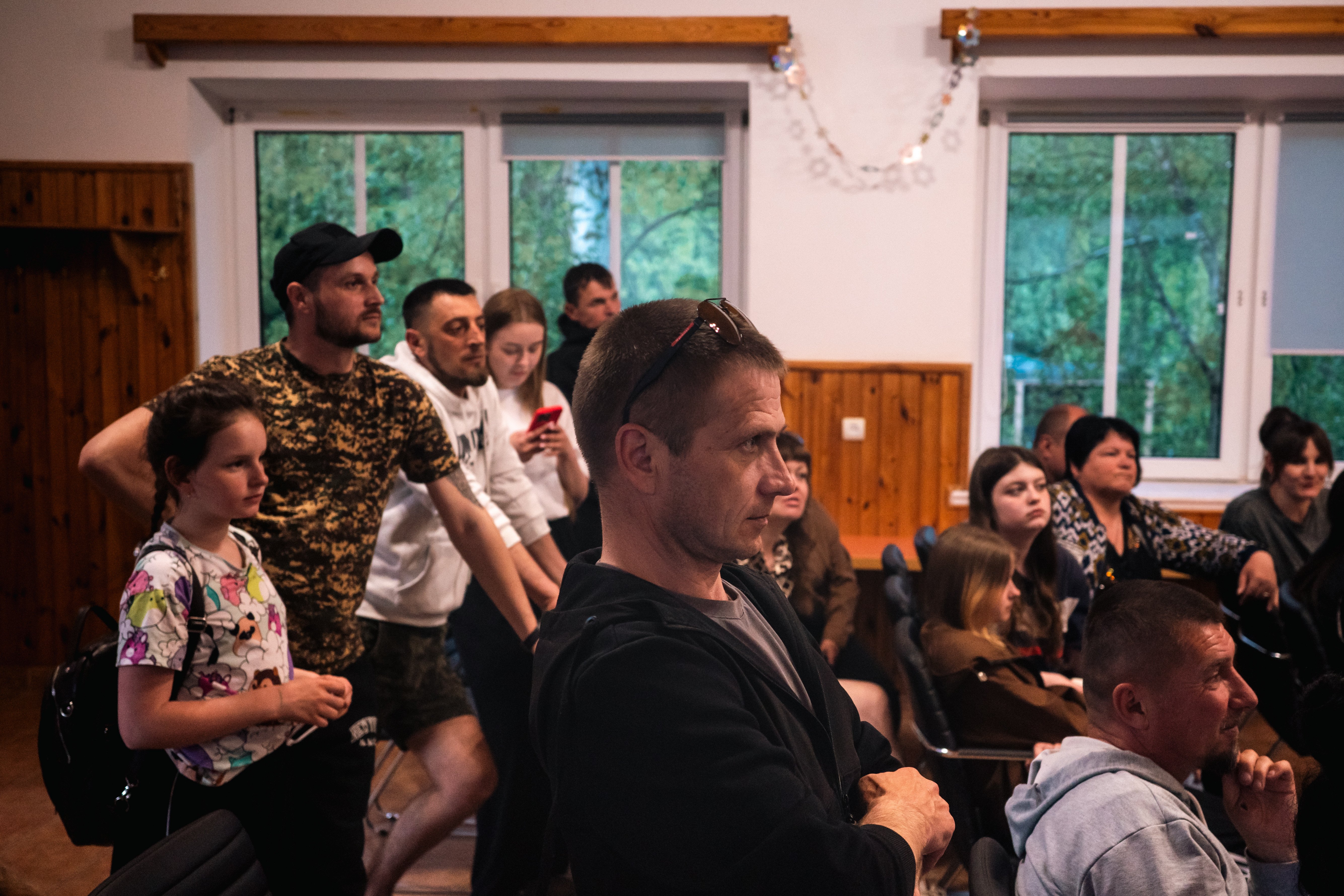
“When you return to civilian life, you think everyone looks at you like you’re crazy.” In a room normally used for catechism classes, Viktor stands with his weight on his left leg, a crutch in his hand. In front of nine other Ukrainian veterans like himself, he continues speaking to Orest Navolovskyi and Oleksii Karachynskyi, the psychiatrist and psychologist leading the meeting beneath a plaster statue of the Virgin Mary: “These camps help you rebuild yourself in this life and prepare for the one ahead.”
Viktor and the others met eight days ago, arriving with their families to participate in the humanitarian “Veteran’s Family” program organized by Caritas-Spes Ukraine, designed to rebuild family ties broken by the trauma of war. For most of them, it is the first time they have spoken with civilian psychologists, openly discussed their feelings, or shared their fears publicly in an attempt to reconnect with life.
The atmosphere is relaxed, laughter frequent. “Everyone jokes, everyone laughs. Those are exactly the emotions we are trying to encourage,” explained Oleksii Karachynskyi, a tactical psychologist, PHD, reserve major and veteran of the Russo-Ukrainian war that began in 2014, one of the caregivers.
“This is the first time anyone has cared about us like this,” said Mykhailo, another veteran beneficiary of the program, stuttering. “When I’m stressed, ever since I came back from the war, I stutter. But when I talk about my problems publicly, my stutter disappears. I learned that here,” he continued, suddenly speaking fluently, as if by magic. Everyone smiled at him.
When it was Batia’s turn to speak, he quietly refused. No one forced him.
It is very important not to stigmatize veterans.
Oleksii Karachynskyi
Tactical psychologist, PhD, reserve Major, war veteran
A program to destigmatize the wounds of war
The word PTSD is everywhere when discussing the mental state of Ukrainian veterans. Yet post-traumatic stress disorder is actually relatively rare. “Around 20% of those who come to the camp,” said Karachynskyi. Viktor agreed: “Everyone’s situation is different, individual. Even among those who served on the frontline, everyone has their own story.”
That does not mean the situations are simple, far from it: sleep disorders, phantom pain, aggression, apathy, depression.
The program takes place in a small village in the Zhytomyr region, west of Kyiv, on land owned by Caritas since the 1990s. The small chapel and several religious symbols as well as the possibility to have group or personal meetings with a military chaplain reflect that Caritas-Spes Ukraine is a Catholic organization. Yet, religion is not a selection criterion.
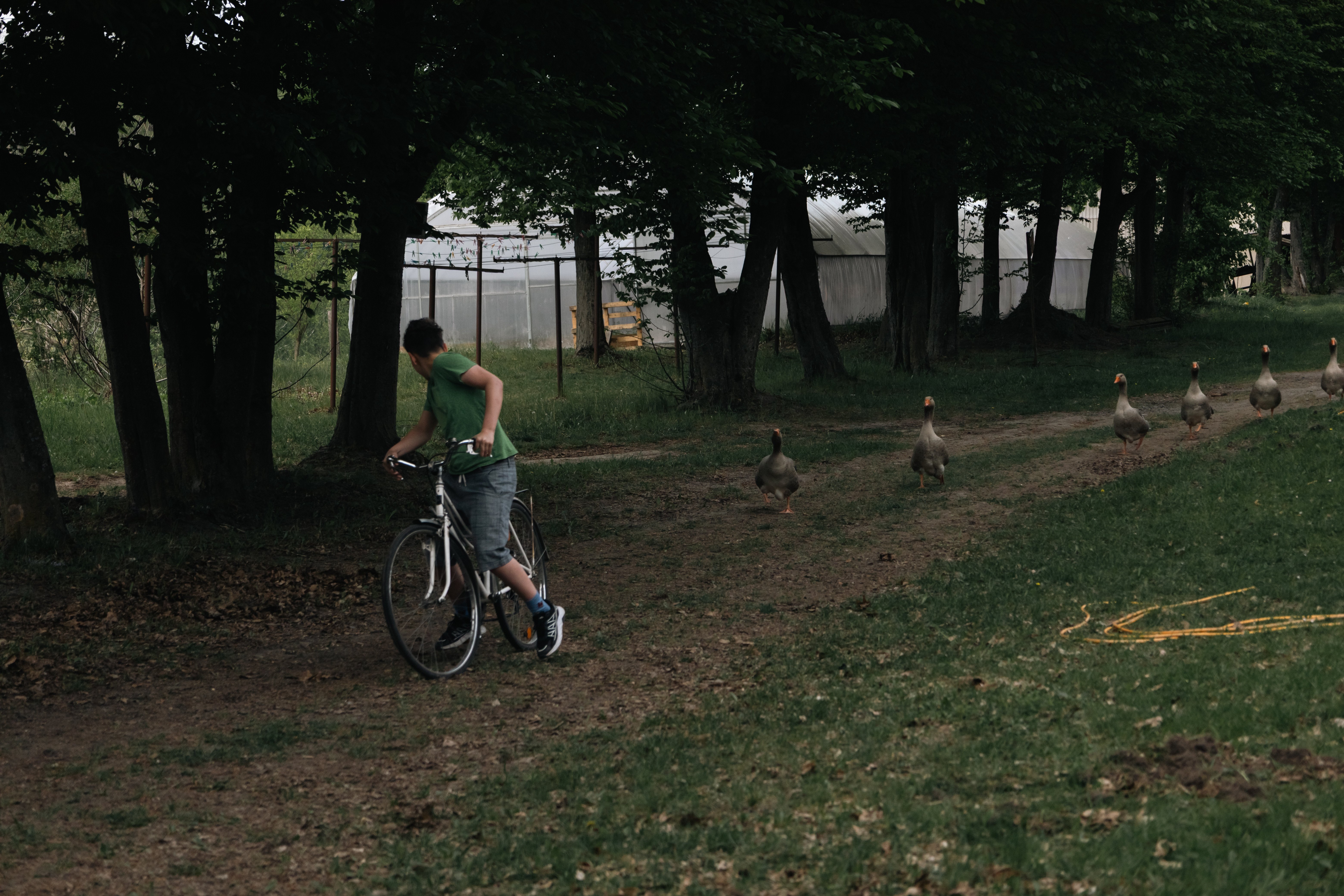
A farm, a greenhouse, several small houses hosting families, and a few communal dining halls make up the rest of the site. Children play with dogs, chickens, geese, and wild pigs roaming freely near a small pond lined with tall green trees. One could almost forget the country is at war and that most of the people here have experienced it directly through their own suffering or that of their loved ones. “Little paradise” is the phrase heard most often to describe the place. Construction work continues to make the site accessible to wheelchair users.
The schedule is intense: physical warm-ups every morning at 8 a.m., breakfast and a tribute to the soldiers at 9 a.m.; then group sessions on general topics (introductions to psychology, child education, or even medication management); lunch, free time, and massage sessions to prepare both body and mind for individual therapy sessions. The rest of the day is devoted to interactive activities and games: waltzing, karaoke, guessing contests, and more. The days usually end at 10 p.m.
The program is not mandatory, though the caregivers try to encourage reluctant participants. Everyone is free to join the activities or not, and can theoretically attend only the massage sessions.
During a session, one officer participating in the program spent all his time fishing, which was his right. But when he saw the progress made by the other veterans, he joined us. On the last day, he opened up and cried with the others.
Liudmyla Frolova
Psychotherapist, head of the “Veteran’s Family” multidisciplinary team
Mykhailo’s path to rebuild his family life
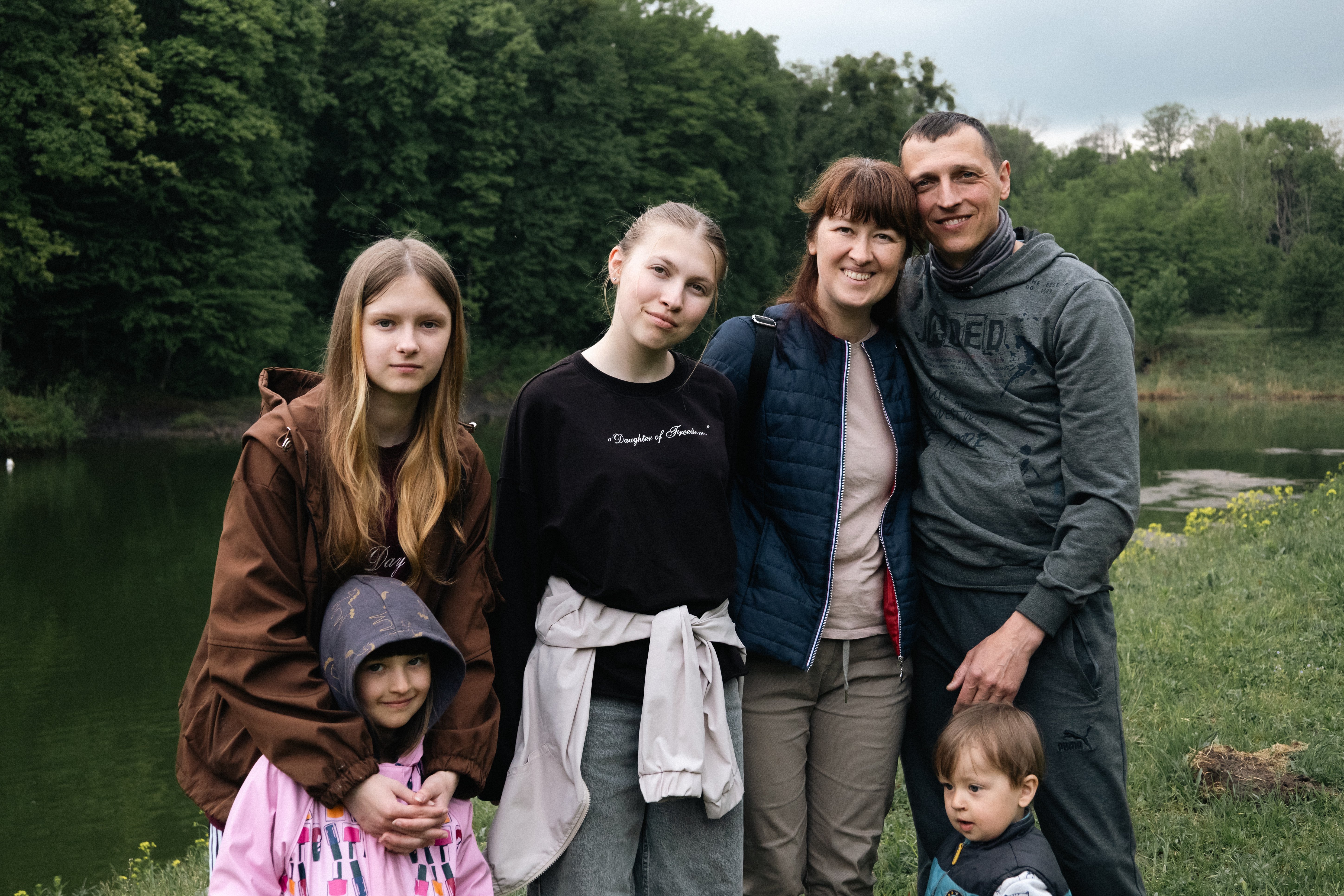
Mykhailo is 41 years old. He was not demobilized because of a physical injury, unlike the vast majority of soldiers since 2022. Already the father of three daughters, he volunteered at the start of Russia’s full-scale invasion in the Da Vinci group, with which he had already been training since 2015. It was after the birth of his fourth child in 2023, following more than a year of fighting in the Kharkiv region, near Lyman, and in Bakhmut, that he decided to return to civilian life, as soldiers with three or more children are legally allowed to leave military service.
“Nothing mattered to me anymore. I wanted to be left alone,” he says. “But when we arrived here, I started looking at the future with much more optimism. I hope our big family will continue to exist for at least as long as we’ve already been together, because we’ve been together for 16 years.”
When asked what his wife Viktoriia thought about his decision to volunteer, he answered: “Maybe she didn’t expect anything else from me. Maybe she would have been more surprised if I hadn’t gone to fight. At least, that’s my impression. Maybe she thinks differently.”
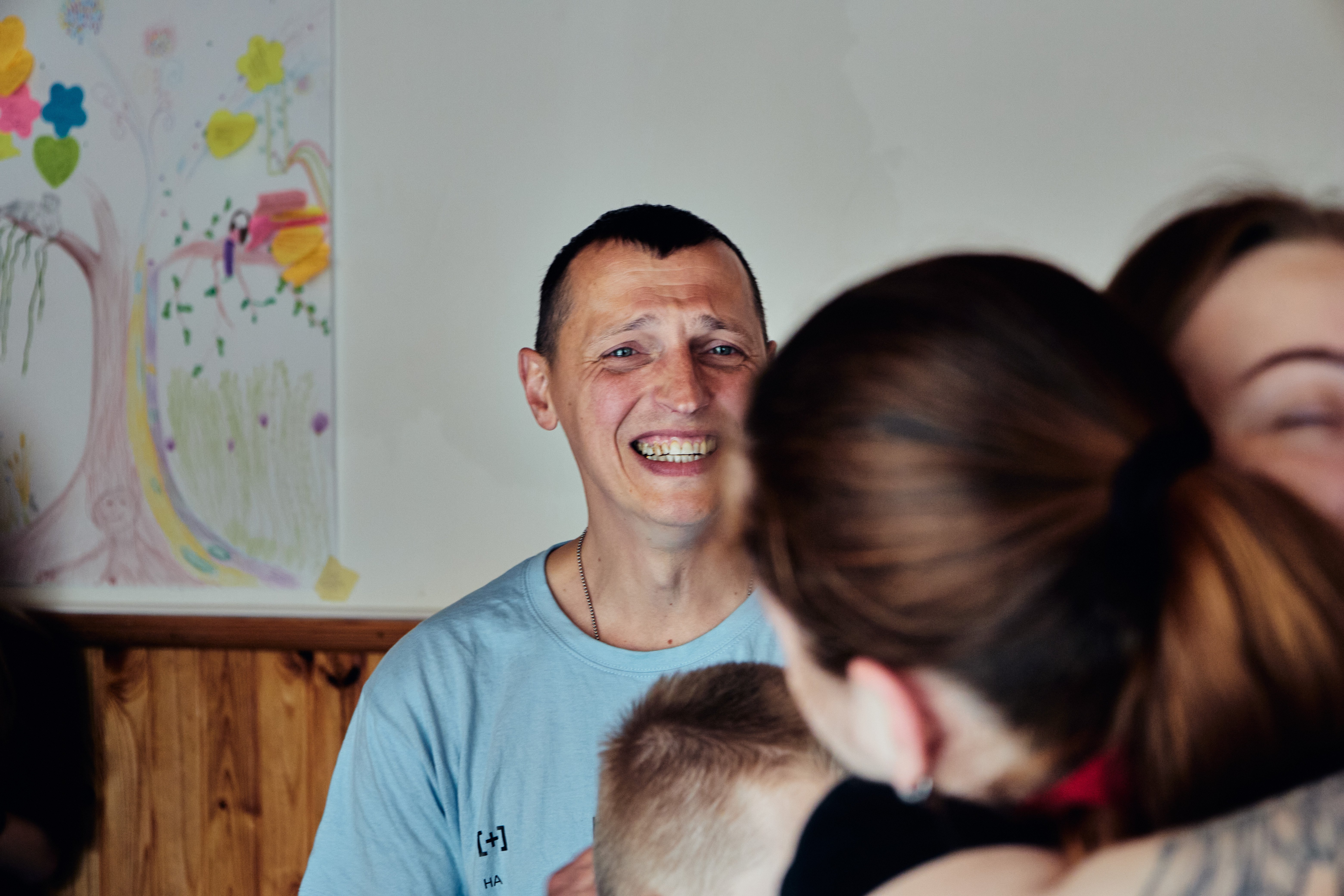
Like tens of thousands of others, Mykhailo said he enlisted to protect his family. Viktoriia explained that between doing nothing—and risking being killed by Russian forces or turned into “slaves without freedom”—and fighting, there was little real choice. “It was a choice without a choice,” she clarified.
“I’m an engineer,” says Mykhailo, “I have a civilian profession. I’m not a confrontational person. I went to war not because I wanted to fight, but because I understood we had no other option.”
Viktoriia may have expected it, but unlike her husband—who trained, bought military equipment, and read military literature long before the full-scale invasion—she was not prepared for what awaited her: the life of a single mother trapped between constant fear of never seeing her husband again and relentless Russian attacks, while caring for three young children.
The children kept asking: ‘Will he survive? Will he survive? Tell us he’ll survive, tell us he’ll be okay.’ That’s what they needed to hear. It was very difficult.
Viktoriia
Russo-Ukrainian war veteran’s wife
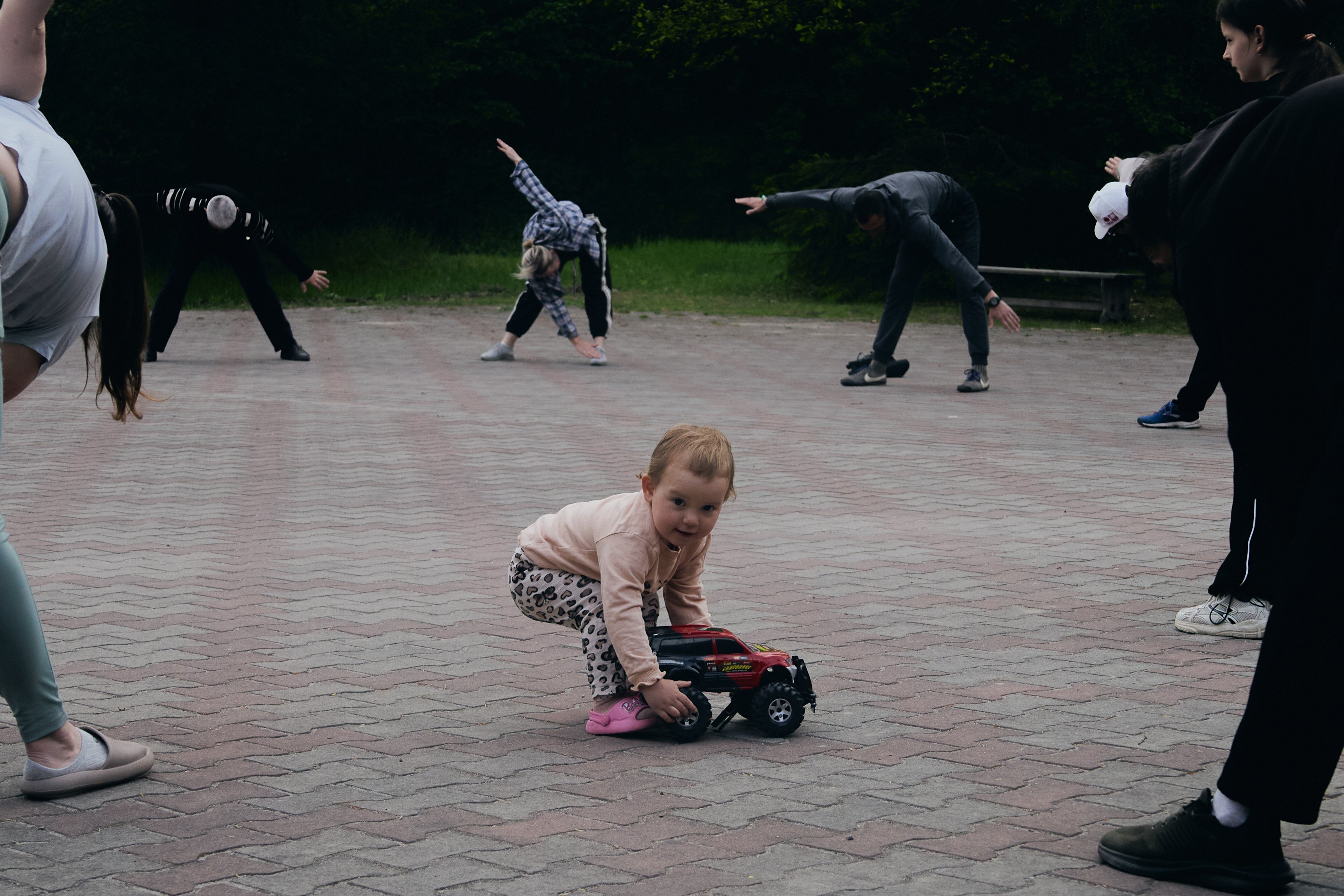
“All children have phones now. They followed everything in the news, too,” Viktoriia said. Their children stopped paying attention, especially at school. Only manual work, gardening, and walks helped ease the constant feeling of anxiety.
Life on the frontline is black and white: the enemy is on the other side. But in civilian life, reality is much more diverse and nuanced. There are no enemies anymore, but for someone carrying certain symptoms of loss, moving from a black-and-white view of the world to this vivid world full of nuances can be difficult.
Yuliia Domoslavska
Psychologist, programme manager for mental health and psychological support
The relatively peaceful environment of the central Cherkasy region, relatively far from the frontline, where Mykhailo reunited with his family, became its own kind of hell for him. A single month at war can feel like an entire year for a family; between the intensity of combat and the stress endured by relatives forced to adapt and compensate for the absence of a family member, time itself seems compressed.
Military hierarchy, stress, and the order-execution mindset soldiers live under are incompatible with family life, which requires understanding, empathy, and communication. Returning to a civilian role after months spent fighting is a mountain few families can climb without outside support.
Like many other Caritas-Spes Ukraine participants, Mykhailo and Viktoriia were close to divorce before arriving at the camp.
The divorce rate among veterans returning from the front exceeds 78%. This is exactly the issue our project works on: giving people a chance to see each other anew—a wife, a child, a husband—and, within these new realities, to build a new life for a renewed family.
Yuliia Domoslavska
Psychologist, programme manager for mental health and psychological support
Viktor’s long rehabilitation after being wounded near Avdiivka
Viktor and Liuba met in a hospital in 2024. The medical facility was overwhelmed by the number of wounded soldiers. Liuba and other volunteers tried to find ways to help. “We told ourselves, ‘Let’s bake little cakes,’” Liuba recalled. “Let’s bring little treats to the boys.”
“At the hospital,” she continued, “one of the wounded soldiers tried to do everything he could to help his comrades. He could barely walk, but he still went out to buy shawarma for them. It took him more than two hours. The sandwiches arrived cold, but everyone was happy.”
She mentioned this strong sense of desire to live—paradoxical compared to what they were going through and had already experienced. “That’s when I realized that with this one—with Viktor—we would truly stay together,” she said. “In October, it will be two years.”
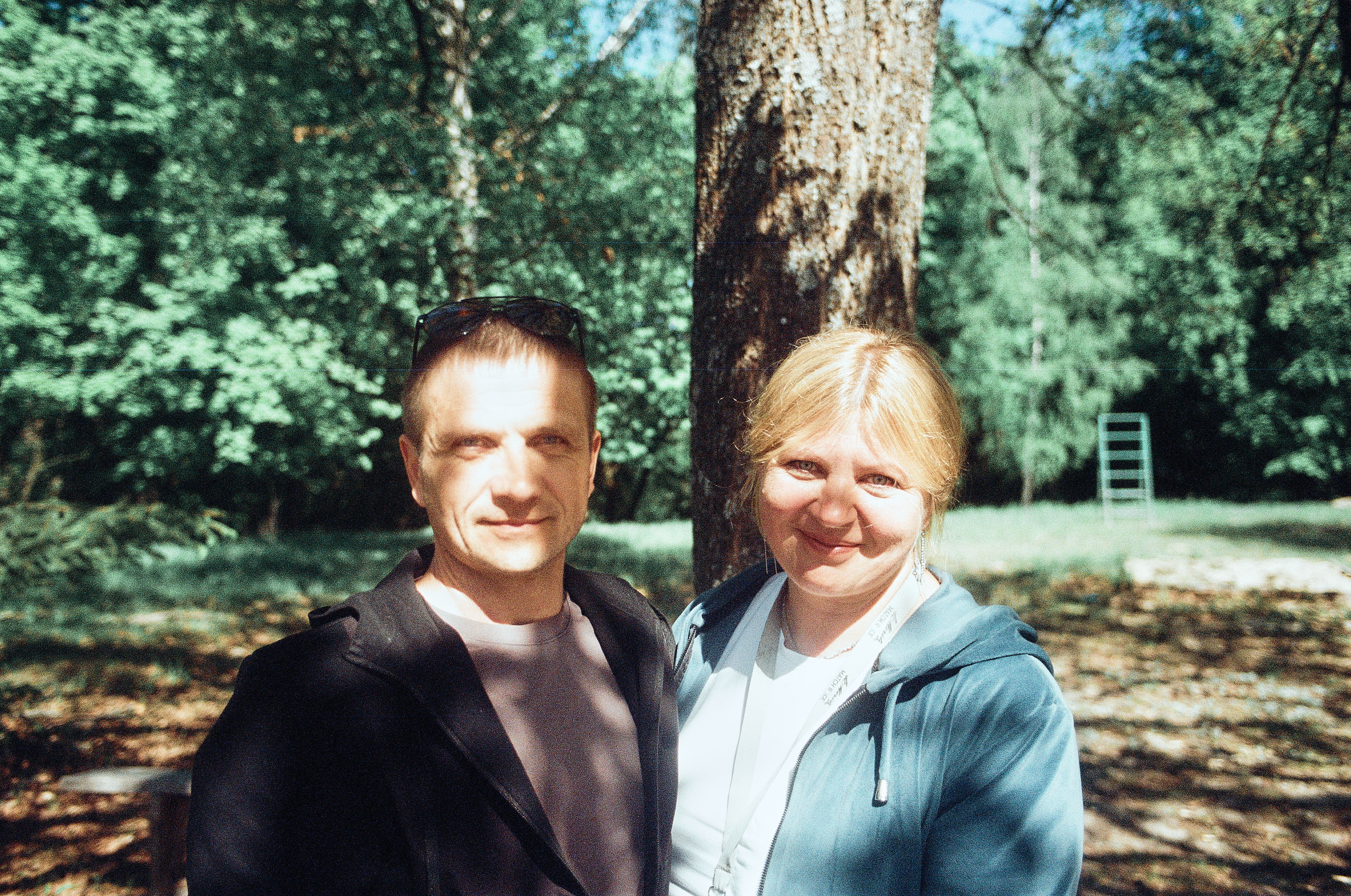
During the war, Viktor fought on the frontline in the Donetsk region near Avdiivka. After 11 months of service, he came face-to-face with a Russian soldier who shot him point-blank in the leg. Miraculously evacuated, he has spent the past three years moving between rehabilitation centers while doctors try to repair his shattered bones.
We looked each other in the eyes [with the Russian soldier who shot me].
Viktor
Russo-Ukrainian war veteran
Viktor worked as an electrician before Russia’s full-scale invasion. But after his injury, finding civilian work became difficult. After spending six months bedridden following surgery, resentment began building inside Liuba: “At some point, it started annoying me too, because I had to get to work and he was just lying there. It was a bit of a tough situation.” That is what led them to join the program.
“Well,” Viktor corrected, “I mainly came for physical rehabilitation, for the massage therapists. I’ve been walking with crutches for three years now. I know my back and shoulders need treatment.” But the presence of psychologists, which Viktor initially considered secondary, turned out to matter more than he expected. “It’s an advantage, yes,” he said. “I’m starting to think maybe I also have a problem on that level. I don’t know.”
Unlike many other veterans, he has not been demobilized and, if his leg eventually heals, he plans to return to the war. “Not in an assault unit,” he said, “but at least somewhere I can help: support work, logistics for the guys, evacuating wounded soldiers. I’m a driver. I have experience. I can even drive on difficult roads.”
Batia’s survival story and recovery
Serhii, “Batia” (“father” in Ukrainian), received his callsign because he immediately became like a father figure to his comrades.
One day, during a Russian bombardment, he shielded other soldiers with his own body. Evacuated in critical condition and placed into a coma, doctors had little hope: even if he woke up, they believed he would almost certainly never regain mobility or speech.
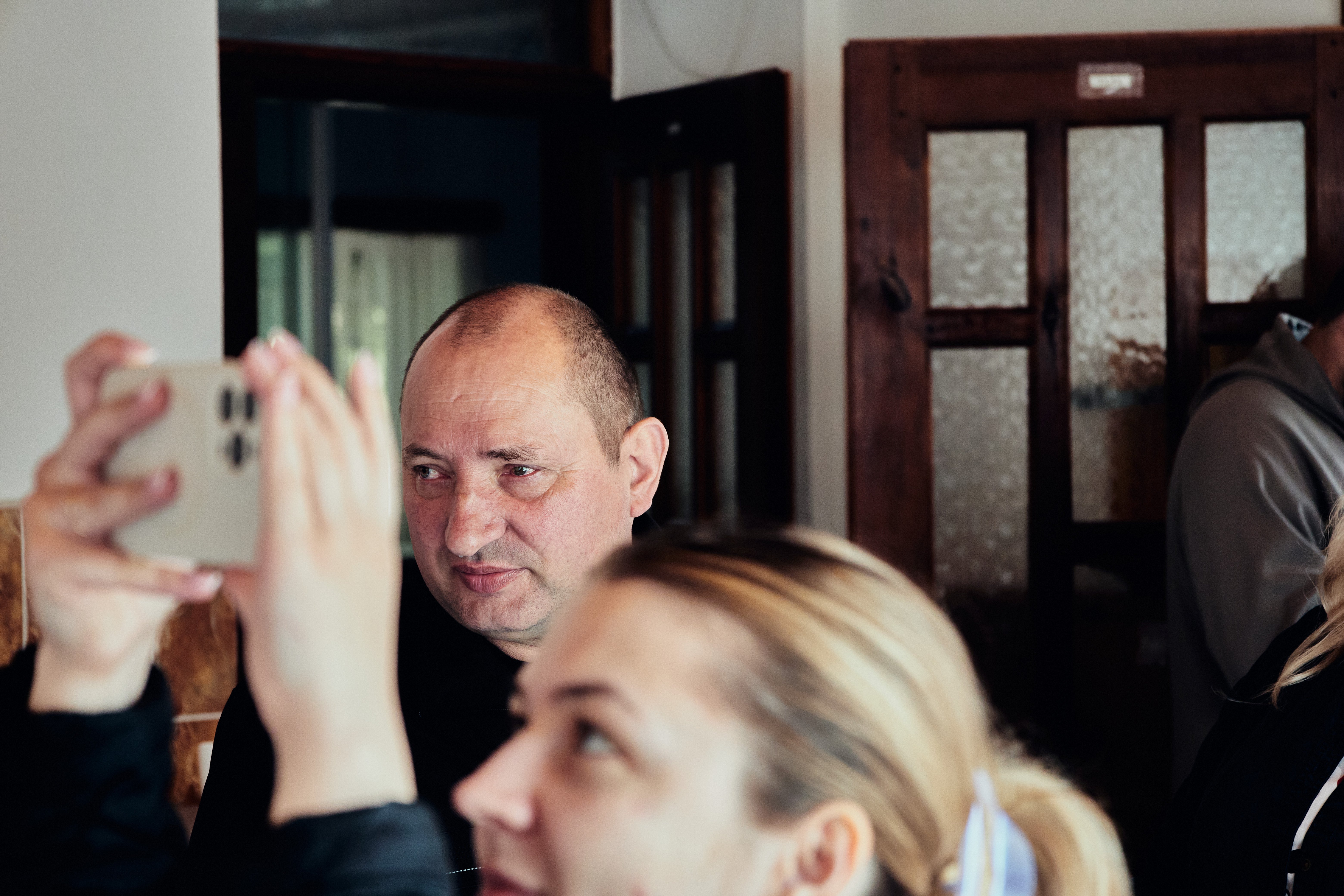
His wife stayed by his bedside day and night for weeks until he finally opened his eyes. That first miracle was followed by another: months of rehabilitation allowed him to walk again.
When he regained the use of his hands, he used his phone to order flowers for his wife almost every day. And once he recovered his speech, they decided together to join Caritas-Spes’ program.
Why Ukraine faces a mental health crisis after years of war
The war in Ukraine is about the survival of an entire people, a culture, a worldview, a way of life.
“In Ukraine, defending one’s country has become a forced choice,” says Yuliia Domoslavska, psychologist and programme manager for mental health and psychological support, “An ordinary civilian man can put on a military uniform overnight and suddenly has to change his entire relationship to the situation—to his own abilities, to his body, to his mind, and to his freedom to act and make decisions.’”
The military family must adapt quickly, and in doing so, it transforms. Its priorities, values, and life goals change radically. At the same time, families often provide clothing for soldiers and organize fundraising for drones and vehicles.
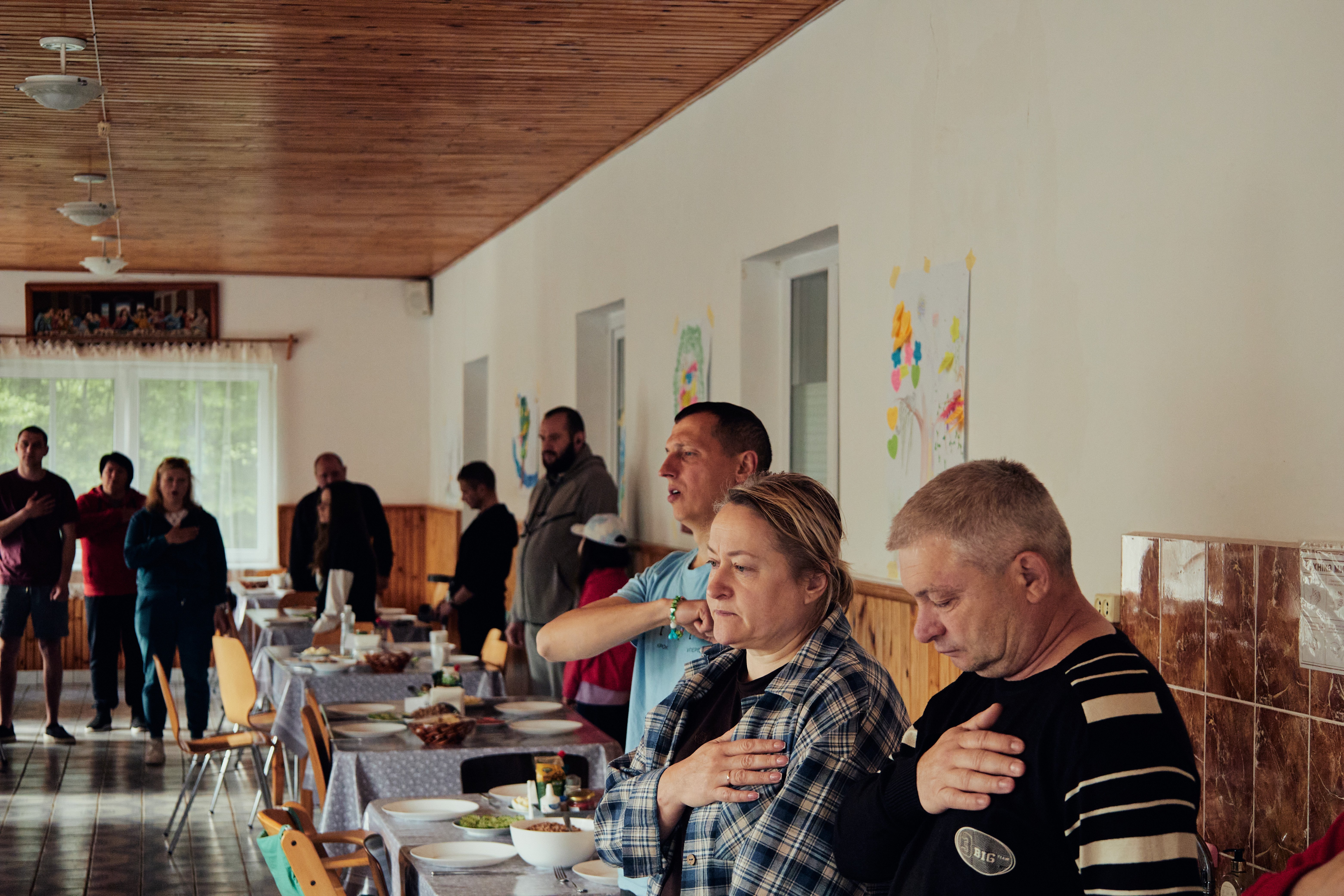
At that moment, Domoslavska explains, many women naturally experience loneliness, abandonment, and despair, because they have to take on all of life’s responsibilities themselves. Many women do not even know how to pay utility bills, yet they must learn and manage them. And this is even more true for families running large households or businesses.
When the man returns, he no longer finds the same woman he left behind when he went to the front. This misunderstanding truly destroys many marriages.
Yuliia Domoslavska
Psychologist and programme manager for mental health and psychological support
This is where psychological or psychiatric support becomes essential. But Ukrainian society as a whole still suffers from a deep mistrust of these institutions, which were long used by the Soviet authorities as a means of coercion.
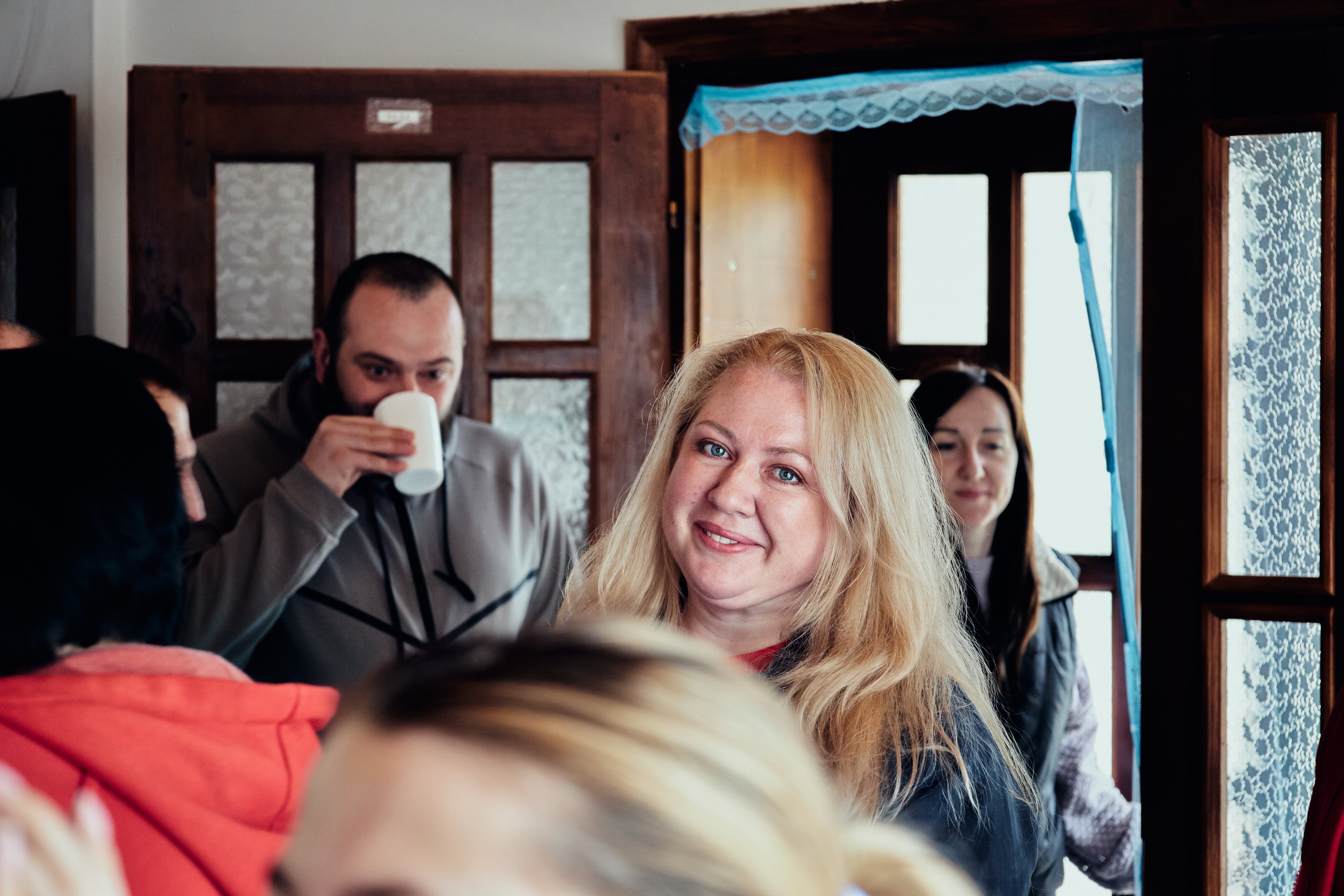
Liudmyla Frolova, psychotherapist, head of the “Veteran’s Family” multidisciplinary team, explained that, during the Soviet time, people were conditioned to hide their pain and trauma, taught to always appear strong, and frequently told to simply "pull themselves together" rather than process their emotions.
Families were viewed merely as obedient "cells" within a cruel and hypocritical society, which normalized an authoritarian style of child-rearing heavily reliant on fear and punishment. Because of this legacy, older generations and the children they raised maintain a visceral distrust of mental health professionals.
For example, as Orest Navolovskyi, psychiatrist, master of medicine, underlines it, many veterans refuse to seek psychiatric help because of a popular myth that treatments and medications, such as antidepressants, will turn them into "vegetables" or cause severe addiction.
Frolova sees the program as the opposite method: starting from the individual and moving toward society as a whole.
“Our project is about building the state, about preserving Ukraine as a community of people with its own vision, worldview, and culture,” she says. “If any cell in an organism is sick, then the whole organism becomes weaker and suffers. In that sense, our project is like a small antibiotic, a kind of healing pill that reaches one small cell.”
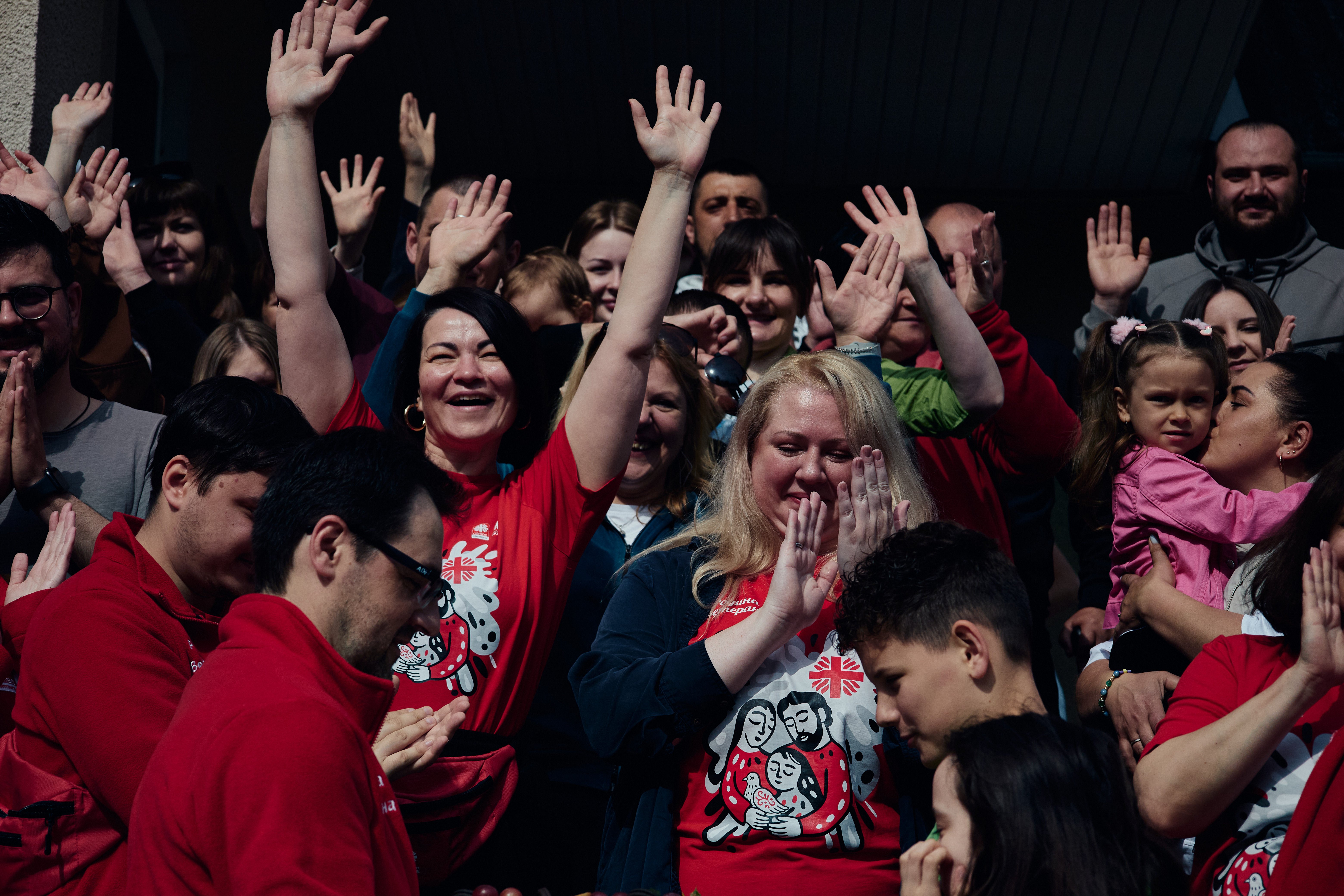
Can Ukrainian families fully return to their pre-war lives?
The 10-day camp is not designed to be a magical, instant cure, but rather a starting point that provides a "vector" and foundation for future rehabilitation. Its goal, as Vita Kolnybolonchuk, psychologist, pointed out, is that the beneficiaries leave with a new, positive association with psychology and psychiatry.
We want to make this happen, though in medical terms, rehabilitation is usually a much longer process. We are here for only ten days, but even so, we manage to set a direction for further rehabilitation.
Liudmyla Frolova
Psychotherapist, head of the “Veteran’s Family” multidisciplinary team
Psychologists note that once participants experience this inner connection and support, they cannot "unsee" it; it becomes a baseline they can rely on and build upon in the future. Beneficiaries often leave with a deep desire to continue their self-discovery and psychological growth.
They learn that they cannot simply rewind their lives to who they were before the war. Instead, they are taught how to integrate their new, difficult experiences into a new reality: the need to meet and understand their changed spouses and children all over again. For some couples where the disconnect is too deep, the program provides them with the emotional tools to undergo a civilized divorce without hostility.
Our beneficiaries say it’s a miracle, but we actually don't do miracles. We just show them the side they have forgotten, which has frozen, which they themselves froze. Being empathetic is hard in the survival system we have fallen into.
Liudmyla Frolova
Psychotherapist, head of the “Veteran’s Family” multidisciplinary team
Yet, participants like Mykhailo fear losing the progress and clarity they gained during the rehabilitation program. They worry that everything could return to the way it was once they go back to family routines, that the trust built with the caregivers is unique, and that a single disappointment could undo all the progress they have made.
Consequently, organizers are already considering creating a "Level 2.0" program for returning families, as graduates are no longer afraid to pursue deep, personal therapy.
Thanks to Uliana Yaskovets, Communications Manager at Caritas-Spes Ukraine, for facilitating the interviews with the beneficiaries.
The project exists thanks to the financial support and donations of international partners, Caritas Norways and Caritas Germany.
Discuss this article:

-111f0e5095e02c02446ffed57bfb0ab1.jpeg "Photo of Roman Kohanets")

-07c046f037cabcd54fb44b5253b3733d.jpg "“Bathing” (2021), an 80 × 60 cm artwork by Ukrainian artist Mariia Drozdova. (Source: Art From Ukraine/Instagram)")
