- Category
- Life in Ukraine
What Sleep Routine? Russia’s Deliberate Targeting of Ukrainian Nights
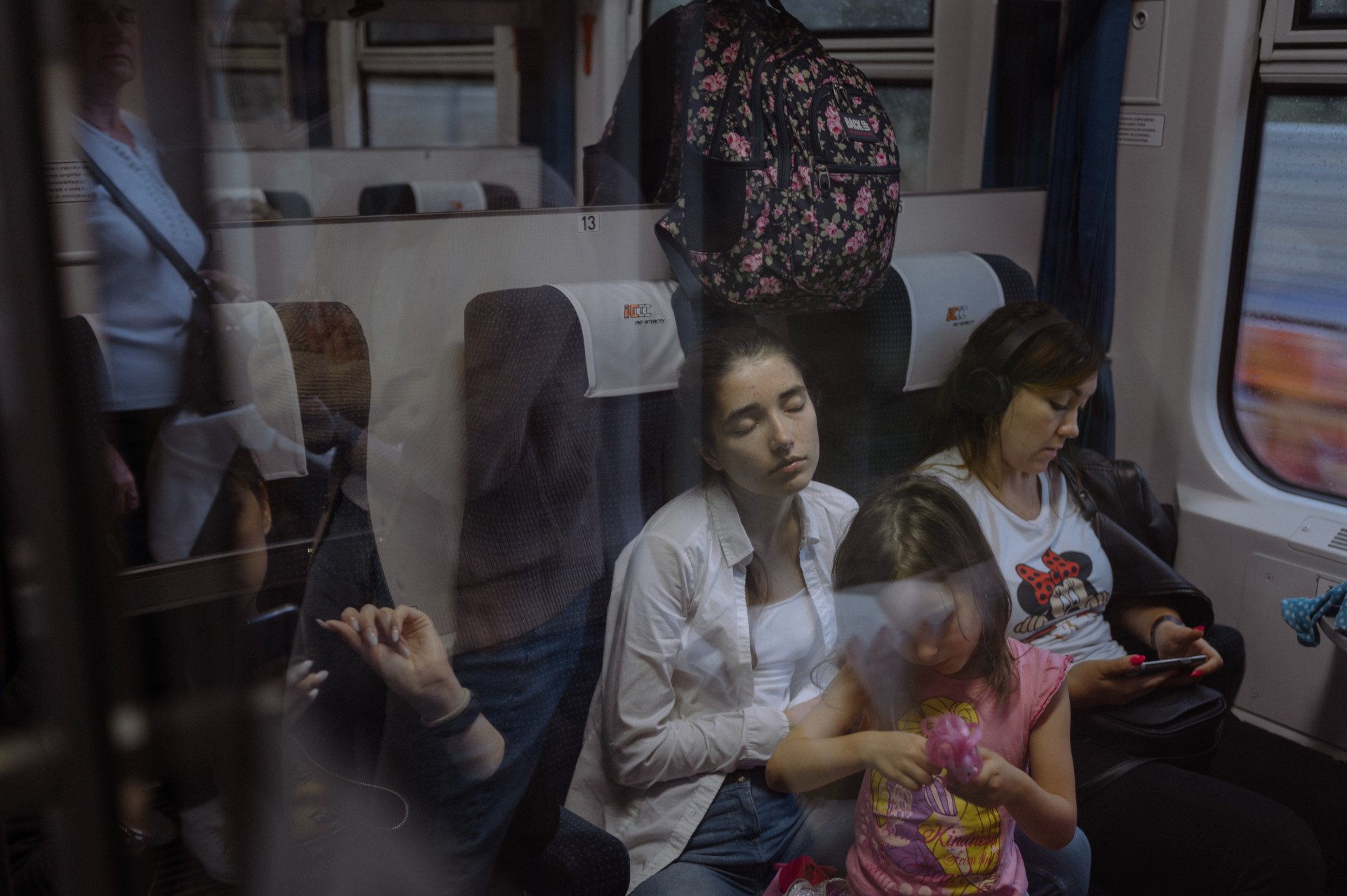
For more than four years, Russia has waged war on Ukraine largely under the cover of darkness, launching nightly drone and missile attacks that have left millions of civilians chronically sleep-deprived and scientists warning of consequences that may outlast the war itself.
 Prefer U24 Media on Google
- Authors

-554f0711f15a880af68b2550a739eee4.jpg "Photo of Lucile Brizard")
Before dawn, on her way for a minor operation, Maria, who requested partial anonymity, drove through “a whole tornado of grey smoke” after a massive Russian missile and drone attack on Kyiv, Ukraine.
That same morning, June 17th, 2025, Maria’s 14-year-old daughter had one of the most important exams of her life. Despite the morbid thump of missiles slamming into the capital and strike drones buzzing overhead, both women had no choice: they had to get up.
How years of Russian attacks have stolen sleep from an entire nation
Over the past near 5 years, Ukraine, under nightly attack, has become a place where sleep is never assured. Even when nothing happens, one waits for the air alert, anticipating.
When the air alert does blare out, the attacks often take place at a critical stage in sleep, the famous Rapid Eye Movement (REM) stage.
Dr. Anton Kurapov, a Ukrainian researcher at the Laboratory for Sleep & Consciousness Research in Salzburg, Austria, confirms that in effect, “the second half of the night is more dominated by REM sleep.” He goes on to address a common misconception: “that sleep consists of identical 90-minute cycles repeating throughout the night.”
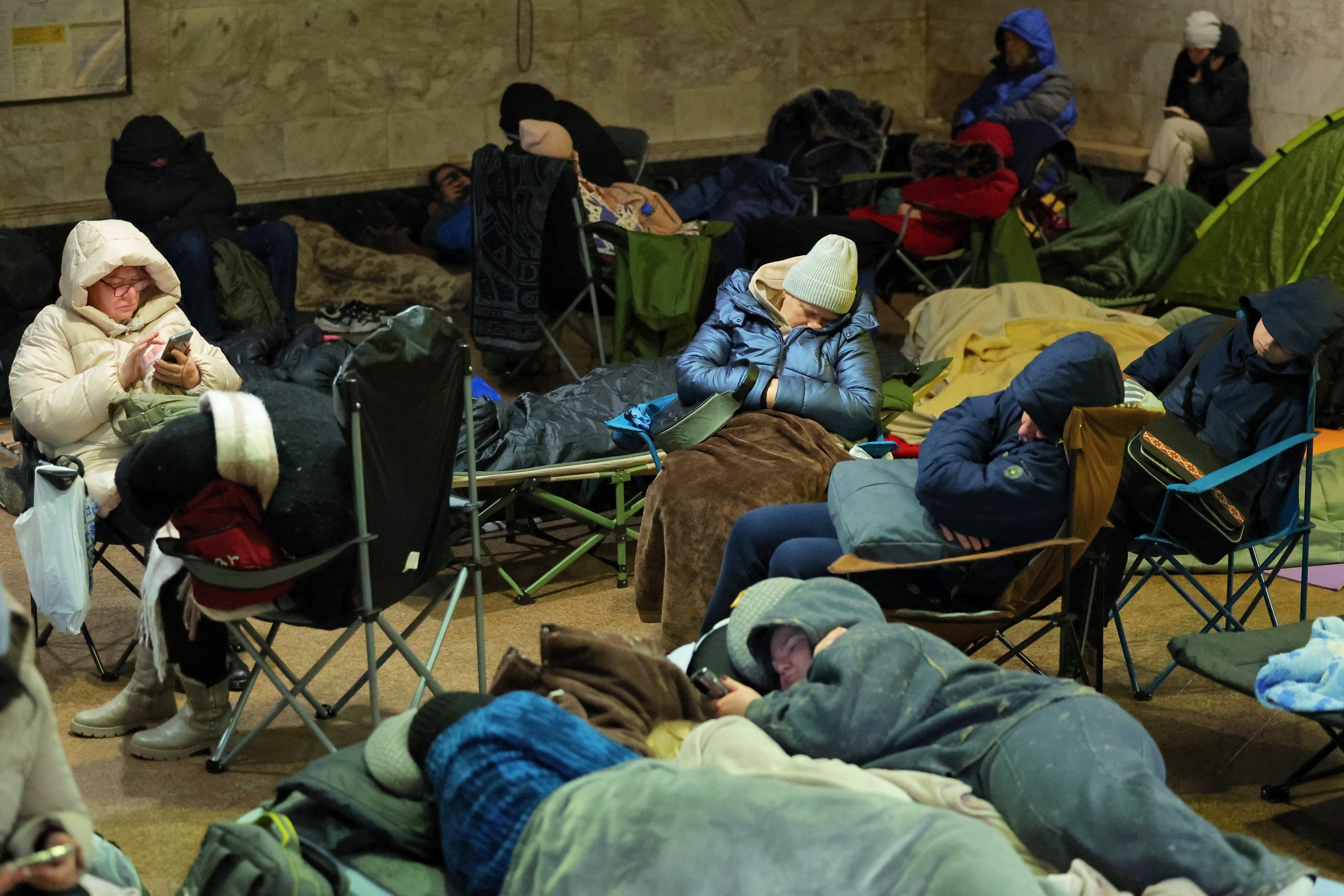
Sleep, he says, unfolds in four stages, cycling through the body in roughly 90-minute intervals. The first two are light sleep. The third, N3, is deep sleep, where the body physically repairs itself. The fourth is REM, when the brain processes emotion and consolidates memory.
“Humans need around 22% to 26% REM sleep to maintain mental health,” says Dr. Kurapov. “If REM sleep is disrupted, anxiety the next day can increase by 40–70%,” he adds, pointing out that the younger you are, the more deep sleep you need, and the older you are—the less.
A study published last May by Dr. Kurapov and other researchers from the University of Salzburg and Taras Shevchenko National University of Kyiv offered a window into the psychological toll of sleeping during sustained Russian bombing campaigns.
Among the 487 Ukrainians who enrolled in a six-week smartphone-based sleep therapy program in the fall of 2023, nearly three-quarters reported some form of insomnia, and 27% experienced clinical insomnia : a rate almost three times higher than in Western countries. And, 60% showed signs of anxiety or depression, with more than half reporting chronic stress.
On average, participants had their sleep heavily disrupted by air raid alarms and combined missile and drone attacks on more than six nights over the course of the six-week study. That was late 2023.
Most Ukrainians know the concussive and precise pound of a ballistic missile slamming at five times the speed of sound into their cities. The residents of Kyiv, especially, remember the summer of 2025 and the nightly drone and missile assaults that strained the city’s air defenses and kept its 3.7 million residents underground.
The subway system recorded 165,000 visits during those June nights, more than double the 65,000 visits in May and nearly five times the number in June of the previous year.
A relative lull followed in the months after. Then, on May 14–15, 2026, Russia launched what Ukrainian President Volodymyr Zelenskyy described as the largest aerial attack on Ukraine in a two-day period since the war began: more than 1,560 drones and 56 missiles, killing at least 25 people in Kyiv alone, including a 12-year-old girl, and collapsing a nine-story residential building. Air raid alarms sounded for roughly 11 hours straight.
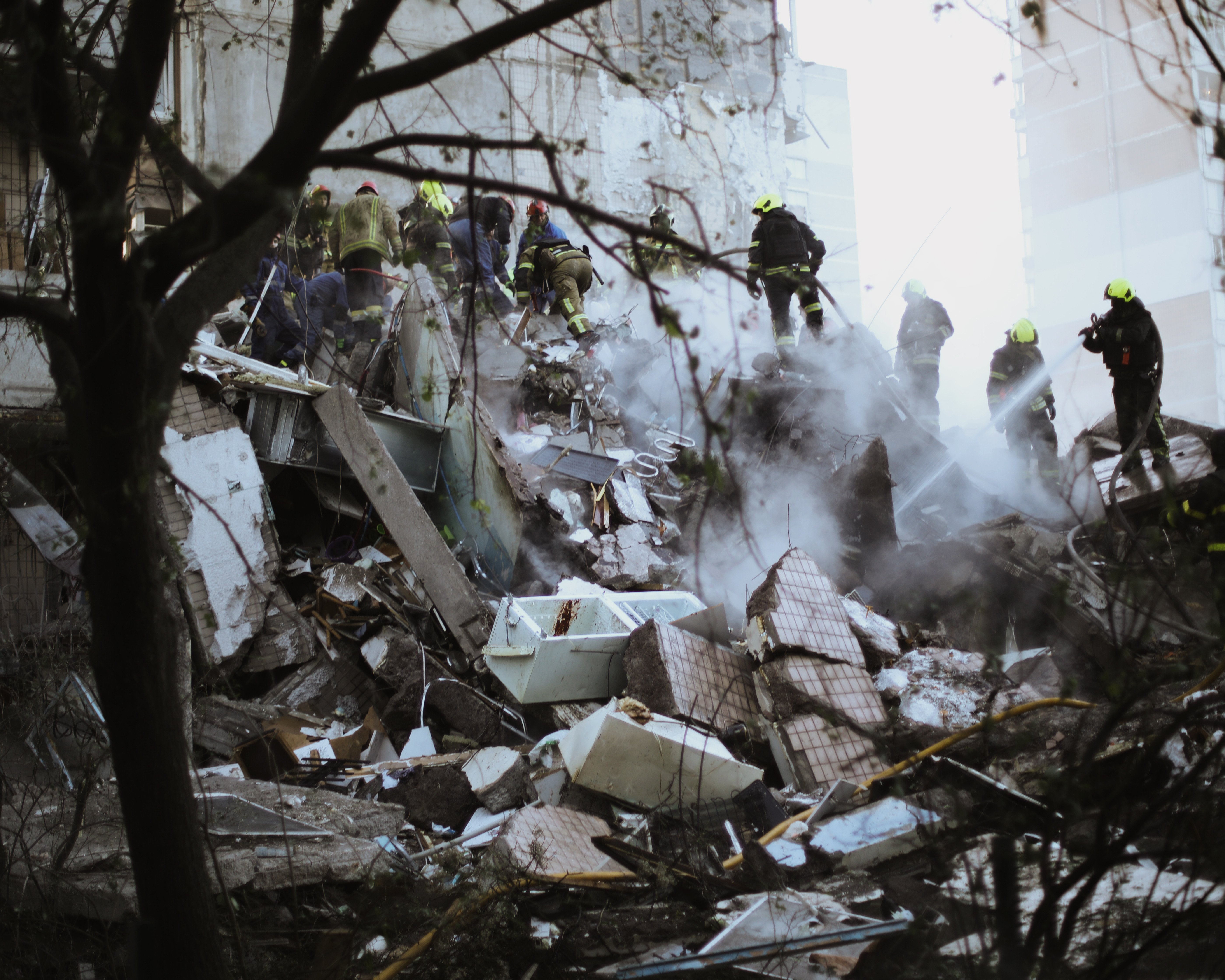
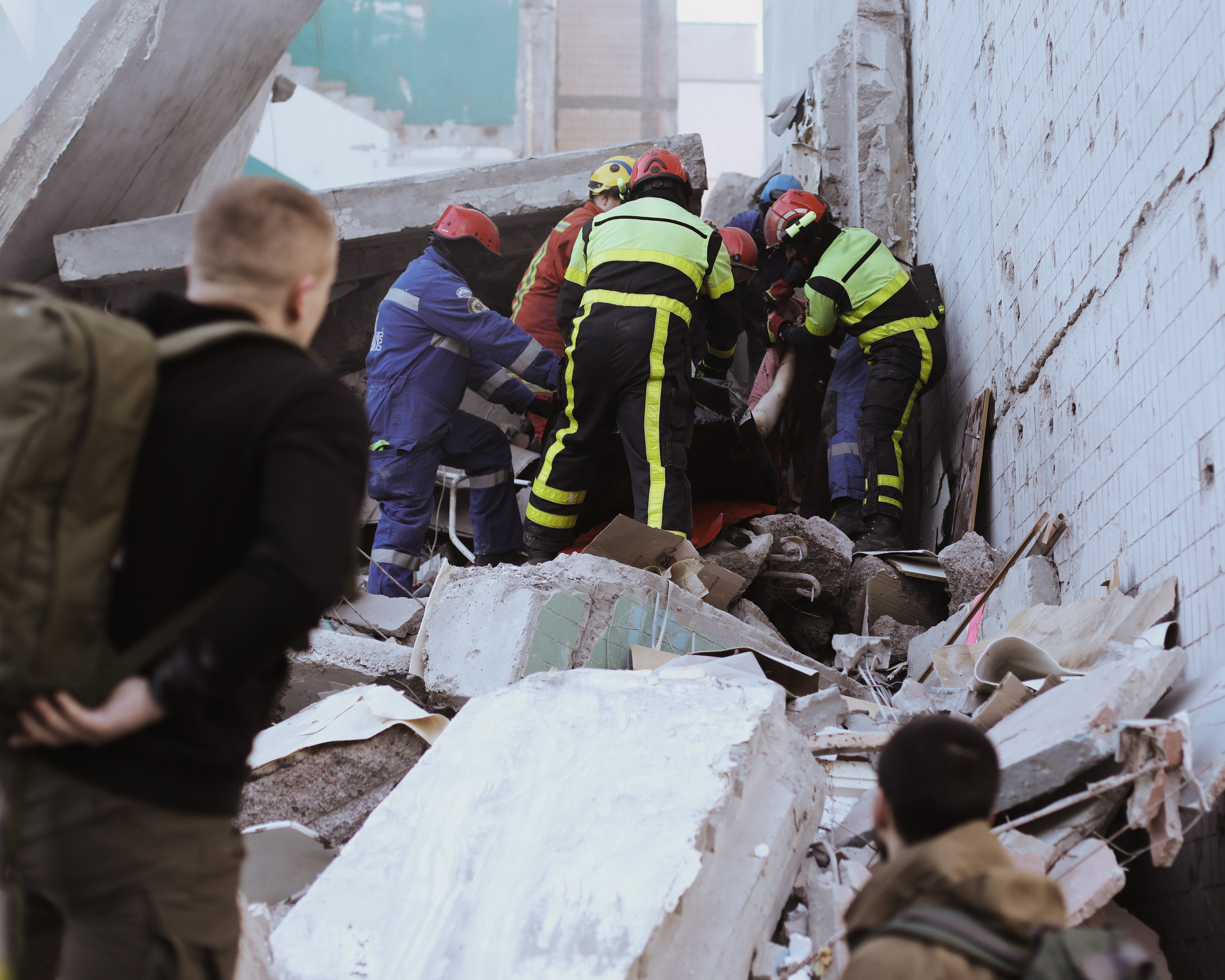
Around ten days later, Russia launched its most devastating attack on Kyiv overnight on May 24, sending 600 drones and 90 missiles—36 of them ballistic—into the capital and its surrounding region.
For only the third time in the conflict, Moscow deployed the Oreshnik, a hypersonic ballistic missile traveling at Mach 10 that Ukraine has no air defense system capable of intercepting. Four people were killed and roughly 100 wounded across the country. By morning, a market had burned to the ground, a water facility was struck, schools were set on fire, and dozens of residential buildings were hit.
The more than four years of Russian strikes on power grids, civilian buildings, and military targets have turned Ukraine, regrettably, into a real-time study in sustained, collective sleep deprivation.
“No laboratory could replicate this,” says Dr. Kurapov. “No ethics committee would allow it. We can only watch and hypothesize about what five, ten, and twenty years of chronically broken sleep does to a society. We simply do not know yet.”
Ukrainians react differently to drone and missile attacks
Lilya, 24, and Ksusha, 21, who did not share their last names, live in the center of Kyiv. The young couple spent time in Canada as refugees but returned to Ukraine in 2025. It turned out they had differing attitudes to attacks. Lilya went to the shelter, and Ksusha preferred to stay home with their dog, Phoebe.
“When we first came back, we had a lot of fights,” says Lilya, “I wanted to go to the shelter. I lived in Ukraine for the first year or two after the invasion started. I saw the consequences of not going, and I was really scared.”
Ksusha doesn’t go, but “I still wake up, especially if it’s loud.” Concerned, she describes the adrenaline her girlfriend experiences during an attack: “It’s crazy how Lilya wakes up. She’s immediately ready to run. I worry she never goes into a deep sleep; she sleeps in her clothes, grabs her backpack, and goes in one second.”

We spoke to Vladyslav Synyahovsky about the physiological and neurological responses civilians experience when under attack. A combat psychologist working at Expio, a Ukrainian medical center that specializes in PTSD and its treatments, Synyahovskyy said that, “When the sirens sound, the brain shifts into survival mode. The amygdala floods the body with cortisol and adrenaline—every instinct primed to run. Sleep, in that state, is not just difficult. It is biologically impossible.”
Lilya reveals that, “I just recently stopped going to the shelter, maybe a few weeks ago. I was drained.”
Now that she stays in her apartment, Lilya adds, “I have dreams of being exploded. In my dreams, the rockets and Shaheds are much bigger than they are in reality, and I am much smaller.”
Ksusha says that sometimes she thinks she’s sleeping through the attack, that the explosions are only in her dreams, “but then I wake up and realize it’s happening in real life.”
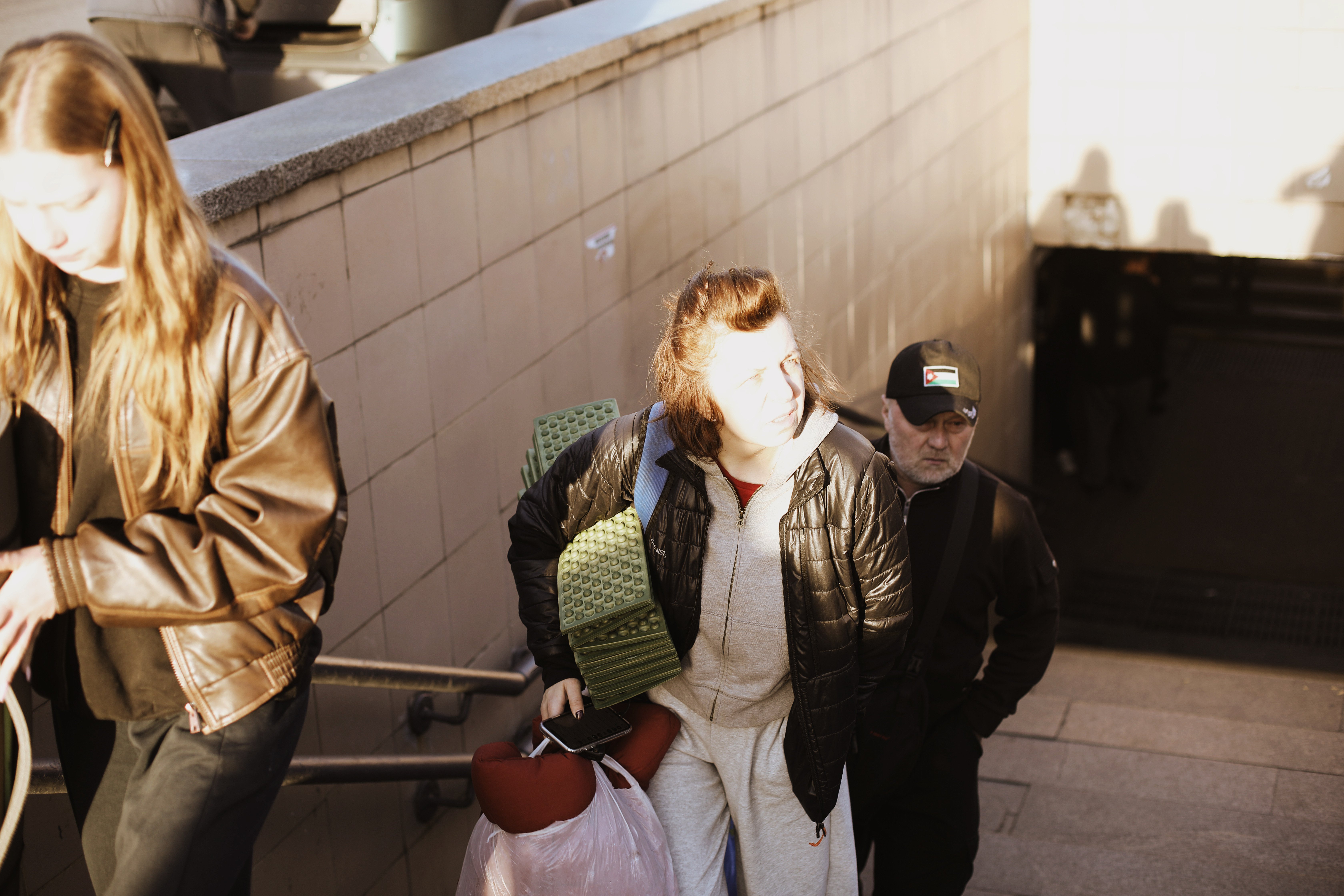
In Synyahovskyy’s view, many civilians living in Ukraine, knowingly or not, suffer from simple and complex PTSD. “At least 40% to 50% of the civilian population is showing symptoms of PTSD—not mild unease, but real symptoms. It is an entire society in distress.”
All of the patients he treats for PTSD—and most have a complex form—struggle with sleep, he says. “Insomnia, sleep disorders, nightmares. It’s textbook,” he says. “The trauma does not stay in the waking hours. It follows them to bed.”
In his opinion, it is no coincidence that Russia attacks when it does—late at night, after 2 am.
Russia deliberately uses the approach as a demoralization technique, honed on Ukrainian POWs and then repurposed against civilians, aiming to slowly whittle them down.
Vladyslav Synyahovskyy
Combat Psychologist, Expio Medical Center
How to treat a sleep crisis?
Dr. Valentyna Mazhbits, a Ukrainian psychiatrist now based in Berlin and coordinator of the Solomia Project, reports that her psychotherapy students often struggle to concentrate and sometimes need instructions repeated multiple times.
“We see that participants in our training who are based in Ukraine are suffering significantly from sleep deprivation due to constant bombing and their non-stop shifts,” she says.
She reports that motivated trainees are unable to wake up, “because they are so overwhelmed by the combination of their workload and sleep deprivation.”
Currently, people are just exhausted.
Dr. Valentyna Mazhbits
Psychiatrist and coordinator of The Solomia Project
In a recent study she has begun, Dr. Mazhbits sent polysomnographs to six hospitals in Ukraine to help build “sleep laboratories.” Sleep, which is largely understudied in Ukraine, prompted Dr. Mazhbits to begin her study because “sleep is fundamental.”
“The fact that sleep is understudied in Ukraine is quite clear,” states Dr. Kurapov, citing a lack of training and focus in this area. He believes that instead of educating people so as to really improve their sleep, psychiatrists prescribe medication.
“In our lab, the gold standard is that medication is a last resort,” he says. “Only if cognitive behavioral therapy does not work and nothing else helps do we consider pills.”
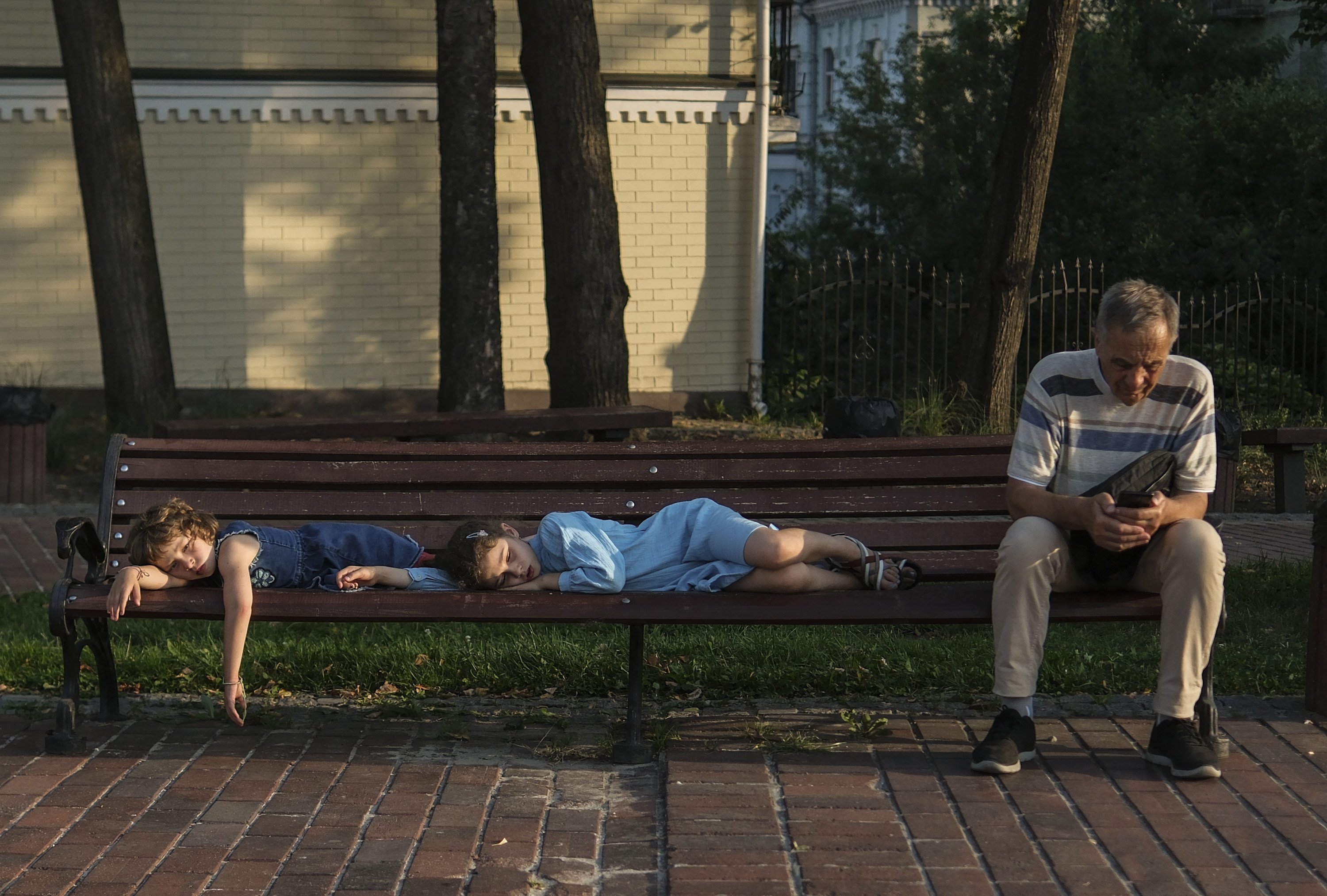
Dr. Kurapov goes on to list some solutions for good sleep hygiene, which require relatively simple behavioral changes. His recommendations are practical for those with fragmented sleep. He says the priority is compensating during the day by taking naps, as studies show it measurably reduces long-term harm.
He also advocates training the brain to associate the bed exclusively with sleep: no phones, no films, no work done lying down. And for those who struggle to fall asleep, he recommends waking earlier than usual to build “sleep pressure” by nightfall.
But, Dr. Mazhbits cautions, “The truth is, there is no 'normal' life in wartime. Only stopping the war can resolve these problems.”
“In Ukraine, the conditions are like a volcano,” she said, "Some people are stable, but others are very fragile."
Dr. Mazhbits describes three distinct patterns observed from working with her patients. Some, she said, rely on psychological defense mechanisms, numbing themselves to the danger and sleeping as though nothing has changed. Others become consumed by it; glued to Telegram channels tracking incoming strikes. A third group moves in exhausted cycles, descending to shelters when the sirens sound, returning to bed, then descending again.
“They are waiting for the end because they have no more strength,” she said about her students. “They work automatically and do their best, but their strength is much less than it was.”
On the afternoon of the huge May 14 attack, Lilya said she had gone back to the shelter, and she would probably start going again. When asked if she had slept, she answered: “No.”
Discuss this article:
-9bd5e1532102621f8fb1c4ba871a3171.png)



-111f0e5095e02c02446ffed57bfb0ab1.jpeg "Photo of Roman Kohanets")
-07c046f037cabcd54fb44b5253b3733d.jpg "“Bathing” (2021), an 80 × 60 cm artwork by Ukrainian artist Mariia Drozdova. (Source: Art From Ukraine/Instagram)")

-c439b7bd9030ecf9d5a4287dc361ba31.jpg "Photo of Katherina Popilnichenko")