- Category
- Opinion
Europe Is Already at War: A Peacetime Mindset Leaves It Vulnerable to Russian Hybrid Attacks
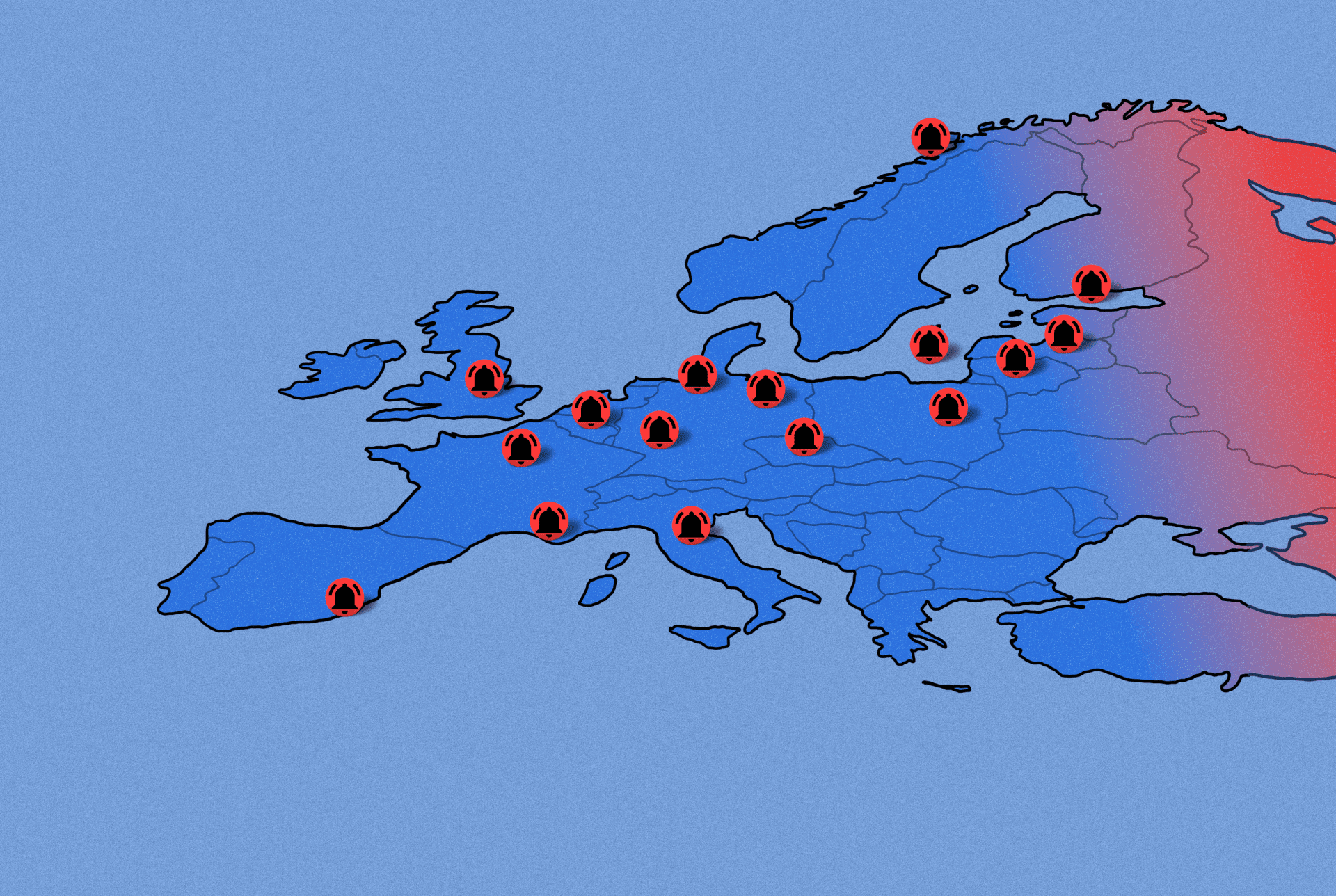
Europe, not just Ukraine, is at war. Russia’s hybrid operations across the continent now reach the level of a sustained, below-threshold hybrid war against Europe. Former top NATO officials are warning that Europe must act.
 Prefer U24 Media on Google
- Authors




-4fda80f8f5b23543209c5802eedf0f1f.jpg "Jamie Shea")
Gábor Iklódy, former Assistant Secretary General for Emerging Security challenges at NATO; Jamie Shea, former Deputy Assistant Secretary General for Emerging Security challenges at NATO; and Myroslava Gongadze, journalist and foreign policy expert, Supervisory Board Member at the Ukrainian Institute, and former chief of Voice of America’s Ukrainian service in Washington, are sending this warning shot to the European leadership.
Russia’s hybrid warfare
Russian threats and targeted actions against Europe are not isolated incidents. They form a centrally planned and managed campaign designed to destabilize European societies, test Europe’s resilience and resolve, and weaken the transatlantic bond.
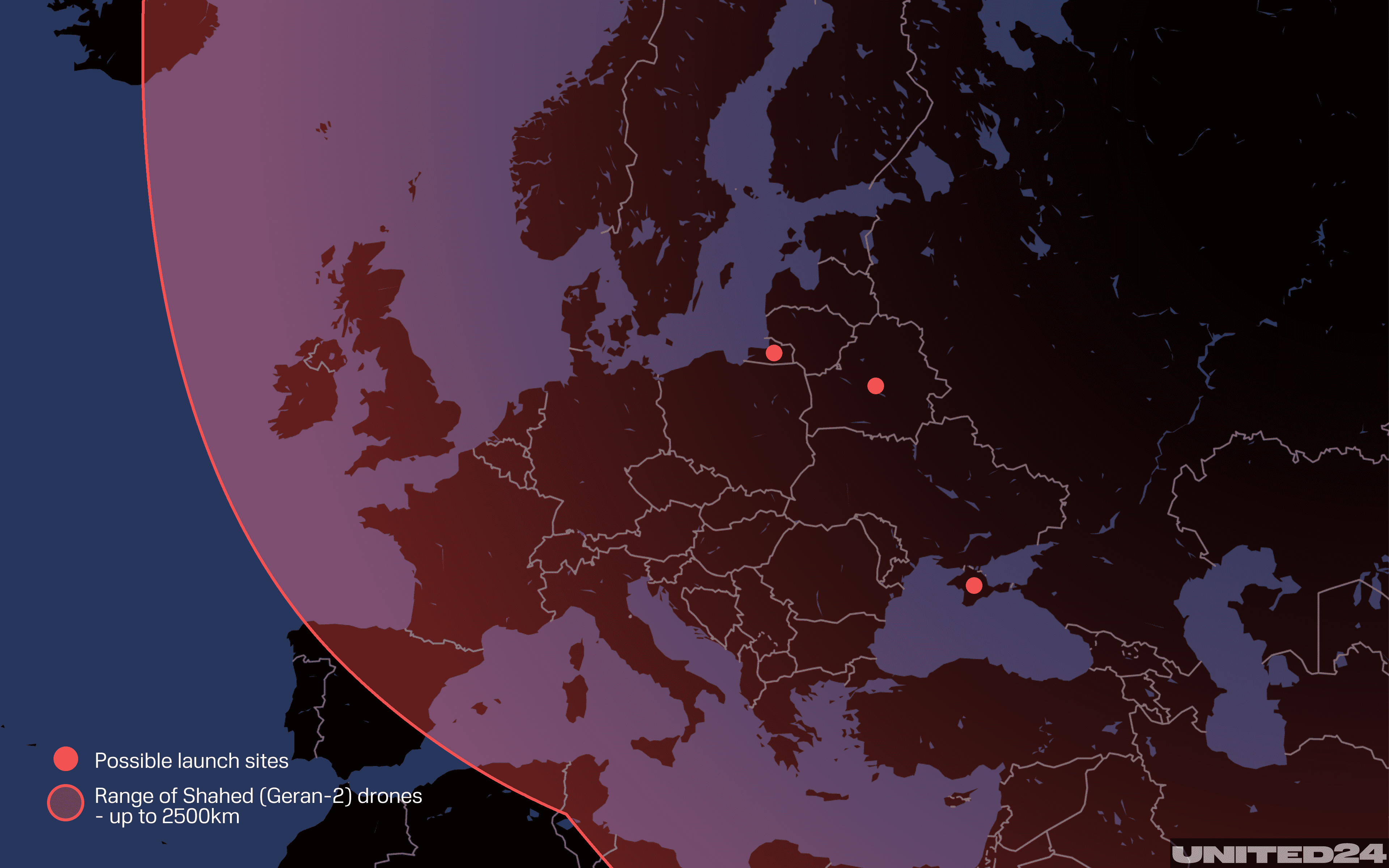
Russia is using a wide toolkit: sabotage of critical infrastructure, subversion, cyberattacks, disinformation and propaganda, GPS jamming of civilian aircraft, damaging undersea cables, drone incursions over EU territory, and operations targeting critical and commercial infrastructure, as well as our democratic institutions, have all been observed in recent days, months, and years.
Hybrid warfare campaigns work best in polarized societies, and what we are witnessing through these measures is exacerbating polarization, eroding trust, and dividing communities. Therefore, countering disinformation, protecting media independence, and building public trust must be strategic security priorities.
None of this is new. These tactics have been part of Russia’s “active measures” for a century. The novelty lies in the scale, frequency, growing boldness, and openness of these operations.
Russia’s purpose is clear: deter Europe from supporting Ukraine by weakening public support, prepare the ground for future escalation, and, crucially, sow doubt about NATO’s Article 5 pledge—the very foundation of the transatlantic security apparatus.
Russia does not hide its intent: it openly claims it is at war with NATO and Europe. This narrative is a central theme in its domestic propaganda to justify the full-scale invasion of Ukraine by portraying it as resistance to Western expansionism. With Washington searching for a quick end to the war, prioritising speed, money and backroom deals over lasting peace, Moscow sees Europe as the main obstacle because it continues to support Ukraine to resist and push back Russian advances. Also, because Europe refuses to accept the Kremlin’s terms.
Taken individually, each hybrid incident committed or sponsored by Russia has been calibrated to remain below thresholds that would trigger stronger NATO and European responses, let alone trigger Article 5. Taken together, they reach the level of a sustained, below-threshold, hybrid war against Europe and NATO. Failing to acknowledge this reality makes it truly difficult to develop effective and robust countermeasures to deter further escalation and risks opening the way for much worse scenarios. Weak reactions to Russia’s aggressions against Ukraine in 2014 and Georgia in 2008 have led us to where we are today and serve as stark reminders.
Peacetime mindset
Europe remains stuck in bureaucratic inertia and political risk aversion. Internal divisions, slow decision-making, and a deeply legalistic peacetime mindset are preventing the EU and most of its Member States from acknowledging the reality of a hybrid war and responding effectively to change the Kremlin’s calculations.
Whether this is about handling sanctions, shadow-fleet vessels, the protection of critical infrastructure, or the use of frozen Russian assets, Europe continues to apply a peacetime logic to an environment that is no longer peaceful and an adversary that does not feel bound by agreed international law.
The result is that Russia has been all but deterred. On the contrary, it has increased the intensity, frequency, and scale of its operations. Recognising this reality is essential to move forward. Europe must acknowledge it is engaged in a hybrid war with Russia. Only then can we use the full force and range of instruments at our disposal.
Failing to name the problem has already cost Europe time and security. Continuing to hesitate will invite further escalation at a moment when Russia is actively probing for weakness. A swift shift from a peacetime posture to a genuine defensive mindset is not escalatory—it is the minimum required to protect Europe, its values, way of life, and all citizens.
From structure to strategy
Europe is not ready for war. Decades of underspending, reliance on external security guarantors, chronic fragmentation in our industries, failure to set collaboration as the norm for industry and research, and dependence on foreign supplies have left Europe without the capabilities, stockpiles, and resilience required to deter a capable and determined aggressor like Russia. Europe’s decision-making and structures require urgent updating. The European defense industry cannot deliver at the scale or speed that a real crisis would require. Geopolitical shifts and changes in the strategic environment mean that the tenacity and resilience of traditional partnerships long assumed unbreakable are increasingly questioned.
NATO’s goal of lifting European defense spending to 5% of GDP within a decade and the EU’s new initiatives and instruments, such as ReArm Europe and SAFE, represent the beginning of a long and painful correction. But money alone will not fix Europe’s defense problem. If Europe continues to spend in ways it has in the past, higher budgets will simply generate more of the same inefficiency. Spending better is as important as spending more.
Ukraine’s defense needs and lessons from its wartime innovation should form the bedrock of future European defense investment strategies and be wholly integrated into European planning.
Joint procurement
Europe still behaves as if 27 separate defense markets can produce a coherent whole. We have known for a long time that it cannot. The continent operates dozens of tank types, fighter models, artillery systems, and command structures—most incompatible with one another and, as a result, a lot more expensive to maintain. Governments protect national champions even when they underperform, slowing consolidation and weakening competitiveness. Joint procurement and standardization remain the exception rather than the rule.
Europe imports roughly three-quarters of its major weapon systems and relies heavily on external suppliers for its critical materials. When trade is being weaponized, this is unwise. Absolute self-sufficiency is neither realistic nor desired, but selective autonomy is overdue.
Infrastructure, society, industry
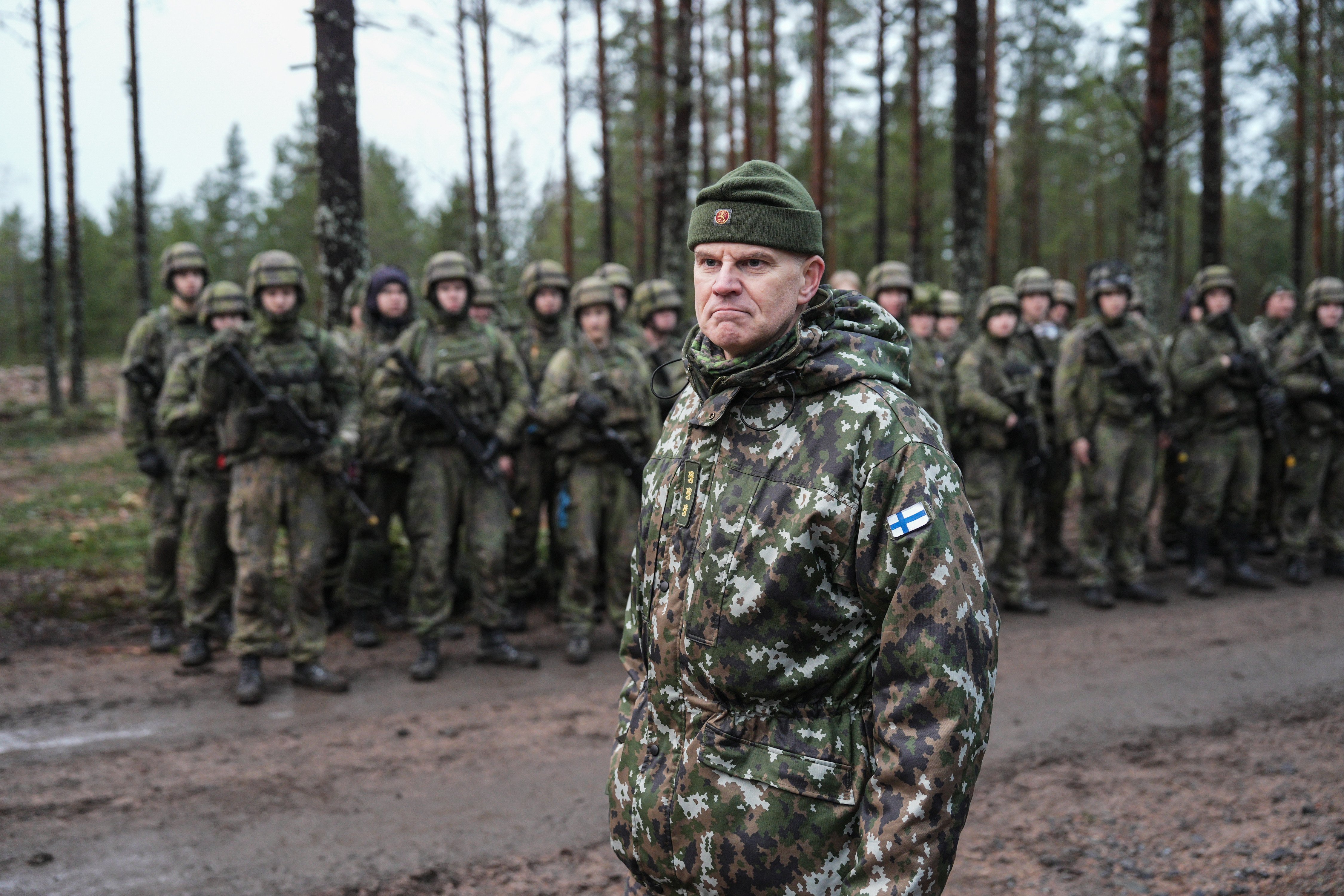
The protection of critical infrastructure and supply chains, and civil preparedness, remain uneven across the continent. We need a whole-of-Europe approach. Modern conflicts illustrate the necessity of dual-use technologies and show that defense and resilience in a hybrid context are increasingly inseparable; Europe must manage them as two sides of the same coin.
Europe needs a whole-of-society approach to crisis response and must adopt a total defense concept across its membership.
Furthermore, hybrid war targets people as much as infrastructure and institutions, and Europe must explain to its citizens why deterrence matters, what is at stake, and how defense spending protects their daily lives. We can and must draw lessons from the Nordic countries and Ukraine’s wartime societal resilience.
Scaling production, improving innovation, and reducing delivery times will require mergers, shared programmes, common standards, and a willingness to allow some national champions to disappear. Industrial policy must follow security needs, not the other way around.
Money alone can’t fix these problems. Purpose, focus, and industrial consolidation must guide the spend. Otherwise, Europe won’t be safer. Money can buy equipment; it cannot buy time, readiness, or deterrence. Those depend on choices Europe has only just begun to confront.
This op-ed is also published by Friends of Europe as part of a joint initiative to amplify expert voices on European security.
Discuss this article:



-f3430f0449615e9897dff835086ac204.jpg "Ukraine Broke With a Soviet-Era Military System and Rebuilt It Around the Soldier")
-e126c16a85d580738cf2d57e760b80a3.jpeg "Photo of Vladyslav Greziev")