- Category
- War in Ukraine
"A Big Friggin’ Deal”: US Congress Passes Late Sen. Graham’s Sweeping Russia Sanctions Bill
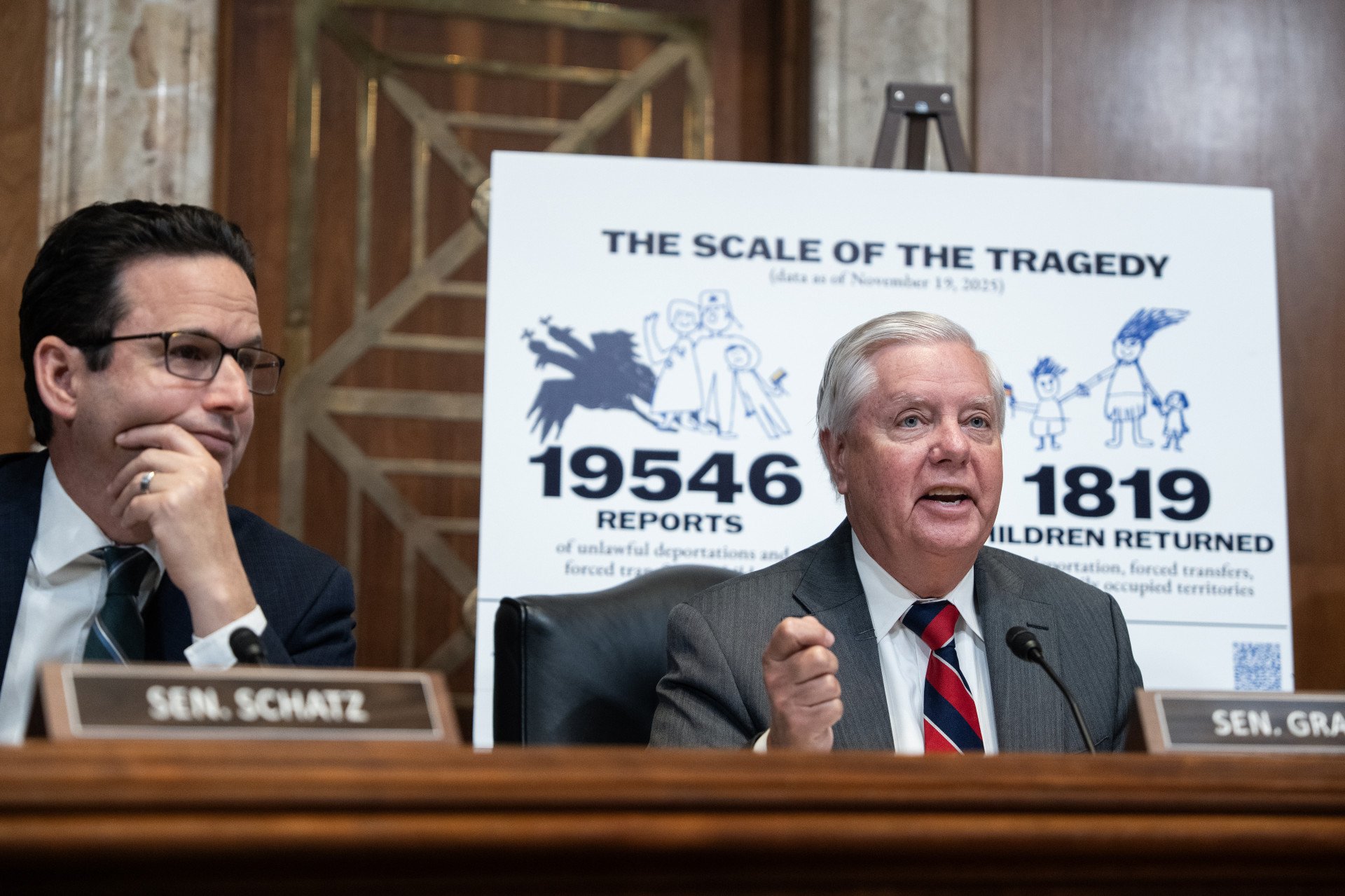
For the first time in nearly two years, Congress has passed major legislation supporting Ukraine, targeting Russia’s war economy and those responsible for abducting Ukrainian children. In favor—262 votes, against—159. The bill now heads to President Trump for his signature
 Prefer U24 Media on Google
- Authors


Sen. Darline Graham Nordone, sister of the late Lindsey Graham, is confident that Trump will sign the law. Meanwhile, more than 600 constituents from 50 states and Puerto Rico arrived in DC to ask their representatives to vote for the bill.
The bill was first introduced on April 1, 2025, as S. 1241, the "Sanctioning Russia Act of 2025," by Senator Lindsey Graham (R-SC), with a House companion bill led by Representative Brian Fitzpatrick (R-PA) filed the same day. It had 84 Senate co-sponsors—exceeding the numerical two-thirds Senate threshold. Despite that support, the bill was stuck for over a year. Graham repeatedly said a vote was close, but timelines kept slipping.

On July 10, 2026, Graham traveled to Kyiv, met with Zelenskyy, and announced he had reached an agreement with the White House to move forward on the bill. He died suddenly shortly after returning from that trip. His death pushed both parties to fast-track the legislation as a tribute to him, and it was renamed in his honor. The Senate held a procedural vote on July 28—the day of Graham's funeral—explicitly framed by lawmakers as a tribute to him, with Zelenskyy in Washington for the funeral and watching from the Senate gallery. Final passage came on August 7, 2026, by a vote of 86-11.
What changed in the new version of the bill?
The revised bill, the "Lindsey O. Graham Sanctioning Russia Act of 2026," was introduced on July 16, 2026 with key changes: instead of a blanket 500% tariff on any country buying Russian oil or gas, it now gives the president authority to impose tariffs of up to 100% specifically on the top five countries that import Russian oil and natural gas (with exceptions for countries importing under 15% of their gas from Russia and reducing that share).
The legislation also targets Russia’s shadow fleet. It also added sanctions related to the abduction of Ukrainian children and expanded sanctions on Iran. The bill is now called the Sanctioning Russia and Iran Act. Sen. Sheldon Whitehouse said it improved the bill’s prospects with Republicans; Trump also suggested adding Iran.
-e6131c15940441f3ea21303204e6bade.jpeg)
How did the Russia sanctions bill pass the House?
On September 15, 2026, the House voted 214-211 on the procedural rule needed to bring the bill to the floor—nearly all Republicans backed it while Democratic leadership opposed it, with only two Democrats—Jared Golden of Maine and Marie Gluesenkamp Perez of Washington—crossing over to help pass the rule.
Democratic opponents argued that the bill gave Trump too much discretion over tariffs while failing to mandate sanctions on Russia. The legislation nevertheless drew support from European leaders, with European Commission President Ursula von der Leyen welcoming its passage by the Senate back in August.
“France had endorsed it, the president of Finland had endorsed this bill. That’s why I think we got so many votes on our side,” said Democratic Rep. Steny Hoyer, “notwithstanding the fact that a number of our leadership expressed reservations […] that the bill would not do what it promises to do, and that Trump would not follow through.”
Hoyer, who spent eight hours calling Democratic colleagues to persuade them to support the bill, said their opposition was not about Ukraine. “It was saying to Trump, ‘We want tougher language.’”
Republican Rep. Don Bacon of Nebraska argued that the president should abandon any pretense of being “a neutral referee amongst two people fighting” when it comes to Russia and Ukraine.
“America should be clearly on the side of freedom and decency and human rights,” he said. “And that's Ukraine. Our actions today will show that the House is on the right side. This is the minimum.”
We're gonna be able to do very hard sanctions and tariffs on Russia. But even better, anybody who buys Russian oil and gas—they will be tariffed. They will get secondary tariffs. We know that the Russian oil industry props up their war economy. We're gonna target their center of gravity economically, but with these sanctions and tariffs.
Don Bacon
United States Representative (R-NE)
Republican Rep. Michael McCaul of Texas argued that the bill could increase pressure on Putin to enter negotiations.
“Zelenskyy was prepared […] to call for a ceasefire and negotiate. The problem is Putin will not,” McCaul said. “So this pressure, we hope, will get him to that point.”
On September 16, 2026, the House passed the bill itself 262-159: 203 Republicans, 58 Democrats and one independent voted yes, while 7 Republicans and 152 Democrats voted no.
Democratic Sen. Richard Blumenthal of Connecticut, who co-authored the bill with Graham, celebrated its passage by invoking his late colleague.
“On this day of joy and pride, I wanna try to channel my inner Lindsey Graham,” Blumenthal said. “This is a big friggin’ deal. We did good. We did good.”
“Those were among Lindsey’s last words to me,” he added.
Blumenthal said the idea of combining sanctions with tariffs emerged during an overnight train journey with Graham after one of their visits to Ukraine. He also pointed to Russia’s deportation of Ukrainian children, which the bill specifically addresses.
“It is also about basic humanity,” he said. “This bill has scorching sanctions on oligarchs, financial institutions, energy companies, and the rest, and it has tariffs, limited and targeted, to the major purchasers, five of them, of Russian oil and gas, and the enablers.”
Graham’s sister, Sen. Darline Graham Nordone, has continued her brother’s work on the legislation.
“This bipartisan effort today is just absolutely amazing,” she said. “I couldn’t be more thrilled. I’m very proud.”
Ukraine advocates bring their message to Congress
Over two days, participants held 459 meetings on Capitol Hill, briefing lawmakers on the situation in Ukraine and the urgent need for continued American support in the fight for freedom. The meetings were part of the American Coalition for Ukraine’s 9th Ukraine Action Summit, which brought advocates from across the country to Washington for briefings, training, and meetings with lawmakers.
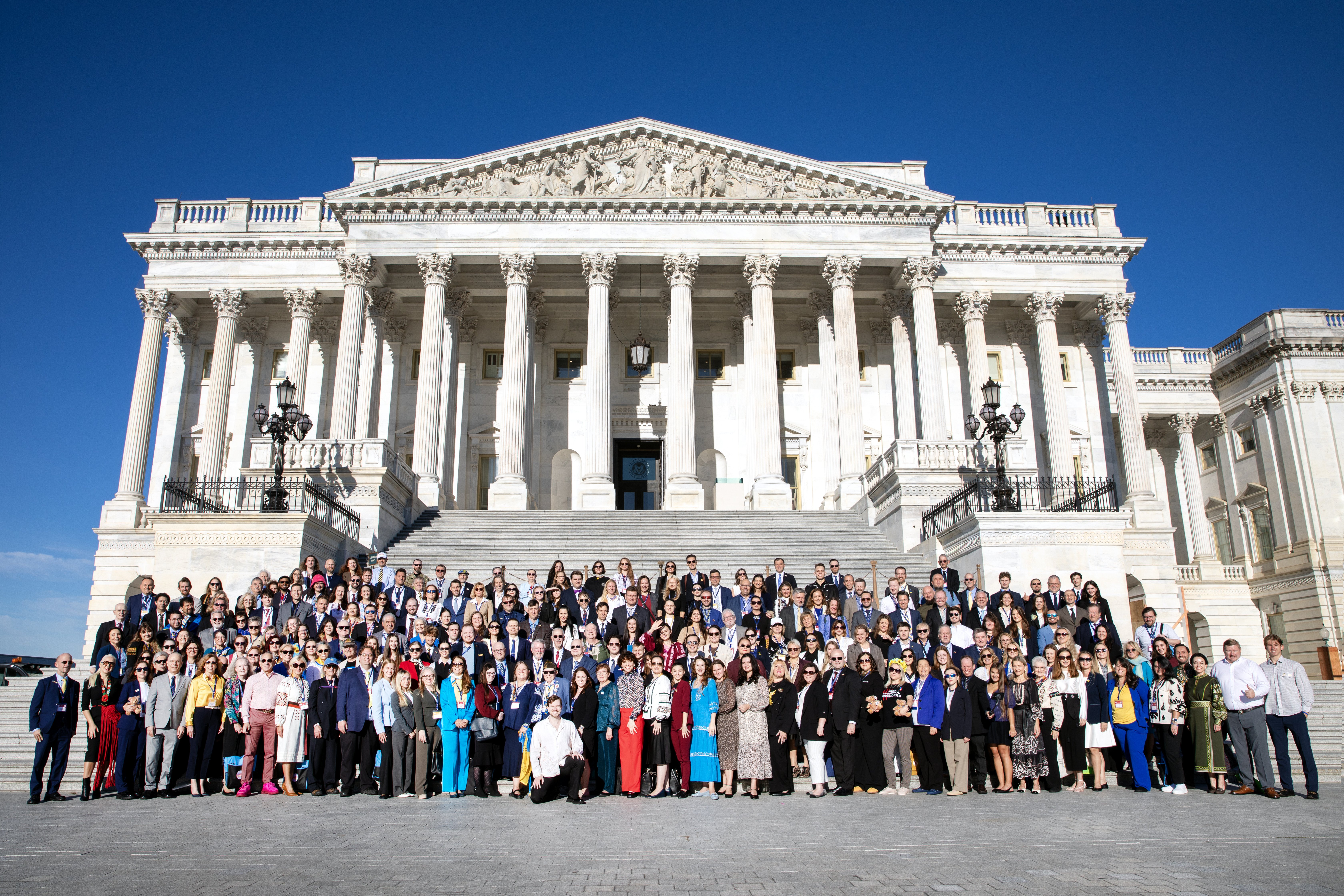
Eugene Goncharov, director of policy at the American Coalition for Ukraine, said the legislation has become the organization’s top priority in Washington. “The 2026 version is significantly broader than the 2025 original,” he said, mentioning the bill’s expanded sanctions on Russia’s war machine and its foreign enablers, while also targeting the abduction of Ukrainian children and Iran.
Passing the bill into law will make this war harder and more expensive for Russia to keep fighting.
Eugene Goncharov
Director of Policy, American Coalition for Ukraine
Attending the Ukraine Action Summit, Denys Sienik, chargé d’affaires at the Ukrainian Embassy in the US, said bringing Ukraine’s voice to Capitol Hill was particularly important amid escalating Russian attacks.
“We are grateful to every senator, to every congressman and congresswoman for their voice and for their support,” he said.
Mira Rubin, California delegation leader for the Ukraine Action Summit and a board member of the American Coalition for Ukraine, stressed the significance of the moment.
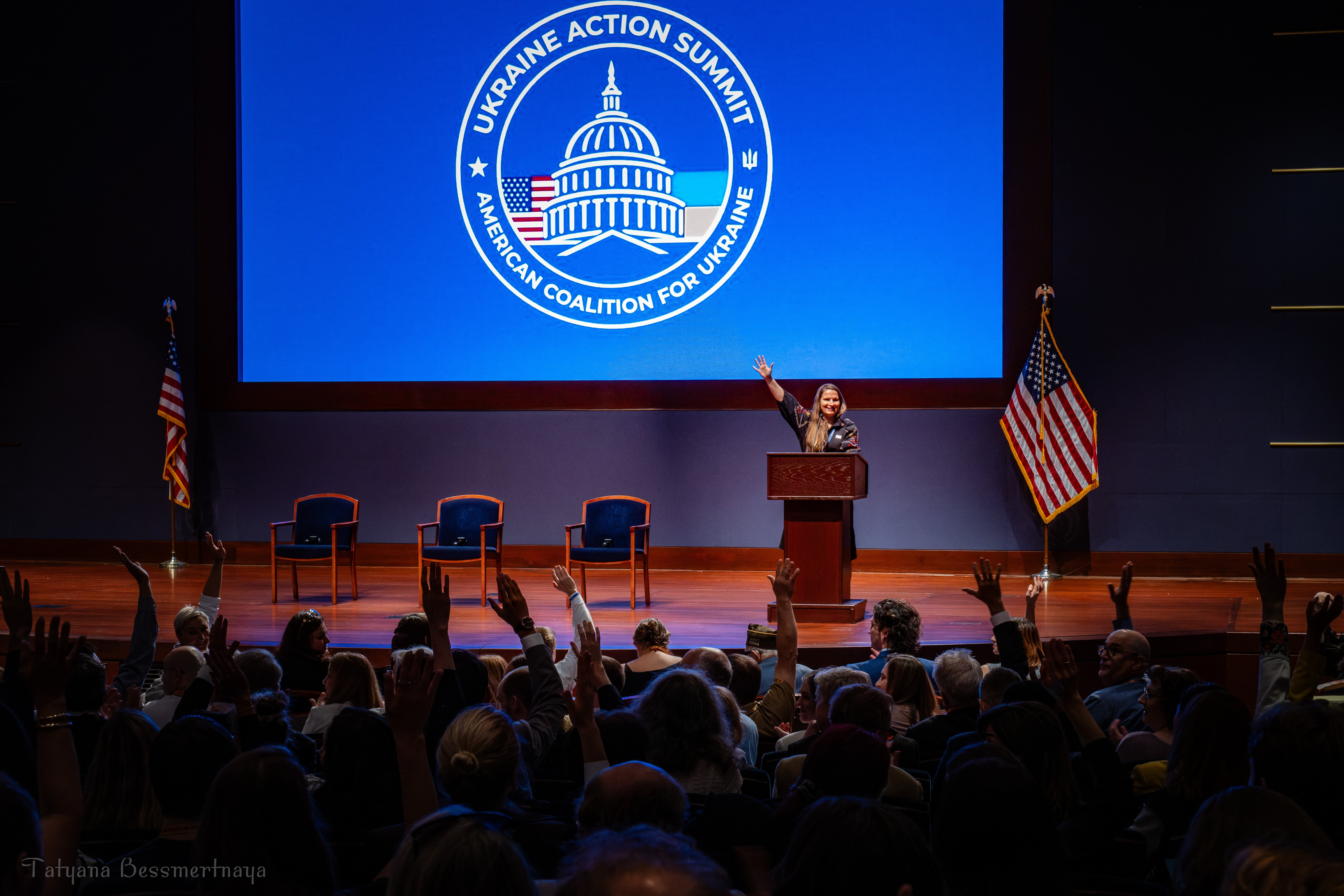
"This is the first time in the past almost two years when we are able to do something for Ukraine in Congress," she said. "We really hope that Congress is going to take this opportunity to signal to Ukraine that the American people are standing with Ukraine."
Christopher Bayer, Georgia delegation leader for the Ukraine Action Summit, emphasized the financial logic behind the legislation.
“It is a big deal in putting economic pressure on Russia and the countries continuously supporting Russia by buying their oil and gas,” Bayer said. “The sanctions do not take any money from the US and the US taxpayers.”
Discuss this article:
-4a56a6b482ec132402c16ef6fcabf9a2.png)



-b3edefa350ac9e77d9bc1b18bd02eac6.jpg "Illustration of a Russian Pantsir-S1 air defense system. (Source: General Staff of the Armed Forces of Ukraine)")


-8efe32f0d3a2b8d38c7673d2cb202b11.jpg "A map showing Ukrainian strikes on Russian missile-related facilities in the Nizhny Novgorod and Tver regions on October 9, 2026. (Source: Oleksandr Manukians/UNITED24 Media)")