- Category
- War in Ukraine
Geran-5 Gets Kh-101-Like Guidance as Russia Pushes Its Jet Drones Toward Full Autonomy
 Prefer U24 Media on Google
- Authors


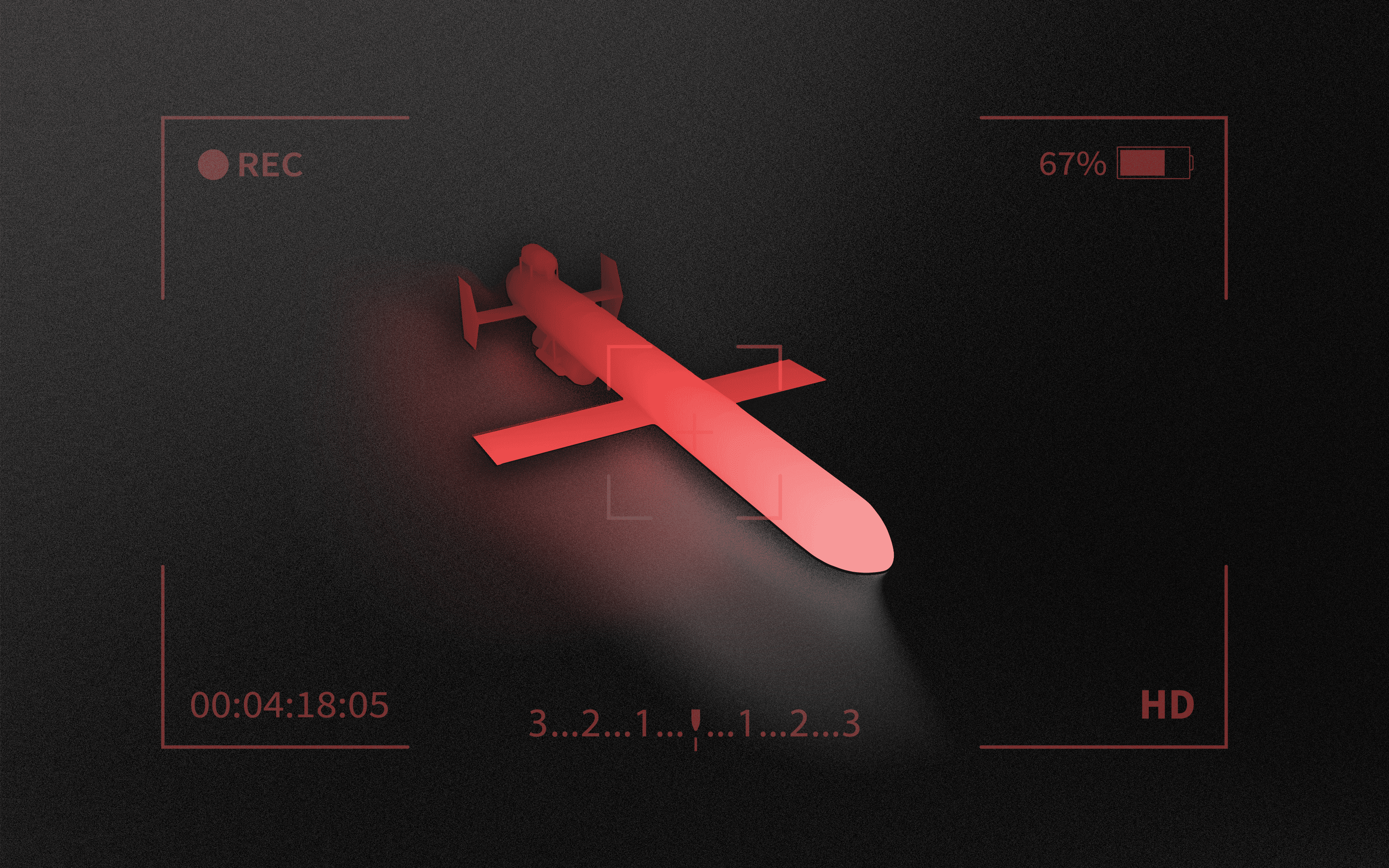
Russia has equipped its newer jet-powered Geran drones with an electro-optical navigation system that lets them autonomously fly toward targets by comparing camera imagery with a stored visual map of the route, bringing their guidance concept closer to that used on some Kh-101 cruise missiles, Defense Express reported on October 5.
Ukraine’s Defense Intelligence recently released new details on the Geran-5 K5 and a newer Geran-4 variant that Russian forces began using this fall. Both reportedly carry a system known as Susannin, designed to reduce the drone’s dependence on an external control signal during the flight.
We bring you stories from the ground. Your support keeps our team in the field.
Rather than relying on an operator continuously steering the aircraft through a communications network, Susannin uses onboard imagery. The drone compares what its camera sees below with reference images loaded into the system and uses those visual matches to determine where it is and continue along its programmed route.
In practical terms, the aircraft can navigate by “looking” at the terrain. Defense Express notes that this means mesh modems and airborne mesh repeaters are not necessarily required for the drone to reach its intended target, since the navigation process can continue autonomously without a constant outside command link.
It’s worth noting that this is a new modification designated Geran-5 K5, with a modified fuselage and equipped with the Susanin optical trajectory correction system, which compares images of the underlying terrain against a preloaded terrain map.
— OSINTWarfare (@OSINTWarfare) September 28, 2026
A similar correction system,… https://t.co/Fu3zVDU8LU pic.twitter.com/TP08w7Jky8
A similar principle has already appeared in more sophisticated Russian long-range weapons. One version of the air-launched Kh-101 cruise missile, known as Izdeliye 504AP, used an optical navigation system called Otblesk-U during Russian missile strikes against Ukraine between 2022 and 2025.
That comparison is important because it shows Russia gradually transferring technologies associated with expensive cruise missiles into cheaper unmanned strike systems. The goal appears to be making jet-powered Geran drones increasingly independent, accurate, and less reliant on vulnerable communications links during their approach to a target.
The change also comes as Ukraine becomes more effective at intercepting Russia’s newer jet-powered UAVs. Defense Express estimates that Ukrainian forces are already destroying roughly 50% to 60% of them, meaning that only around four or five out of every 10 launched may currently reach their targets.
-206fe4a4a8ec2b475c4abe18fe578683.png)
Improving autonomous navigation could therefore be part of Russia’s effort to increase the number of drones that survive long enough to complete their missions, particularly as Ukraine expands dedicated interceptor-drone units and other counter-UAV defenses.
The Geran-5 and newer Geran-4 are part of a broader Russian effort to move beyond the original propeller-driven Shahed concept. Their jet propulsion already gives them significantly greater speed, while systems such as Susannin add another layer of sophistication by allowing the aircraft to navigate visually without depending on continuous external guidance.
The result is a weapon that increasingly sits somewhere between a conventional one-way strike drone and a small cruise missile: cheaper and simpler than weapons such as the Kh-101, but borrowing some of the same ideas in navigation and terminal autonomy.
Earlier, a Geran-type drone equipped with a turbojet engine entered Moldovan airspace and later crashed and exploded near a road in the Orhei district on the evening of September 30.
Discuss this article:
-9a7b3a98ed5c506e0b77a6663f5727c5.png)

-29a1a43aba23f9bb779a1ac8b98d2121.jpeg "Photo of Illia Kabachynskyi")
-7d122a07556dc8e44148079aa671b3d7.jpg "Russia Takes Five Hits in Just Two Days as Ukraine Hunts Key Defense Factories")
-63c859efab550813c9d508440e946c5d.jpg "Russian Presidential Press Secretary Dmitry Peskov speaks on a mobile phone during a Russian-Kazakh forum, on July 25, 2026, in Omsk, Russia. (Source: Getty Images)")
-72b63a4e0c8c475ad81fe3eed3f63729.jpeg "Photo of Cyril Barabaltchouk")
-111f0e5095e02c02446ffed57bfb0ab1.jpeg "Photo of Roman Kohanets")