- Category
- Latest news
Ukraine Lifts the Veil on Russia’s Geran-5 Drone—A Hybrid of Foreign Technology
 Prefer U24 Media on Google
- Authors


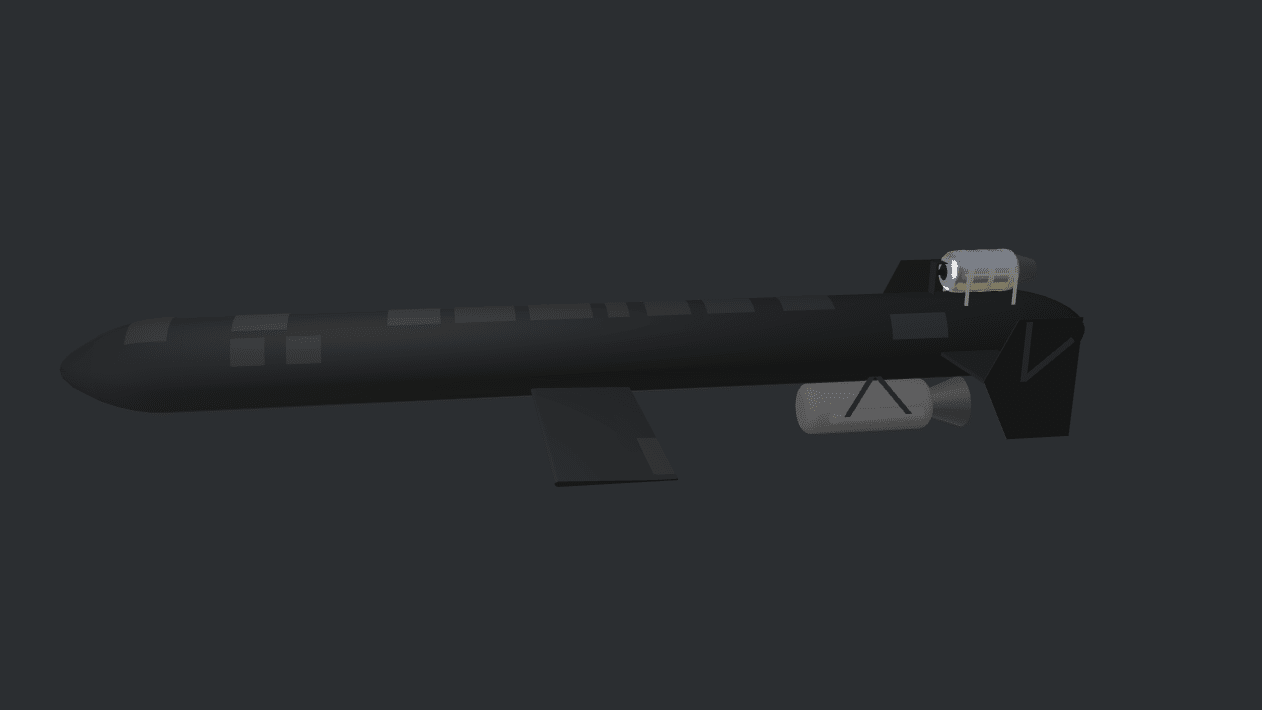
Ukraine’s Main Intelligence Directorate (HUR) has released a detailed technical breakdown of Russia’s new strike unmanned aerial vehicle, the “Geran-5,” according to materials published on the War&Sanctions portal.
According to the statement on January 19, HUR first disclosed initial photographs and basic information about the UAV earlier this month. The Geran-5 visually resembles Iran’s Karrar drone, while most of its internal blocks are identical to components used in other Geran variants produced at Russia’s Alabuga facility, as reported by the intelligence. Russian developers are also reportedly exploring the possibility of launching the drone from a Su-25 ground-attack aircraft.
We bring you stories from the ground. Your support keeps our team in the field.
The Geran-5 has a maximum takeoff weight of about 850 kilograms. Its cruising speed ranges between 450 and 600 kilometers per hour, significantly exceeding the performance of the Geran-3, according to HUR. The drone’s flight endurance is estimated at around two hours, with a range of up to 950 kilometers. Its maximum altitude is listed at six kilometers, although recorded combat use has occurred at altitudes between 200 meters and three kilometers.
The intelligence agency also noted that the identified electronic components used in the Geran-5 originate from three countries: China, the United States, and Germany.

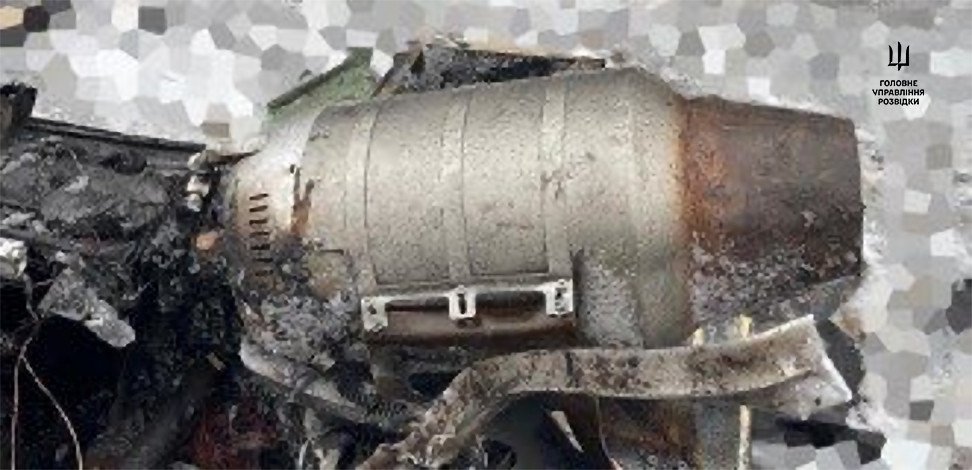
The UAV is powered by a Chinese-made TELEFLY TF-TJ2000A turbojet engine with a thrust of 200 kilogram-force. The drone is equipped with systems similar to those found on other Geran models, including an FCU flight controller, a SADRA/MINSOO inertial navigation system, a Kometa-M12 satellite navigation unit with a 12-element CRP antenna, a Tracker V3 telemetry transmission system based on a Raspberry microcomputer and 3G/LTE modems, as well as a Xingkai Tech XK-F358 MESH modem.
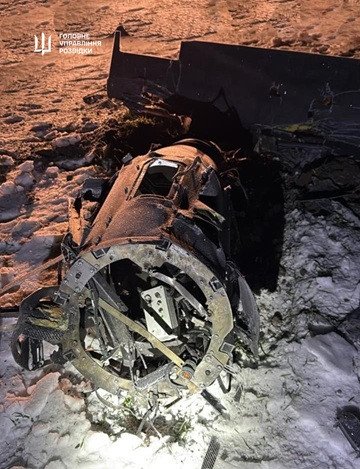
HUR reported that the fuselage, wings, and tail surfaces are made of carbon fiber, while the load-bearing structure consists of aluminum profiles and steel. The marking of the UAV follows the experimental “E” series previously used on Geran-2 modifications equipped with R-60 missiles and man-portable air-defense systems.
Earlier, German authorities launched a probe into a domestic company suspected of breaching sanctions after Ukrainian journalists reported that its products may have been used in the manufacture of Russia’s Shahed-type attack drones.
Discuss this article: