- Category
- War in Ukraine
How Ukraine Brought Down the Crimean Bridge
 Prefer U24 Media on Google
- Authors


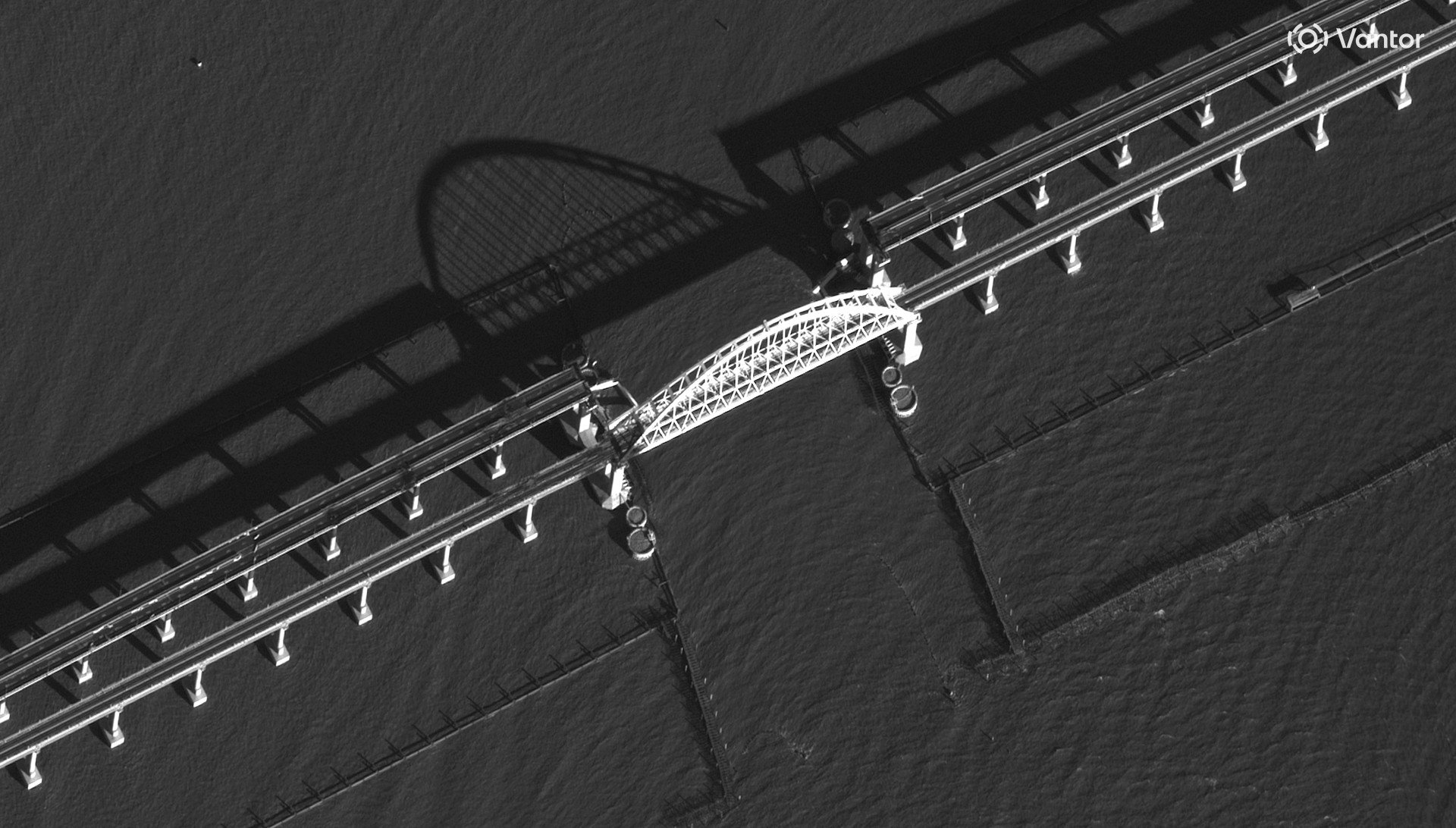
By the morning of November 17, the world had seen the road section of the Crimean Bridge collapse. A 273-meter span and its arch fell into the water following a coordinated Ukrainian operation carried out entirely with domestically developed weapons.
The bridge was one of Russia’s most heavily protected sites, after Vladimir Putin’s residences and the capital, Moscow. Multiple layers of defences protected the structure from land, sea, and air.
Ukrainian forces struck it three times in 2026—on November 16, 17, and 19. Russia’s suppression of accurate battlefield reporting helped keep the scale of the operation out of public view until the span collapsed.
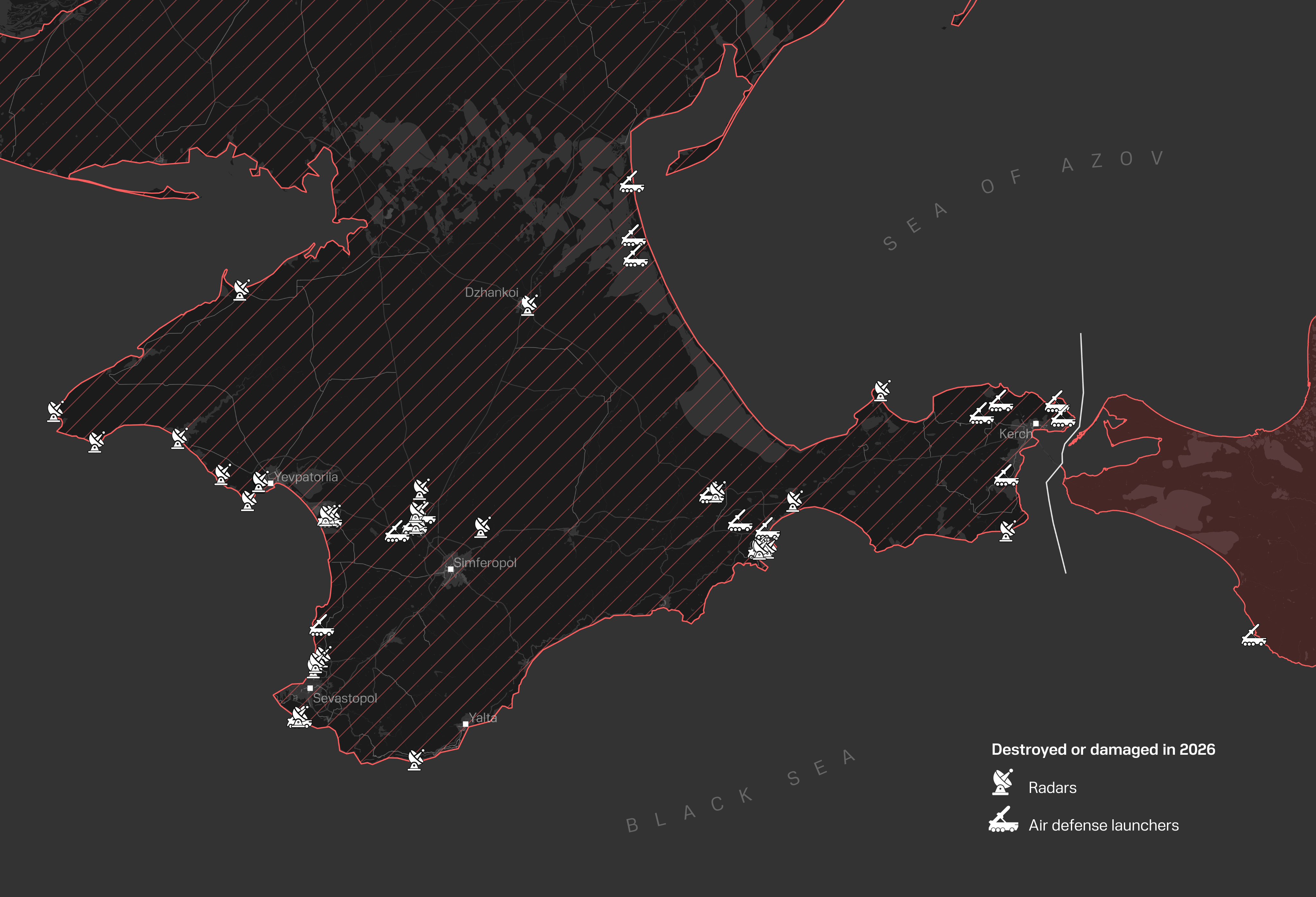
Phase 1: Clearing the way
In the lead-up to November 16, Ukrainian drones targeted Russian air defence and electronic warfare systems across Crimea, along the approaches to the bridge, and in Kerch itself—the city served by the Crimean Bridge, also known as the Kerch Bridge.
This weakened Russia’s ability to defend the bridge against subsequent strikes.
The preparatory attacks attracted little additional attention. Ukrainian drones had been systematically targeting Russian air defences in Crimea since early 2026. Russia could not replenish those defences fast enough: sustained Ukrainian long-range strikes inside Russia also forced it to redeploy systems to refineries, airfields, and other military facilities.
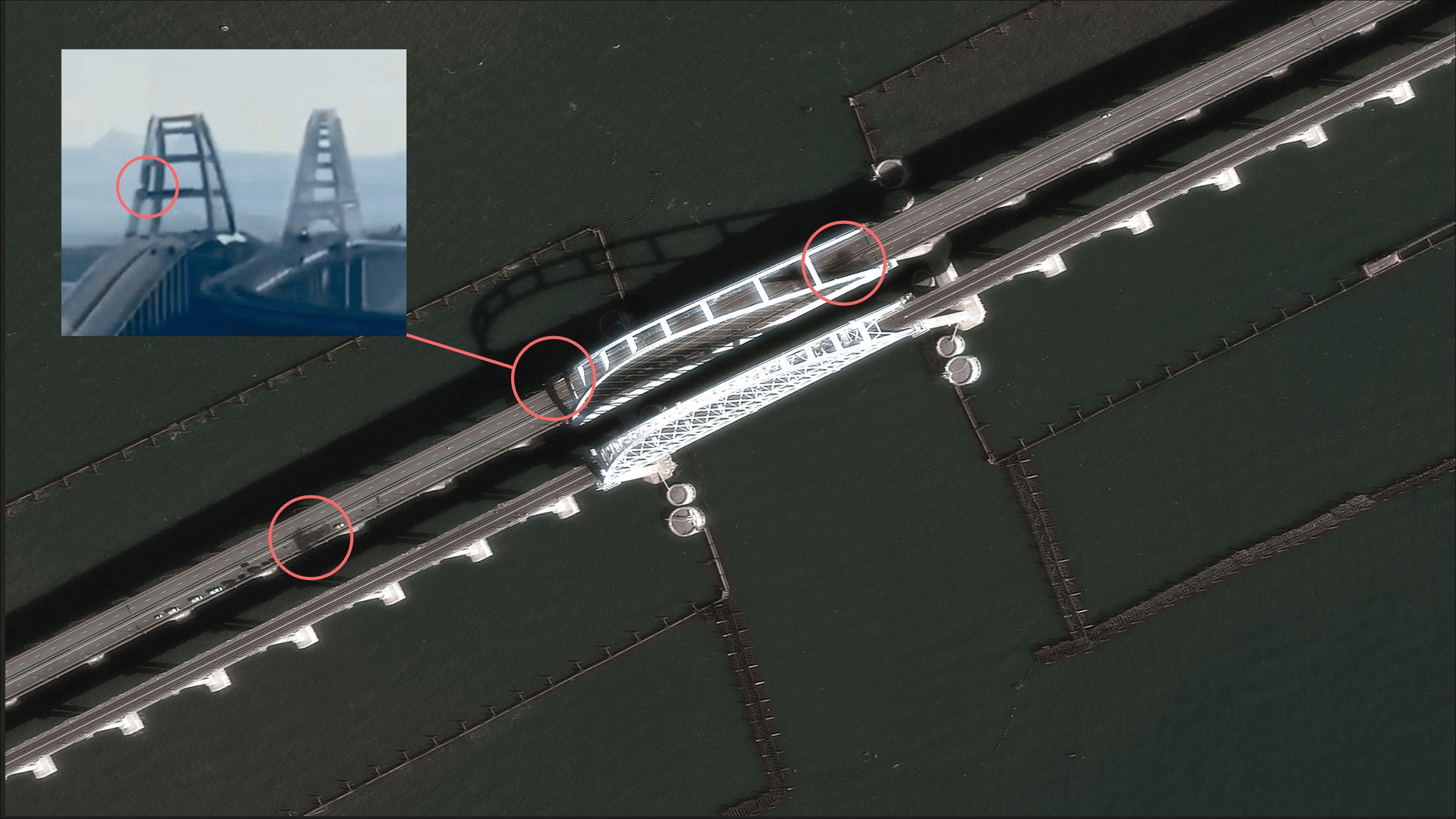
Phase 2: Testing the defences
On the morning of November 16, Russian occupation authorities reported that traffic on the Crimean Bridge had been restricted following a Ukrainian drone attack.
Ukraine did not comment or disclose further details, preserving the operational secrecy needed for the next stages.
The strike served as a reconnaissance mission. A hit on the road bridge’s arch confirmed Ukrainian calculations and helped make the subsequent attack more effective.
Ukrainian forces also had the bridge’s technical documentation well before the operation. This allowed them to plan their strikes with a detailed understanding of its structure.
Previous Ukrainian attacks on the bridge—in 2022, 2023, and 2025—had each been isolated strikes. Russia therefore did not recognize the November 16 attack as part of a larger operation.
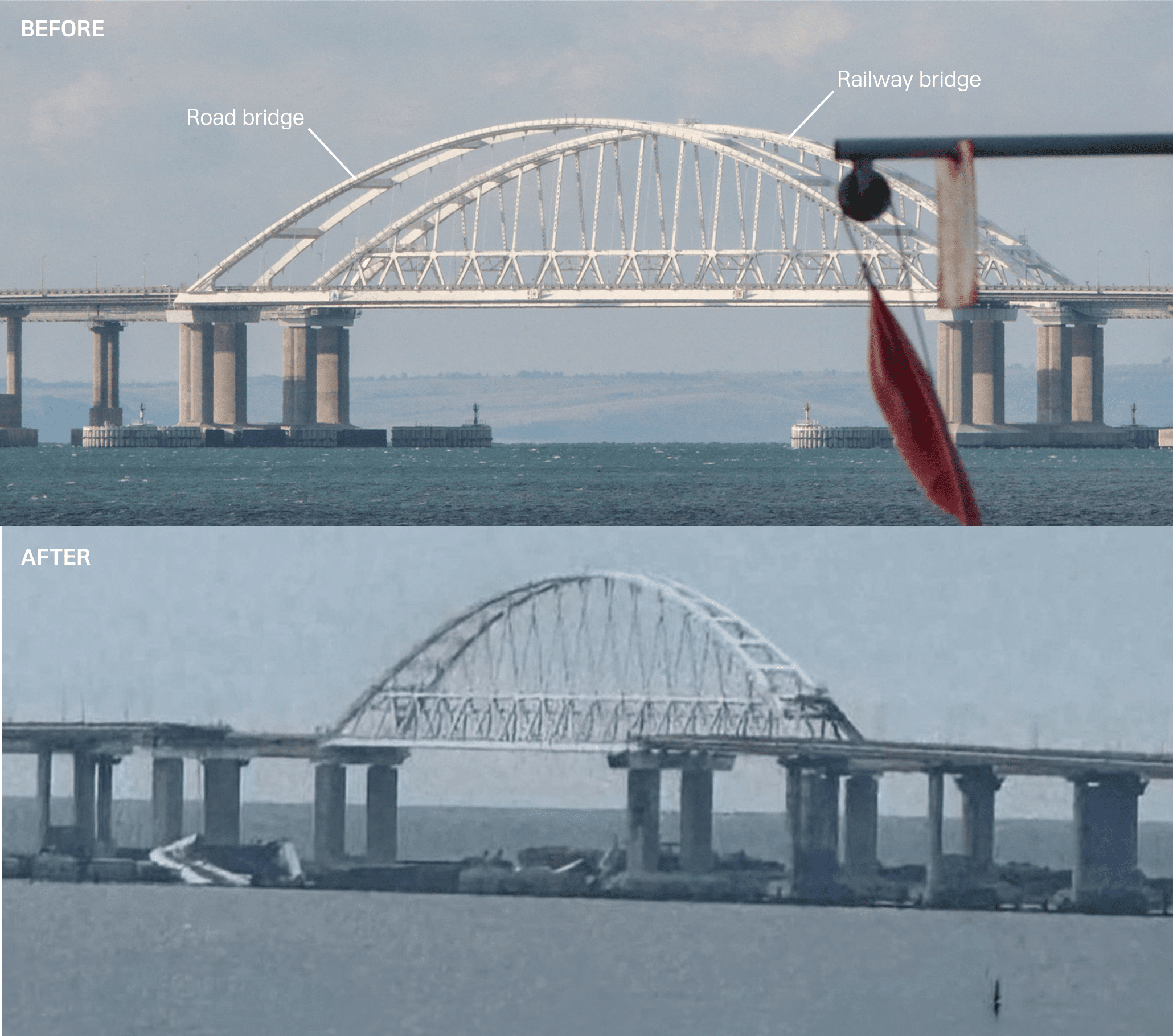
Phase 3: Bringing down the span
The attack overnight on November 16–17 was one of Ukraine’s largest combined strikes. It involved previously unknown Ukrainian drones, including decoys, jet-powered drones, and attack drones, alongside Ukrainian missiles.
Decoys diverted Russian air defences while the Palianytsia jet-powered drone delivered precision strikes on the road bridge and its arch. The 273-meter span collapsed.
Flamingo, Neptune, and Ruta missiles, together with the An-197 jet-powered drone, then struck the railway section. Its stronger construction, designed to withstand the weight of trains, allowed it to remain standing.
A further strike on November 19 caused additional damage. Rail traffic was subsequently permitted on only one of the two tracks, with average crossing speeds falling to 26 km/h against a stated maximum of 120 km/h.
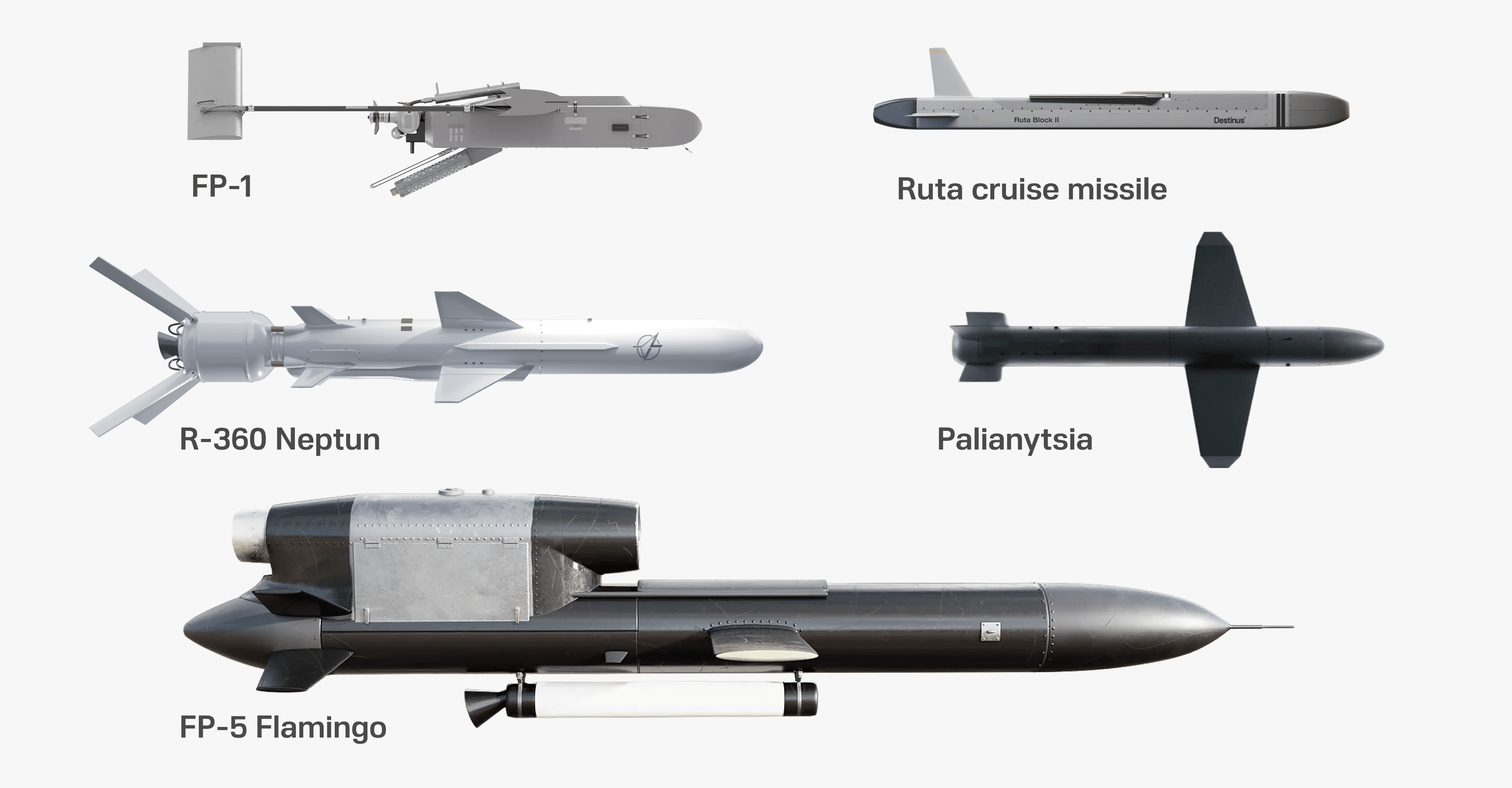
Ukrainian Weapons That Broke Through Russia’s Defences
The attack on the Crimean Bridge relied entirely on Ukrainian-developed weapons and technology: every drone and missile was Ukrainian, and 90% of the systems had been developed since the start of the full-scale invasion.
The weapons used included:
Dovbush T40, MICH-2000, and FP-1 UAVs: strikes on Russian air defence systems and diversionary maneuvers during the bridge attack.
Palianytsia jet-powered UAV: strikes on the road bridge.
An-197 jet-powered UAV: strikes on the railway bridge.
FP-5 Flamingo, Neptune, and Ruta cruise missiles: strikes on the railway bridge.
Combining drones and missiles with different flight characteristics and striking power complicated Russian interception efforts. As a result, some reached their targets and struck both sections of the bridge.
Russia’s Supply Routes Disrupted
The collapse of the road section creates a major logistical challenge for temporarily occupied Crimea.
More than 10,000 vehicles crossed the bridge daily, including transports carrying Russian personnel, fuel, weapons, and military equipment. It provided a relatively fast and safe connection from mainland Russia to a peninsula used as a staging ground for operations in southern Ukraine.
The damaged railway and ferry crossings will be unable to meet transportation demand.
The fallen span also obstructs the roughly 120-meter navigation channel through the Kerch Strait, effectively halting shipping in the area and blocking access to several Russian ports.
Even the most optimistic estimates put repairs at months; in reality, restoring the bridge will be impossible until hostilities cease.
The only remaining road route from Russia to occupied Crimea is the R-280 highway through occupied Ukrainian territory. It remains under sustained Ukrainian attack, targeting both military cargo and the road infrastructure. Roughly 6 bridges have been destroyed along different sections.
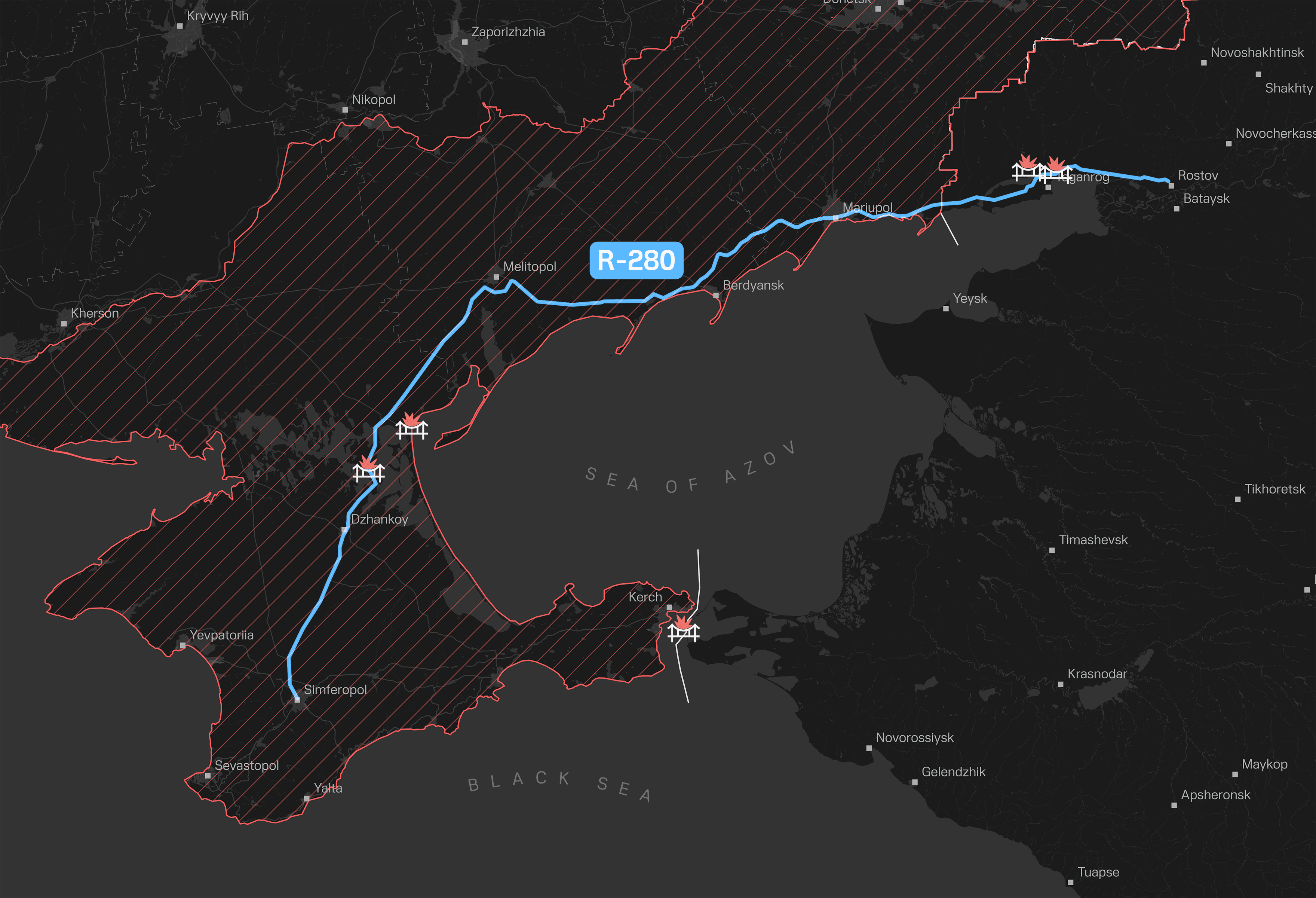
The route is time-consuming and unsafe for Russian forces. As the sole remaining road connection, it will also require additional resources to protect.
Discuss this article: