- Category
- War in Ukraine
Latvia Pushes NATO to Integrate Ukraine’s Battlefield Drone Expertise Into Defense Strategy
 Prefer U24 Media on Google
- Authors


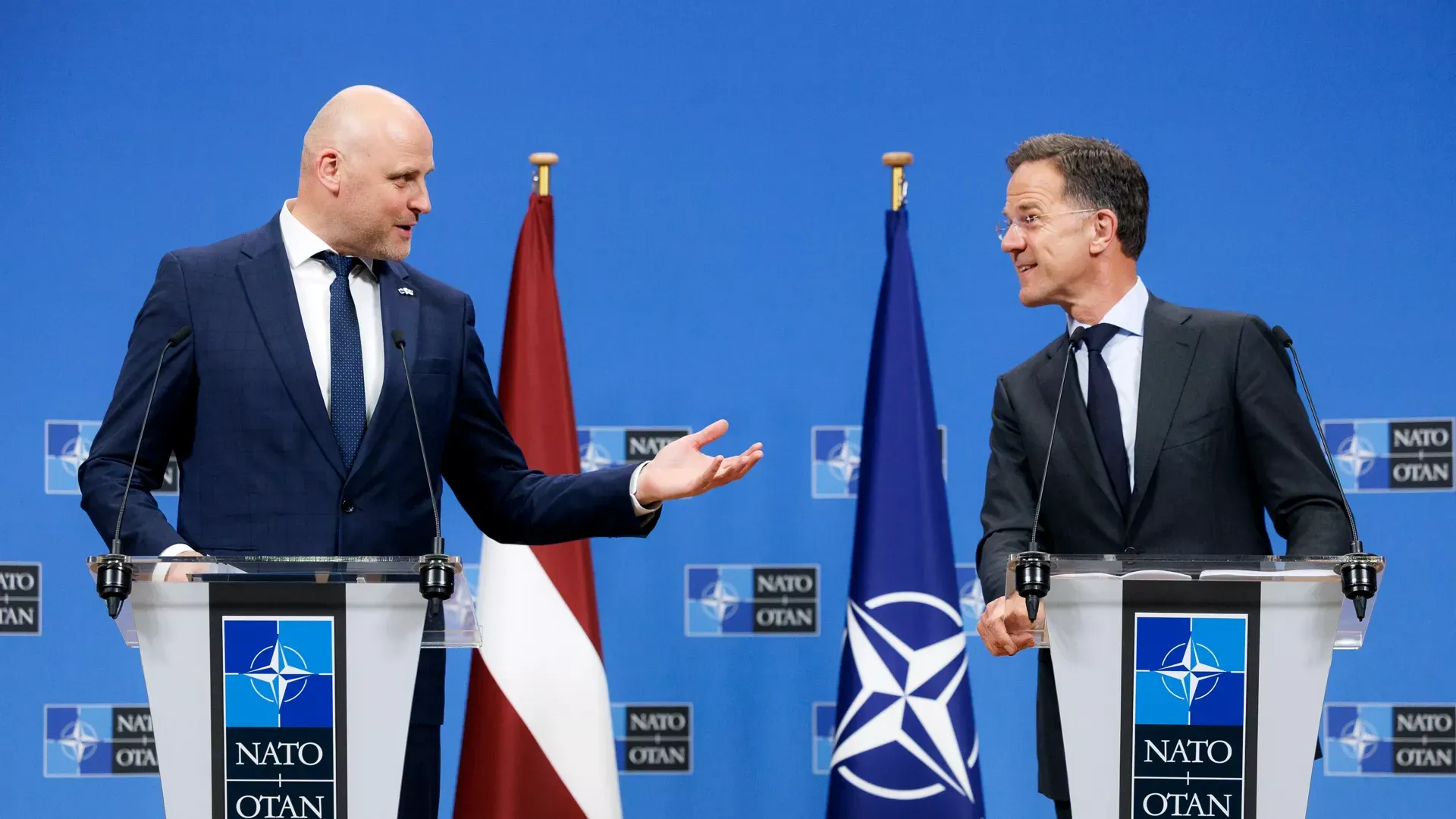
NATO allies must incorporate Ukraine’s experience in drone warfare into their own defense systems, Latvian Prime Minister Andris Kulbergs said during the joint press point with NATO Secretary General Mark Rutte in Brussels on June 17.
Kulbergs stressed that Ukraine has become the global leader in modern drone warfare and that its battlefield knowledge should be directly integrated into NATO planning and capability development.
We bring you stories from the ground. Your support keeps our team in the field.
“There is no other country who can do it better,” Koolbergs said. “We should not be experimenting while somebody already has a solution. We need specialists in place and close cooperation, a subscription-like model, because drones develop not monthly but weekly. We need the latest upgrade to defend best.”
He added that Latvia’s newly signed defense cooperation agreement with Ukraine is designed precisely to facilitate such integration, enabling Latvian forces to adopt Ukrainian operational experience in real time.
The NATO Secretary General also underscored Ukraine’s central role in shaping future Alliance capabilities, particularly in counter-drone warfare. He said NATO is “laser focused” on developing low-cost interception systems and moving rapidly from experimentation to operational deployment.
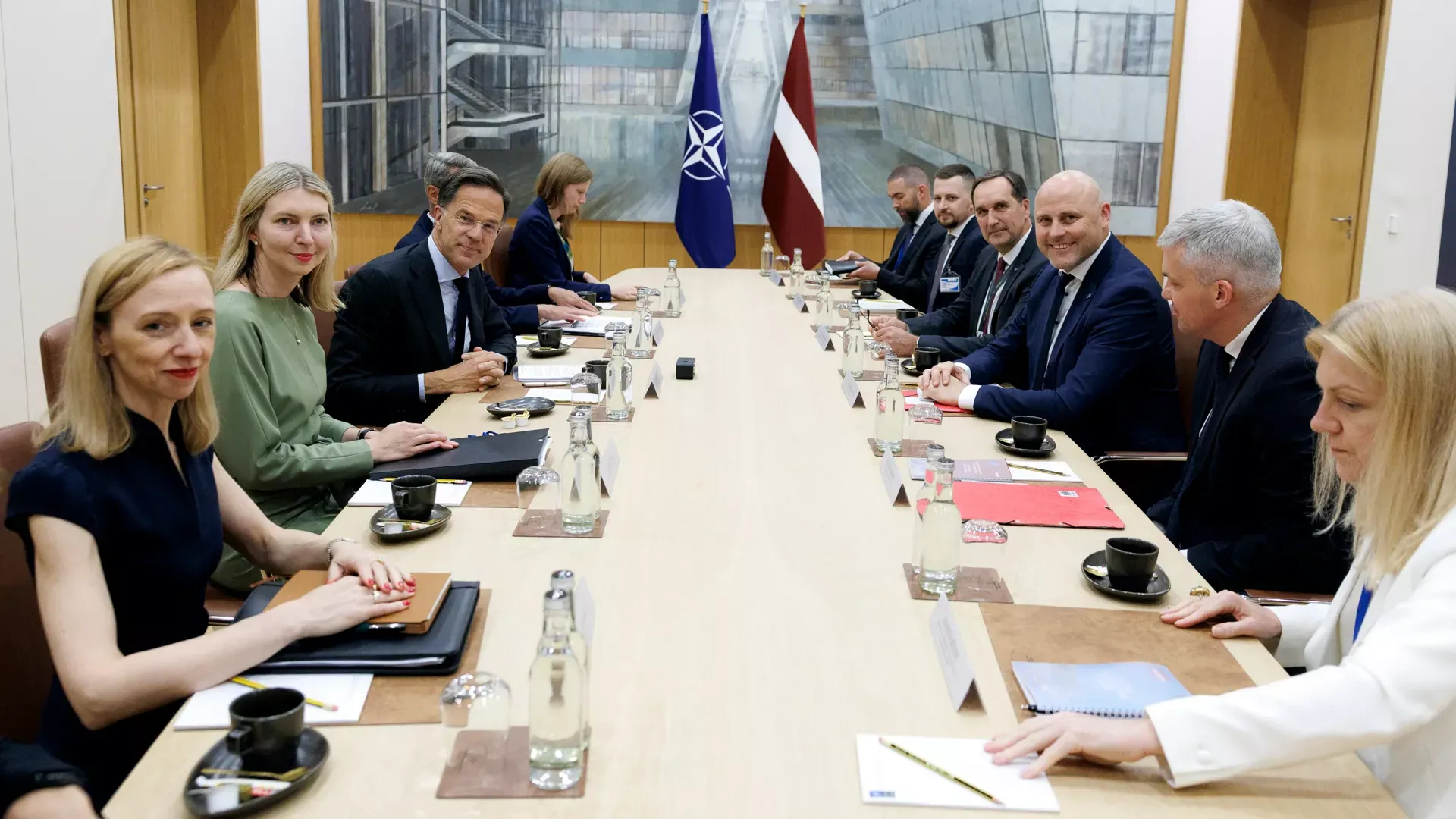
“This has to be done at speed,” he said, noting that Ukraine’s battlefield innovation is already influencing NATO’s approach to air defense and unmanned threats.
A key theme of the meeting was the rising threat of drones across NATO’s eastern flank, including recent airspace violations. Both officials agreed that expensive traditional air defense systems cannot remain the primary response.
“We cannot continue to shoot down drones with very costly interceptors,” the Secretary General said. “We have to find an interception techniques which are of the same cost as the drones.”

Kulbergs echoed this position, calling for more allied ground-based air defense systems and improved cost-effective counter-drone solutions across the Baltic region.
“We need more boots on the ground and more allied presence in Latvia, the Baltics and the Eastern Flank,” he said. “The best way to protect us—to prepare for the worst.”
Latvia also reiterated its long-term commitment to Ukraine, confirming continued military assistance and expanded energy support ahead of the next heating and electricity seasons.
Kulbergs said Latvia remains one of Ukraine’s strongest supporters relative to GDP, noting that military assistance has been maintained at 0.25% of GDP for three consecutive years and will increase to 0.3% this year.
“For three years now, Latvia’s military support to Ukraine has been 0.25% of our GDP. This year it is even 0.3%, and we are committed to that further as well,” he said.
He also confirmed additional funding for Ukraine’s energy resilience, including support ahead of winter, as well as ongoing cooperation in air defense and drone technology under joint bilateral agreements.
NATO officials and Latvia both emphasized that Ukraine’s role is not limited to receiving support but increasingly extends to providing critical battlefield expertise to allies, particularly in countering unmanned aerial threats.
Additionally, Latvian Prime Minister highlighted the historical significance of the date, linking it to broader security concerns in Europe.
“Today, 17th of June, in 1940, Russian bootstepped into Riga, exactly today. And that's a symbolic that we meet here in NATO, because security and alliance, NATO alliance is more than ever needed and necessary presence to be in not only Latvia, not only in Baltics, but in all Eastern flank,” he stated.
“We do support Ukraine, because we think that is the partner, that is the nation who is keeping us safe in Europe,” he said.
Earlier, speaking at a press conference with NATO defense ministers in Brussels on June 17, ahead of the Ukraine Defense Contact Group (UDCD), Mark Rutte said the Alliance is closely monitoring China’s involvement in developments linked to Russia’s war against Ukraine, including reports suggesting that Russian military personnel were trained on Chinese territory.
Discuss this article:
-4a56a6b482ec132402c16ef6fcabf9a2.png)

-c439b7bd9030ecf9d5a4287dc361ba31.jpg "Photo of Katherina Popilnichenko")

-29a1a43aba23f9bb779a1ac8b98d2121.jpeg "Photo of Illia Kabachynskyi")