- Category
- World
European Allies and Canada Add Over $90B to Defense Spending as Ukraine Aid Stays NATO Priority
 Prefer U24 Media on Google
- Authors

-111f0e5095e02c02446ffed57bfb0ab1.jpeg "Photo of Roman Kohanets")
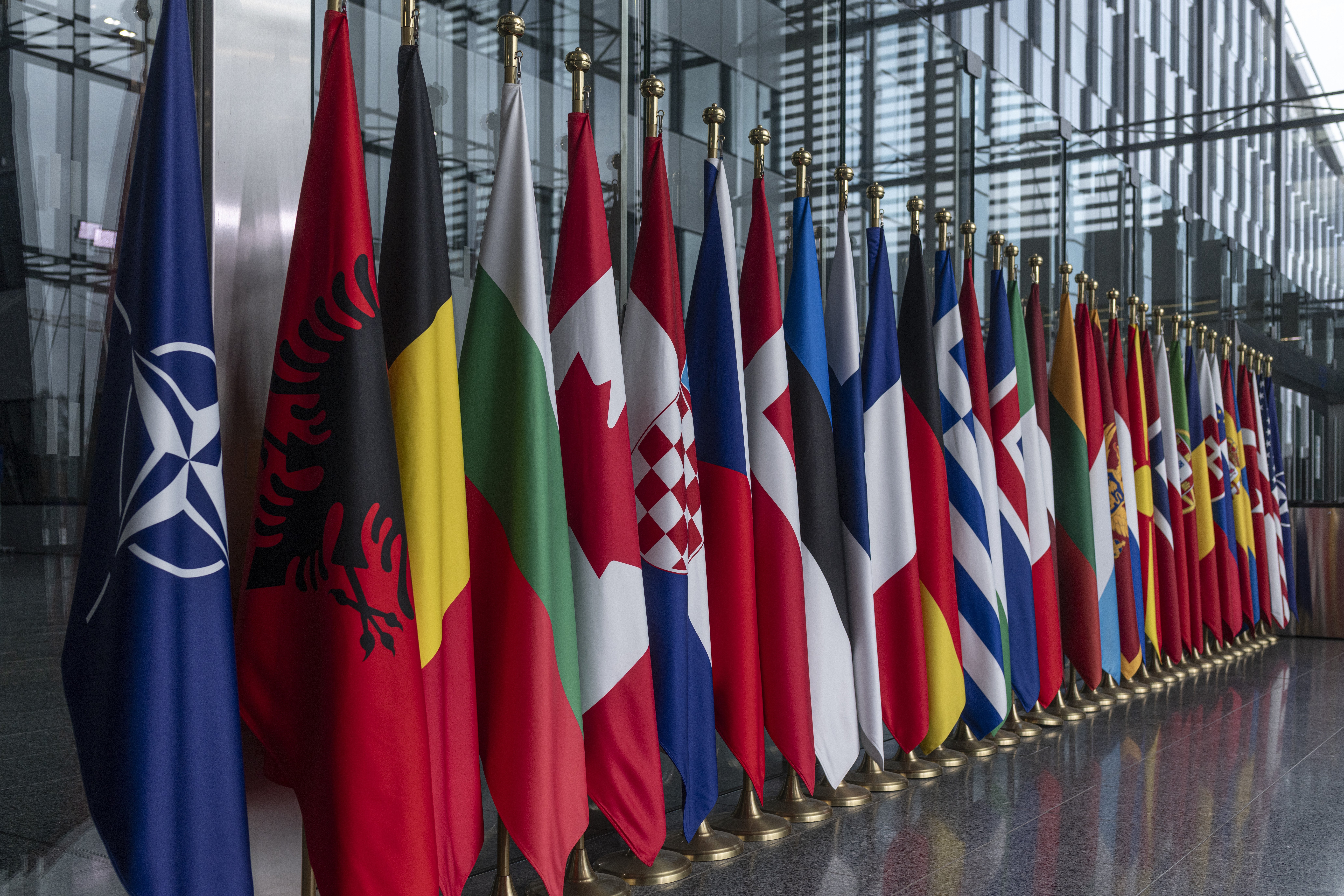
NATO will keep military support for Ukraine at the top of its agenda as European allies and Canada lift core defense investment by over $90 billion in a single year, the alliance's Secretary General, Mark Rutte said in Brussels, according to a UNITED24 Media correspondent.
Speaking at a press conference on June 17 ahead of the Ukraine Defense Contact Group (UDCD), also known as the Ramstein group, Rutte told reporters that the contact group, co-chaired by Germany and the United Kingdom, would anchor the afternoon's agenda, alongside final preparations for the alliance's summit in Ankara in July.
We bring you stories from the ground. Your support keeps our team in the field.
"Finally, with Russia's war in its fifth year, providing support to Ukraine remains a priority," he stated. The Secretary General credited Kyiv with reshaping the fighting. "Ukraine is demonstrating that the Russian war machine is not unstoppable, and is shifting the dynamics on the battlefield," he noted.
He pledged to carry that case into the talks. "This will be my message at the UDCG," he added.
Rutte tied that appeal to a broader push for allies to lift defense spending ahead of the Ankara summit. "Ahead of the summit in Ankara, allies will highlight how they are delivering on commitments made in The Hague last year, investing 5 percent of GDP in defense by 2035," he explained. "That's what we agreed."
The Hague pledge, set at last year's summit, fixed a single benchmark for every member to reach by 2035, and Rutte pressed governments to outpace it.
"So I expect nations to present clear, concrete, and credible plans to reach that goal, ideally well ahead of the agreed timeline," he emphasized. "And many are already showing that they are doing exactly that."
He pointed to a sharp rise in spending over the past year as proof that the target was within reach. "We saw a massive increase in defense investment in 2025, with European allies and Canada increasing their core defense investment by over $90 billion," he conveyed. "That is an astounding figure, amounting to a nearly 20 percent increase in a single year, with further increases already on the books for 2026."
The alliance chief argued the money was translating into hard capability. "These significant investments are producing real capabilities," he confirmed. "And we are already seeing that European allies and Canada are more capable and take more responsibility for our security."
Rutte framed the trend as fairer burden-sharing across the alliance, underpinned by a stronger industrial base."
“We need more forces, more resources, and a much stronger industrial base," he stated. "That means making steady increases to defense investment and more fairly sharing responsibility for our collective security."
“This is what NATO 3.0 is all about—a stronger Europe in a stronger NATO,” he said, summing up the shift.
That rebalancing has long leaned on Washington, a dependence the alliance is now moving to correct. The United States has adjusted its pledged contributions to NATO's force model, Rutte indicated, with European allies and Canada absorbing more on the conventional front.
"We see that European allies and Canada are ready, willing, and able to do more," he confirmed. Washington had reaffirmed its commitment, he added, telling allies the US nuclear deterrent remained "solid" while urging Europe and Canada to shoulder more of the conventional load.
The contact group Rutte was preparing to chair is set to field a major new appeal from Kyiv. Ukraine is preparing to ask its partners for an additional $20 billion in emergency military support, arguing that the coming months represent a narrow and potentially decisive window to consolidate a temporary battlefield advantage over Russia, with the funding intended to translate directly into expanded capability before that momentum fades.
Discuss this article:
-4a56a6b482ec132402c16ef6fcabf9a2.png)

-c439b7bd9030ecf9d5a4287dc361ba31.jpg "Photo of Katherina Popilnichenko")