- Category
- Latest news
$4 Billion Air Defense Push as Allies Announce Major Ukraine Support Package
 Prefer U24 Media on Google
- Authors

-c439b7bd9030ecf9d5a4287dc361ba31.jpg "Photo of Katherina Popilnichenko")
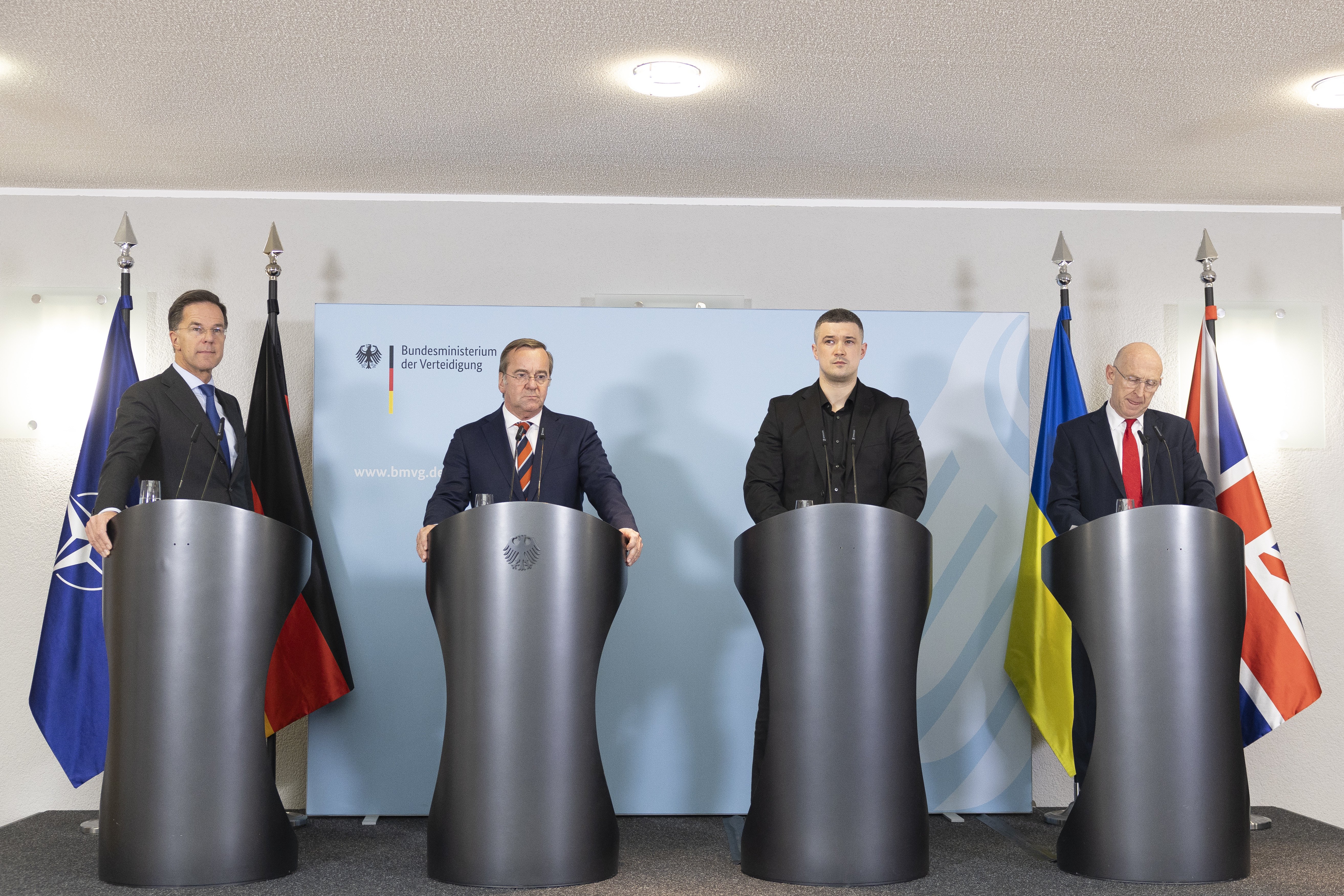
The 34th meeting of the Ukraine Defense Contact Group in the Ramstein format in Berlin concluded with significant new commitments focused on long-term security.
Following directives from the President of Ukraine, air defense has been strengthened to reduce enemy battlefield capability, according to Ukraine's Defense Minister Mykhailo Fedorov on April 15.
We bring you stories from the ground. Your support keeps our team in the field.
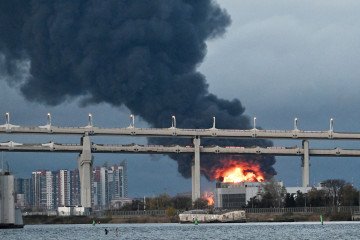
Simultaneously, economic pressure is being applied to the aggressor’s energy sector to limit the ability to fund Russia’s full-scale invasion of Ukraine.
These achievements are the result of collective work with international partners. "I thank every country of the Contact Group for their contribution to strengthening the defense of Ukraine," noted Fedorov.
Special recognition was given to the support for air defense through the PURL initiative and the supply of missiles for Patriot systems. New contributions to the PURL initiative were confirmed by Belgium, Norway, Bulgaria, Lithuania, and Estonia.
The United Kingdom has committed to its largest drone support package this year. Germany is investing $4 billion to strengthen air defense, along with an additional $600 million for deep-strike and mid-strike capabilities.
The Netherlands is providing $268 million for drones, while Norway is allocating $560 million for basic drone supplies for brigades and $150 million for a logistics hub.
Spain is directing $232 million through the SAFE program and providing more Patriot missiles. Canada’s contributions include $15 million to the NSATU fund, $42 million for the Czech ammunition initiative , and $17 million for critical engineering equipment.
Lithuania is providing $39 million for the Czech initiative and $29 million for PURL, while also supplying armored vehicles and supporting military rehabilitation.
Belgium has pledged $81 million for the Czech initiative, $81 million for the German air defense initiative, and $92 million for the drone coalition. Belgium is also supporting F-16 operations and increasing sanctions on the Russian shadow fleet. Estonia is contributing $13 million to the PURL initiative to bolster air defense.
A special air defense initiative started by German Defense Minister Boris Pistorius has already gathered $2.16 billion for urgent deliveries. Additional signals of support regarding expanded cooperation were also received from the UK, Germany, and Canada.
-26996f853b997cc6c286f0a8b0d3740c.jpg)
The current priorities remain the strengthening of air defense, the development of drones and missiles, and ensuring the front lines are supplied with long-range ammunition.
Providing assistance to Ukraine is seen as a contribution to collective security. "Together with partners, we are bringing a just and lasting peace closer," the statement concluded.
During the meeting of the Ukraine Defense Contact Group on April 15, 2026, Mykhailo Fedorov outlined a strategy centered on air defense, land operations, and economic pressure.
He reported that Ukraine had successfully reinforced its defensive systems, achieving interception rates of over 80% for cruise missiles and 90% for drones despite an intense winter of attacks.
Fedorov also detailed the significant losses inflicted on Russian forces and emphasized that strikes against the aggressor's energy sector were actively reducing the resources available to finance Russia’s full-scale invasion of Ukraine.
Discuss this article: