- Category
- War in Ukraine
Massive Fire Hits Russia’s Nurlino Oil Transit Hub More Than 1,200 km From Ukraine
 Prefer U24 Media on Google
- Authors


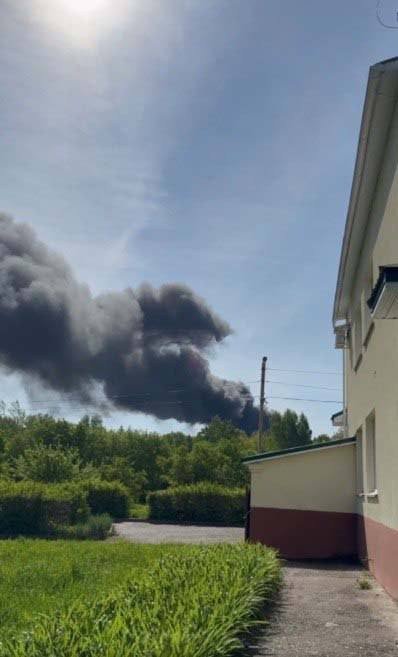
A large fire broke out at the Nurlino linear production and dispatch station in Russia’s Bashkortostan region on May 13, according to Russian Telegram channels and local media reports.
We bring you stories from the ground. Your support keeps our team in the field.
According to Astra, the facility belongs to Russia’s state pipeline operator Transneft and serves as a major node in the country’s oil transportation network. Videos published online showed thick black smoke rising above the industrial site, reportedly visible from parts of Ufa located roughly 25–30 kilometers away.
Local channels cited by Astra reported that Russia’s Emergency Ministry linked the incident to a “violation of the technological process” at the facility. Authorities in Bashkortostan had not publicly commented on the fire at the time of publication.
The Nurlino station is located more than 1,200 kilometers from Ukraine and plays a significant role in Russia’s main oil pipeline infrastructure.
According to publicly available infrastructure documents reviewed by Russian monitoring resources, the site has a total storage capacity of around 500,000 cubic meters and includes approximately 25 to 27 large oil reservoirs, many of them RVSP-20000 vertical steel tanks with capacities of 20,000 cubic meters each.
The facility connects oil flows from Western Siberia and the Ural region to central and southern parts of Russia. Through the broader Transneft pipeline system, crude oil transported via Nurlino can reach export infrastructure linked to the Black Sea, including terminals near Novorossiysk, Tuapse, and Taman.
According to Astra, no air raid alerts were declared in the region before the fire. At the same time, Russian monitoring channels noted that the site has never previously been targeted by Ukrainian long-range drones.
Earlier, The Moscow Times reported on May 12 that Russia’s oil production is projected to fall to its lowest level since 2009 by 2026, as sanctions, declining profits, reduced drilling activity, and rising wartime costs continue to pressure the country’s energy sector. According to the report, Russian oil companies have shifted into what experts described as a “cash-saving mode,” contributing to a steady decline in output.
Discuss this article:
-9a7b3a98ed5c506e0b77a6663f5727c5.png)

-efa69d4733b5af9f7cd0a642f85424a6.jpeg "Thick black smoke rises from the heavily damaged Proton-Electrotex plant in Orel, Russia, following a reported strike. (Source: Exilenova+)")