- Category
- World
Russian Oil Production Projected to Reach Lowest Level in 17 Years
 Prefer U24 Media on Google
- Authors

-c439b7bd9030ecf9d5a4287dc361ba31.jpg "Photo of Katherina Popilnichenko")
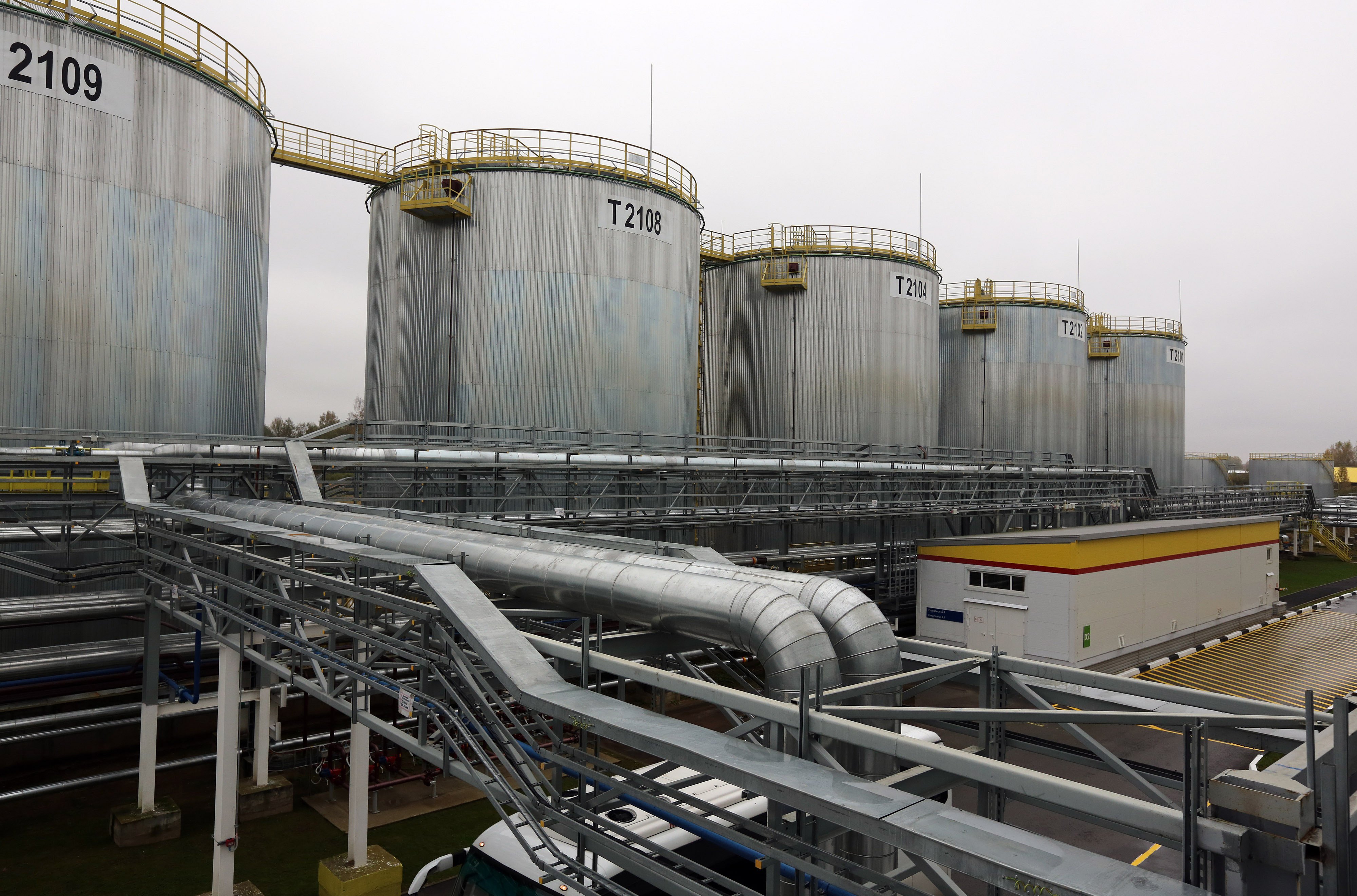
Russia’s oil extraction is expected to decline for the fourth consecutive year in 2026, falling to its lowest level in 17 years, according to The Moscow Times on May 12.
We bring you stories from the ground. Your support keeps our team in the field.
The Ministry of Economic Development reports that oil companies will produce 511 million tons of oil by the end of that year. This follows 511.4 million tons last year, 516 million in 2024, 530 million in 2023, and 535 million in 2022.
Since the first year of Russia’s full-scale invasion of Ukraine, oil production has declined by 4.5%. These projected volumes are the lowest since 2009 when the country produced 494.2 million tons.
Even during the pandemic crisis in 2020, production levels were higher at 512.7 million tons. In previous forecasts, the Ministry expected production to grow to 525 million tons this year and reach 540 million by 2028. New estimates show production will only reach 525 million tons by 2027 and will not rise further.
The decline in Russian oil production accelerated this spring despite OPEC+ quotas that allowed for higher extraction levels. Independent expert Gennady Maksakov, former head of research at Yakov and Partners, says this is due to the worsening financial situation of oil companies. Last year, companies reduced drilling to a three-year low.
This happened after increased sanctions, lower oil prices, and a strong ruble reduced their profits. Rosneft’s profits fell four times, Gazprom Neft’s profits were cut in half, and Lukoil reported its first loss in twenty years. Maksakov notes that companies have switched to a "cash-saving mode," which will lead to further production drops.
Sergey Vakulenko, a scholar at the Carnegie Berlin Center, states that “the Russian oil industry has found itself in a zugzwang.” He believes oil production will continue to decline slowly but steadily at a rate of about 3% per year.

Vakulenko explains that “maintaining the current production level or achieving growth is only possible by involving reserves with a full-cycle technical cost of more than $35–40/bbl, for which the Russian oil industry now lacks sufficient capital, and the state lacks the readiness to leave this capital in the industry.”
Other factors related to Russia’s full-scale invasion of Ukraine are also impacting the sector. These include the need to spend money on repairing refineries that have been attacked and the general instability of cash flows.
Vakulenko believes it is almost impossible to start major new projects, such as those focused on shale oil. He states the reasons are “both too high a cost and capital intensity relative to existing production, and the limitations caused by the war.”
In February 2026, Russia’s crude oil production dropped for the third consecutive month, reaching its lowest level since August 2025. This decline was driven by tightening US energy sanctions and a series of Ukrainian drone strikes that successfully disrupted operations at key domestic refineries.
Discuss this article:




-421e8a9c474cc6ae67d60a56d7572c56.jpg "Russian ruble coins and one hundred dollars are seen on a table. (Source: Getty Images)")
-72b63a4e0c8c475ad81fe3eed3f63729.jpeg "Photo of Cyril Barabaltchouk")


-111f0e5095e02c02446ffed57bfb0ab1.jpeg "Photo of Roman Kohanets")