- Category
- World
Russia Increasingly Uses Forced Psychiatric Treatment to Silence Political Dissent
 Prefer U24 Media on Google
- Authors

-c439b7bd9030ecf9d5a4287dc361ba31.jpg "Photo of Katherina Popilnichenko")
Since the start of Russia’s full-scale invasion of Ukraine, authorities have increasingly used forced psychiatric treatment to suppress dissent.
A report by the human rights project APUS, “You will not get out of here,” highlights this resurgence of a tactic commonly used in the Soviet era. Current data from OVD-Info indicates that 63 people convicted on political charges are currently being subjected to these punitive medical measures, according to The Moscow Times on June 1.
We bring you stories from the ground. Your support keeps our team in the field.
These charges include spreading so-called “fakes” about the military and calling for actions against state security. The Human Rights Center “Memorial” also tracks 57 such individuals.
Former patients who were convicted on political charges report being tied to beds, forced to take strong medications, and subjected to severe restrictions on movement, phone calls, and correspondence.
Many state that it is nearly impossible to challenge a decision to send them for psychiatric “treatment,” and they often remain uncertain about their release dates.
This environment creates a sense of total control and absolute helplessness, leading many to conclude that “Punitive psychiatry is a system.” Researchers note that while these tactics echo Soviet-era policies, the current situation involves the selective use of such measures rather than a uniform state policy.
APUS reports that civil activism is frequently used as the basis for psychiatric examinations. According to one human rights advocate, medical reports for political cases often include references to a person's “thirst for justice,” “active life position,” or “harsh criticism of state authorities” as evidence of mental illness.

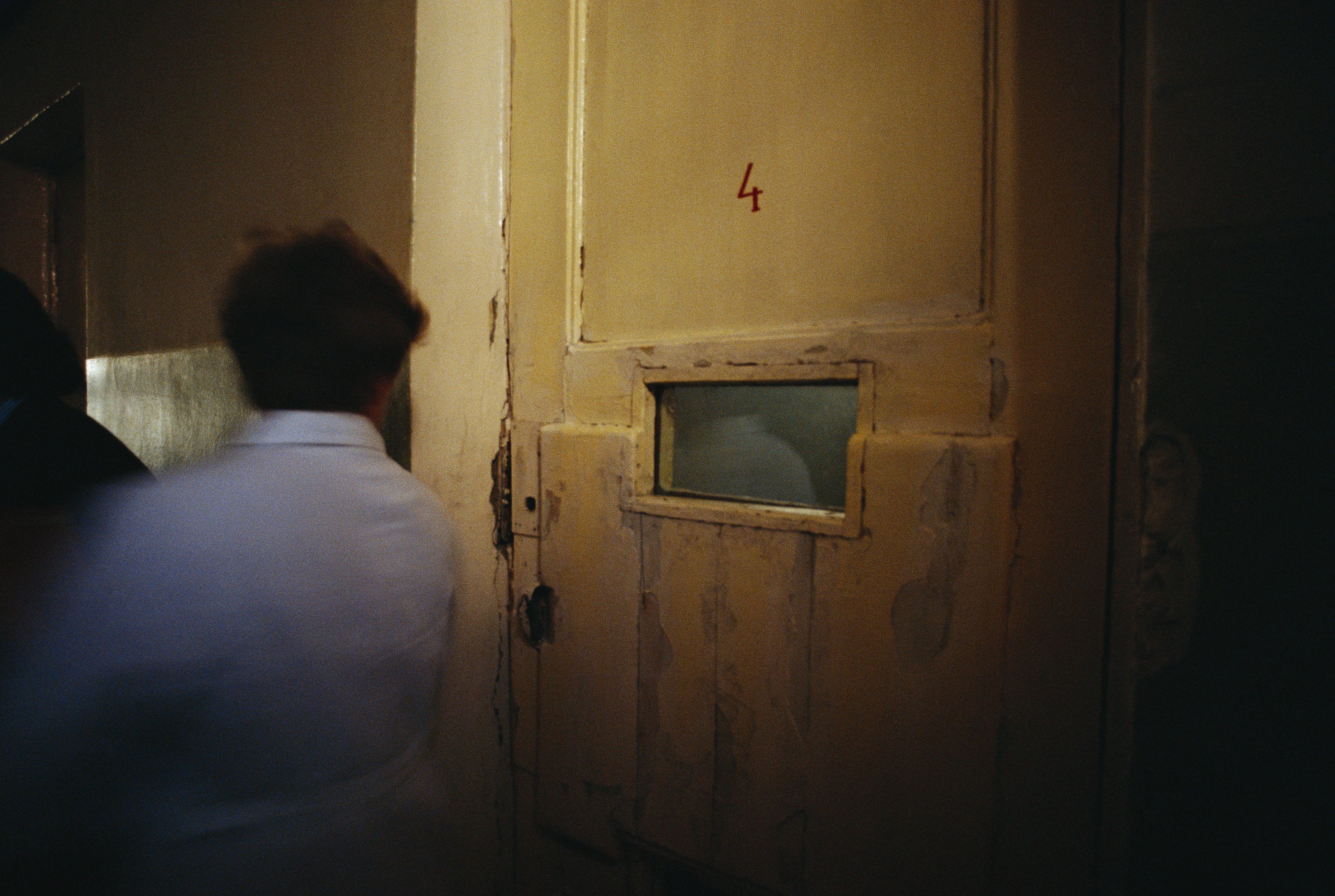
Those held in these facilities describe being placed in closed wards immediately upon arrival, where they are restrained with straps, bandages, or ropes. Relatives and lawyers state that these measures are used even against individuals who show no aggression.
The report mentions the use of drugs such as haloperidol, aminazine, and diphenhydramine. Researchers warn that these substances can cause permanent damage to the nervous system, respiratory depression, and even coma in those who are mentally healthy.
Psychiatric staff also use isolation or confinement in a “special block” as a form of punishment. A lawyer for one political prisoner noted that many are sent to “violent” wards for the first week simply as a display of power, even without prior aggressive behavior. Other methods of control include the removal of privacy, with staff present and listening to all interactions between patients and their families.

The lack of a defined release date is another significant concern. While a prison sentence has a fixed end, patients in these facilities often cannot determine when they will be allowed to leave.
A relative of one prisoner described this system as “full subordination without a term and without an exit.” When families attempt to seek a mandatory second opinion, they are often met with resistance, and the request is treated as further evidence of the need for continued “treatment.”
For over 50 years, the Soviets weaponized psychiatry as a tool of repression and control. The arbitrary diagnosis of “sluggish schizophrenia” targeted dissidents and ordinary people suspected of harboring anti-regime sentiments.
Discuss this article: