- Category
- Anti-Fake
Russian Church Says Use of Social Media Amounts to “Dark Magic” and Extremism
 Prefer U24 Media on Google
- Authors

-111f0e5095e02c02446ffed57bfb0ab1.jpeg "Photo of Roman Kohanets")
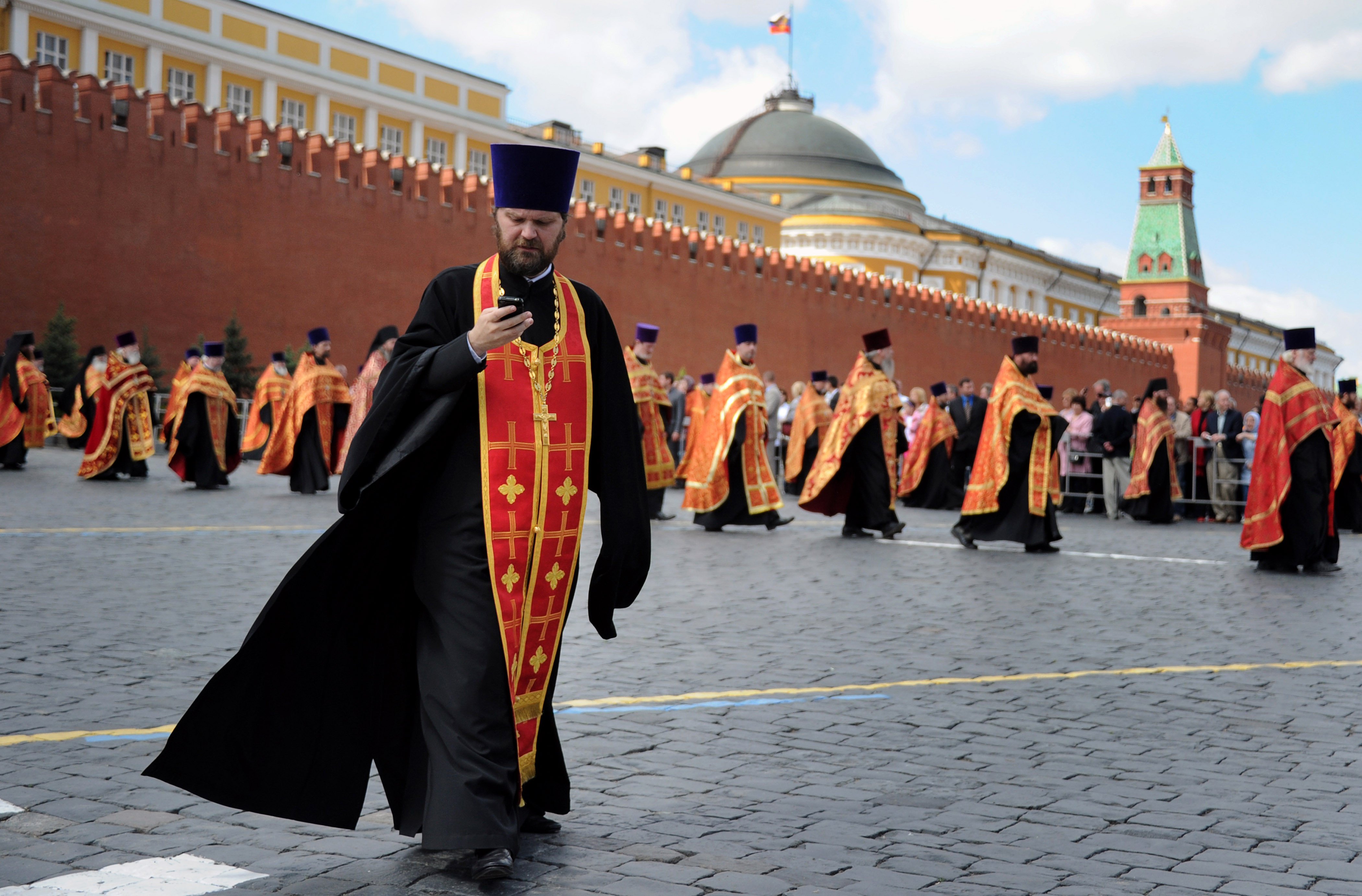
The Russian Orthodox Church (ROC) has deployed theological propaganda in support of the Kremlin's campaign to justify internet censorship, positioning itself as an active instrument of state information control.
Ukraine's Center for Countering Disinformation (CPD) documented this pattern in a report published on its official website on June 1.
We bring you stories from the ground. Your support keeps our team in the field.
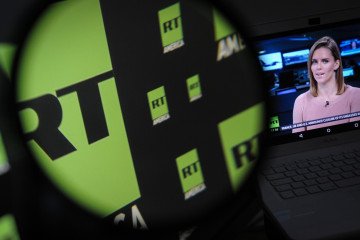
The church's state-affiliated broadcaster, Spas, released a documentary titled "Net" that frames social media use and the creation of online profiles as forms of “dark magic,” and digital extremism.
Russian church officials have also publicly encouraged Russian citizens to welcome internet restrictions, arguing that "technological civilization fades before eternity."
The CPD assessed that the ROC is providing a direct service to the Kremlin—exploiting religious authority to blunt public discontent over expanding restrictions on online access.
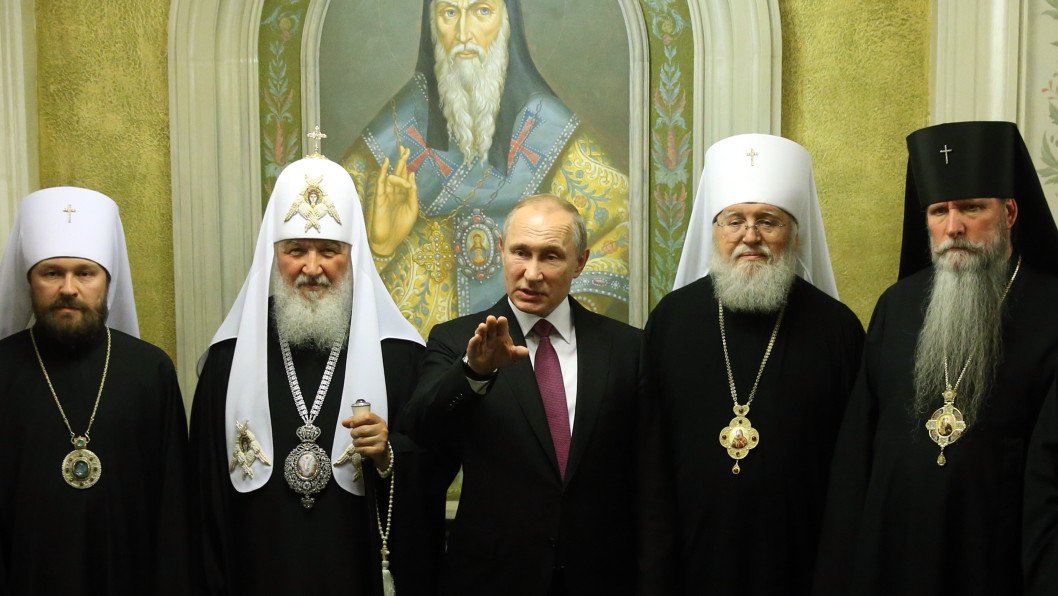
The depth of the church's integration into Putin's state apparatus, the center noted, is visible in its readiness to convert religious doctrine into a justification for digital censorship. An earlier CPD report had documented the church's parallel role as a military propaganda instrument within Russia's broader state machinery.
The ROC's function as a political actor has drawn growing international scrutiny. The European Union is preparing a 21st sanctions package, expected to be finalized by late June or early July, that would for the first time place senior church figures—including Patriarch Kirill—under EU restrictions.
Kirill has publicly framed Russia's invasion of Ukraine in theological terms, claiming the country has no history of aggression, and already faces sanctions from the United Kingdom, Canada, and the Czech Republic.
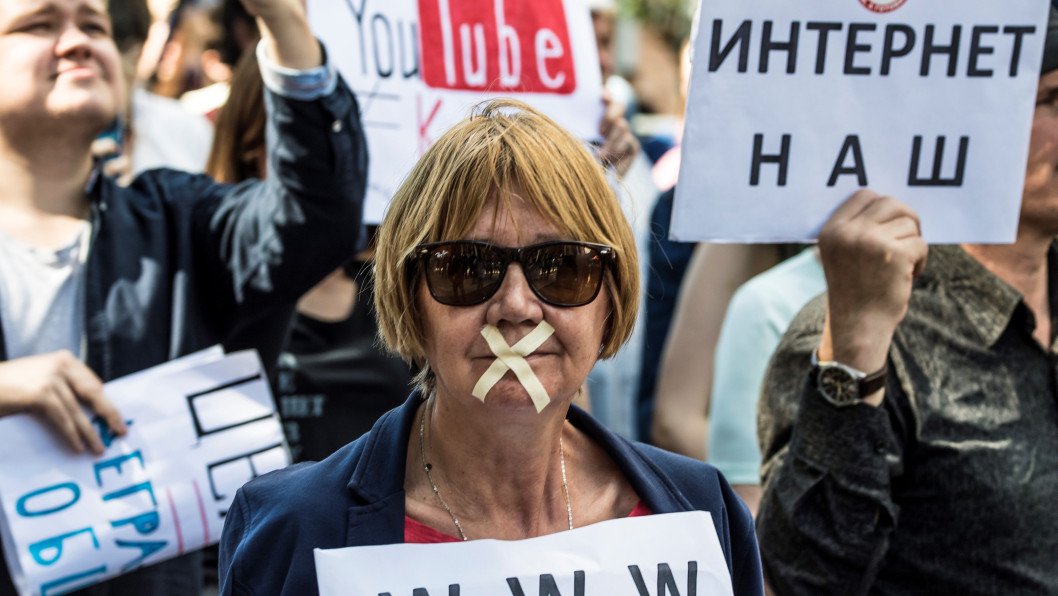
Russia's systematic effort to build a closed digital environment stretches back to the early years of its full-scale invasion. After blocking Facebook and Instagram in 2022, authorities progressively began throttling YouTube, then tightened restrictions on Telegram, WhatsApp, and TikTok.
By 2025, the campaign had produced over 37,000 hours of documented disruptions, affecting nearly every resident of the country. The final escalation came in March 2026, when a nationwide "white list" system limited online access to government-approved platforms only—a rollout that immediately triggered mobile internet blackouts across 68 regions.
The strategy reaches beyond outright blocking: by confining Russians to state-monitored platforms, the Kremlin fosters an environment in which citizens self-censor without any direct enforcement.
Discuss this article:
-4a56a6b482ec132402c16ef6fcabf9a2.png)

-c439b7bd9030ecf9d5a4287dc361ba31.jpg "Photo of Katherina Popilnichenko")

-206008aed5f329e86c52788e3e423f23.jpg "Photo of Oleksandr Moiseienko")
-72b63a4e0c8c475ad81fe3eed3f63729.jpeg "Photo of Cyril Barabaltchouk")