- Category
- World
Russian Financial Officials Warn Putin That War Spending Has Reached Unsustainable Levels
 Prefer U24 Media on Google
- Authors

-c439b7bd9030ecf9d5a4287dc361ba31.jpg "Photo of Katherina Popilnichenko")
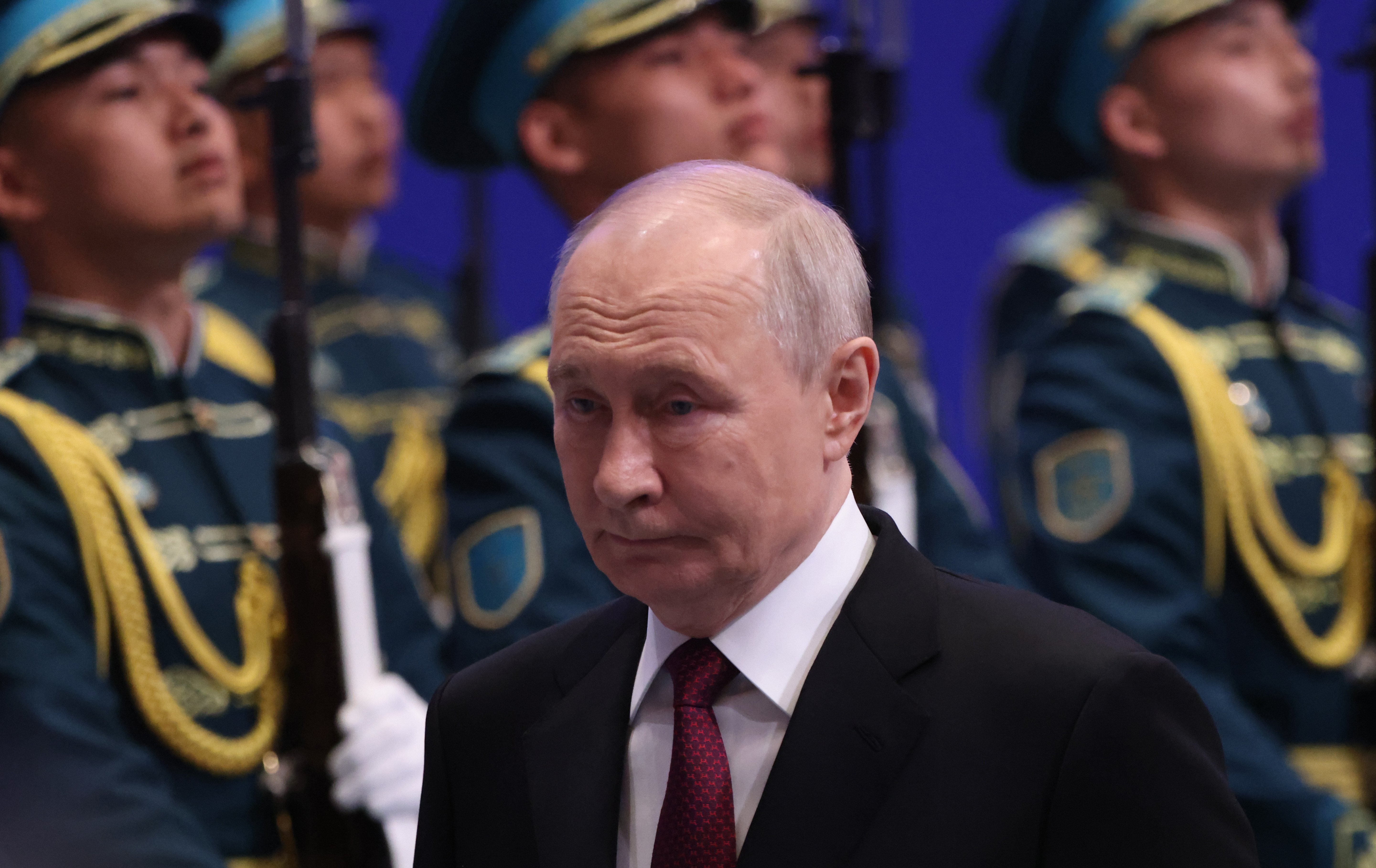
High-ranking officials in the Russian government have warned leader Vladimir Putin that the country’s spending on Russia’s full-scale invasion of Ukraine is reaching an unsustainable level.
This internal warning represents the most significant sign of friction within the Moscow leadership since the start of the war, according to Bloomberg on June 1.
We bring you stories from the ground. Your support keeps our team in the field.
Sources familiar with the matter and internal documents reveal that representatives from the Ministry of Finance and the Central Bank have alerted the Kremlin that current defense spending risks triggering a dangerous increase in the state budget deficit.
The financial strain is significant: according to official data, the deficit for the first four months of the year rose to 5.9 trillion rubles ($82 billion), or 2.5% of GDP, which is approximately 50% higher than the annual target.
Officials who are increasingly concerned about the state of the economy have proposed new cuts to defense spending, arguing it is impossible to stabilize public finances without such measures. However, this has met stiff resistance from the Ministry of Defense and some Kremlin factions, who argue that any reduction would devastate an economy now deeply dependent on military contracts.
According to two people close to the Russian government, the Ministry of Defense is not only resisting cuts but is demanding additional funding to cover a total shortfall that could reach three trillion rubles (~$41.7 billion) this year.
Putin is aware of these pressures, but the final decision rests solely with him. During the development of the 2026 budget, officials had projected a potential funding gap of 1.2 to 1.5 trillion rubles ($16.7–$20.8 billion), with some having hoped that a diplomatic breakthrough last year would have allowed for defense reductions—a hope that has not materialized.
The economic situation is further complicated by the fact that Russia’s National Wealth Fund reserves are approximately 60% lower than they were before the full-scale invasion. While some expected rising oil prices to offset these costs, experts suggest that prices would need to remain above $100 per barrel for at least a year to make a meaningful difference.
Meanwhile, the Ministry of Economy has downgraded its growth forecast for 2026 to just 0.4%, and the country is currently balancing on the edge of a recession.
-f1704327b95757a1131f927a0fdb4a88.jpg)
In a recent interview, Finance Minister Anton Siluanov stressed that “a certain restraint” is needed in government spending, noting that “reserves are not infinite.” The situation has caused visible frustration even within the legislative branch.
Valery Gartung, a senior lawmaker, recently questioned the path forward. “What are we supposed to do with this?” he asked. “Print money or what? Like in ’92, when prices rose by 30% every week? We understand that this is not a solution.”
In the first nine months of 2025, Russia spent $146.4 billion from its budget on military expenditures—four times more than it had in 2021—which accounted for 39% of total government spending.
As military costs rose, civilian spending shrank, and the current budget allocated just 25.1% to social needs, marking the lowest level in two decades.
In total, the state directed $522 billion in taxpayer funds toward the war effort between 2022 and 2025, an amount that could have otherwise financed the entire higher education system for 24 years or supported federal healthcare for 22 years.
Discuss this article:

-111f0e5095e02c02446ffed57bfb0ab1.jpeg "Photo of Roman Kohanets")

-a1738cb523135070a26ed61c09a8eb5e.jpg "Police stand in front of the Russisches Haus in Berlin, Germany. (Source: Getty Images)")
-72b63a4e0c8c475ad81fe3eed3f63729.jpeg "Photo of Cyril Barabaltchouk")