- Category
- World
Russia’s Arctic Military Push Could Put London and Northern Europe in Hypersonic Missile Range
 Prefer U24 Media on Google
- Authors



Russia is preparing to challenge NATO’s position in the Arctic, a development that could enable Moscow to threaten parts of Europe with hypersonic weapons, Norwegian Defense Minister Tore Sandvik has warned, according to RBC-Ukraine on June 1, citing The Times.
Sandvik said Russia has concentrated much of its nuclear arsenal in the Arctic region and continues to expand its Northern Fleet. Russian submarines are also being detected with increasing frequency near NATO territorial waters.
We bring you stories from the ground. Your support keeps our team in the field.
A key area of concern is the strategically important maritime corridor between mainland Norway and the Svalbard archipelago. According to the report, gaining control over this passage would allow Moscow to establish a so-called “bastion defense” around its military assets while securing easier access for Russian naval forces to the Atlantic Ocean.
Such a scenario would pose a direct challenge to the United Kingdom and other NATO allies, as it could significantly reduce the alliance’s ability to monitor the movements of Russian submarines, according to RBC-Ukraine.
The report also highlighted the threat posed by Russia’s Tsirkon hypersonic cruise missiles, which are capable of carrying nuclear warheads. In addition, Moscow continues to develop the Poseidon nuclear-powered underwater drone.
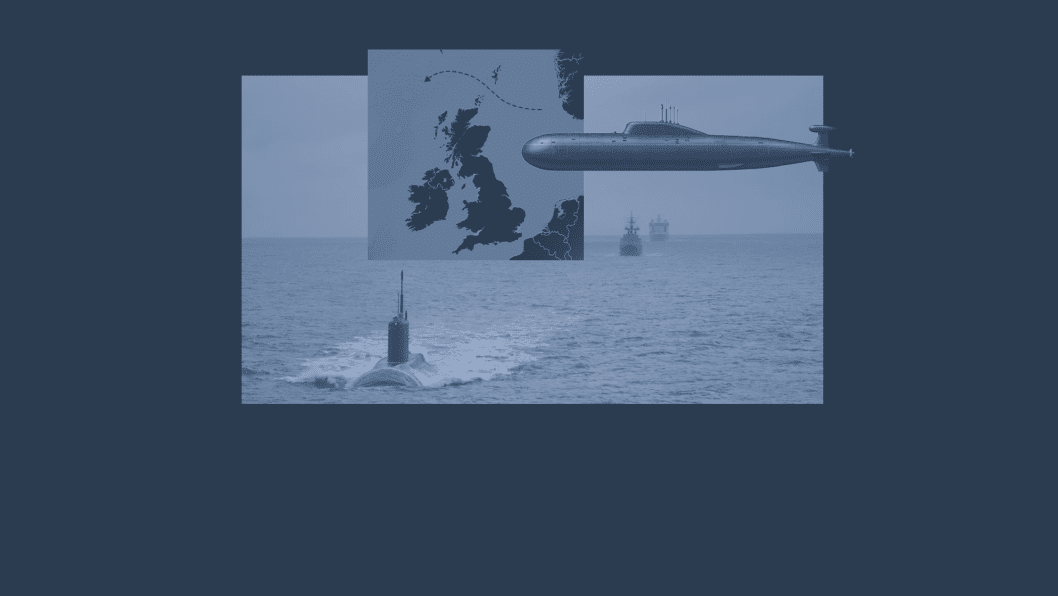
Sandvik warned that if Russian forces were able to control the northern corridor, the operational range of their hypersonic weapons would extend to London, as well as targets in Norway and Denmark.
According to RBC-Ukraine, NATO’s maritime defense strategy is based on controlling narrow waterways through which Russian naval forces can access the world’s oceans.
Currently, the Alliance effectively oversees two of the three major maritime passages: the Bosporus Strait leading into the Black Sea and the Danish straits controlling access from the Baltic Sea. The remaining northern route continues to be viewed as a possible area of escalation.
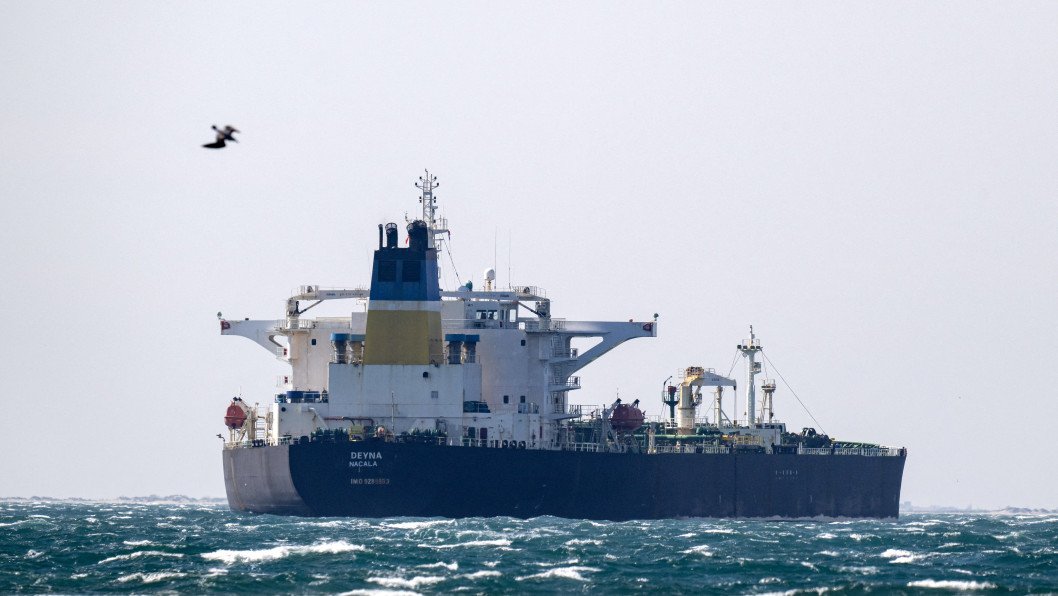
At the same time, Scottish Labour MSP Michael Marra has warned that Russian submarines have recently posed a threat to subsea cables connected to North Sea energy infrastructure.
The comments were made during a debate in the Scottish Parliament on Scotland’s energy policy, held under a government motion titled “It’s Scotland’s energy,” introduced by Stephen Gethins, Scotland’s Minister for Europe, External Affairs and Energy.
While the discussion primarily focused on energy governance and the future mix of Scotland’s electricity generation, Marra used part of his intervention to stress that energy security must be treated as inseparable from the protection of critical infrastructure.
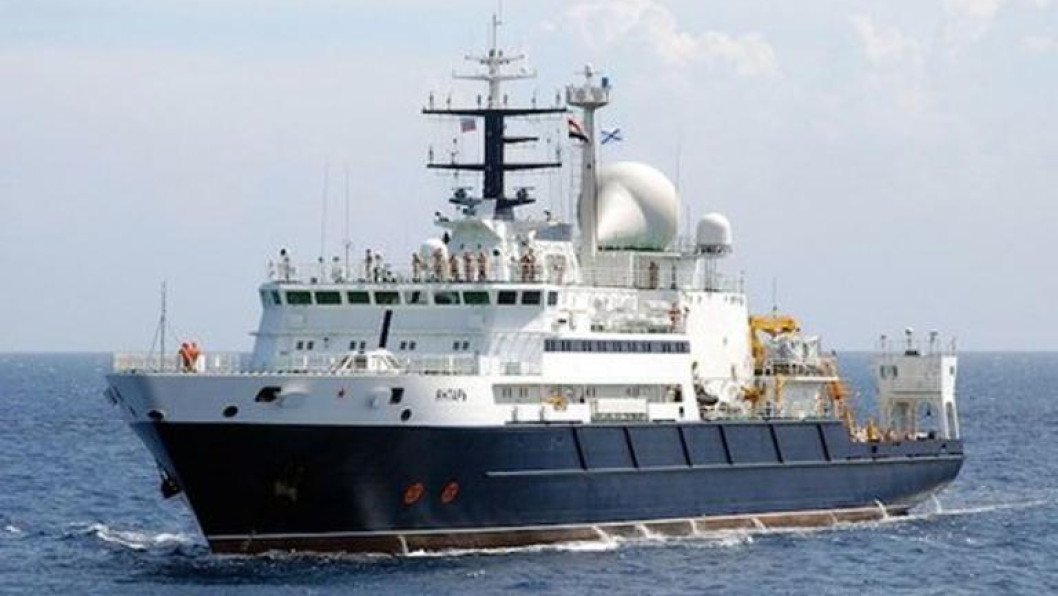
He told the chamber that “our North Sea assets, in which Russian submarines have threatened cabling in recent weeks, must be a defense priority.”
Marra also linked the issue to broader constitutional questions, arguing that distancing Scotland from the United Kingdom’s defense framework would increase costs at a time when greater investment in resilience and protection is required.
Previously, British and Norwegian naval forces successfully tracked and deterred three Russian submarines that were attempting to survey critical underwater cables and pipelines in the North Atlantic.
Discuss this article:
-4a56a6b482ec132402c16ef6fcabf9a2.png)


-c439b7bd9030ecf9d5a4287dc361ba31.jpg "Photo of Katherina Popilnichenko")

-111f0e5095e02c02446ffed57bfb0ab1.jpeg "Photo of Roman Kohanets")

-a1738cb523135070a26ed61c09a8eb5e.jpg "Police stand in front of the Russisches Haus in Berlin, Germany. (Source: Getty Images)")
-72b63a4e0c8c475ad81fe3eed3f63729.jpeg "Photo of Cyril Barabaltchouk")