- Category
- War in Ukraine
Ukrainian Strikes Push Russian Oil Processing to 16 Year Low After Record Month of Drone Attacks
 Prefer U24 Media on Google
- Authors

-72b63a4e0c8c475ad81fe3eed3f63729.jpeg "Photo of Cyril Barabaltchouk")
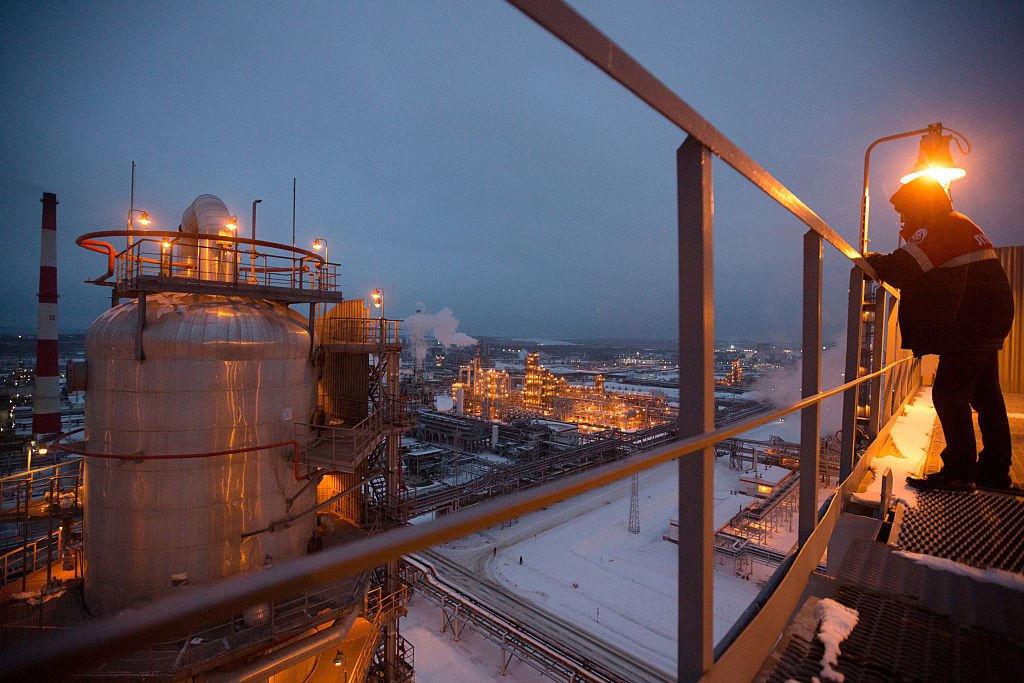
Ukrainian drone attacks against Russian energy infrastructure reached a record high in May, prompting Moscow to ban jet fuel exports and threatening to further hurt processing that’s at a 16-year low, Bloomberg reported on June 1.
With a risk of domestic fuel shortages right as summer holiday demand increases, Russia prohibited exports of jet fuel until the end of November. While this will have little impact on international markets since Russia isn’t a major shipper of the fuel, it is the latest step by the Kremlin to safeguard local supplies, Bloomberg wrote.
We bring you stories from the ground. Your support keeps our team in the field.
The decision comes after Ukraine carried out at least 16 attacks on Russia’s fuel-producing facilities in May, according to a Bloomberg tally of public statements from both countries. Drones targeted eight of Russia’s 10 biggest refineries last month. In total, there were at least 30 strikes on Russian oil assets in May, the most for any month since the start of the full-scale invasion of Ukraine in 2022.
Kyiv has intensified strikes on Russian energy infrastructure to cut Moscow’s ability to benefit from higher oil prices caused by the Iran war. Ukraine has also doubled down on a strategy of repeatedly attacking selected sites to maximize damage and prevent quick repairs. Bloomberg notes that the Yanos refinery, co-owned by Rosneft and Gazprom Neft, was targeted three times in May, while Lukoil facilities in Nizhny Novgorod and Perm were each hit twice.
The attacks reveal a new strategy. Ukrainian forces are not only targeting primary refining units, which have been relatively easy to fix, but also technically complex secondary units, according to Sergey Vakulenko, an industry veteran and a scholar at the Carnegie Endowment for International Peace, quoted by Bloomberg.
-c65beef38eb42c5c49f25778e5905100.jpg)
He noted that these secondary units help refineries produce more gasoline and diesel but are much harder and costlier to repair because Western sanctions make it difficult to source replacement equipment.
Drones are also targeting export terminals, pumping stations, and storage facilities. If Russia hoped to produce and store more fuel to avoid a repeat of recent summer fuel crises, that goal will be much more difficult with reduced capacity and storage volumes, Bloomberg noted.
The compounding damage across the energy sector has severely dented Russia’s output. According to estimates from analytics firm OilX, cited by Bloomberg, May’s average crude processing rate should total 4.58 million barrels a day. That is a drop of about 700,000 barrels a day, or 13%, from a year earlier—the lowest level since October 2009.

Bloomberg writes that, while the immediate impact at civilian gas pumps has been muted, with average gasoline prices rising by just over 2 rubles [$0.03] since the start of the year to 67.53 rubles ($0.94) per liter, signs of a tightening supply are showing. By late May, daily volumes of premium 95 gasoline offered for delivery in the European part of Russia fell to around 5,000 tons per day—a third of what was available a year ago, according to the St. Petersburg International Mercantile Exchange.
At the same time, wholesale prices for premium fuel on the commodities exchange jumped more than 20% year-on-year.
Despite the refinery attacks, Kremlin spokesman Dmitry Peskov told reporters on May 21 that Moscow sees no current risk of fuel shortages, attributing lower refinery output in some regions to seasonal maintenance, according to Bloomberg.
Independent monitoring, however, shows that the supply squeeze is already reaching civilian gas pumps. While Kremlin officials recently denied any risk of fuel shortages, the gas stations in New Moscow have started capping purchases at 60 liters of gasoline and 100 liters of diesel per transaction.
These retail restrictions, which mirror the rationing already seen in temporarily Russian-occupied Crimea, as well as parts of the temporarily occupied Zaporizhzhia and Donetsk regions, show that the shrinking wholesale volumes are hitting everyday consumers.
Discuss this article:
-9bd5e1532102621f8fb1c4ba871a3171.png)

-c439b7bd9030ecf9d5a4287dc361ba31.jpg "Photo of Katherina Popilnichenko")



-29a1a43aba23f9bb779a1ac8b98d2121.jpeg "Photo of Illia Kabachynskyi")