- Category
- War in Ukraine
Poland Had F-16s and AWACS Airborne—So How Did a Russian Missile Fly 100 Km In?
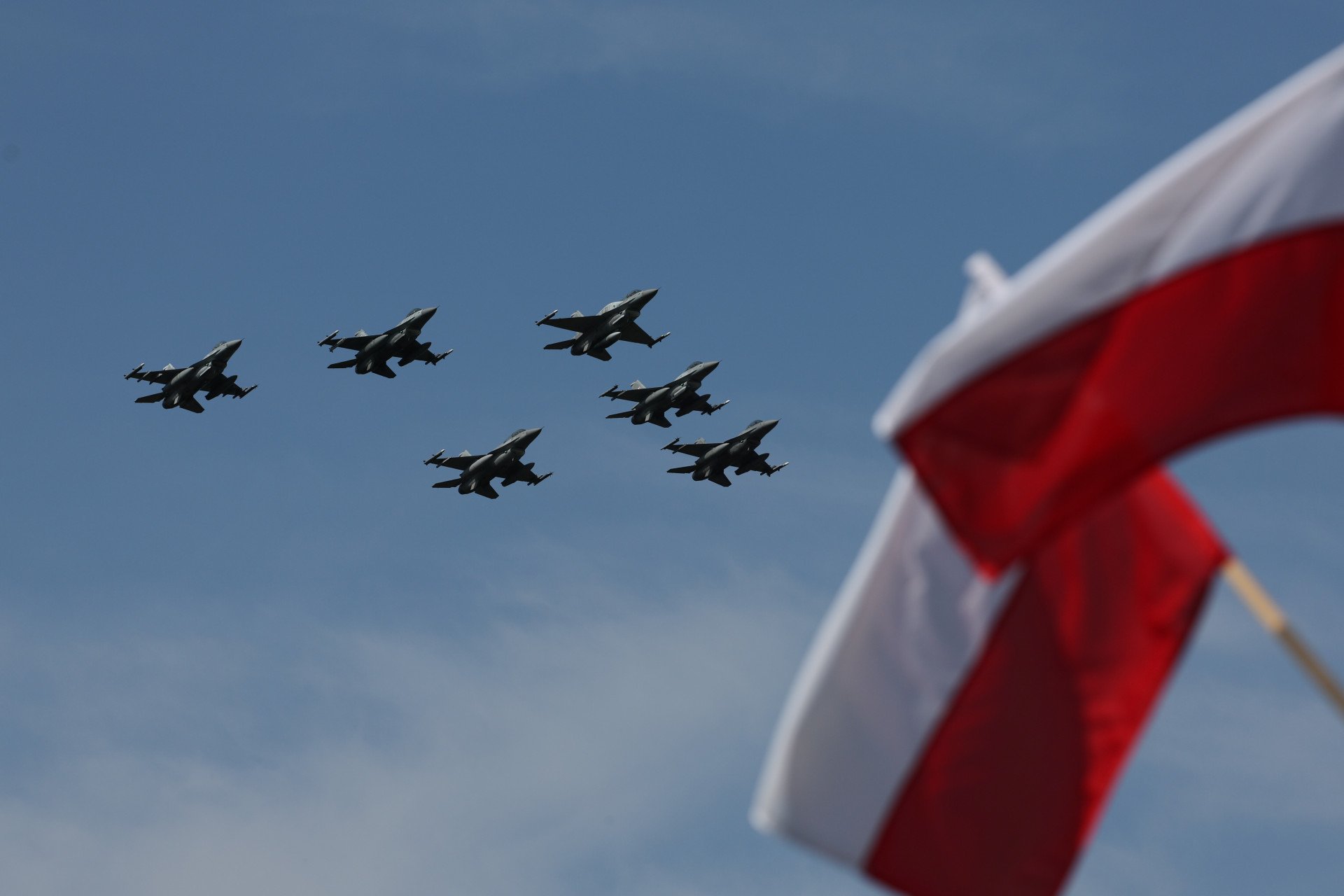
Poland had F-16 fighters and an airborne early-warning aircraft already in the sky during Russia’s latest mass attack on Ukraine. Yet a likely Kh-101 cruise missile still traveled nearly 100 kilometers—about 62 miles—through NATO airspace before exploding in a field and leaving a 10-meter crater.
 Prefer U24 Media on Google
- Authors


The incident raises serious questions about Poland’s interception procedures, command chain, and rules for opening fire, Defense Express reported on July 30.
We bring you stories from the ground. Your support keeps our team in the field.
Russia launched another large combined strike overnight, this time expanding its attacks beyond Kyiv to cities across western Ukraine. During the barrage, at least one Russian missile again crossed into Poland.
Polish air defense detected an unidentified object traveling west at approximately 3:40 am local time and dispatched an F-16 to intercept it. Six minutes later, before the object could be conclusively identified, it disappeared from radar.
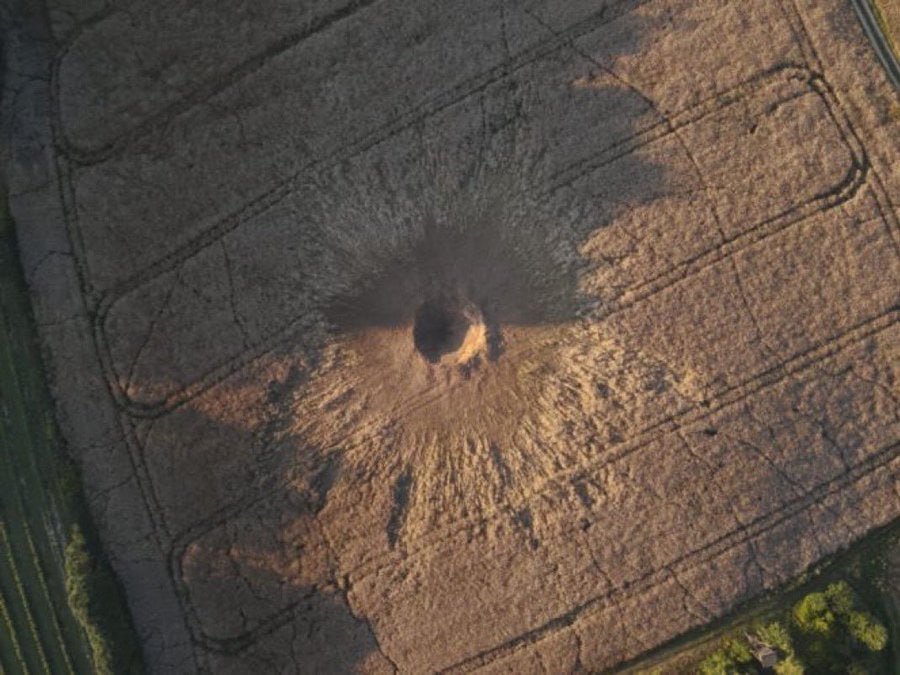
A helicopter crew later found the impact site near Tarnawa-Kolonia in Poland’s Lublin region. The explosion left a crater about 33 feet wide, roughly 1.2 miles from the nearest homes.
The Head of the Ministry of Foreign Affairs of Ukraine, Andrii Sybiha, confirmed that a Russian Kh-101 missile entered Polish airspace during a nighttime attack on Ukraine.
“This is yet another clear demonstration that strengthening Ukraine’s air defense now is urgent and serves as a guarantee for the protection of the entire Euro-Atlantic community,” he wrote.
❗️At night, a Russian Kh-101 cruise missile flew over Poland during a large-scale Russian strike on Ukraine, violating NATO airspace, – Ukrainian Foreign Minister Sybiha.
— 🪖MilitaryNewsUA🇺🇦 (@front_ukrainian) July 30, 2026
“This is yet another proof that strengthening Ukraine’s air defence is an urgent necessity and serves as a… pic.twitter.com/XOqs2jKErm
Evidence points to a Kh-101
Defense Express assessed that the object was most likely an air-launched cruise missile fired by a Russian Tu-95MS or Tu-160 strategic bomber.
Unofficial air-target trackers, including Monitorwar, reported that a Kh-101 crossed the Polish border near the Ukrainian city of Volodymyr before continuing approximately 100 kilometers into the country.
Local residents in the Polish village of Targowisko heard a massive explosion this morning and found a large crater in a field.
— OSINTtechnical (@Osinttechnical) July 30, 2026
Follows reports of a Russian cruise missile entering Polish airspace overnight. The area has been secured by Polish authorities. pic.twitter.com/dTtkN6DyJj
The missile’s speed left Poland with little time to respond. A Kh-101 flying at roughly 560 mph can cover that distance in less than seven minutes.
However, the strike was not unexpected. Poland said it had scrambled two fighters and an airborne early-warning aircraft in advance, while Russian missiles were still flying over Ukraine.
According to Defense Express, that suggests the main weakness may not have been detection alone. The problem could instead lie in the decision-making chain and Poland’s engagement rules, which may require visual identification and formal authorization before an unknown object can be destroyed.
During Russia’s overnight missile attack, a Russian cruise missile flew deep into Poland leaving a large crater near Tarnawa-Kolonia and Tokary villages in Lublin Voivodeship.
— Special Kherson Cat 🐈🇺🇦 (@bayraktar_1love) July 30, 2026
The impact site lies roughly 100 km from the Ukrainian border. Russia launched Kh-101 missiles… https://t.co/FvlGEL54rL pic.twitter.com/BAhQCH81CR
Major cities and defense industry within reach
The missile flew through Polish airspace without interception despite several major cities lying within roughly 100 kilometers of the Ukrainian border, including Chełm, Zamość, and Lublin.
Stalowa Wola, one of Poland’s principal armored-vehicle production centers, is located only about 50 kilometers—31 miles—southwest of the explosion site.
Defense Express noted that the missile fortunately fell in a relatively sparsely populated area. A slightly different route could have placed urban areas or strategically important defense facilities at risk.
Air raid sirens are sounding in the Polish city of Lublin as Russian cruise missiles near the Polish-Ukrainian border. pic.twitter.com/WjHbHWjI79
— OSINTtechnical (@Osinttechnical) July 30, 2026
During the same Russian attack, Ukraine’s Air Force intercepted 54 of 61 cruise missiles and neutralized 265 of 284 long-range drones.
Russia also launched four Zircon or Oniks anti-ship missiles and nine ballistic missiles, only one of which was intercepted.
Weapons that penetrated Ukraine’s defenses struck residential buildings. At least eight people were killed and dozens injured.
Near Kryvyi Rih, a ballistic missile destroyed a family home, killing six people, including girls ages five and 12. In Lviv, a missile struck an apartment building, leaving residents trapped beneath the rubble as rescue operations continued.
Discuss this article:
-4a56a6b482ec132402c16ef6fcabf9a2.png)


-c439b7bd9030ecf9d5a4287dc361ba31.jpg "Photo of Katherina Popilnichenko")



-29a1a43aba23f9bb779a1ac8b98d2121.jpeg "Photo of Illia Kabachynskyi")