- Category
- War in Ukraine
Russia Is Fortifying Key Bridges Against Ukrainian Ballistic Missile Strikes, Partisans Say
 Prefer U24 Media on Google
- Authors


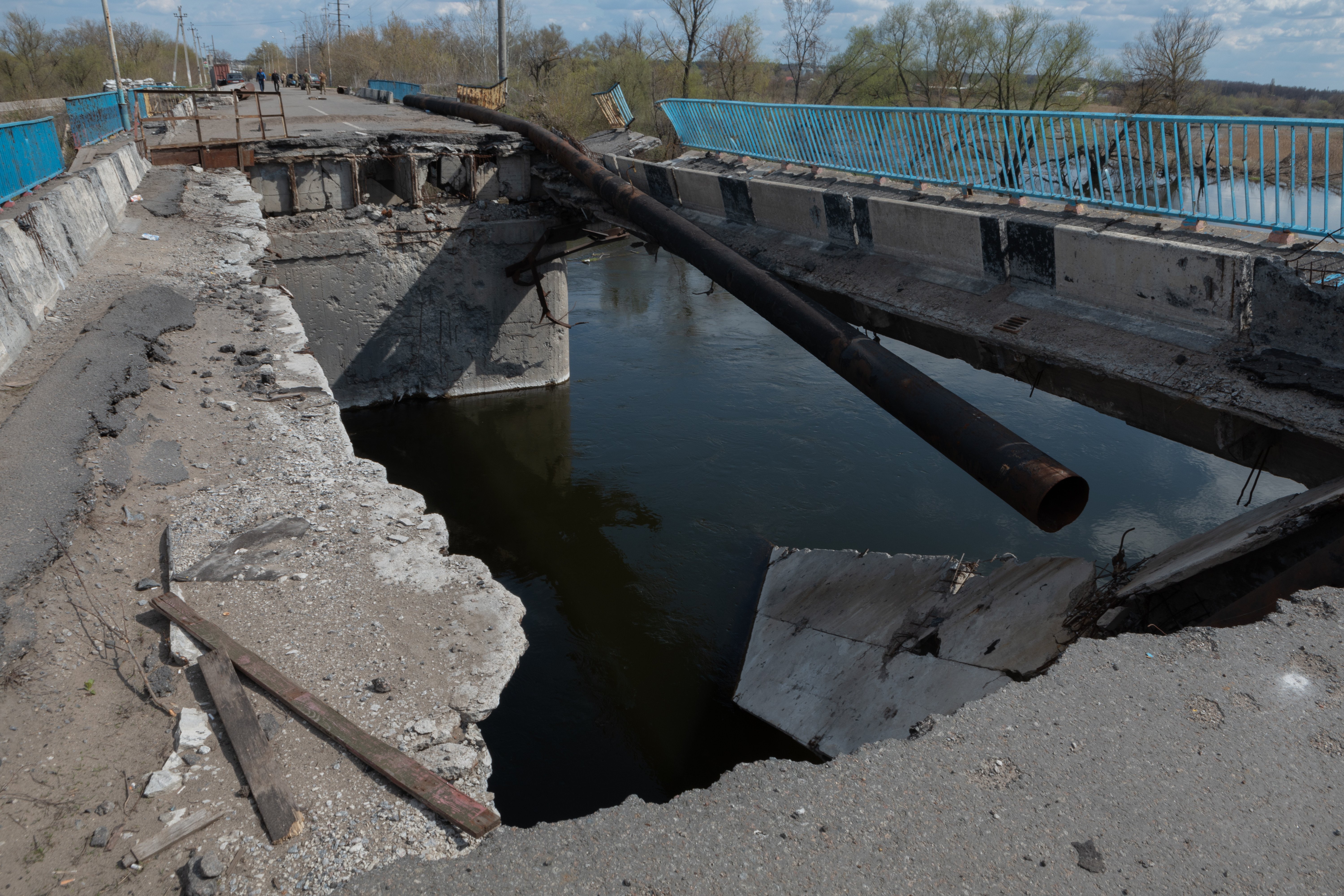
Russian authorities have begun urgently reinforcing key road and rail bridges used to supply troops, preparing them for possible Ukrainian ballistic missile strikes, according to the ATESH partisan movement on October 6.
ATESH said its agents in the Rostov region’s road administration learned that civilian agencies and military authorities received instructions from the headquarters of Russia’s Southern Military District to strengthen major logistics nodes and prepare alternative routes if bridges are damaged.
We bring you stories from the ground. Your support keeps our team in the field.
According to the group, Russia’s federal road agency, Russian Railways, and regional administrations received the orders. The measures focus on crossings considered critical to moving ammunition, fuel, equipment, and personnel toward Russian forces operating against Ukraine.
In the Rostov region, work is reportedly underway to reinforce both highway and railway bridges across the Don River while preparing backup routes that could be used if the main crossings are disabled. Similar measures are being introduced along the Taganrog axis, ATESH said.
❌ Chonhar road bridge destroyed, - Dnipro Osint
— MAKS 26 🇺🇦👀 (@Maks_NAFO_FELLA) October 5, 2026
Satellite images have recorded the consequences of new attacks in Crimea. As of September 26, at least three large holes in the bridge and the crossing were recorded on the bridge and the crossing nearby.
This significantly… pic.twitter.com/9fPQ2ng4X8
Russian forces are also reportedly expecting renewed Ukrainian strikes around Syvash and Armyansk on the route toward occupied Crimea. In the Belgorod region, bridges near Shelayevo and Urazovo are being placed on heightened readiness, with Russian planners reportedly concerned that precision strikes on relatively small crossings could sharply slow logistics and force military traffic onto a limited number of detours.
The planned protection measures include round-the-clock posts staffed by Russia’s National Guard and military commandant units, anti-drone nets, electronic warfare systems, and engineering teams prepared to repair damaged infrastructure. Russian authorities are also reportedly organizing pontoon crossings that could serve as temporary replacements if permanent bridges are knocked out.
“Bridges remain the main supply arteries of the Russian army. Damaging them blocks the delivery of fuel, ammunition, and personnel,” ATESH said.
Ukraine’s SOF has destroyed a railway bridge over the North Crimean Canal near Rozdolne in occupied Crimea.
— Special Kherson Cat 🐈🇺🇦 (@bayraktar_1love) June 23, 2026
Strike drones first destroyed the bridge itself before returning the following night to hit repair equipment and the remaining structure.
The bridge became the first… pic.twitter.com/EMLYkuF8rW
The reported preparations suggest Russian commanders are increasingly concerned not only about Ukrainian drones and cruise missiles, but also about Kyiv’s expanding ballistic strike capabilities. Bridges are particularly sensitive targets because even localized damage can disrupt large transport networks, force convoys onto predictable alternative routes, and create bottlenecks well behind the front.
ATESH’s claims have not been independently verified, but the measures described by the group would point to a broader Russian effort to make critical logistics infrastructure more resilient as Ukraine expands the range and variety of weapons available for deep strikes.
Previously, Ukrainian forces have marked the first successful operational deployment of the domestically developed FP-7 tactical ballistic missile during Russia’s full-scale invasion of Ukraine.
Discuss this article:




-c439b7bd9030ecf9d5a4287dc361ba31.jpg "Photo of Katherina Popilnichenko")