- Category
- War in Ukraine
Russia Is Losing More Troops Than It Recruits, and It Is Recruiting Fewer Than It Used To
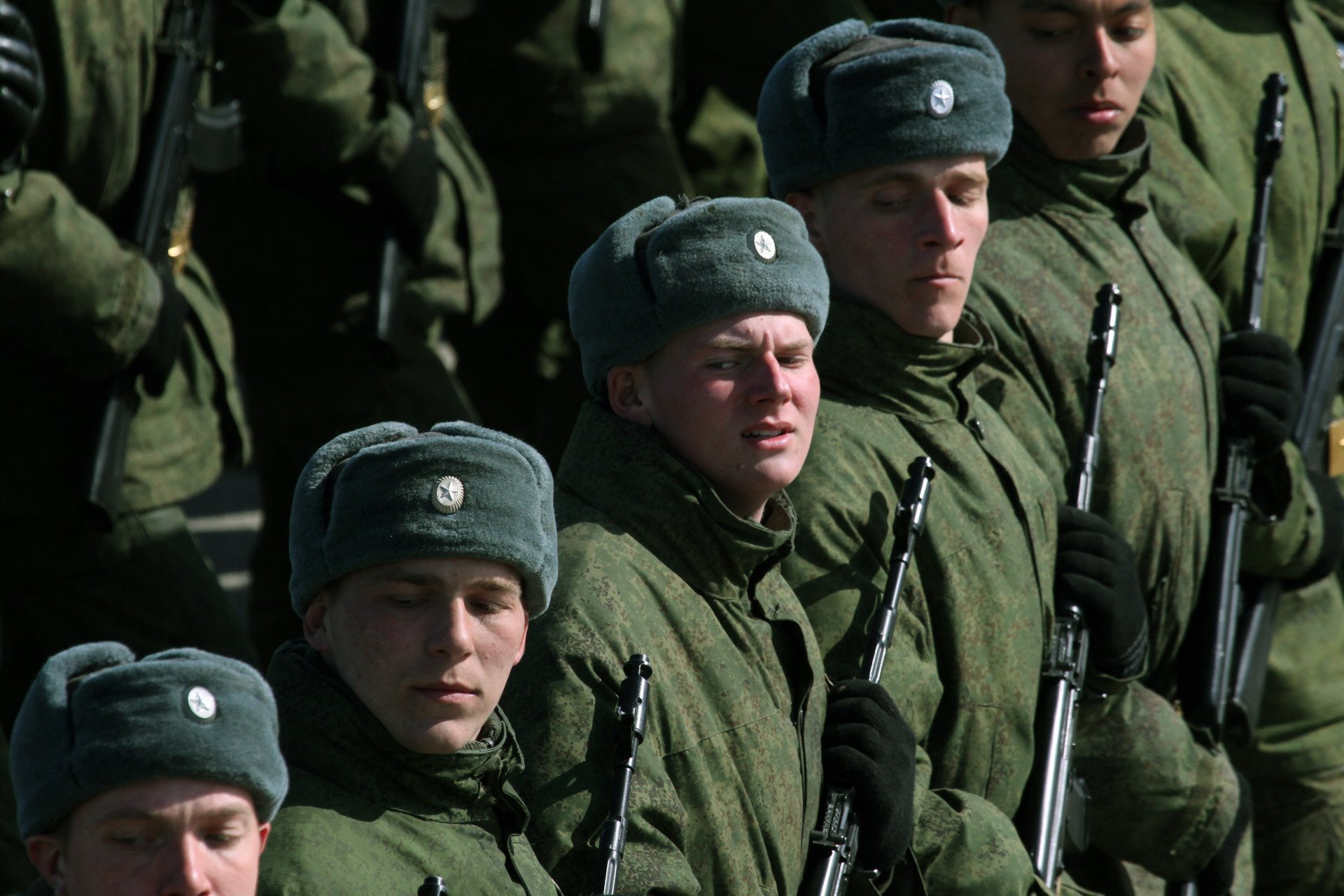
The Kremlin is losing: Money, people, resources. While deaths are rising, recruitment to the Russian army continues to slow down: this year, the Kremlin has managed to sign up at least 10% fewer people than in 2025.
 Prefer U24 Media on Google
- Authors


The Kremlin's challenge is not only the scale of its losses but the growing difficulty of replacing them. German economist Janis Kluge has studied Russian recruitment for years, relying on budget data. According to his latest estimate, 34,000 new contracts were signed in October. The figure is significant, but the trend is downward:
October 2024: 41,000 contracts
October 2025: 38,000
October 2026: 34,000
Over the first ten months of 2026, Kluge estimates 297,000 new contracts were signed. That is roughly 10% fewer than in the same period of 2025.
Meanwhile, the Russian army is dying at an unseen scale, both according to Ukraine's General Staff and according to visually confirmed data from the Delta system. In October, the General Staff recorded 54,000+ killed and wounded, while Delta confirmed more than 41,000. Both figures are the highest of the entire full-scale war. From 1 to 24 November alone, the Unmanned Systems Forces killed and wounded 14,545 Russian soldiers. In October and November, the USF's average daily toll began to exceed 600 Russian troops, and it regularly passes 800. A year earlier, this figure was half as high.
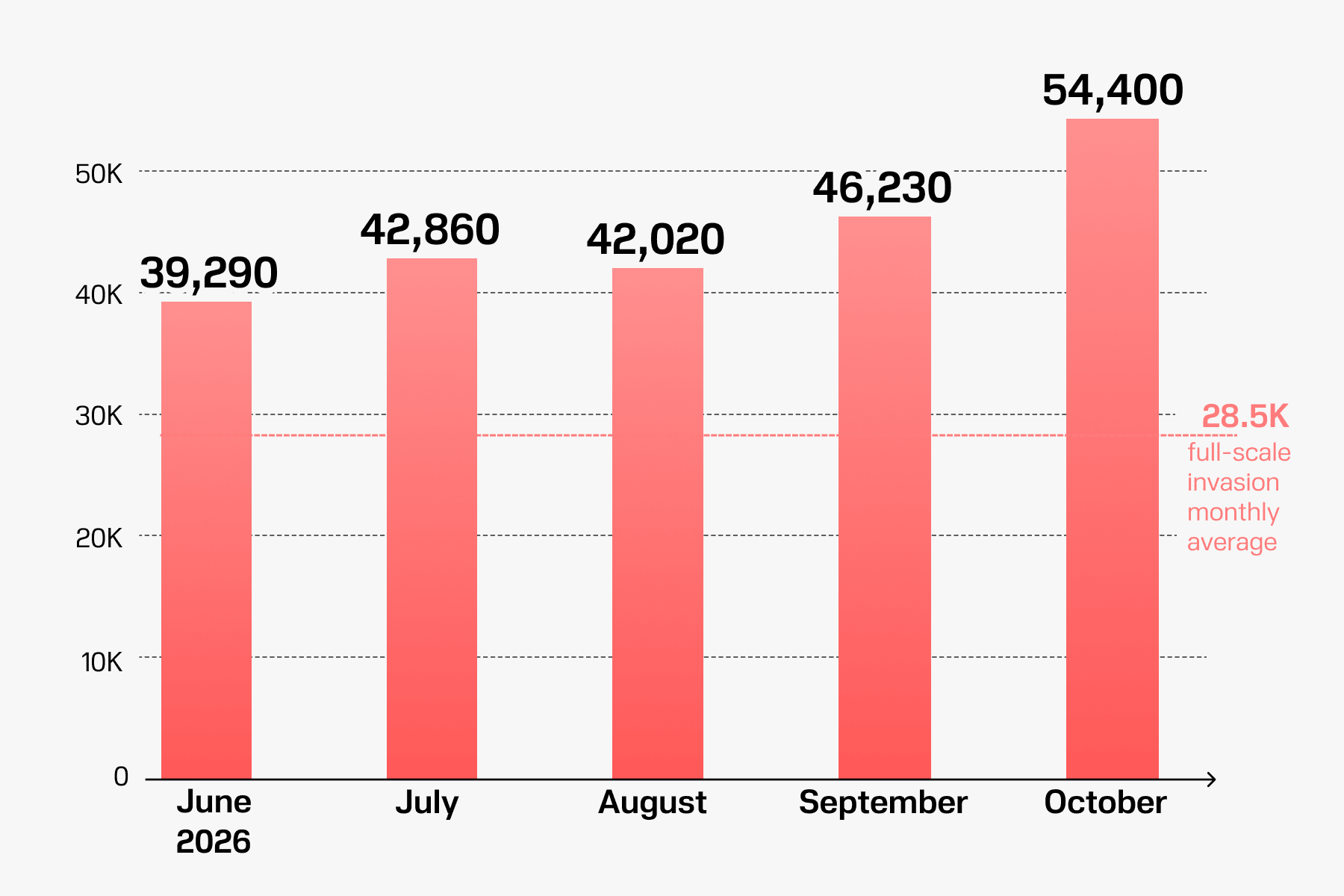
According to the General Staff, in the first ten days of November alone, the Russian army lost more than 20,000 troops killed and wounded. Since the start of the year, losses have exceeded 430,000, and verified Delta data has shown more than 30,000 killed and wounded every month. The Russian army is also losing a large share of its personnel as killed, not just wounded. According to Ukrainian statistics from recent years, because the battlefield is saturated with drones, 60–70% of Russian personnel losses are deaths rather than injuries.
Russian state statistics paint just as grim a picture. Rosstat data leaked by hackers has been analyzed, and the latest research shows that by the end of September the Russian army had lost 490,000 troops killed. Including those missing in action, who are overwhelmingly dead but not yet entered in the registers, the figure reaches 720,000.
Set against the General Staff's total of more than 1.6 million Russian casualties, this means roughly every second Russian soldier who goes to war in Ukraine dies there. For the Russian people, Vladimir Putin has become as ruinous as Joseph Stalin.
On top of all that: the Russian army has failed in every offensive campaign of 2026. Spring, summer, and autumn have passed without a single significant gain for Moscow.
The money is running out
Russia's economic situation no longer helps recruitment either. Russian regions simply lack the money for the huge payments that accompanied recruitment in the first years of the war, and the federal budget has no funds to support them. As a result, payments are being cut, and so is the number of people joining the army for money.
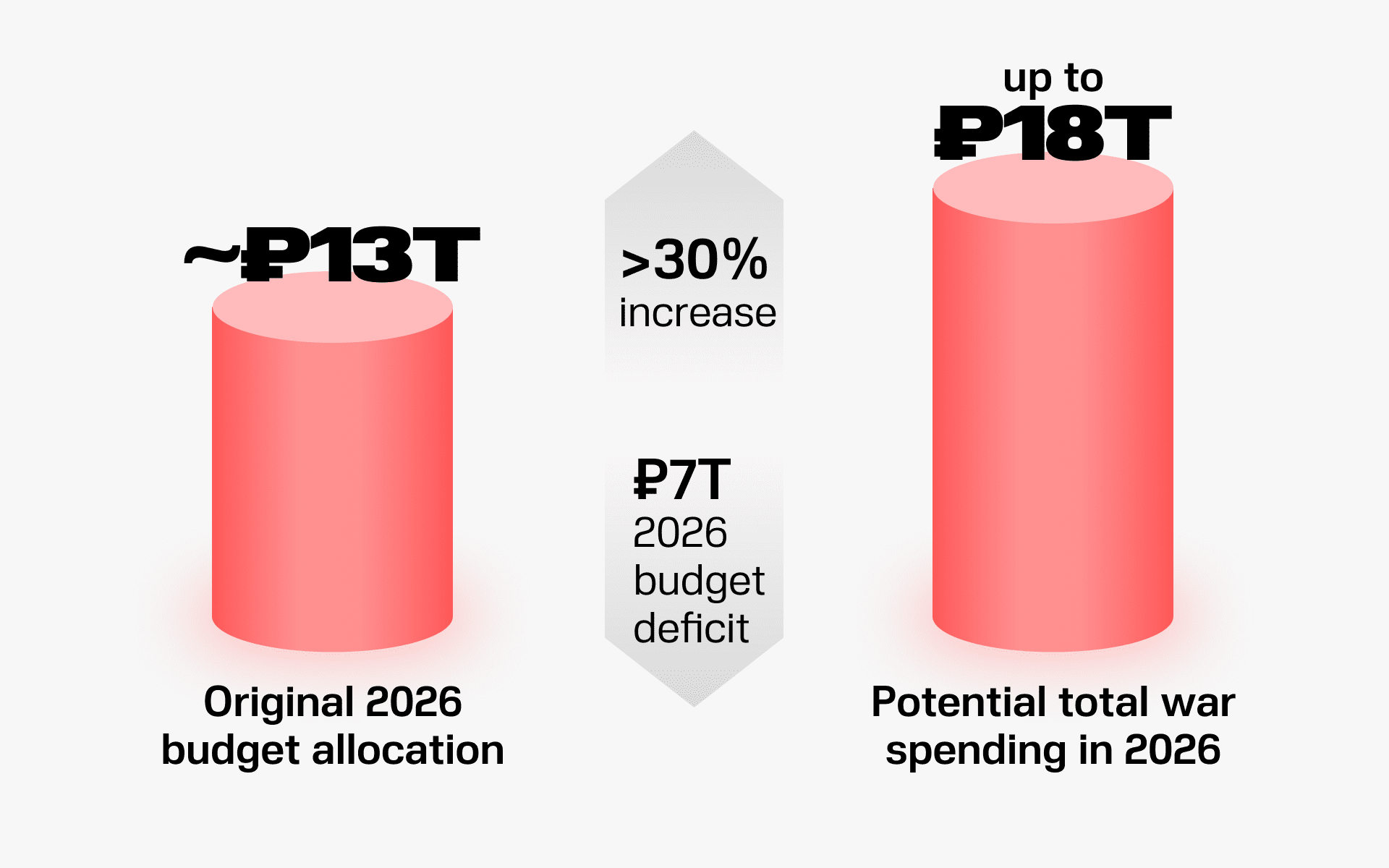
In Mordovia , for example, the authorities set a payment of 3 million rubles for new contractees on 18 August, then cut it back to 800,000 on 15 September. In September, the Irkutsk region also reduced its payment, from 2.1 million to 1.8 million rubles. In May, the Sverdlovsk region lowered its regional payment from 2.7 million to 2.5 million rubles.
The mass cutting of bonuses began back in autumn 2025. According to calculations by Novaya Gazeta Europe, at least nine regions reduced payments in October alone. In Tatarstan, the regional bonus fell from 2.7 million to 400,000 rubles, in Mari El from 2.6 million to 400,000, and in Chuvashia from 2.1 million to 400,000. In the Samara region, a payment that reached 3.6 million rubles in early 2025 had also dropped to 400,000 by October. Cuts were also made in the Nizhny Novgorod, Ulyanovsk and Orenburg regions, Yamalo-Nenets Autonomous Okrug, Bashkortostan and others. No matter how you look at it, Russia is paying a high price for this war, both in human and financial resources. The question is how long Vladimir Putin's regime can keep this system running, and also how long the people are willing to keep paying.
Discuss this article: