- Category
- War in Ukraine
Russia Just Used a Radioactive Drone in Ukraine for the First Time—Here’s What We Know
 Prefer U24 Media on Google
- Authors


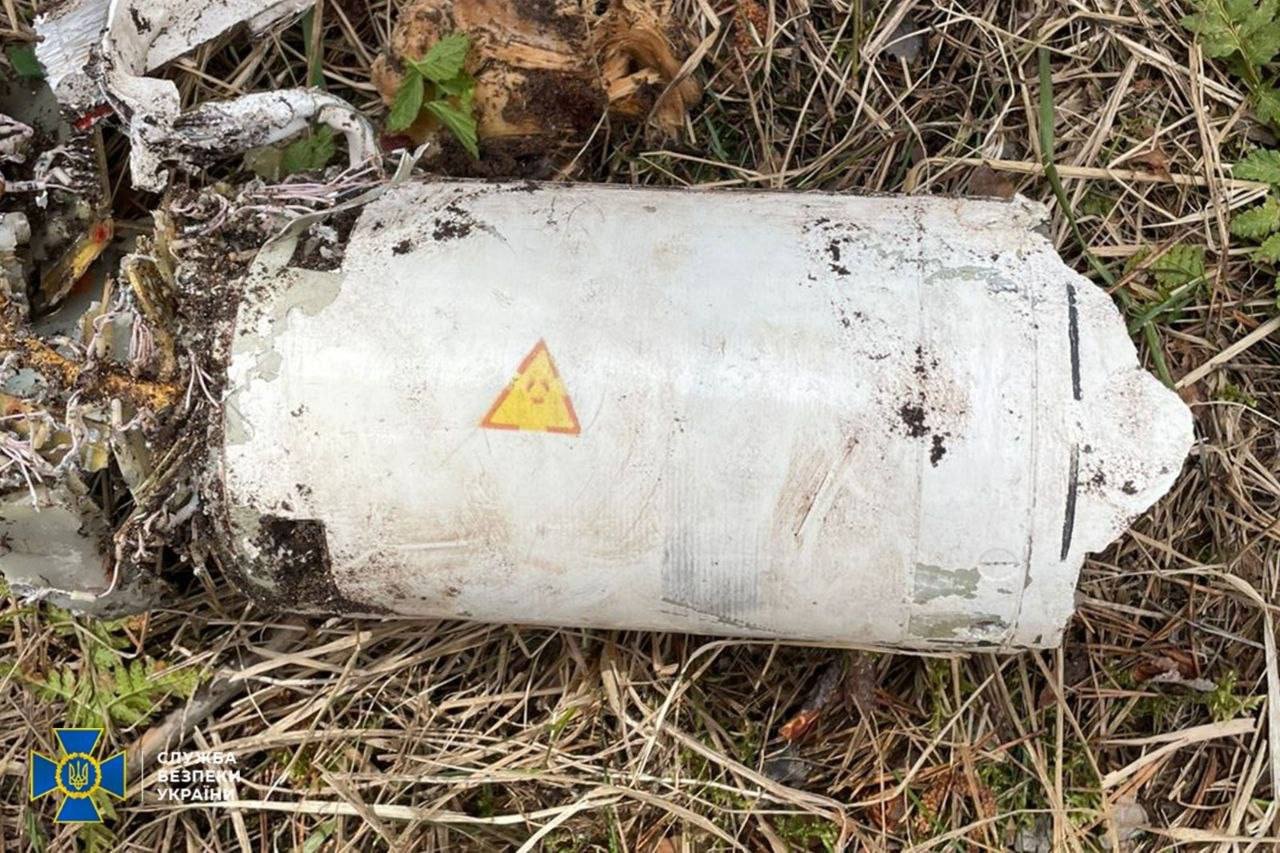
Ukraine’s Security Service (SBU) said it detected elevated radiation levels on the wreckage of a Russian strike drone used in an attack on the Chernihiv region in April 2026, after investigators found fragments of an air-to-air missile mounted on the modified UAV.
According to the SBU, counterintelligence officers and investigators examined debris from a modified Russian Geran-2 drone after the April 7 attack near the village of Kamka. The wreckage included parts of an R-60 air-to-air missile, which Russian forces are believed to have installed on the drone.
We bring you stories from the ground. Your support keeps our team in the field.
Ukrainian officials say Russia has been using such missiles during mass drone attacks in an attempt to threaten Ukrainian aircraft and helicopters intercepting incoming UAVs.
During radiation reconnaissance near the wreckage, specialists recorded gamma radiation levels of 12 microsieverts per hour, significantly above natural background levels and potentially dangerous to human health.
The SBU said emergency crews, together with Ukraine’s State Emergency Service and Armed Forces, made the missile warhead safe and transported the radioactive materials to a designated storage site.
❗️russians have started using radioactive weapons on shaheds attacking Ukraine, according to the SBU.
— Angelica Shalagina🇺🇦 (@angelshalagina) May 20, 2026
It refers to an R-60 missile mounted on a shahed drone. Fragments showed a gamma radiation level of 12 μSv/h, which significantly exceeds the normal level. pic.twitter.com/tu7VZnIN2T
Further examination found that the missile’s warhead contained depleted uranium, striking elements identified as Uranium-235 and Uranium-238.
The SBU warned civilians to be especially careful if they discover fragments of drones, missiles, or other munitions. Damaged or burned ammunition poses the greatest risk, as it may release radioactive dust harmful to people and the environment.
Authorities urged residents not to approach, touch, or move suspicious debris and to report such findings to emergency services immediately.
-0dd6690104be0ab97f4509f72602b40d.jpg)
According to Ukrainian specialists, the R-60M differs from the older R-60 missile in part because its warhead uses depleted uranium rods rather than tungsten. One way to identify the R-60M is the radiation hazard marking on the warhead section.
This is not the first time Russia has threatened Ukraine with radiation pollution. Earlier, reports emerged that the structural stability of the shelter over Reactor 4 at the Chornobyl Nuclear Power Plant has come under renewed scrutiny following damage caused by a Russian drone strike in February 2025, raising concerns about the long-term containment of radioactive materials.
Discuss this article:



-c439b7bd9030ecf9d5a4287dc361ba31.jpg "Photo of Katherina Popilnichenko")

-111f0e5095e02c02446ffed57bfb0ab1.jpeg "Photo of Roman Kohanets")