- Category
- War in Ukraine
Russian Elites Fear Covert Mobilization as Putin Eyes 300,000 New Troops
 Prefer U24 Media on Google
- Authors

-72b63a4e0c8c475ad81fe3eed3f63729.jpeg "Photo of Cyril Barabaltchouk")
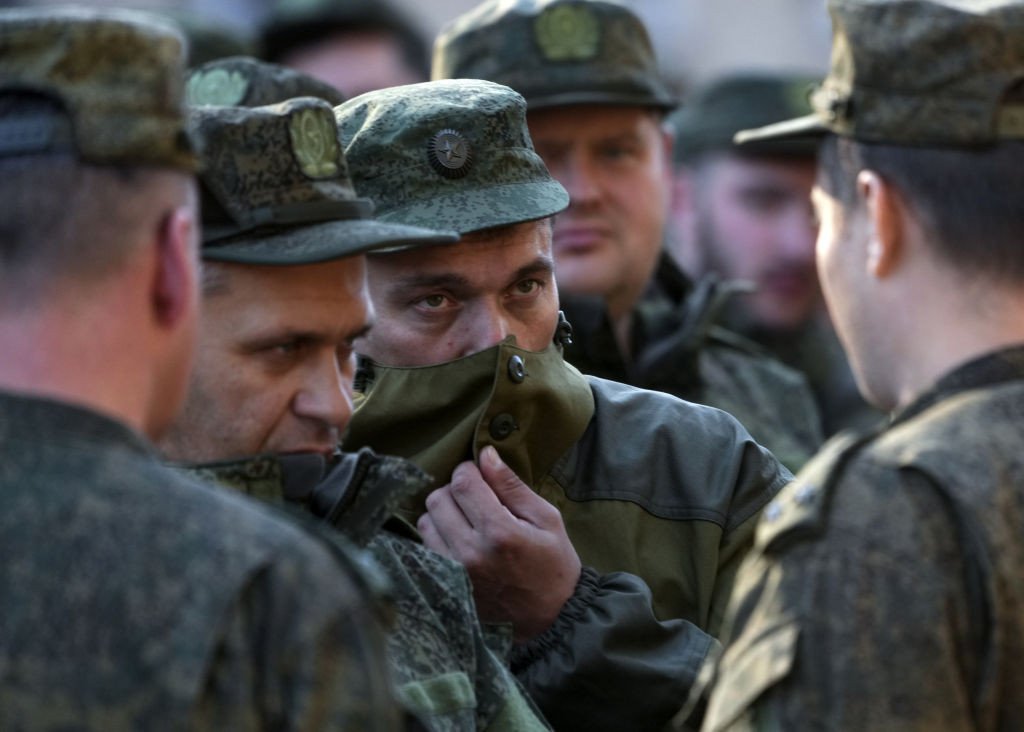
Russian elites and Kremlin insiders are increasingly gripped by the fear of a looming military mobilization following the upcoming State Duma elections, Bloomberg reported on September 18.
This prompted a quiet scramble to move assets and relatives out of the country.
We bring you stories from the ground. Your support keeps our team in the field.
Internal documents obtained by Bloomberg reveal that Kremlin officials—and even workers at military recruitment centers—have been advising friends and family to leave Russia in the coming months while actively seeking ways to open foreign bank accounts.
The panic coincides with Russian leader Vladimir Putin’s recent directive to slash the number of regional officials by 15% to ease the burden on a deficit-ridden budget. However, according to the documents seen by Bloomberg, there are growing internal fears that the Kremlin intends to draft these newly unemployed bureaucrats into the military.
According to a European security official cited by Bloomberg, Russia is preparing to send an additional 300,000 men to the war in Ukraine. But unlike the chaotic partial mobilization of September 2022, which triggered a massive exodus of hundreds of thousands of Russians, the Kremlin may avoid a formal public announcement this time.
Instead, authorities have completely overhauled the conscription system to handle a silent draft. Paper summonses have been replaced with a unified digital registry that is now seamlessly integrated with the tax service, the Ministry of Internal Affairs, medical records, property databases, and border control.
Once an electronic summons is issued, the recipient is automatically barred from leaving the country.
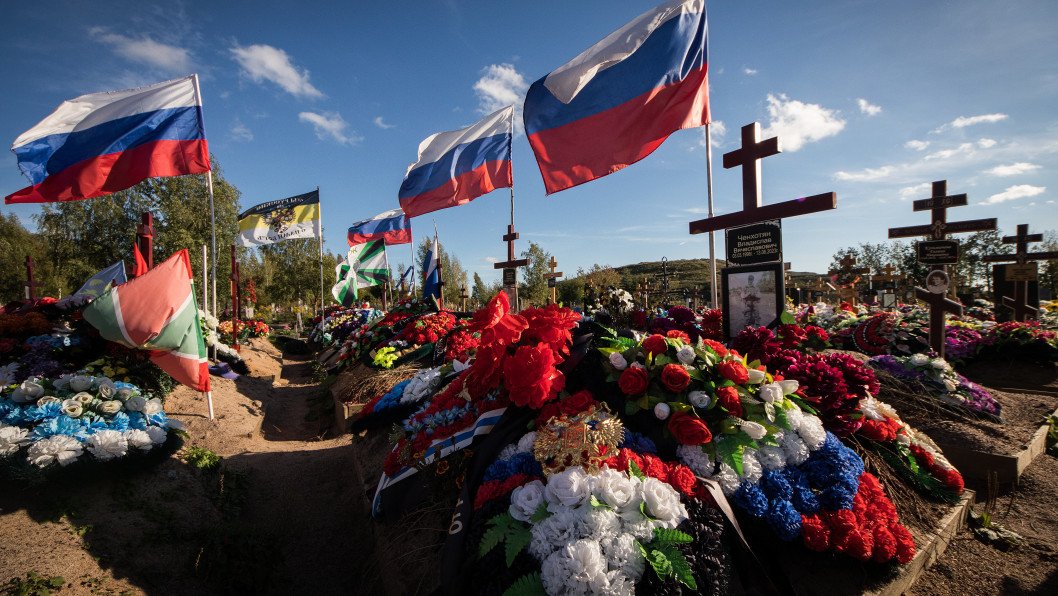
While sources indicate that Putin has not yet made a final decision on whether to pull the trigger on a mass draft, the Russian army is facing severe manpower shortages. Russian leader continues to demand the full capture of Ukraine’s Donetsk and Luhansk regions, but the human cost remains staggering.
A source in Moscow familiar with the statistics told Bloomberg that frontline fatalities are reaching up to 1,000 soldiers every week.
Furthermore, the military is struggling to attract capable volunteers. The source noted that the overall “quality” of individuals currently signing contracts with the Ministry of Defense is extremely low.
To sustain the 700,000-strong force currently deployed in Ukraine—a figure cited by Putin himself—Russia must recruit approximately 400,000 new soldiers annually.

Yet, despite raising the average sign-on bonus to a record 1.8 million rubles ($19,000), the influx of recruits is noticeably shrinking. Janis Kluge, an expert at the German Institute for International and Security Affairs, calculates that 234,000 people signed contracts in the first half of this year, down from 260,000 during the same period last year.
This manpower deficit has directly impacted battlefield progress. Territorial gains have practically stalled; Bloomberg analyst Alex Kokcharov estimates that Russia captured just 155 square kilometers during its summer offensive—13 times less than the 2,037 square kilometers seized during the same period a year earlier.
“The military situation in recent months indicates that Russia does not have enough manpower to concentrate troops on the main axis of attack and confidently cover the front line,” said Kirill Rogov, head of the Re: Russia analytical center. “In other words, mobilization is necessary if the goal is to reach the borders of the Donbas within the next six months.”
If a mobilization is initiated, the burden is unlikely to be shared equally across the country. Political scientist Ekaterina Schulmann told Bloomberg that the Kremlin will likely focus its drafting efforts on the regions that demonstrate the highest levels of support for Putin during the upcoming parliamentary elections.

“In places where loyalty, discipline, and administrative efficiency will be demonstrated, more people will be drafted,” Schulmann explained. In the eyes of the Kremlin, she noted, regional authorities who can successfully execute an election can equally execute a mobilization.
The Kremlin’s current reliance on shadow recruitment to avoid a formal mobilization has placed immense pressure on local authorities. According to recent reports, courts in 51 Russian regions have been fining municipal officials for missing their contract-soldier quotas.
This pressure has driven administrators to drastic measures, including attempts to draft hundreds of male orphans in the Irkutsk region. To enforce compliance, the State Duma is reviewing legislation to significantly increase these financial penalties and introduce suspensions of up to three years for noncompliant bureaucrats.
Discuss this article:

-c439b7bd9030ecf9d5a4287dc361ba31.jpg "Photo of Katherina Popilnichenko")