- Category
- War in Ukraine
Russia’s Hidden Weapon of War: Sexual Violence Against Ukrainians

Since Russia first invaded Ukraine in 2014, survivors have reported sexual violence in occupied towns, detention centers, and prisons. Years of investigations suggest these were not isolated acts, but part of a broader pattern that has become one of the war’s most difficult crimes to document—and one of its hardest to prosecute.
 Prefer U24 Media on Google
- Authors

-f88628fa403b11af0b72ec7b062ce954.jpeg "Photo of Amira Barkhush")
This article contains graphic descriptions of torture, sexual violence, and other forms of abuse suffered by Ukrainian prisoners of war and civilians. Reader discretion is advised.
“Go ahead and rape those Ukrainian women, okay?” a woman laughingly tells her husband, a soldier fighting in Ukraine.
“And don’t tell me anything. Understood?”
“Rape them and not tell you anything?” he asks.
“Yeah, so that I don’t know anything. Got it?”
“Can I, really?”
“Yeah, I allow it. Just use protection.”
“Okay.”
This intercepted phone call between Russian soldier Roman Bykovskiy, who was serving in the occupied Kherson region, and his wife, Olga Bykovska, became one of the most disturbing pieces of evidence to emerge during Russia’s full-scale invasion. Both originally from Russia’s Oryol region, the couple had moved to Crimea after Russia occupied the peninsula in 2014.
It is one of hundreds of intercepted conversations released by Ukraine’s Security Service. It is also a rare glimpse into how sexual violence can be normalized and encouraged.
From occupied villages to Russian detention centers, survivors have described rape, sexual torture, forced nudity, genital mutilation, and other forms of abuse. Together, their testimonies point not to isolated acts of cruelty, but to a broader pattern documented by investigators, prosecutors, and international organizations. Why has sexual violence become such a recurring feature of Russia’s war against Ukraine?
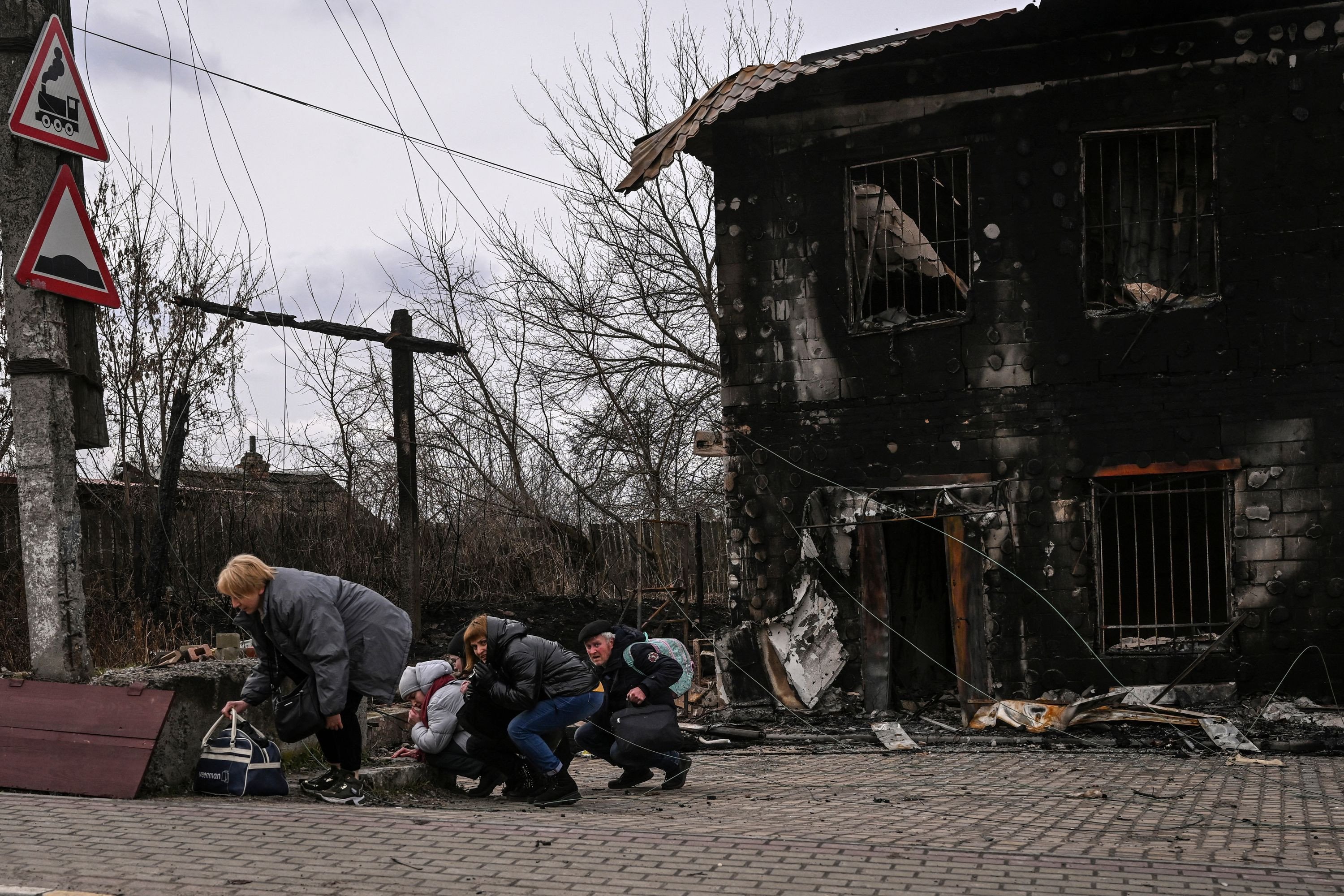
What counts as conflict-related sexual violence?
In November 2024, Ukraine’s parliament passed landmark legislation defining the legal status and protections for people affected by conflict-related sexual violence (CRSV) committed during Russia’s armed aggression against Ukraine.
Conflict-related sexual violence refers to acts of a sexual nature committed against civilians, prisoners of war, or other protected persons linked to armed conflict. It is recognized under international humanitarian and human rights law as a war crime and, in certain circumstances, may also constitute a crime against humanity or an act of genocide.
Under Ukraine’s law, CRSV extends far beyond rape. It includes:
rape;
forced pregnancy, abortion, or sterilization;
forced prostitution and sexual exploitation;
forced sexual acts with a third party;
being forced to witness a sexual act;
sexual slavery and human trafficking for the purpose of sexual exploitation;
forced circumcision, castration, mutilation, or violent acts committed against genital organs;
forced nudity of a sexual nature;
any other forms of sexual violence and threats to commit them.

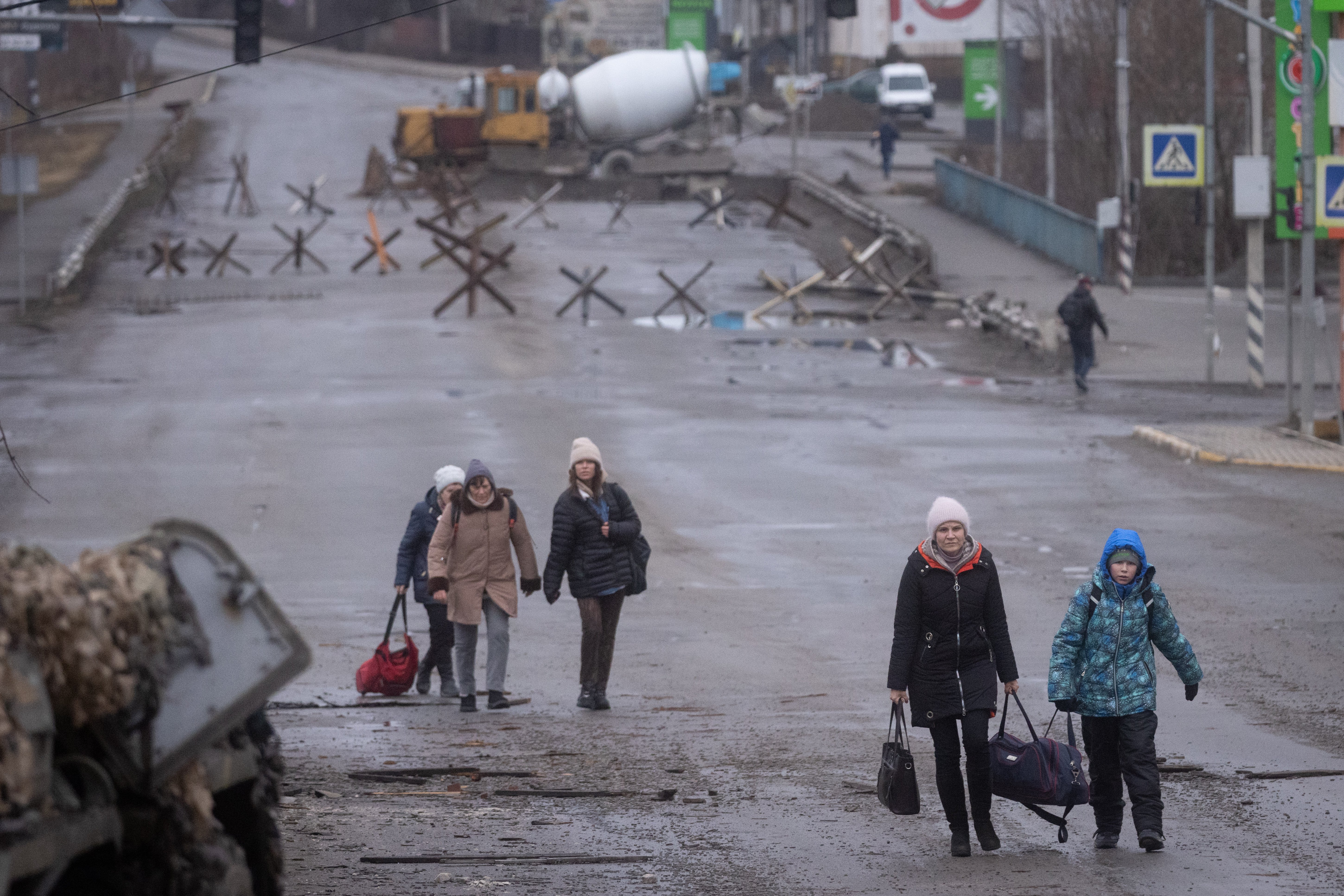
Civilians carry their belongings as the evacuate to safety across a contested bridge at the frontline between Bucha and Irpin on March 04, 2022 in Irpin, Ukraine. Photo by Chris McGrath/Getty Images
Counting the uncountable
Since the start of Russia’s full-scale invasion, Ukrainian prosecutors have documented 401 cases of conflict-related sexual violence. The highest number of victims has been recorded in the Kharkiv, Kherson, Donetsk, Kyiv, and Zaporizhzhia regions, says the Prosecutor General Ruslan Kravchenko. Among the documented victims are 250 women, 151 men, 23 girls, and one boy.
Yet those figures tell only part of the story.
Conflict-related sexual violence is one of the world’s most underreported crimes. Fewer than 40% of women who experience violence seek help of any kind, and fewer than 10% report it to the police, the UN report states. Trauma, stigma, fear of retaliation, and the lack of access to support often prevent survivors from coming forward.
At the same time, organizations working directly with survivors of sexual violence committed by Russian forces estimate that the true number of victims exceeds 2,000. Evidence collected in Ukraine suggested that sexual violence was being used deliberately as a weapon of war, said Pramila Patten, the UN Special Representative on Sexual Violence in Conflict.
“When you hear women testify about Russian soldiers equipped with Viagra, it’s clearly a military strategy,” she said. Investigators had documented cases involving victims between the ages of four and 82, including women, girls, men, and boys, Patten added.
A weapon of dehumanization
Ukraine’s Foreign Ministry has described Russia’s use of conflict-related sexual violence as a method of warfare and an instrument of terror and intimidation. These crimes are intended to destroy human dignity and instill fear, and their systematic nature has been confirmed by international monitoring bodies that have collected evidence in Ukraine, the ministry says.
The women never had a choice, said Anna Orel, a member of the Andreiev Foundation team documenting sexual crimes committed by Russian forces in Ukraine’s de-occupied regions.
“We never met women who said no to Russian soldiers because they all died,” Orel said.
She also described the case of a man raped by Russian soldiers at a checkpoint: “They wanted to destroy him morally.”
Her words point to an essential feature of these crimes: the purpose is not limited to physical injury. Sexual violence can be used to humiliate victims, break their sense of self, and demonstrate that perpetrators hold complete power over their bodies and lives.
Long before Russia’s full-scale invasion
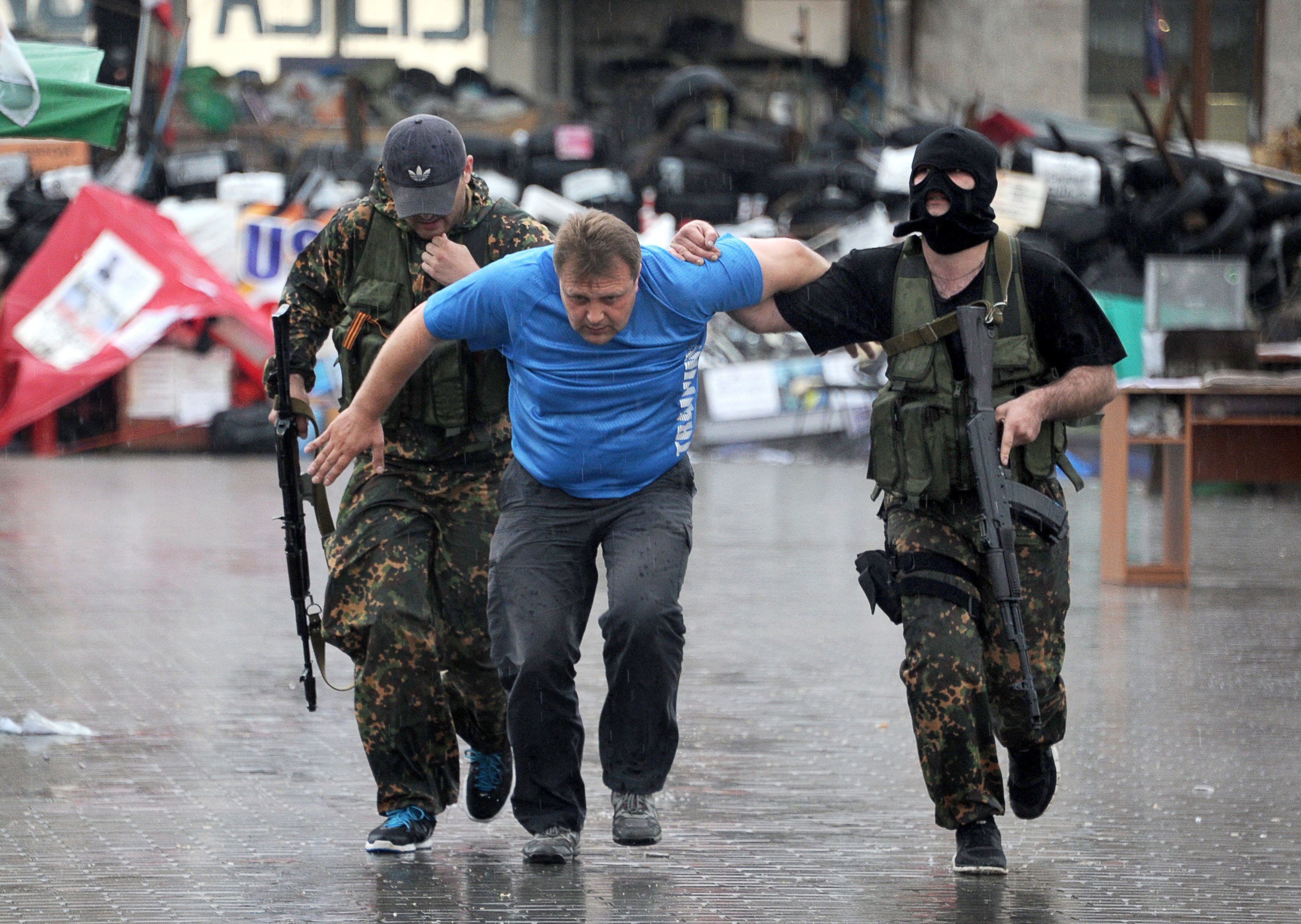
This pattern predates Russia’s full-scale invasion. In August 2014, Mila, a 38-year-old woman whose name was changed for her safety, was detained for 43 days by forces of the Russian-backed self-proclaimed Donetsk People’s Republic after being accused of cooperating with the Ukrainian military. She said interrogators threatened to pour acid on her genitalia and kicked her in the stomach, telling her that she did not deserve to have children.
Mila reported being drugged. When she regained consciousness, her clothes had been torn, and she was suffering from vaginal bleeding. She also described how her cellmate, Iryna, was repeatedly gang-raped. Other imprisoned women, she said, were offered “protection” from rape by guards in exchange for sex with senior officials.
Years before Bucha became a global symbol of Russian atrocities, survivors in occupied eastern Ukraine were already documenting sexual violence, torture, and coercion. Yet these accounts received comparatively little international attention.
Sexual violence against Ukrainian POWs
The figures published by Ukraine’s Prosecutor General’s Office do not include cases of sexual violence against Ukrainian prisoners of war, many of whom have reported such abuse after returning from Russian captivity.
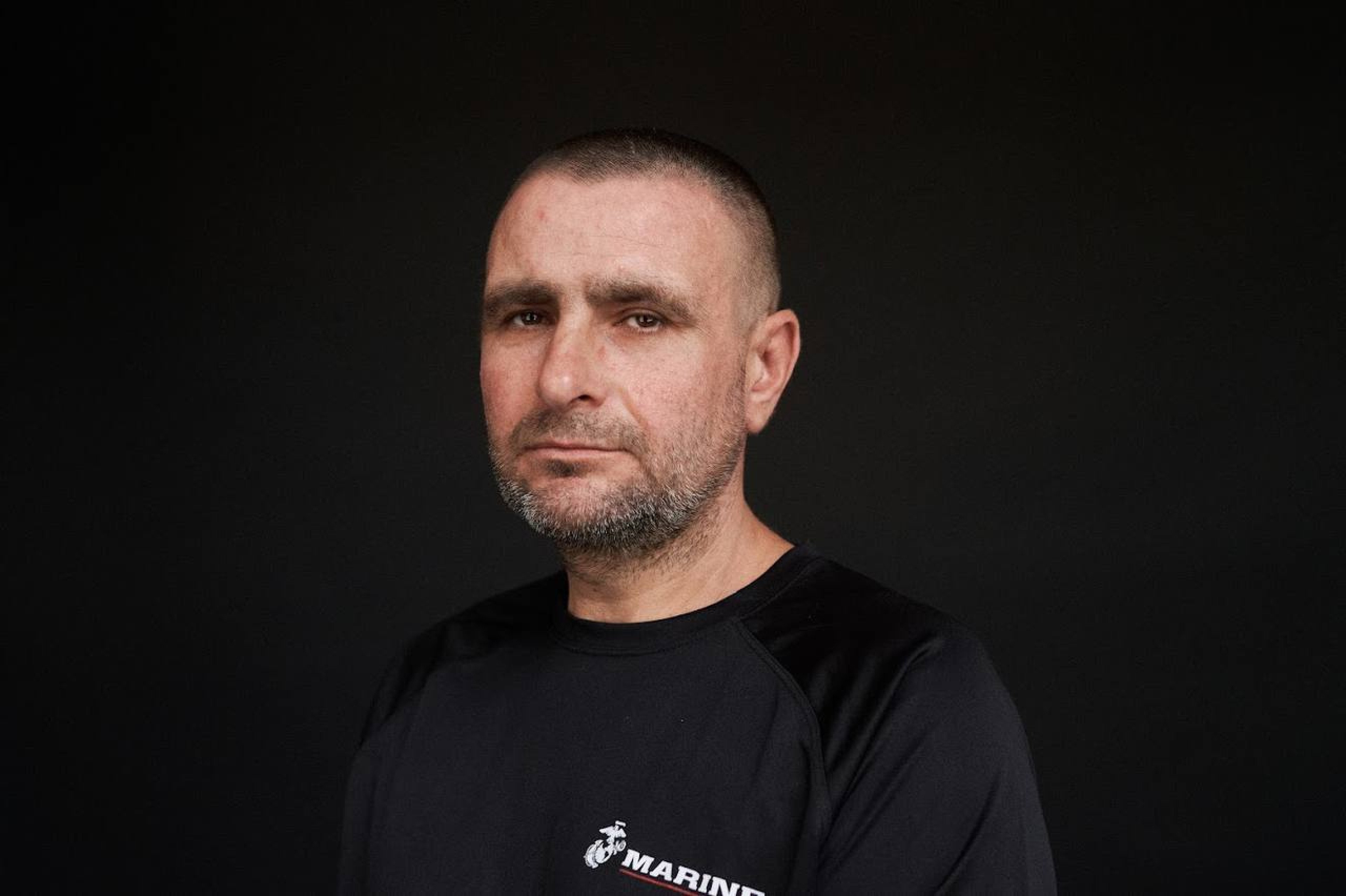
One of them is Oleksandr Savov, who spent two years, ten months, and three days in captivity and made it his mission to expose the atrocities that took place in Russian prisons.
Savov described the intake process at SIZO-2 in Taganrog, in Russia’s Rostov region. Guards stripped the prisoners naked and forced him and another captive to imitate sexual intercourse while male and female prison staff filmed them.
“Dad said that in that moment, he just focused on the thought, ‘I know this person,’ and hoped that they could somehow silently agree to just do it,” his daughter Anastasiia told UNITED24 Media in an interview. “They were completely naked. They were beaten for many hours. This is the place where he first learned that a person, a man, could be raped.”
Savov also recalled the case of a prisoner who was raped because guards had confused his surname with that of another man they were searching for.
“When they found out, they said, ‘Sorry, happens. Here is a cigarette,’” Anastasia said.
Oleksandr died eight months after returning from captivity, on November 16, 2025, due to total bodily exhaustion caused by torture and abuse.
Russia’s denial of war crimes against Ukrainians
In May 2026, the United Nations added Russian armed and security forces to its annual list of parties credibly suspected of committing or being responsible for patterns of conflict-related sexual violence. The report, which covered violations documented during 2025, focused primarily on abuse against Ukrainian prisoners of war and civilian detainees.
Russian authorities have consistently denied UN human rights investigators access to detention sites in Russia and the temporarily occupied territories of Ukraine. Even without that access, investigators verified 310 cases of conflict-related sexual violence against prisoners of war and civilian detainees, the vast majority of whom were men.
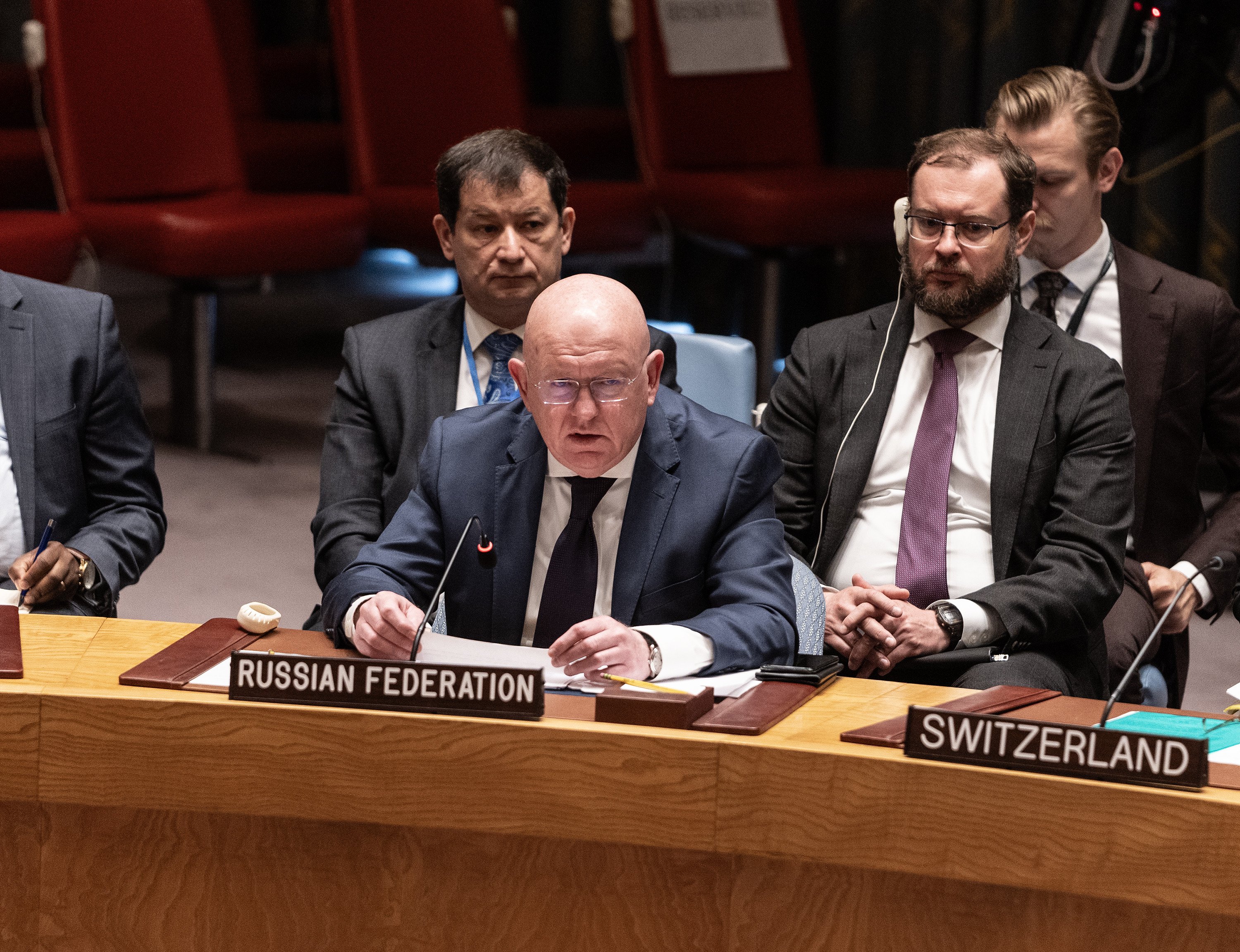
Russia responded not by announcing an investigation, but by dismissing the findings: “We will write a letter to the secretary-general saying that these are unsubstantiated lies and alleged things which again portray Russia as a villain, like they do all the time,” Russia’s UN Ambassador Vassily Nebenzia said.
The findings confirmed that the abuse was not a series of isolated incidents, but a deliberate practice of torture, humiliation, and psychological terror directed against Ukrainian prisoners of war and civilians, said Ukraine’s Human Rights Ombudsman, Dmytro Lubinets.
“The fact that Russian security forces have been officially included in the UN ‘blacklist’ is an important international recognition of the Russian Federation’s responsibility for these crimes. At the same time, this is not enough without further decisive steps by the international community,” Lubinets said.
Justice beyond the courtroom
Justice for conflict-related sexual violence is not limited to prosecutions and prison sentences. It also requires shifting the burden of shame from survivors to perpetrators.
Ukraine’s Prosecutor General, Ruslan Kravchenko, says that accountability efforts are already underway. Investigators have issued notices of suspicion in 116 cases involving Russian military personnel, submitted 64 indictments against 81 individuals to court, and investigated 148 incidents of conflict-related sexual violence. Ukrainian courts have already convicted 26 perpetrators in 19 cases, sentencing each of them to prison.
“While most perpetrators are hiding in Russia, this does not mean impunity. For each verdict, we have established facts, identified perpetrators, collected evidence, and built a legal basis for Russia’s further accountability, including in international courts,” he said.
He stressed that justice is not only about prosecuting perpetrators, but also about supporting survivors.
“We work according to a victim-centered approach: without pressure, without stigma, with respect for human dignity. Together with international partners and civil society organizations, we ensure access to medical, psychological, social, and legal assistance. Survivors must not be left alone with what they have experienced,” he said.
For the hundreds of Ukrainian survivors who have come forward, and the many more who remain silent, that shift is about more than accountability. It is about restoring dignity, recognizing the truth of what happened, and ensuring that the burden of these crimes no longer falls on those who endured them.
Ultimately, without legal consequences and social condemnation, the shame remains attached to survivors, while perpetrators are allowed to return to ordinary life. True justice begins when survivors no longer have to hide, but perpetrators do.
As Mildred, a survivor of conflict-related sexual violence from Zimbabwe, put it:
“[Justice] is the true healer of the wounds we carry. No amount of money or words can restore our lost dignity, but justice will surely pave the way for us to regain our dignity.”
Discuss this article: