- Category
- War in Ukraine
Starlink Speeds Rise Again in Ukraine—but Key Frontline Missions Are Still Disrupted, Zelenskyy Says
 Prefer U24 Media on Google
- Authors



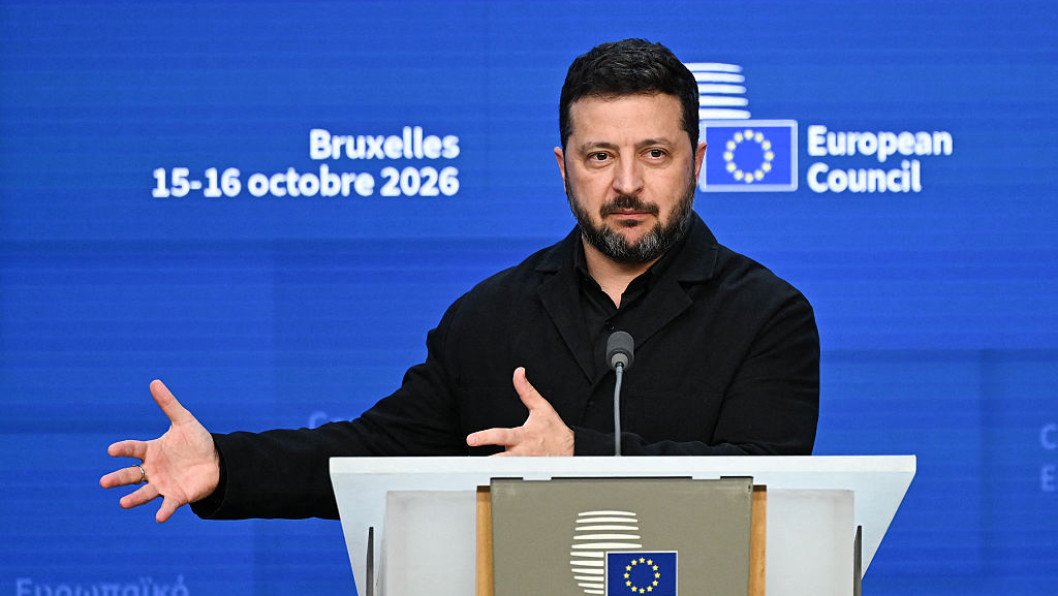
Starlink connectivity has improved in Ukraine following reported signals from the White House to restore higher operating speeds, but the system remains restricted, and Ukrainian forces still cannot carry out some frontline missions as before, President Volodymyr Zelenskyy said during a briefing in Brussels on October 16.
According to Zelenskyy, Ukraine’s partners said there had been signals from the White House regarding the restoration of Starlink’s higher-speed capabilities.
We bring you stories from the ground. Your support keeps our team in the field.
“Have they returned to the previous speed? No. But has the speed increased? Yes,” Zelenskyy said.
The restrictions have become a significant battlefield issue because Ukraine uses high-speed Starlink connectivity on rapidly moving unmanned systems. Zelenskyy stressed that Ukrainian forces do not currently use Starlink for deep strikes inside Russia.
“No, we do not use Starlink for attacks or retaliatory strikes on the territory of the Russian Federation. That is precisely why we appealed to SpaceX and the White House to open up such a capability for us. If we had it, we obviously would not be asking,” he said.
❗️Volodymyr Zelenskyy explained that the Ukrainian Armed Forces critically need Starlink because soldiers on the front lines sometimes remain in positions for weeks and months under constant surveillance by enemy drones. To deliver food, water, and other supplies to them, they… pic.twitter.com/31uiDI0D1o
— 🪖MilitaryNewsUA🇺🇦 (@front_ukrainian) October 16, 2026
Zelenskyy described the sudden restrictions as an unpleasant and dangerous “surprise,” particularly because Starlink is used in operations intended to intercept Russia’s new jet-powered Shahed-type drones.
“We use Starlink to intercept jet-powered ‘Shaheds’ that fly in and strike our civilians, killing our families. We use special interceptors—drones that move at high speed and use Starlink,” Zelenskyy said.
He stressed that the service was not completely switched off. Instead, its effective speed limit was sharply reduced, which prevented some Ukrainian interceptor drones from keeping their satellite connection while pursuing fast-moving Russian targets.
⚡️ "Give us Starlink, open it for us on Russian territory, and we will destroy his ballistic missile launchers,"
— UNITED24 Media (@United24media) October 15, 2026
Zelenskyy stressed that stopping Russian ballistic launches would force Vladimir Putin to negotiate, rendering further energy strikes unnecessary. pic.twitter.com/pGInwI44v8
“And when the speed was reduced, we were unable to shoot down a certain number of these ‘Shaheds.’ That is very painful and unpleasant. In other words, we were unable to provide protection for the population. The ‘Shaheds’ were flying at more than 400 kilometers per hour, while our speed was reduced to 78 km/h,” he said.
That means Russian jet-powered drones were traveling at more than 249 mph, while Ukrainian Starlink-equipped systems reportedly faced connectivity restrictions at around 48 mph.
The restrictions have also affected Ukrainian middle-strike operations against Russian military targets in occupied Ukrainian territory. Zelenskyy said Starlink connectivity had previously supported those missions, but the new limits made some of them impossible.
“And we can no longer do this,” he said.
Beyond combat missions, Zelenskyy emphasized that the restrictions have also complicated battlefield logistics. Ukrainian units use drones connected through Starlink to deliver food and water to troops holding isolated or difficult positions.
“Many people are within reach of enemy drones; we use UAVs to deliver water and food to people who have been holding positions for a long time. We use drones and Starlink. So this affected our ability to protect the population,” Zelenskyy said.
Previously, Germany called for speed restrictions affecting Starlink service in Ukraine to be lifted, stressing that Berlin itself finances part of the satellite communications equipment used by the country.
Discuss this article:
-9a7b3a98ed5c506e0b77a6663f5727c5.png)






-111f0e5095e02c02446ffed57bfb0ab1.jpeg "Photo of Roman Kohanets")