- Category
- War in Ukraine
“The Brink of Death”: How an Elderly Couple Escaped Russian-Made Starvation in the Middle of Europe
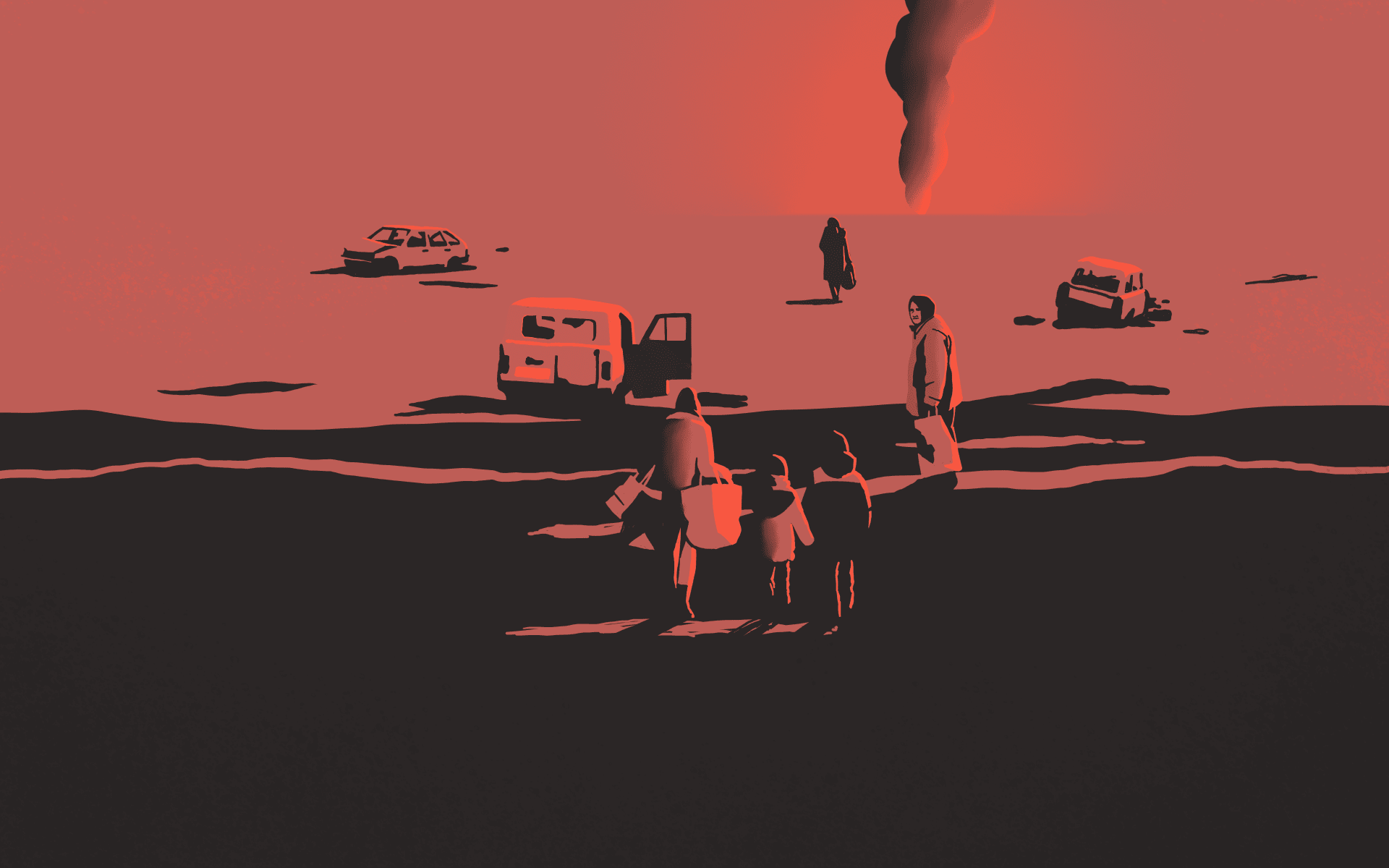
By the time they escaped Russian-occupied Oleshky, the elderly couple had been eating grass to survive. The grandmother could walk only 20 or 30 steps before collapsing. Ahead of them were 25 kilometers of mined roads and Russian drones.
 Prefer U24 Media on Google
- Authors



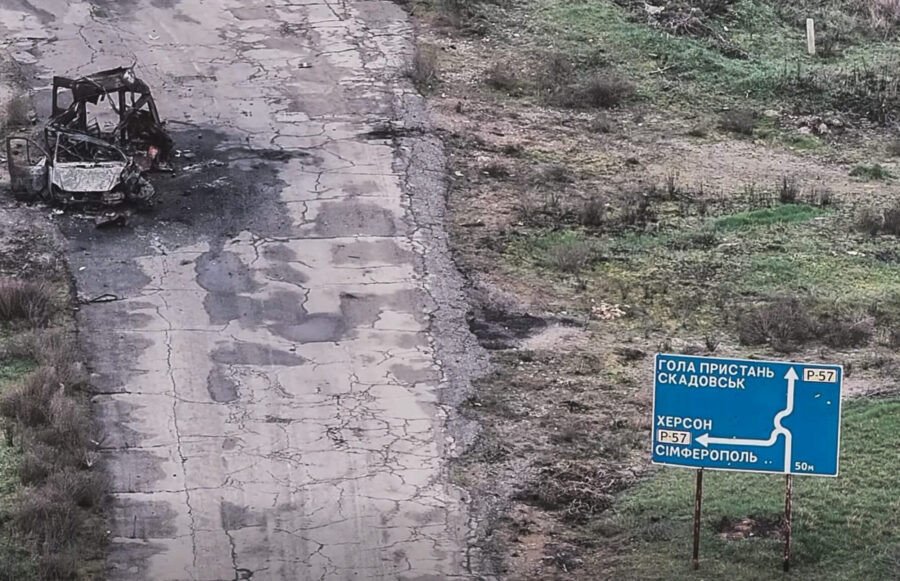
It’s almost impossible to escape Russian-occupied Oleshky, a city in Ukraine’s Kherson region currently facing a humanitarian crisis. One of the few roads out is known as the “Road of Death”—littered with mines and frequently targeted by swarms of drones.
For two elderly grandparents, it became a last attempt to escape a city where survival was increasingly impossible. Their grandson, Vladyslav, told UNITED24 Media what his grandparents endured—and what life had become inside occupied Oleshky.
Vladyslav’s surname and his grandparents’ names have been withheld for their safety while Oleshky remains under Russian occupation.
Today, the temporarily occupied town of Oleshky marks 942 years.
— UNITED24 Media (@United24media) September 12, 2026
Cut off from aid, ~1,700 residents endure drone attacks, mined roads, extreme food and medicine shortages, and unburied dead.
🧵 1/8 pic.twitter.com/flwiSw2InF
Vladyslav, now 19, grew up in Oleshky with his family. When Russia launched its full-scale invasion in February 2022, he refused to stay silent, secretly attending pro-Ukrainian rallies without his mother knowing. His family experienced first-hand what life under Russian occupation felt like—in 2014, his father’s family fled Donetsk, and his mother’s family fled Crimea.
In 2022, his immediate family had to move again. They fled Oleshky, finally escaping to Ukrainian-controlled territory on April 17, 2022. They left with nothing, believing they would soon be back.
His grandparents stayed behind. They had spent most of their lives in Oleshky. Leaving meant abandoning not just a home, but the only world they had known for decades.
For the next four years, Vladyslav followed his grandparents’ lives under occupation through calls and messages, until even those became difficult.
The 25-kilometer escape under Russian drones
By the time his grandparents began their escape, hunger had already drained much of their strength. In Oleshky, they had resorted to “making salad out of grass”. There were “no cats left in the city because they’d all been torn apart by dogs… no pigeons in the city because people had caught them” for food, Vladyslav said.
“Dogs even attacked elderly people who were very weak and tore them apart,” he said.
By then, Vladyslav’s grandparents were barely strong enough for the journey ahead. They faced approximately 25 km on foot with another 10 people. Already weakened and suffering from health problems, they gradually fell behind.
“During the last kilometer, my grandmother could take maybe 20 or 30 steps…she would vomit and collapse because she was hungry and exhausted,” Vladyslav said.
As his grandmother grew weaker, his grandfather would unfold the portable cot he had carried with them, leaving them exposed on a road stalked by Russian drones. “My grandmother would sit or lie down and rest for a little while, and then they would continue,” Vladyslav said.
Every step and pause carried a risk. They knew the journey could cost them their lives.
Oleshky lies directly across the Dnipro river from Kherson, but the water is mined and under constant threat from Russian drones.
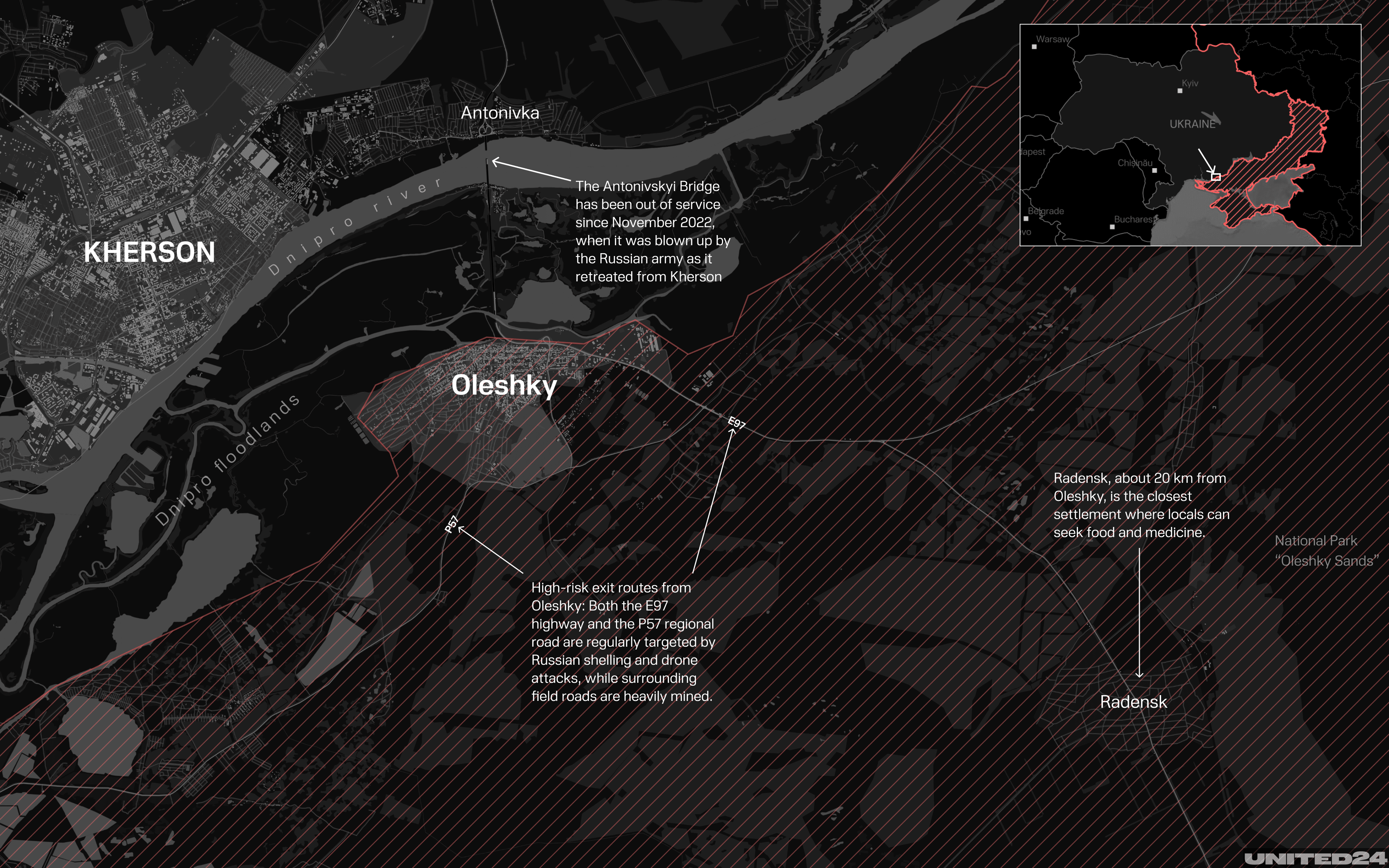
Routes through occupied territory are also dangerous, Oleksandr Tolokonnikov of Kherson’s military administration told UNITED24 Media.
“For the people of Oleshky, both routes are effectively blocked today,” he said.
Throughout the blockade, people attempting to leave Oleshky had been targeted by drones. Drone attacks were not new to Vladyslav’s grandparents.
In 2025, his grandfather had already been concussed when a Russian drone struck nearby. This time, they were lucky. The road out was the final chapter of an ordeal that had begun long before they left Oleshky.
Held hostage in their own home by a Russian soldier
In Oleshky, silence had become the norm. There were no cars, no neighbors, almost no sounds at all—only the buzzing of drones overhead. In July 2026, Vladyslav’s grandfather heard movement behind the fence.
A day later, a Russian soldier arrived at their home, demanding their documents. “He liked coming over frequently,” Vladyslav said, adding that he demanded that his grandparents cook for him.
The soldier’s visits soon became more threatening.
“When he was on drugs, he would come over in an agitated state,” says Vladyslav. “He would start shooting in different directions—up, down, right, left—at the chickens and roosters.” The chickens were among his grandparents’ last remaining sources of food, until the Russian soldier killed them.
On one occasion, Vladyslav said, the soldier forced his grandparents into an outside shower while firing indiscriminately and shouting derogatory terms for Ukrainians.
His grandfather got down on his knees. “Please don’t kill us. We’ll feed you, we’ll give you something to eat,” he pleaded. Had the shower been lockable, things could have ended very differently.
“I would have just shot you, thrown a grenade in there, and locked you in the shower. That would have been it,” the soldier told Vladyslav’s grandparents. The threats didn’t stop there. He also told his grandparents that Russian forces were raping pensioners across the city, likely in a bid to intimidate them.
When the Russian soldier slept in their house, he would store his weapons there. “He had basically made a little weapons cache. He would hang things up and hide his weapons and grenades there.”
Eventually, while the soldier was asleep, his grandparents packed their belongings and fled to the hospital, the only place in the city they believed was safe. But the soldier was determined not to let them escape so easily.
A neighbor still living in their area was threatened by the soldier who was demanding to know where the grandparents had gone. He told him that he didn’t know and to find them himself.
Fifteen minutes later, he returned carrying a machine gun. “You’re fucked. I’m going to shoot you,” the Russian soldier shouted. The neighbor also then fled to the hospital, where he told Vladyslav’s grandparents what had happened.
By then, Vladyslav’s grandparents had nowhere to return to. They had two homes—a house that had been taken over by the Russian soldiers, and an apartment that had been looted and was also being used by Russian forces to store weapons, with soldiers patrolling the building. They eventually went to stay with an acquaintance on the other side of the city.
Oleshky under Russia’s humanitarian blockade
Russian forces are using Oleshky to conduct military operations, while keeping civilians inside the city, Tolokonnikov explained.
“They understand perfectly well that the Ukrainian military will not strike civilian populations,” he said. “The presence of people in the city limits the ability to target Russian military facilities and positions” he said.
It is in the Russians' interest to keep people in Oleshky…they leave civilians in the combat zone while simultaneously using them as a shield for their own military activities.
Oleksandr Tolokonnikov
Kherson military administration
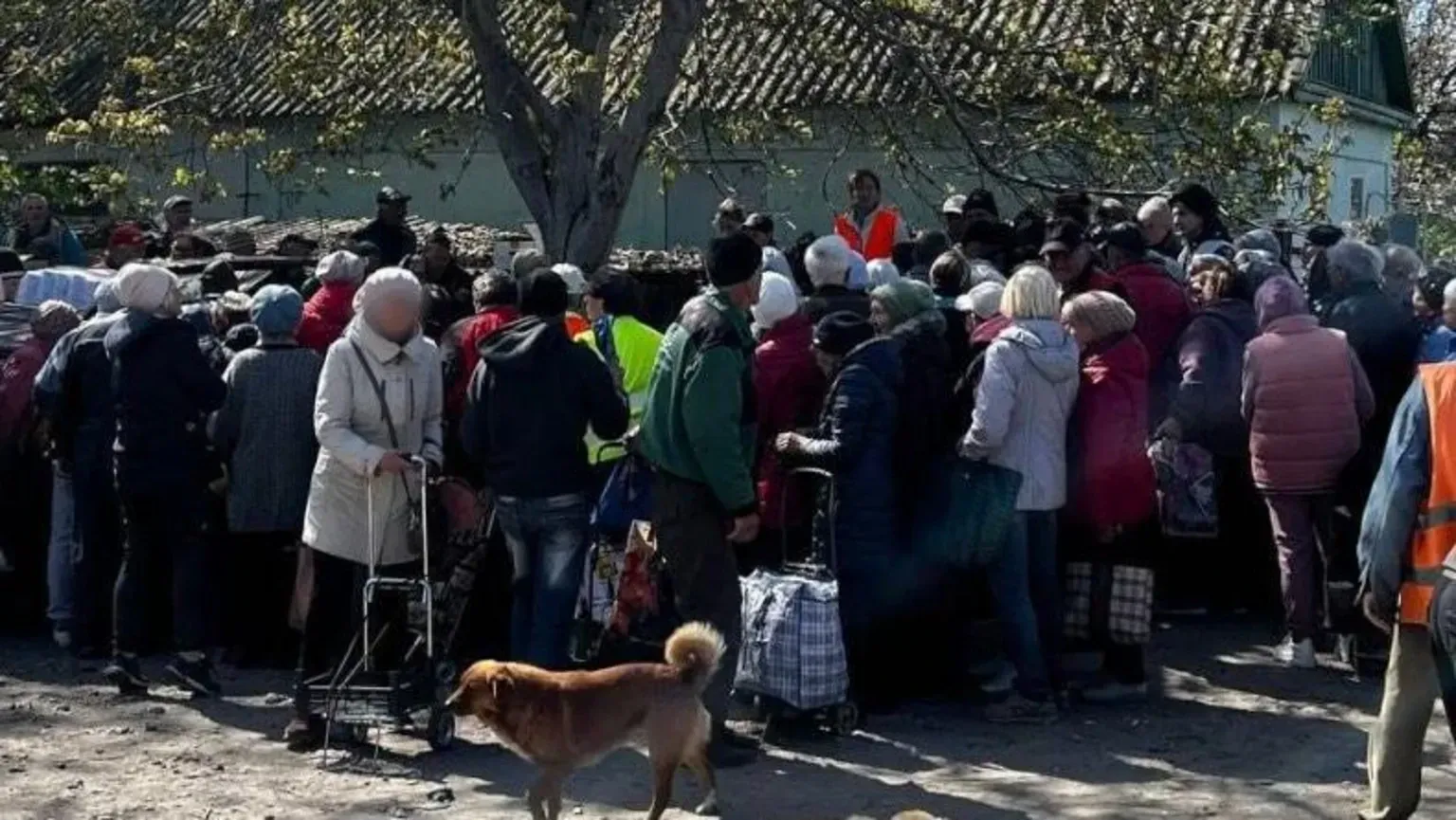
Around 2,000 people remain in Oleshky today, down from the 24,000 who lived there before Russia’s full-scale invasion. Among them are almost 50 children, according to Tolokonnikov.
For those who remain, there is little left of normal life.
“The city is effectively blockaded by the Russian army,” he said. “People are forced to survive in the midst of a humanitarian catastrophe—without normal access to food, water, electricity or medicine.”
Since March 2026, Ukrainian authorities have been using drones to deliver food to the blockaded city. In a single night, around 4,000 kg of food was delivered to 100 locations across the city, Tolokonnikov said, but even those deliveries were not safe from Russian hands.
Several residents “were detained by the Russians, brutally beaten and thrown into a basement. There are also testimonies of cases of sexual violence,” he said.
🚨 BREAKING: Ukraine delivered a second 4-ton shipment of humanitarian aid to occupied Oleshky in Kherson region.
— UNITED24 Media (@United24media) October 4, 2026
Nearly 400 packages with food, medicine, and children’s supplies were delivered by drones, while six animals were evacuated. pic.twitter.com/JtDVNo8vzD
Russian forces have also taken the delivered food for themselves, sold it, and even attempted to shoot down the drones carrying the aid. “In other words, people who are on the verge of starvation face risks even when trying to receive assistance,” Tolokonnikov said.
“We are doing everything possible to save the residents of Oleshky from starving to death,” Tolokonnikov added. “Civilians are killed in Oleshky practically every day as a result of Russian attacks, hunger, the lack of medical assistance, and people’s general exhaustion.”
For Vladyslav’s grandparents, survival increasingly depended on whatever food they had been able to save or grow themselves. In 2025, they began stocking up food such as grains, and they also took flour, spices, and other food products from the apartment Vladyslav had shared with his family before himself escaping the occupation.
“By 2025, those products had already expired,” Vladyslav said. “But when you’re starving, you eat what you have.” There was no salt, flour, or meat. The little food they grew in their garden became one of their last remaining sources of food, but it could not last forever.
By October that year, even a trip to the market was deadly. Vladyslav’s grandfather’s brother never made it home.
“He stepped on a mine… I don't know how they got the body to the cemetery, but my grandfather had to dig his brother's grave and bury him himself.”
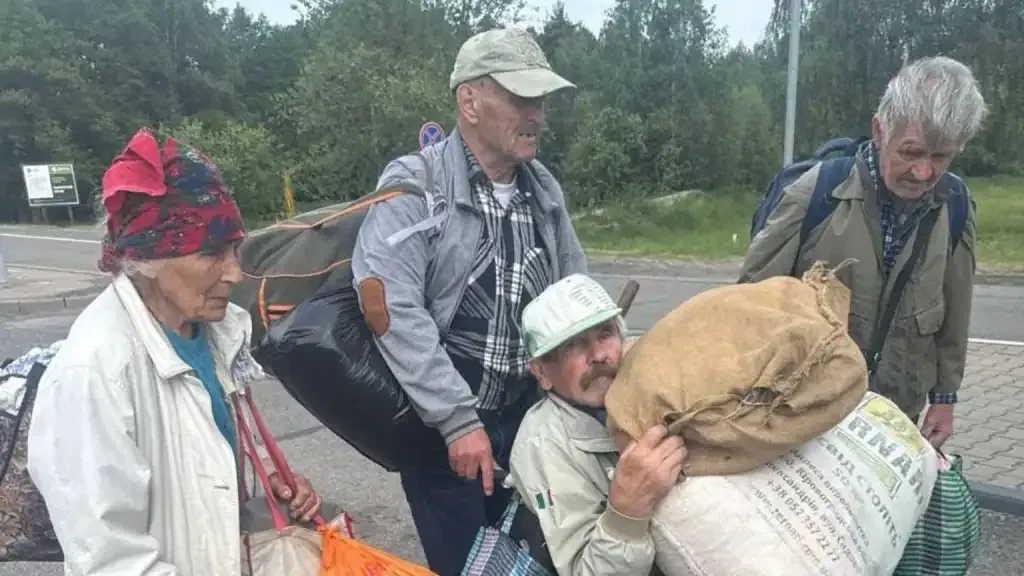
By January 2026, the blockade had become critical.
Communication with his grandparents also became increasingly unstable. By July 2026, they’d lost all contact. The Russian soldier who had taken over their home was also stopping them from getting to whatever food they had left.
The city’s last remaining hospital was also struggling. Vladyslav said it was being run by Russian forces, with only four doctors remaining, and that the building had been partially damaged.
His grandparents told him there were around 70 wounded people there, many of whom had lost everything. With winter approaching, conditions facing those still trapped in Oleshky could become even more critical.
“Freezing temperatures will add to all the existing problems. There is no electricity or gas supply in the city, and there is no way to deliver coal or gas cylinders for the people. For those who are exhausted, ill or elderly, this could become a matter of life and death,” Tolokonnikov said.
The dangerous escape from Russian-occupied Oleshky
Leaving Oleshky was dangerous—Vladyslav knew it from his own experience. During his immediate family's escape, Russian forces often hid among civilian vehicles before opening fire, killing people and leaving cars shot up and abandoned along the road to Ukrainian-controlled territory.
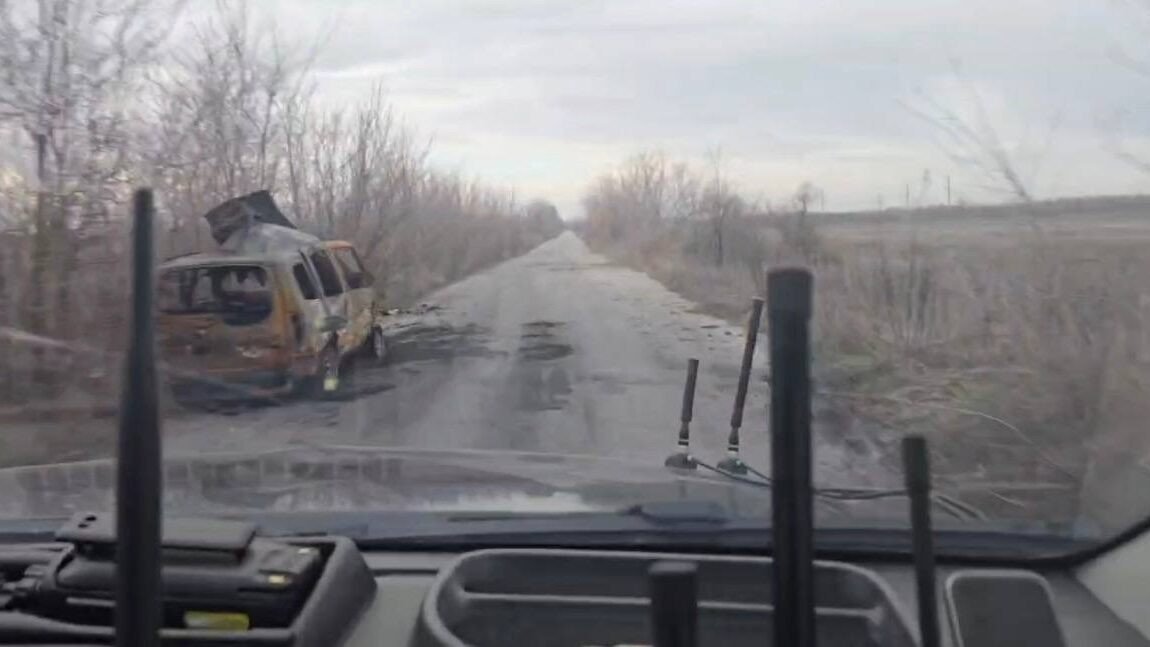
At Russian checkpoints, soldiers searched their phones and social media. At one point, Russian forces found Ukrainian content on his aunt’s phone.
“If it weren’t for the three-year-old child you have here, we would have shot you,” a Russian soldier told them, Vladyslav recalled.
Yet with his grandparents starving inside Oleshky, the family had little choice but to face that road again.
By early August 2026, Vladyslav’s mother was already working to get his grandparents out of Oleshky, communicating with volunteers who were willing to risk the journey into the occupied city.
One volunteer drove towards Oleshky in his own car carrying humanitarian aid and intending to evacuate them. He never made it. A Russian drone struck his vehicle.
His grandparents began the journey out of Oleshky on foot.
They walked through the “Road of Death” towards Radensk, a neighbouring town, passing endless rows of destroyed civilian and military vehicles. Some carried signs marked “volunteers”; others read “people” or “children”.
But reaching Radensk was only the beginning.
From there, his grandparents faced a six-day journey involving multiple vehicles and a route that took them through the Kherson and Zaporizhzhia regions, Melitopol, Donetsk, Luhansk, and Rostov-on-Don in Russia before they eventually travelled through Belarus and back into Ukraine.
“My grandfather said that they were about 300 kilometers from Moscow,” Vladyslav said.
When Vladyslav finally received the call that his grandparents had made it out, he was stunned. He immediately called his grandfather. “I didn’t even get a chance to ask what their plans were next, what they were going to do. My grandfather sounded a little uncomfortable,” he recalled.
But then he heard that his grandparents were eating borscht. For Vladyslav, that was enough.
Before the blockade, Oleshky survived another Russian-made catastrophe
This was not the first time Russian occupation pushed Oleshky to “the brink of death”. Then came the destruction of the Kakhovka Hydroelectric Power Plant.

“The city was almost completely flooded and they had to do whatever to survive. They spent the whole night swimming. Thank God they found people who helped them,” Vladyslav said.
Water reached his grandparents’ home within six or seven hours. As it rose through the house, they placed stools and boxes on the floor, trying to keep themselves above the water.
“It was a horrible night,” he recalled. His family desperately searched for volunteers who could reach them. But Russian forces would not allow Ukrainian volunteers or people from Kherson through, so they began turning to Russians for help.
“We started messaging different numbers in Russian, asking, ‘Please help, here’s the address.’ A lot of people responded. Some just replied with ‘ha-ha-ha,’” Vladyslav recalled.
Eventually, acquaintances were able to reach them. Locals travelled through the flooded city by boat, taking dogs, people—whoever and whatever they could rescue.
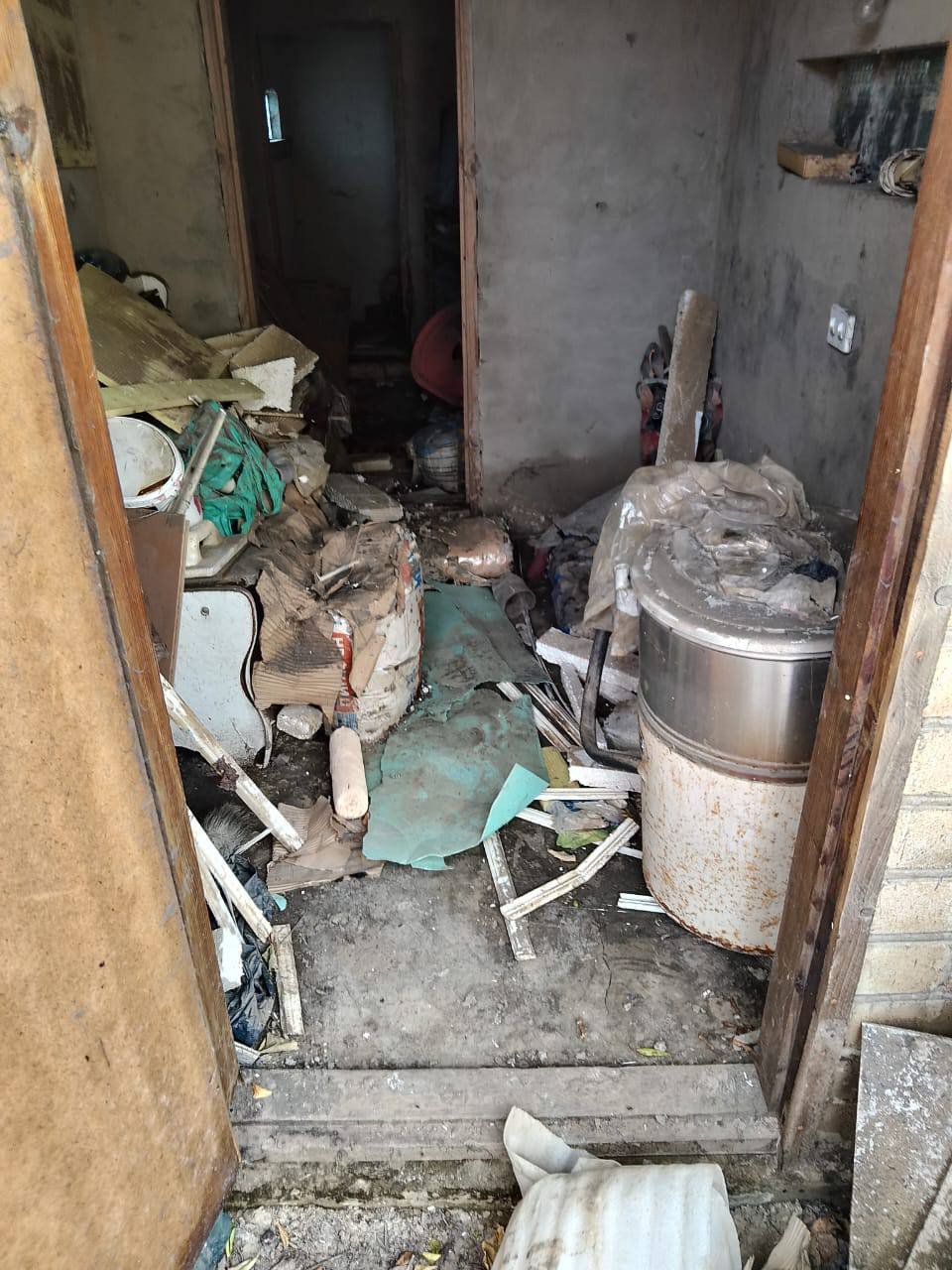
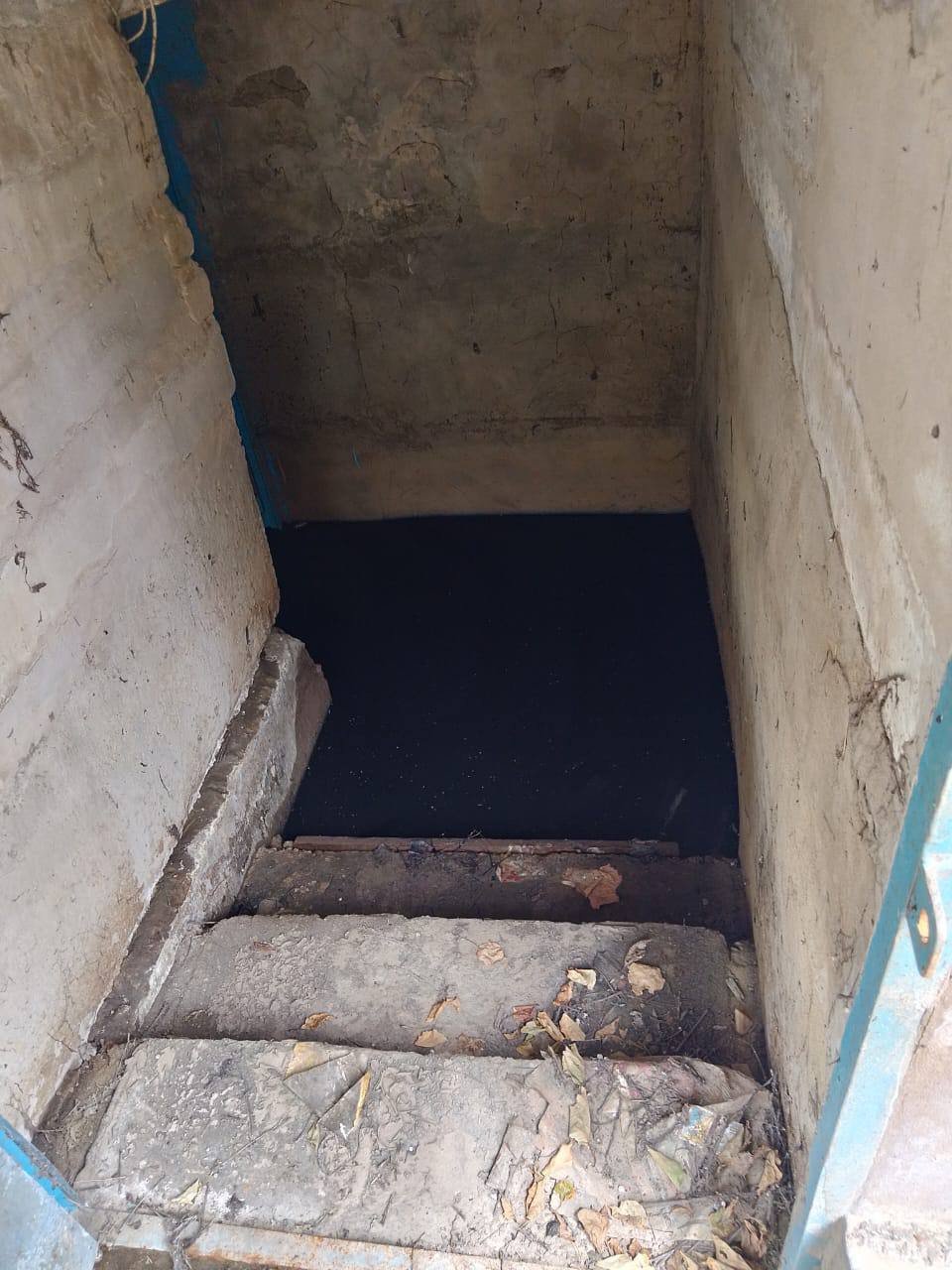
Vladyslav’s grandparents said many people died, although the true number remains unknown. “People who couldn’t move on their own or swim were brought to the morgue,” he said. Some victims were recorded as having died under “unspecified circumstances”. Even Russia’s soldiers were killed in the flood, Vladyslav said.
The flood killed animals, destroyed homes, gardens, crops and much of the surrounding ecosystem.
“Fruits, crops, vegetables—all of that was simply washed away. Almost everything was completely destroyed,” Vladyslav said. Electricity was also affected. His grandparents would walk for around an hour to reach a hospital which had signal boosters, enabling them to communicate with their family.
Then there were the mines. Floodwaters had shifted them through the city, leaving locals with no way of knowing where they had ended up. Russian forces had also laid tripwires inside homes, meaning nobody knew what might be waiting beneath the water or where the tripwires had ended up.
After escaping Oleshky, the Russian occupation followed them home
Now, after all these years of horror, Vladyslav’s grandparents were physically safe, but the years spent under occupation had followed them.
“They still have this habit of listening to what’s happening outside, to any sounds—drones or whatever. They sleep in their clothes because they got used to sleeping dressed, because if a drone came, they had to immediately go and hide.”
His grandfather also continues to buy food compulsively.
“He very reflexively keeps going into stores and buying meat, bread, whatever. There’s already bread at home, but he still buys it because you never know what might happen.”
Oleshky now feels distant to him. “Like a completely different world,” says Vladyslav.
“Everything is fine, technically,” he says. “You go bowling, you have a nice meal. And then you remember that your grandmother and grandfather over there haven’t had meat, haven’t eaten anything like that at all. And you don’t feel like eating anymore.”
For years, the family thought that they might never see Vladyslav’s grandparents again.
“My mother kept saying, over and over and over again, ‘Leave, leave, leave, please, please, please.’ They just kept trying. They didn’t give up. And it wasn’t for nothing.”
His grandparents may have escaped the blockade, but they will not return to Oleshky, even after its liberation, Vladyslav said. For them, the city they once knew had already disappeared long before they left.
“They literally saw the transformation of Oleshky with their own eyes,” he said. “Little by little, they [Russians] take away your freedom. Your life gets worse, and you don’t even notice it.”
Vladyslav’s memory of Oleshky remains frozen in time—a city he remembers before years of occupation and destruction changed it beyond recognition.
For now, much of what has happened inside Oleshky remains unknown. “What we are talking about now is only part of the information we receive,” Tolokonnikov said. “I am convinced that the scale of this tragedy will shock us even more after the liberation.”
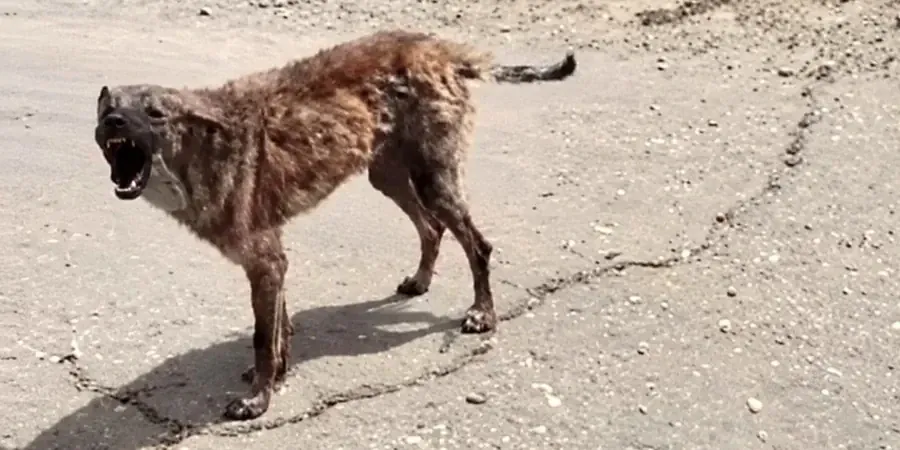
For Vladyslav, telling the story of his city was a way to ensure that what happened there was not forgotten. “I simply couldn’t stay silent about my city.”
“Oleshky is just one example. Bucha is just one example. There could be more and more cases like this. You can be indifferent to something, maybe, but you can’t just stand by and do nothing when it concerns people you love.”
Discuss this article: