- Category
- War in Ukraine
The Middleman Keeping Russia’s Missile Industry Running
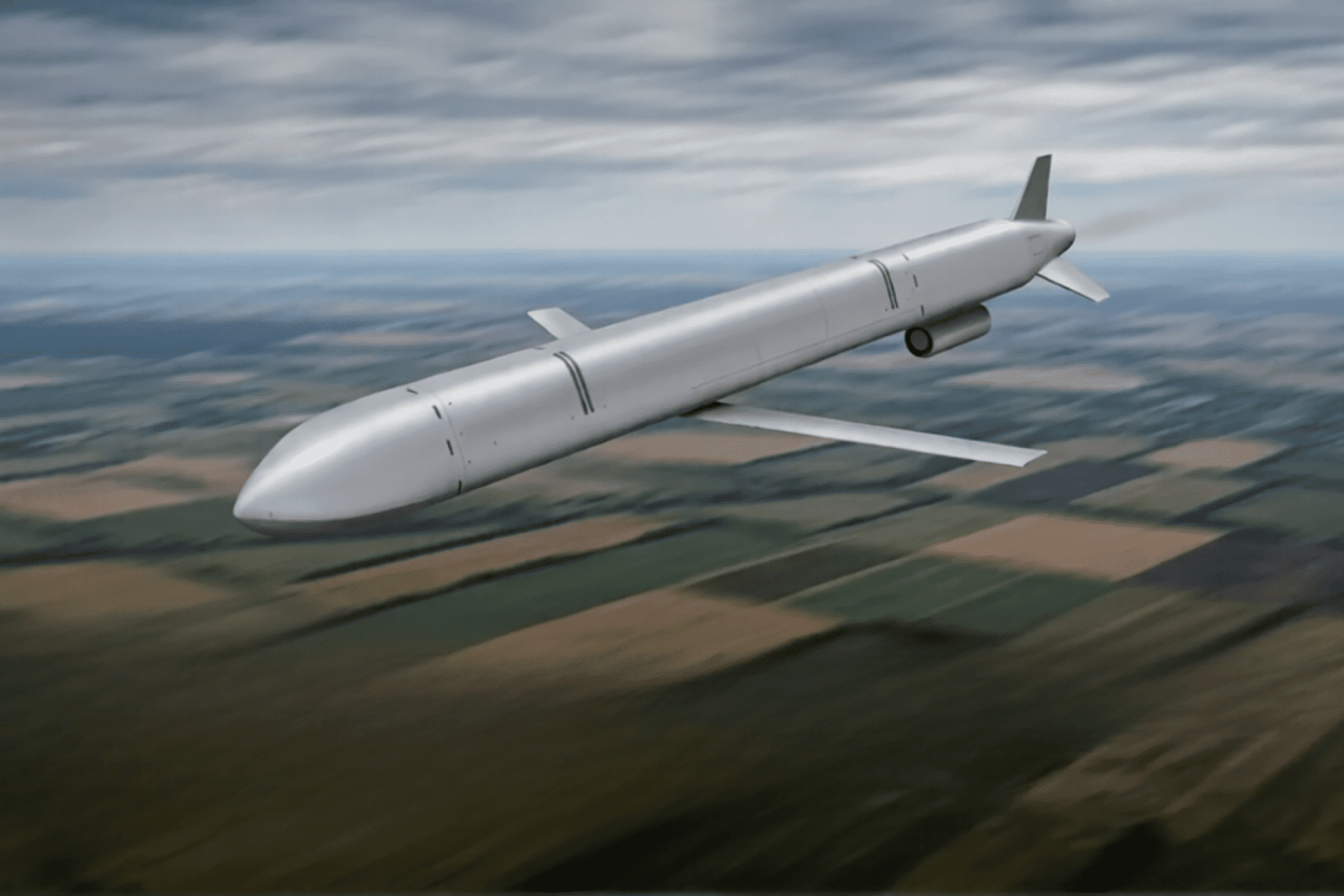
Anyone who has spent a night in Kyiv knows the sound of a Kh-101 cruise missile. What far fewer people know is that many of the foreign electronics guiding those missiles reach Russia through a little-known procurement company that relies on more than 400 shell companies in China to bypass Western sanctions.
 Prefer U24 Media on Google
- Authors




The Kh-101 cruise missile is manufactured by one of Russia’s largest defense conglomerates, Tactical Missiles Corporation (KTRV), which produces launch systems, engines, explosives, and other components used in Russian missile systems.
But programming the flight of these precision weapons requires sophisticated Western-made components, particularly sensors that measure a missile’s movement and orientation in flight. Russia is incapable of producing such advanced microelectronics domestically, yet it has proven highly capable of building networks that successfully circumvent Western sanctions.
At the center of this effort is TRV-Engineering, a company that has built an extensive supply network delivering Western and Chinese electronics to Russia’s defense-industrial complex, effectively supplying the entire KRTV. It serves as KTRV’s principal procurement organization while also functioning as the corporation’s chief’s de facto personal cash cow.
Documents obtained by UNITED24 Media from the private intelligence firm Dallas Analytics show that international sanctions have done little to stop the company from remaining the primary supplier of microelectronics for Russia’s missile industry. To evade export controls, TRV-Engineering relies on more than 50 suppliers within Russia and over 400 shell companies in China.
Key findings
JSC TRV-Engineering (Tax ID 5018205784) serves as the chief procurement company for Tactical Missiles Corporation (KTRV). It conducts tenders on the corporation’s behalf, supplies KTRV enterprises with rolled steel, industrial equipment, and imported electronic components, and provides logistical support across the entire corporation.
The company and several of its contractors are partially owned by the family of KTRV Director General Boris Obnosov, including his daughter Olga Zorikova.
Although TRV-Engineering is under sanctions imposed by the United States, the European Union, Japan, and several other countries, it conducts almost no direct overseas procurement. Instead, it purchases goods through intermediaries, including NPP Variant Group LLC, Microlab IC LLC, Integra LLC, TPK-Gorizont LLC, and Abtronix LLC. Most of these companies have yet to be sanctioned.
TRV-Engineering procures both Chinese and Western microelectronics for Tactical Missiles Corporation, including products manufactured by the Dutch company Nexperia and the US-based Analog Devices.
What is Tactical Missiles Corporation?
Tactical Missiles Corporation (KTRV) is Russia’s leading manufacturer of air-launched precision-guided weapons and has ranked among the world’s top 100 arms producers for many years. Its facilities produce most of the cruise missiles Russia uses to strike Ukrainian cities, including the strategic Kh-101, the heavy supersonic Kh-22 and Kh-32, the tactical Kh-59MK2, and the Kh-69—often dubbed Russia’s answer to the Storm Shadow. The Kh-69 features a square cross-section, allowing it to fit inside the internal weapons bays of the fifth-generation Su-57 fighter jet. KTRV also manufactures the Kh-31 anti-radiation missile and the Kh-35 anti-ship missile.
Outside KTRV, the only other major Russian missile systems are the Kalibr cruise missiles, produced by the Novator Design Bureau (part of the Almaz-Antey concern), and the Iskander ballistic missiles and Kinzhal hypersonic missiles, developed by the Kolomna Machine-Building Design Bureau.
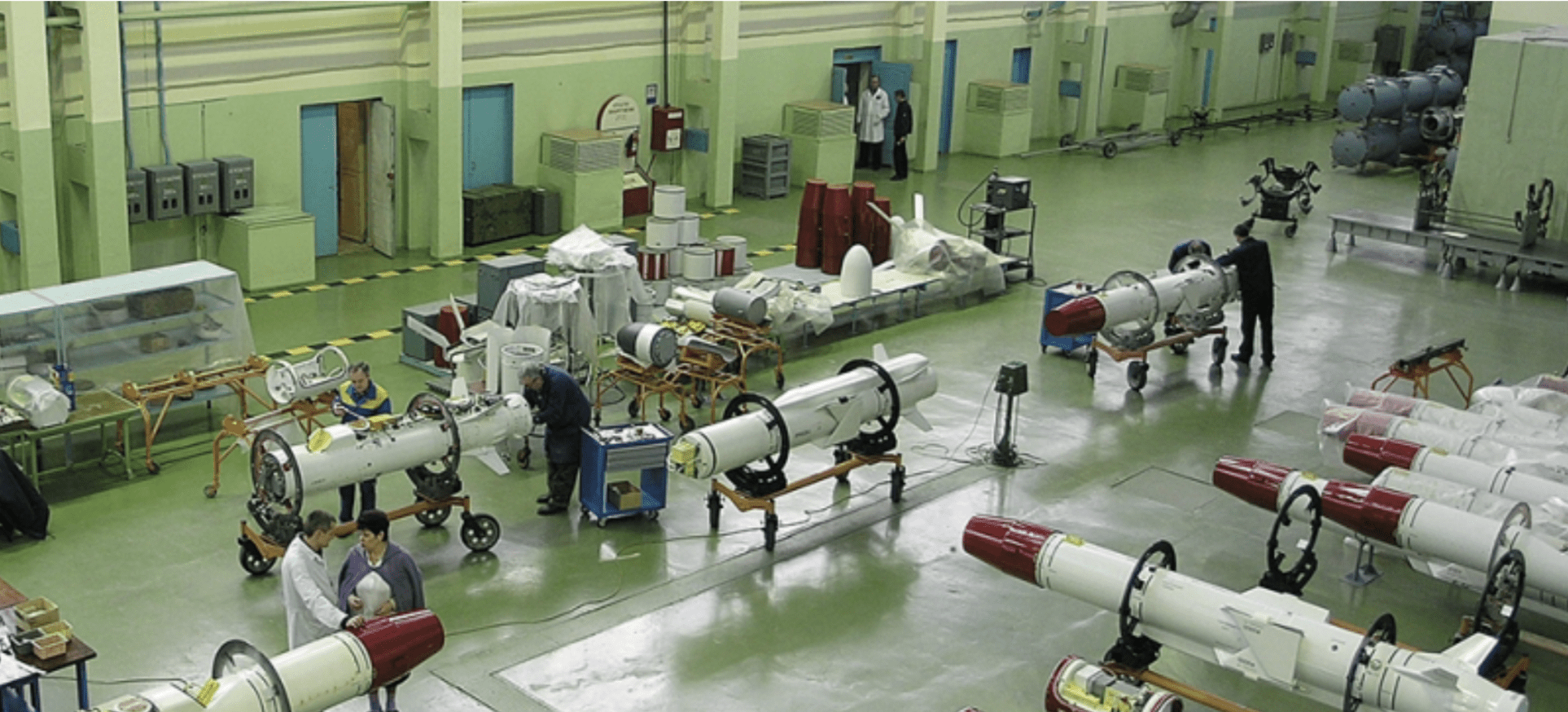
The corporation was established by a presidential decree signed by Vladimir Putin in January 2002 and is built around the Zvezda-Strela plant and design bureau in the Moscow suburb of Korolyov. Today, KTRV encompasses around 40 design bureaus, serial production plants, and maintenance facilities.
Among them are the Raduga Design Bureau in Dubna, which develops the Kh-family of missiles; the Moscow-based Vympel Design Bureau, manufacturer of air-to-air missiles including the R-37M, which Russian aviation uses against Ukrainian aircraft; NPO Mashinostroyeniya in Reutov, Moscow region, the developer of the Oniks supersonic cruise missile and the Tsirkon (Zircon) hypersonic missile; and GNPP Region, which specializes in precision-guided aerial bombs.
The production of UMPK modules (unified planning and correction module) is also linked to KTRV. These modules converted Soviet high-explosive aerial bombs into 'glide' bombs, which have become the most widely used weapon for striking frontline Ukrainian cities.
Today, the holding employs approximately 60,000 people.
How Boris Obnosov built KTRV’s procurement empire
KTRV is wholly state-owned and relies primarily on government funding to produce weapons. The corporation is headed by Boris Obnosov, who served as First Secretary of Russia’s Permanent Mission to the United Nations from 1994 to 1998. Ironically, during the same period, Obnosov also worked as an adviser to the Russian Foreign Ministry’s Department for Security and Disarmament. He later became one of Vladimir Putin’s trusted representatives during election campaigns.
Obnosov has led the newly established missile manufacturing corporation since 2003. While he no longer officially serves as a presidential adviser, Russian media have long referred to him as the president’s unofficial “chief missile adviser” because of his decades-long leadership of the country’s flagship missile manufacturer.

Over time, Obnosov has effectively privatized large parts of the state-owned corporation. Such a scenario would be difficult to imagine in a Western state enterprise, but in Russia, siphoning value from state assets has become something of a national tradition.
In 2012, Obnosov ordered all companies within the holding to conduct procurement exclusively through a single “authorized organization”—Zvezda-Strela Trading House LLC, later renamed TRV-Engineering.
As Russian media reported in 2018, a network of intermediary companies gave Obnosov’s daughter, Olga Zorikova, control over 20% of TRV-Engineering’s shares. At the time the procurement order was issued, she was just 23 years old and publicly described herself as a bridal makeup artist.
By 2018, TRV-Engineering was collecting a 12% agency commission on every procurement contract awarded within the corporation. In addition, it acted as a direct supplier itself, securing contracts worth billions of rubles over a five-year period.
Between 2012 and 2017, the company generated 12 billion rubles in revenue, including 6 billion rubles ($74.26 million) from direct contracts with KTRV.
In 2020, the company changed its legal status from TRV-Engineering LLC to JSC TRV-Engineering.
Determining how much the company has earned since the start of Russia’s full-scale invasion is difficult. Since 2022, TRV-Engineering has stopped publishing its financial statements, and its ownership structure can no longer be independently verified.
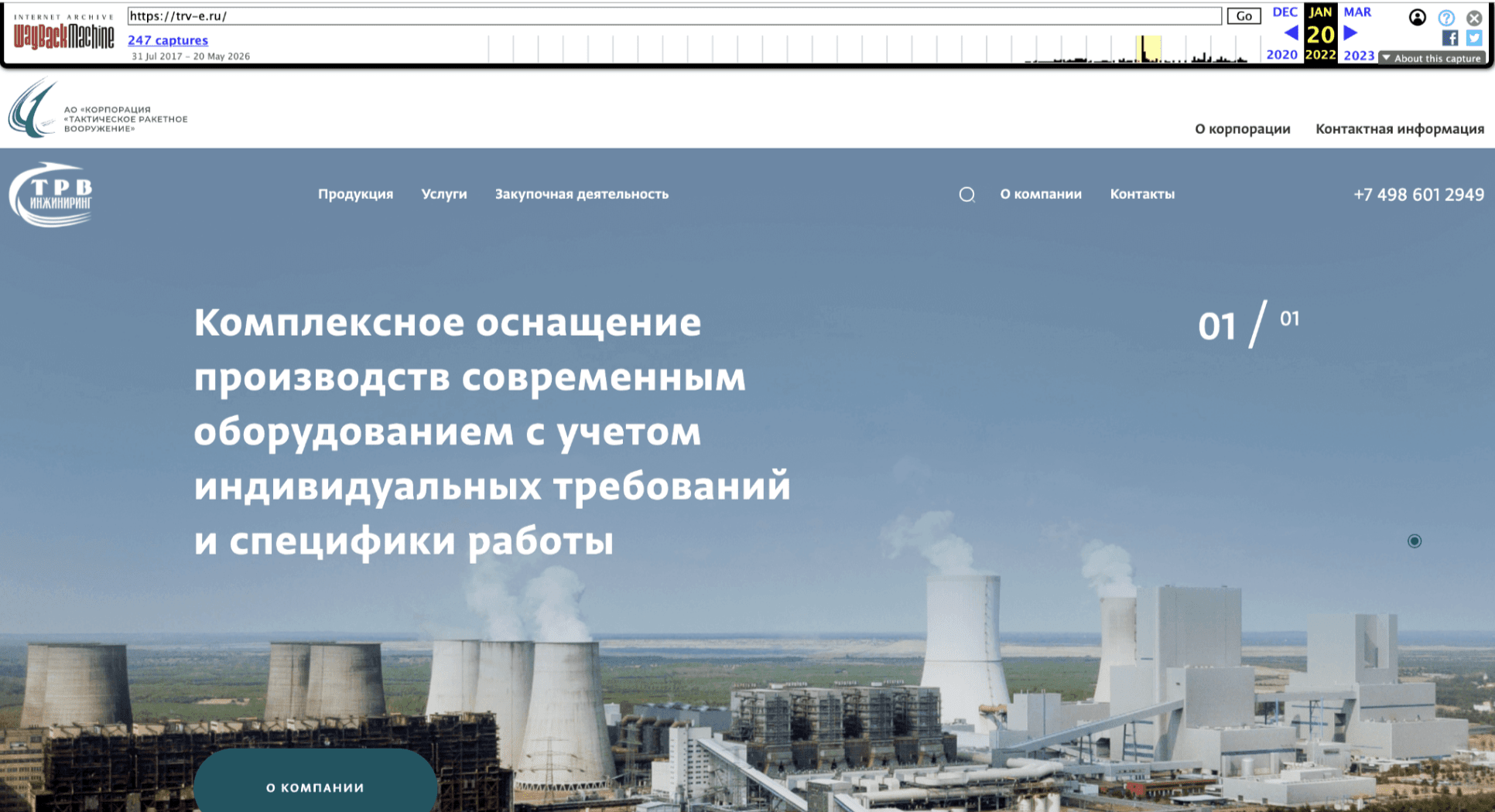
At the same time, court documents involving the company indicate that the volume of defense procurement contracts awarded to Tactical Missiles Corporation has increased sharply since 2021.
How Russia obtains foreign electronics for its missiles
TRV-Engineering participates in projects under Russia’s federal defense industry development program, and supplies rolled steel, industrial tools, engineering equipment, and manufacturing technology produced in both Russia and abroad.
The company has been under sanctions imposed by Ukraine, the European Union, Japan, Canada, and several other countries since 2022. In 2024, the United States also sanctioned TRV-Engineering for “operating in the defense and related materiel sector of the Russian Federation economy.”
Yet these restrictions have done little to disrupt its procurement operations. Among the documents obtained by UNITED24 Media is a 2024 contract between TRV-Engineering and NPP Variant Group LLC, under which the company purchased $5 million worth of GNI11AY inertial measurement modules (IMUs).
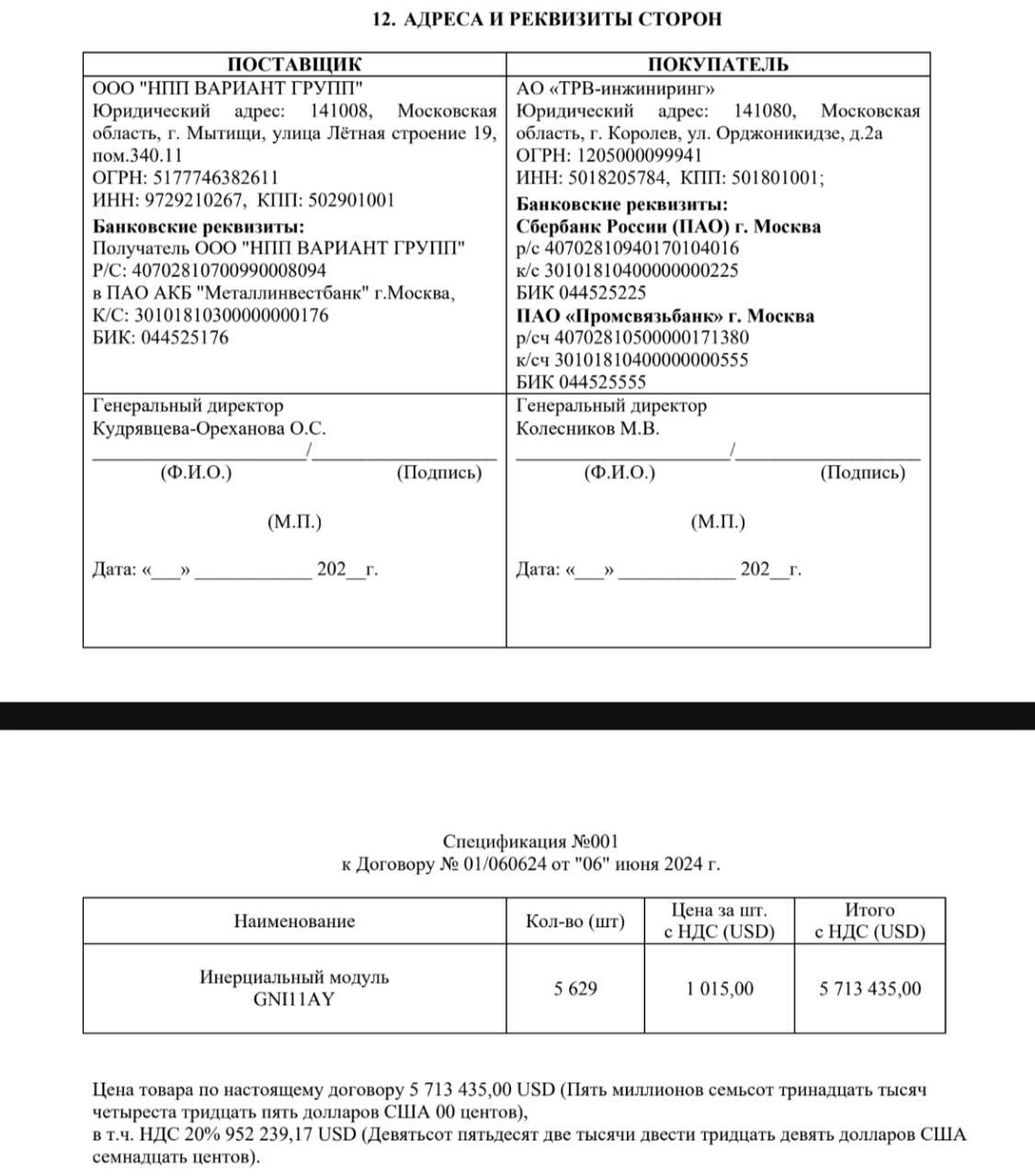
The GNI11AY is an electronic sensor that determines how an object moves through space. It combines an accelerometer, which measures acceleration, and a gyroscope, which measures rotation. Together, they allow a missile or drone to determine its position and trajectory without relying on GPS. As a result, inertial measurement units are a critical component of modern guidance systems, enabling missiles and unmanned aerial vehicles to stay on course even when satellite navigation signals are jammed.
This was not an isolated shipment. Throughout 2024, NPP Variant Group imported $7.3 million worth of electronic components into Russia, including antenna amplifiers, measurement converters, and the same GNI11AY inertial measurement units. The modules are manufactured by the Chinese company Guanxingnav, which supplied $7.2 million worth of equipment to the Russian intermediary.
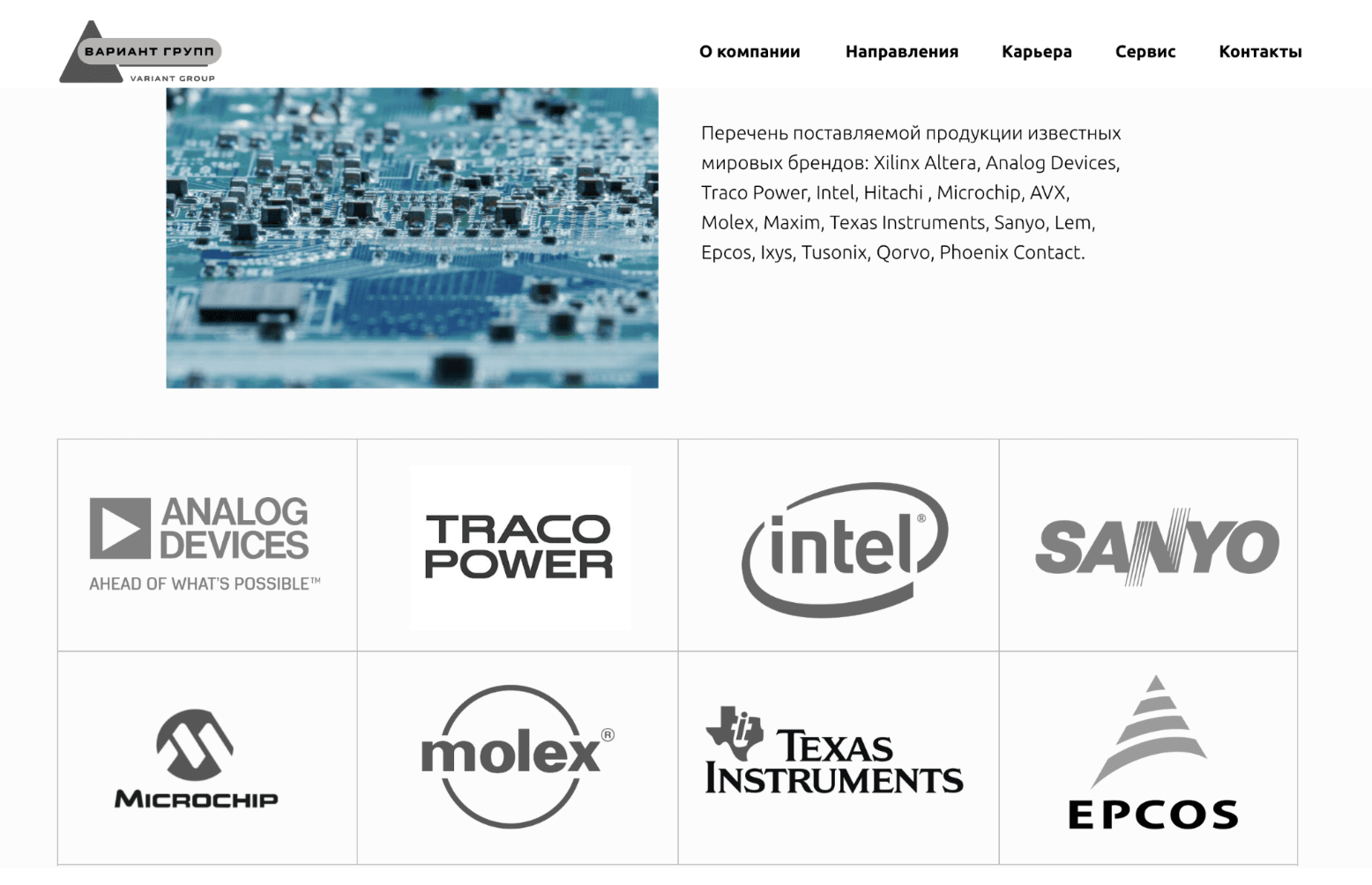
The European Union, Ukraine, and Switzerland did not impose sanctions on Variant Group until April 2026. The company, however, remains unsanctioned by the United States.
Chinese components are not the only products reaching Russia’s missile industry. A contract with Microlab IC LLC, signed at the end of 2023, shows that TRV-Engineering also procures Western-made electronics, including diodes and transistors manufactured by the Dutch company Nexperia and integrated circuits produced by the US-based Analog Devices.
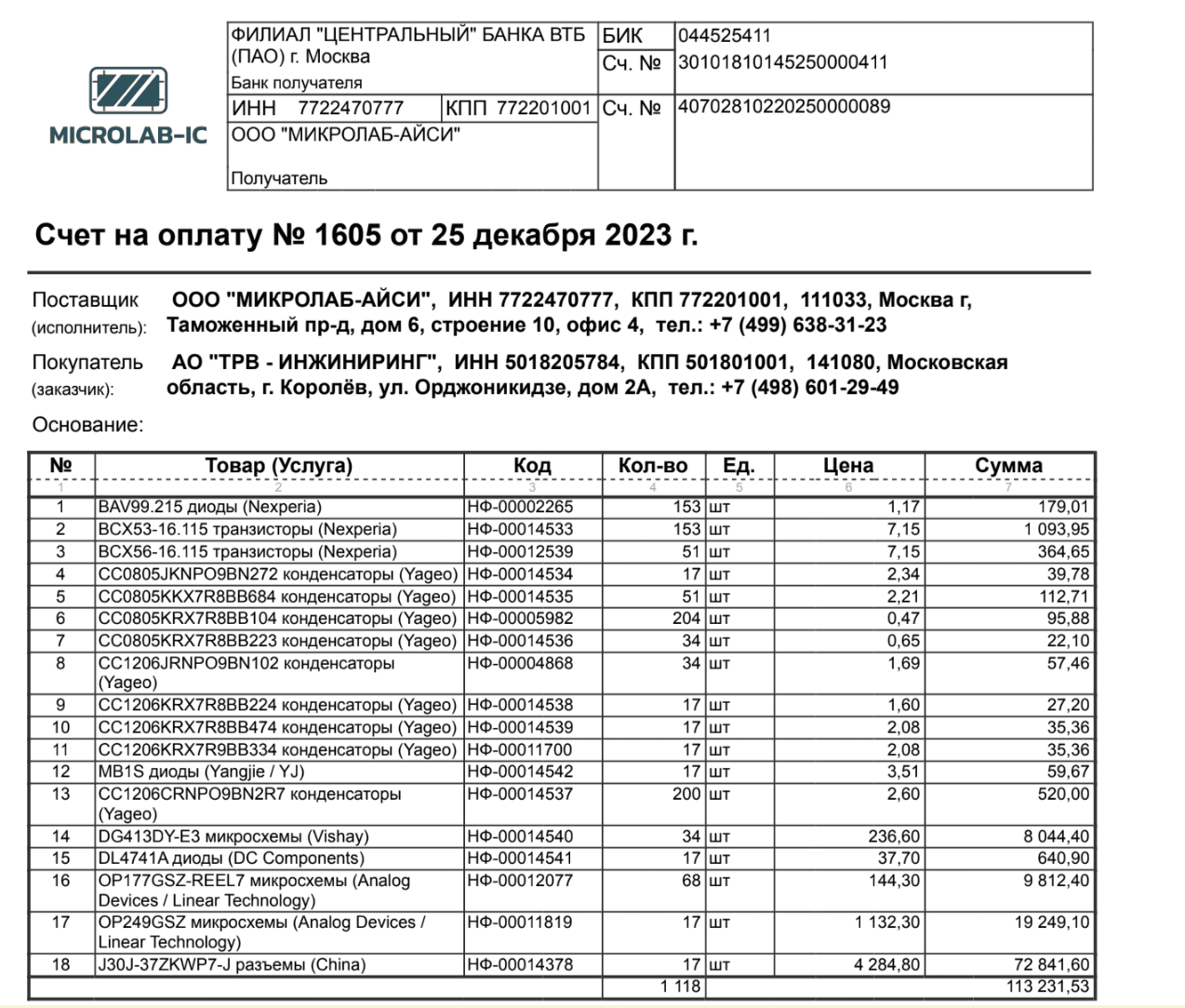
Overall, Microlab IC imported $2.1 million worth of microelectronics into Russia. The overwhelming majority consisted of integrated circuits manufactured by NXP Semiconductors (Netherlands), Analog Devices (United States), Texas Instruments (United States), Infineon Technologies (Germany), TE Connectivity (United States/Ireland), VPT, Inc. (United States), and Harwin (United Kingdom).
A similar role is played by Integra LLC, which supplied analog switches to Tactical Missiles Corporation. According to the available records, the company completed 179 shipments with a combined value of approximately $1.8 million.
Its imports included piezoresistive pressure sensors manufactured by Switzerland’s Keller Druckmesstechnik AG, frequency converters produced by Japan’s Nisshinbo Micro Devices, measurement electronics from National Instruments (United States), and integrated circuits manufactured by Texas Instruments and Qorvo (United States).
Variant Group, Microlab IC, and Integra are just a few of the dozens of companies supplying critical components to Russia’s missile industry. Yet the sanctions regime targeting these intermediaries remains inadequate. Ukraine continues to pay a heavy price for bureaucratic delays and a lack of political resolve. The identities of KTRV’s suppliers are well known to Ukraine’s international partners, but many of these companies continue operating because sanctions are difficult to coordinate and enforce. Given Russia’s growing threat not only to Ukraine but also to NATO countries, governments should begin developing more effective mechanisms to disrupt these procurement networks before they become even more deeply entrenched.
Discuss this article:



-c439b7bd9030ecf9d5a4287dc361ba31.jpg "Photo of Katherina Popilnichenko")