- Category
- War in Ukraine
Ukraine Built a $50B Defense Industry in Four Years. Here’s Why Exports Matter
 Prefer U24 Media on Google
- Authors

-29a1a43aba23f9bb779a1ac8b98d2121.jpeg "Photo of Illia Kabachynskyi")
Ukraine’s defense industry has grown dozens of times over since the start of the full-scale invasion. Crucially, this growth is not about reviving production lines established decades ago, but about building entirely new, high-tech weapons systems that are already in demand worldwide.
“During the full-scale war, Ukraine’s defense industry has demonstrated unprecedented growth: production capacity has increased 50-fold, reaching $50 billion,” Ukraine’s Ministry of Defense said at the Munich Security Conference.
We bring you stories from the ground. Your support keeps our team in the field.
Production of Ukrainian drones and missiles alone could reach $35 billion in 2026.
The steady expansion of production capabilities has been driven by two factors:
The high intensity of the war, which requires large volumes of a wide range of weapons, from artillery shells to drones.
The slow delivery of equipment and weapons by partners, making domestic production essential for maintaining resilience during such delays.
Production capacity has indeed grown exponentially. In 2022, it was estimated at approximately $1 billion. A year later, it had risen to $3–6 billion. In 2024, estimates ranged from $10 to $20 billion annually. In 2025, the figure reached $35 billion, and in 2026, it is expected to total at least $50–55 billion.

This surge did not happen on its own. Over the same period, hundreds of new manufacturers of drones, robotic systems, electronic warfare systems, missiles, military vehicles, and other equipment have emerged in Ukraine. Entirely new production capacities — previously nonexistent in the country — have been established, helping shape the industry’s overall capabilities. More than 2,300 manufacturers and over 5,000 developments have passed through the Brave1 defense innovation cluster alone.
The challenge is that production capacity does not equal actual output. The primary customer of Ukraine’s defense industry is the Ukrainian Armed Forces, which simply does not have the funds to order everything that can be produced. In 2025, Ukraine placed domestic defense orders totaling just $12 billion; the year before, it placed $10 billion in domestic defense orders.
Orders have also been supported by the so-called “Danish model,” under which foreign governments place orders with Ukrainian manufacturers, and the weapons go directly to the front lines. Even with such assistance, however, it has not been possible to fully utilize available production capacity.
Arms exports
Exporting Ukrainian weapons abroad is one solution that would allow domestic manufacturers to fully load their production lines. By opening their products to global markets, companies could produce weapons for Ukraine and international buyers. This would increase sales, with the proceeds directed toward research and development, expansion, and—not least—tax revenues to support Ukraine’s economy. Larger production volumes often reduce unit costs, benefiting both the Ukrainian military and buyers in partner countries.
As early as 2026, Ukrainian defense exports could amount to several billion dollars. Ukraine is expected to focus primarily on drones, which have already proven their effectiveness on a real battlefield against an exceptionally powerful adversary.
Another important reason to open exports is to simplify capital attraction for Ukrainian manufacturers. Operating with a single customer—the Ukrainian Armed Forces—imposes limitations, as potential foreign investors see this constraint as a risk factor. Through exports, manufacturers can sign contracts with countries around the world, confirming their production capacity and demonstrating the quality of their developments.
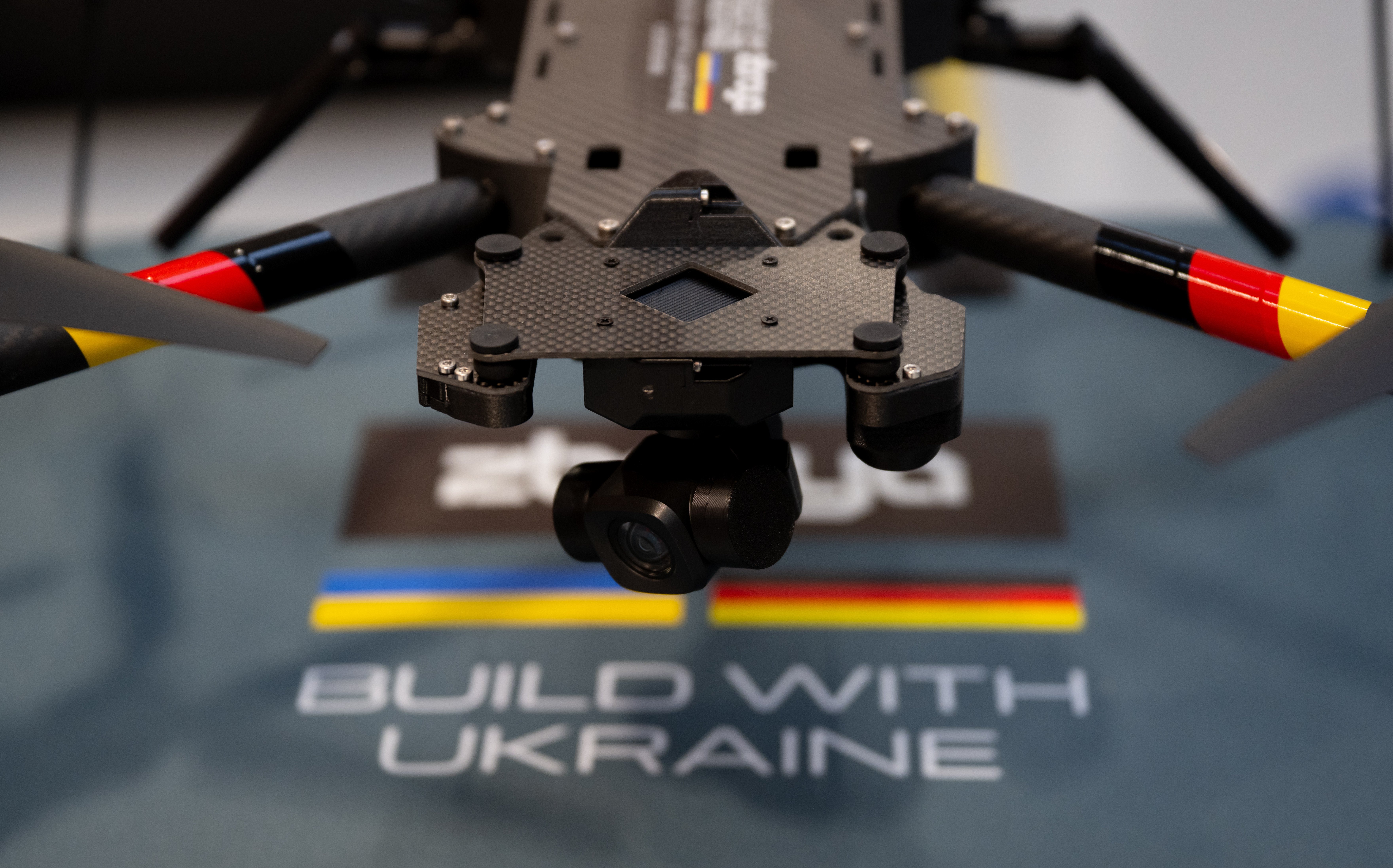
Ukraine has also launched two cooperation formats: Build in Ukraine and Build with Ukraine abroad—joint production ventures both within Ukraine and abroad. The latter format is considered safer for foreign companies, given the security situation, while the Ukrainian military can receive anywhere from 50% to 100% of the output produced.
For Ukraine, these formats and arms exports also represent a way to give back to its partners, who would be first in line to purchase Ukrainian equipment and weapons. Ukraine has mastered long-range strike capabilities with the longest confirmed operational ranges, developed drone interception systems, and demonstrated the ability to rapidly scale up mass production—including manufacturing its own components. These innovations will now become available to partner nations as well.
For Ukraine’s defense sector, all of this represents an opportunity to develop faster, expand production capacity, and invest in new technologies. The war in Ukraine remains extremely intense and differs markedly from its early phase in 2022. The speed of adaptation and the ability to rapidly reconfigure production have become defining strengths of Ukraine’s defense industry—strengths that the rest of the world may now also benefit from.
Discuss this article:




-069bcff560c187631790749394a6ccb1.jpg "Prime Minister Mark Carney addresses the media at a press conference in Edmonton, Alberta, on March 20, 2025. (Source: Getty Images)")